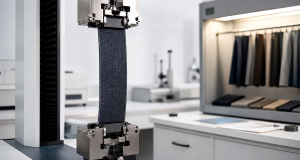
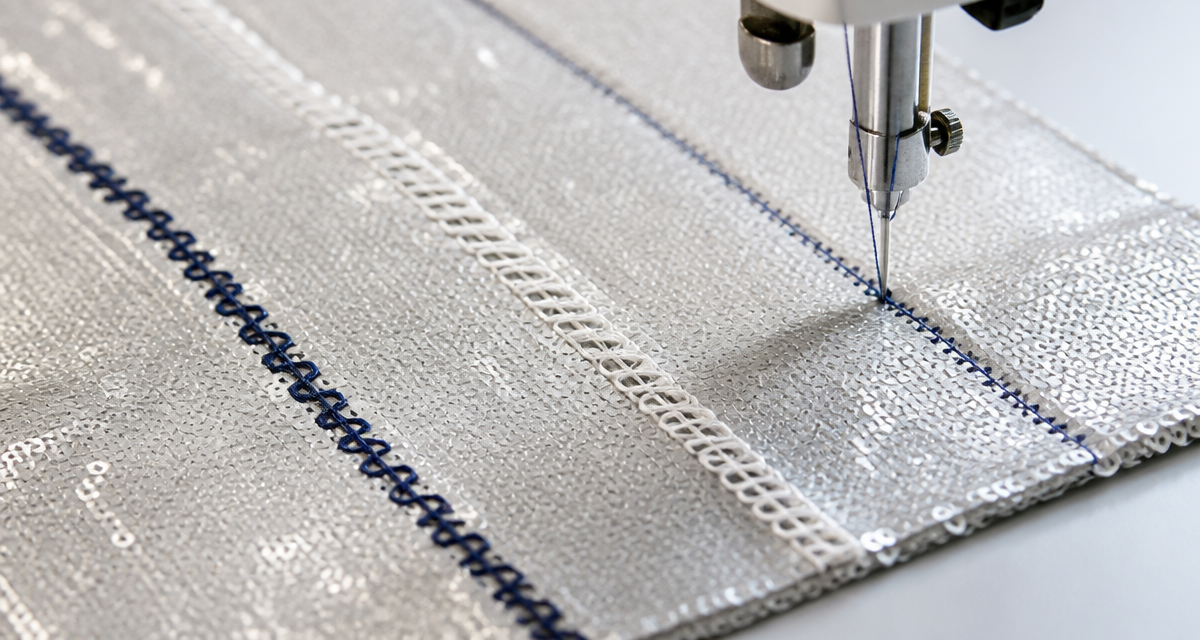
Sequin fabric seam slippage is the movement of base-cloth yarns and sequins away from a stitched seam when force pulls across the stitch line. It appears as a gap, a grin line, or a row of loose sequins beside the stitching. For a B2B buyer, sequin fabric seam slippage is the difference between a garment that survives a fitting and one that fails on the shop floor, so it should be specified, tested, and recorded before bulk production begins.
Key Takeaways
- Seam slippage is measured, not judged by eye. Ask for a method and a number.
- Sequin fabric slips more than plain fabric because the base cloth carries the load while sequins interrupt the stitch line.
- Stitch type, seam allowance, sequin density, and lining choice all change the result.
- Write the test method, the sample size, and the acceptance limit into the purchase order.
- Test on the same base cloth, sequin size, and thread you intend to buy.
What Is Sequin Fabric Seam Slippage?
Sequin fabric seam slippage is the tendency of yarns in the base cloth to slide out of a seam when a force pulls across the stitch line. The seam does not break. Instead, the fabric pulls away from it, leaving an opening.
In sequin fabric the effect is amplified. Every sequin interrupts the base cloth, and every needle penetration creates a small perforation. As a result, the load spreads across fewer yarns than in a plain woven fabric of the same weight.
Seam slippage is also different from seam strength. A seam can be strong and still slip. Equally, a seam can be weak without slipping. Buyers need both numbers, because each answers a different question about how the garment will behave.
Why Sequin Fabric Seam Slippage Behaves Differently
Three features of sequin fabric make the problem harder to control than on plain cloth.
- Reduced yarn density at the seam. Sequins push the base cloth apart, so the stitch line crosses fewer load-bearing yarns.
- Slippery surface fibres. Many sequin base cloths use fine polyester mesh or satin, which has low inter-yarn friction.
- Weight and gravity. Dense sequin panels are heavy, so vertical seams carry more continuous load than the same seam in a light fabric.
Because of these three factors, a seam that passes on a plain polyester swatch may still fail on sequin fabric. Therefore, always test the actual construction, not a substitute.
How to Test Sequin Fabric Seam Slippage
- Cut a prepared seam sample. Use the approved base cloth, sequin size, seam type, and thread. Prepare at least three specimens from different areas of the roll.
- Condition the samples. Let them rest in a standard atmosphere so humidity and temperature do not distort the result.
- Mark a fixed gauge length. Draw two reference lines a known distance from the seam so you can measure movement precisely.
- Apply a controlled opening force. Use a tensile tester or a standard seam-slippage fixture. Apply load steadily, not in a jerk.
- Record the force at a fixed opening. Note the load required to open the seam to the agreed gap, usually a few millimetres.
- Repeat and average. Test warp and weft directions separately, because sequin fabric rarely fails the same way in both.
- Photograph the failure. A photo of the opened seam shows the supplier exactly what happened and removes guesswork.
Seam Slippage by Seam and Construction Type
| Construction | Slippage risk | Why | Buyer action |
|---|---|---|---|
| Plain lock-stitch, single row | High | One row of stitches carries all the load | Add a second row or narrow the stitch length |
| Double-stitched seam | Moderate | Load spreads across two rows | Confirm row spacing in the spec |
| Overlocked then closed | Moderate | Edge is contained before joining | Check the overlock width matches the allowance |
| Seam with fusible tape | Low | Tape stabilises the yarns | Confirm tape weight and application heat |
| Seam with a lining layer | Low | Lining shares the load | Keep the same lining in every bulk run |
| Stretch or bias seam | Very high | Movement adds to the opening force | Test on the actual garment angle |
Choose the row that matches your garment and write the outcome into the approved sample record.
Specification and Inspection Fields Buyers Should Confirm
- Base cloth reference, sequin size, and sequin density per centimetre
- Seam type, stitch class, and stitches per centimetre
- Seam allowance width in millimetres
- Thread type, ticket number, and colour reference
- Test method reference and specimen size
- Acceptance limit for opening at the agreed load
- Direction tested: warp, weft, or both
- Lining or interlining reference if used
- Result recorded per roll and per dye lot
- Pass, hold, or reject decision with inspector name and date
These ten fields take minutes to agree and prevent weeks of dispute later.
Common Causes and Practical Fixes
| Cause | Symptom | Fix |
|---|---|---|
| Seam allowance too narrow | Yarns pull out with little force | Widen the allowance and re-test |
| Long stitch length | Large openings between penetrations | Shorten the stitch and re-test |
| Low yarn friction in base cloth | Slippage on smooth mesh or satin | Add a stabilising tape or lining |
| Heavy sequin load | Progressive opening over time | Support the seam with a second row |
| Needle damage | Cut or frayed yarns at the stitch line | Change needle size and type, then re-test |
How to Reduce Seam Slippage in Bulk Production
- Freeze the construction before ordering. Changing thread or seam type after bulk starts invalidates the original test.
- Give the factory the approved sample. A physical reference beats a written description when the operator is threading a machine.
- Re-test after any material change. New base cloth, new sequin supplier, or new thread all require a fresh test.
- Check the first garment of the run. One quick look at the first sewn piece catches a changed machine setting early.
- Keep a seam log. Record machine settings, needle type, and thread lot so results can be traced later.
- Review failures monthly. Repeated failures point to a process issue, not an unlucky roll.
Reading Test Results Before You Approve
Do not look only at the pass or fail mark. Look at how the seam failed and how much margin it had. A seam that passes with almost no margin will fail as soon as a new thread lot arrives.
However, a seam that passes with a comfortable margin lets you accept small production variation without risk. In practice, ask the supplier to report the measured value, not just a conclusion. That single habit turns a subjective conversation into a technical one.
For related controls, review our guide on embroidery backing selection, which explains how stabilisers change seam behaviour, and our pre-shipment inspection checklist for sequin fabric. If the finished piece will be cleaned, pair this test with the sequin fabric wash care protocol.
Frequently Asked Questions
Is seam slippage the same as seam strength?
No. Seam strength measures how much force a seam carries before it breaks. Seam slippage measures how far the fabric moves away from the seam under load. A seam can fail either test first.
How many samples should be tested per order?
Agree this with the supplier in advance. A common approach is to test at the approval stage, then re-test whenever the base cloth, sequin, or thread changes.
Does sequin size affect slippage?
Yes. Larger and heavier sequins reduce the number of yarns available near the seam and add weight, so the same seam can slip more than it would with small sequins.
Can a lining solve seam slippage?
A lining helps because it shares the load, but it does not replace correct stitch choice and seam allowance. Use it as one control among several.
What should be written in the purchase order?
State the test method, the specimen size, the direction tested, and the acceptance limit. Then reference the approved seam sample as the visual standard.
Conclusion: Specify Seam Slippage Before You Cut
Sequin fabric seam slippage is a specification problem more often than a factory problem. When the method, the limit, and the approved sample are clear, the supplier can build to them and the buyer can verify the result.
Therefore, treat seam slippage as a line item in your technical pack. Define it, test it, record it, and keep the record with the order. That discipline protects the garment, the delivery date, and the relationship. Use our guide on checking sequin fabric quality before bulk ordering to build the wider control plan around it.
Get Sequin Fabric Samples for Your Next Order
Test seam performance, colour, and hand feel on your own base cloth, sequin size, and colour reference before you commit to bulk. Yunfan Textile produces decorative and sequin fabric for B2B buyers worldwide.
Source direct on Alibaba - request bulk pricing, specifications, and production details in one place.
Request Sequin Fabric Samples and share your target GSM, width, sequin size, and colour reference.
Talk to Morris directly:
Email: morris@yunfantextile.com
WhatsApp: +86 156 3752 5803
WhatsApp: +86 175 1619 6727