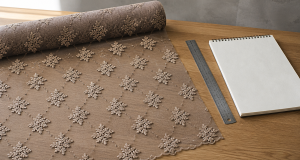
Decorative fabric width tolerance is the range of measurement you accept around the declared width of a roll. It matters because markers, cutting plans, and yield calculations all assume a fixed width. When decorative fabric width tolerance is too loose, panels come up short, markers no longer fit, and the effective cost per usable metre rises even though the invoice price did not change.
Key Takeaways
- Width tolerance is a purchase-order term, not a factory preference.
- Measure in at least three places along the roll, not only at the head end.
- A minus-only tolerance is usually safer than a plus-or-minus band.
- Fabric can relax after unrolling, so measure after it has settled.
- Record every measurement so a claim is supported by data.
What Is Decorative Fabric Width Tolerance?
Decorative fabric width tolerance is the permitted variation between the measured width of a roll and the width stated in the specification. It is expressed in centimetres or inches, and it can be written as a single-sided limit or as a band.
The tolerance exists because fabric is not a machined part. Tension during finishing, heat setting, and rolling all pull the cloth slightly narrower or wider. Therefore, a realistic tolerance protects both sides from arguing over a millimetre that no process can hold.
Equally important is the direction of the tolerance. If a roll is wider than declared, the marker still fits and the extra width is a small bonus. However, if a roll is narrower than declared, the marker may no longer fit at all.
Why Width Tolerance Changes Your Yield
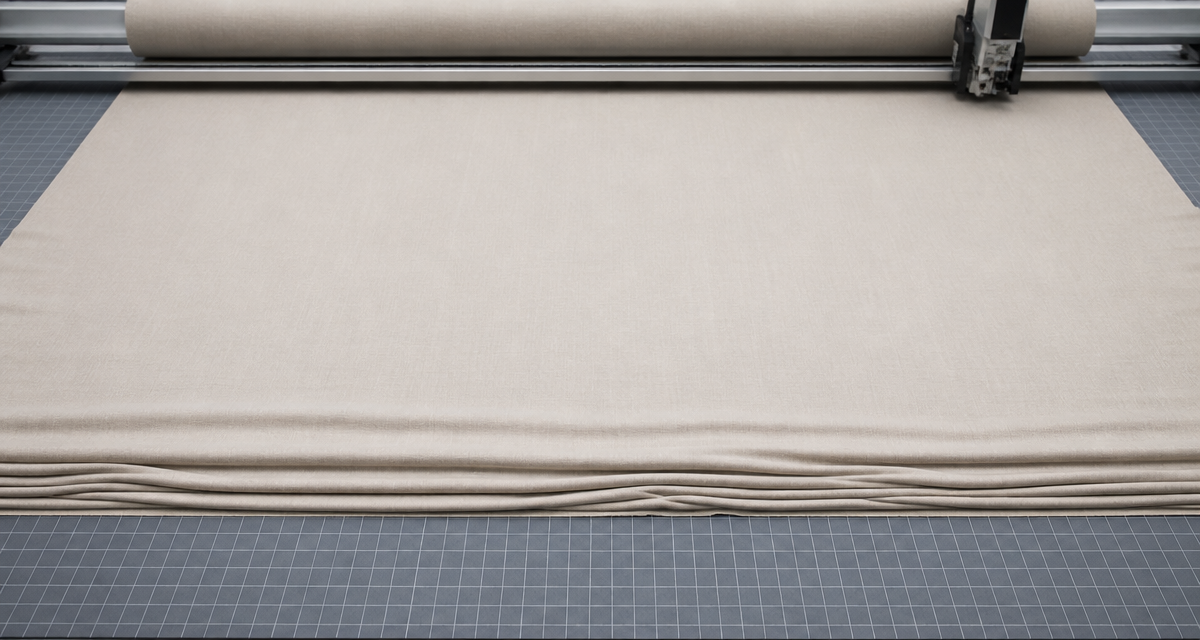
Yield is the number of usable panels you cut from a roll. It depends on the marker width, the seam allowance, and the actual fabric width. A roll that is two centimetres narrower than declared can drop an entire panel from a nested marker.
In addition, narrow rolls waste time. Cutting staff re-plan the marker, the cutting plan is re-issued, and the order may need an extra roll to finish. Because of this, a tolerance that looks generous on paper can cost far more than a slightly higher fabric price.
For decorative and sequin fabric, the effect is stronger. Dense sequin panels are expensive per metre, so every wasted centimetre is expensive. Pair this control with the method described in our guide to decorative fabric roll inspection so width is checked at the same time as shade and surface.
How to Measure Decorative Fabric Width
- Unroll enough fabric to relax. Pull out at least two metres and let the cloth settle before measuring.
- Lay the fabric flat. Use a clean, flat table. Do not measure on a curved or stretched surface.
- Measure away from the selvedge pull. Position the tape at least ten centimetres in from the head end.
- Take three readings. Measure at the head, the middle, and the tail of the roll.
- Measure selvedge to selvedge. Exclude curled edges, because a curled edge is not usable width.
- Record every reading. Write the three numbers down with the roll number and the date.
- Compare with the declared width. Calculate the difference and mark the roll pass, hold, or reject.
Width Tolerance Limits by Fabric Type
| Fabric type | Typical tolerance band | Main risk | Buyer note |
|---|---|---|---|
| Rigid woven decorative | Narrow band | Marker no longer fits | Set a minus-only limit |
| Sequin on mesh | Moderate band | Shrink and relax after finishing | Measure after unrolling |
| Embroidered woven | Moderate band | Motif moves near the edge | Check motif clearance to the edge |
| Stretch knit decorative | Wide band | Width relaxes after unrolling | Define relaxed width, not greige width |
| Sheer and organza | Narrow band | Edge curl reduces usable width | Measure inside the curl |
| Jacquard decorative | Moderate band | Pattern repeat lost at the edge | Confirm repeat position to edge |
Use the row that matches your order and write the agreed figure into the specification.
Specification and Inspection Checklist
- Declared width in centimetres and inches
- Tolerance direction: minus only, plus only, or both
- Permitted deviation in millimetres
- Measurement points: head, middle, and tail
- Relaxation time before measurement
- Selvedge condition and curl allowance
- Usable width after edge trim
- Roll number and batch reference
- Measured values recorded per roll
- Pass, hold, or reject decision with date and inspector
Width Tolerance, Usable Width, and Cuttable Width
| Term | Definition | Who uses it |
|---|---|---|
| Declared width | The width written in the specification | Buyer and supplier |
| Measured width | The width found on the physical roll | Inspector |
| Width tolerance | The accepted difference between the two | Both parties |
| Usable width | Width that survives edge trim and curl | Cutting team |
| Cuttable width | Width the marker can actually use | Pattern and cutting |
These five numbers are often confused. Keeping them separate makes the cutting plan accurate and the conversation with the supplier factual.
What Causes Width Variation
Width variation comes from the process, not from carelessness. Tension in the stenter frame, heat-setting temperature, and the way a roll is wound all pull the cloth. In addition, a roll wound under high tension can measure correctly in the factory and relax narrower after a week in transit.
As a result, the measurement point matters as much as the tolerance. A supplier who measures on a stretched roll and a buyer who measures on a relaxed roll will always disagree. Therefore, define the measurement condition in writing before the order is placed.
Shrinkage is closely related and worth testing separately. Our protocol for decorative fabric shrinkage testing explains how to run that test and record the result.
How to Negotiate and Document Tolerance With a Supplier
- Send the specification before quoting. Ask the supplier to confirm the declared width and the achievable tolerance in writing.
- Agree the measurement method. State the relaxation time, the number of readings, and the tool.
- Set a minus-only limit where yield is tight. This prevents the narrow-roll problem entirely.
- Define the remedy. State whether out-of-tolerance rolls are replaced, credited, or used on a lower-value style.
- Ask for the record format. A simple table per roll is enough. Full laboratory reports are rarely needed for width alone.
- Review the first shipment closely. Confirm the supplier measured the way you measure, then relax the checks once the process is proven.
Once the width rule is stable, extend the technical pack to weight. Our guide to sequin fabric weight in GSM and gram per yard shows how to specify that figure the same way.
Frequently Asked Questions
What is a reasonable width tolerance for decorative fabric?
It depends on the construction and the finishing route. Ask the supplier to confirm what the process can hold, then set a minus-only limit for the side that affects your marker.
Should I measure fabric before or after it relaxes?
Measure after relaxation, because that is the width your cutting team will actually use. State the relaxation time in the specification so both parties measure the same way.
Is a wider roll a problem?
Rarely for cutting, but it can affect yield calculations and packaging. If the extra width changes the cost basis, define a plus limit as well.
How do I handle a roll that measures short?
Hold the roll, photograph the measurement with the roll number visible, and send the record to the supplier the same day. Then agree replacement, credit, or restricted use.
Does width tolerance apply to cut length as well?
No. Width and length are separate specifications with separate tolerances. Length is covered in our guide to decorative fabric roll length.
Conclusion: Put the Width Rule in Writing
Decorative fabric width tolerance is one of the cheapest controls available to a buyer. It costs nothing to define, it takes minutes to check, and it prevents the most expensive kind of waste, which is fabric that cannot be cut to plan.
Therefore, write the declared width, the tolerance direction, the measurement method, and the remedy into every purchase order. Then verify the first rolls against that rule. The result is a predictable cutting plan and a supplier relationship built on numbers rather than opinions.
Get Decorative Fabric Samples for Your Next Order
Confirm width, weight, and hand feel on your own specification before you commit to bulk. Yunfan Textile produces decorative, sequin, and embroidery fabric for B2B buyers worldwide.
Source direct on Alibaba - request bulk pricing, specifications, and production details in one place.
Request Sequin Fabric Samples and share your target GSM, width, sequin size, and colour reference.
Talk to Morris directly:
Email: morris@yunfantextile.com
WhatsApp: +86 156 3752 5803
WhatsApp: +86 175 1619 6727