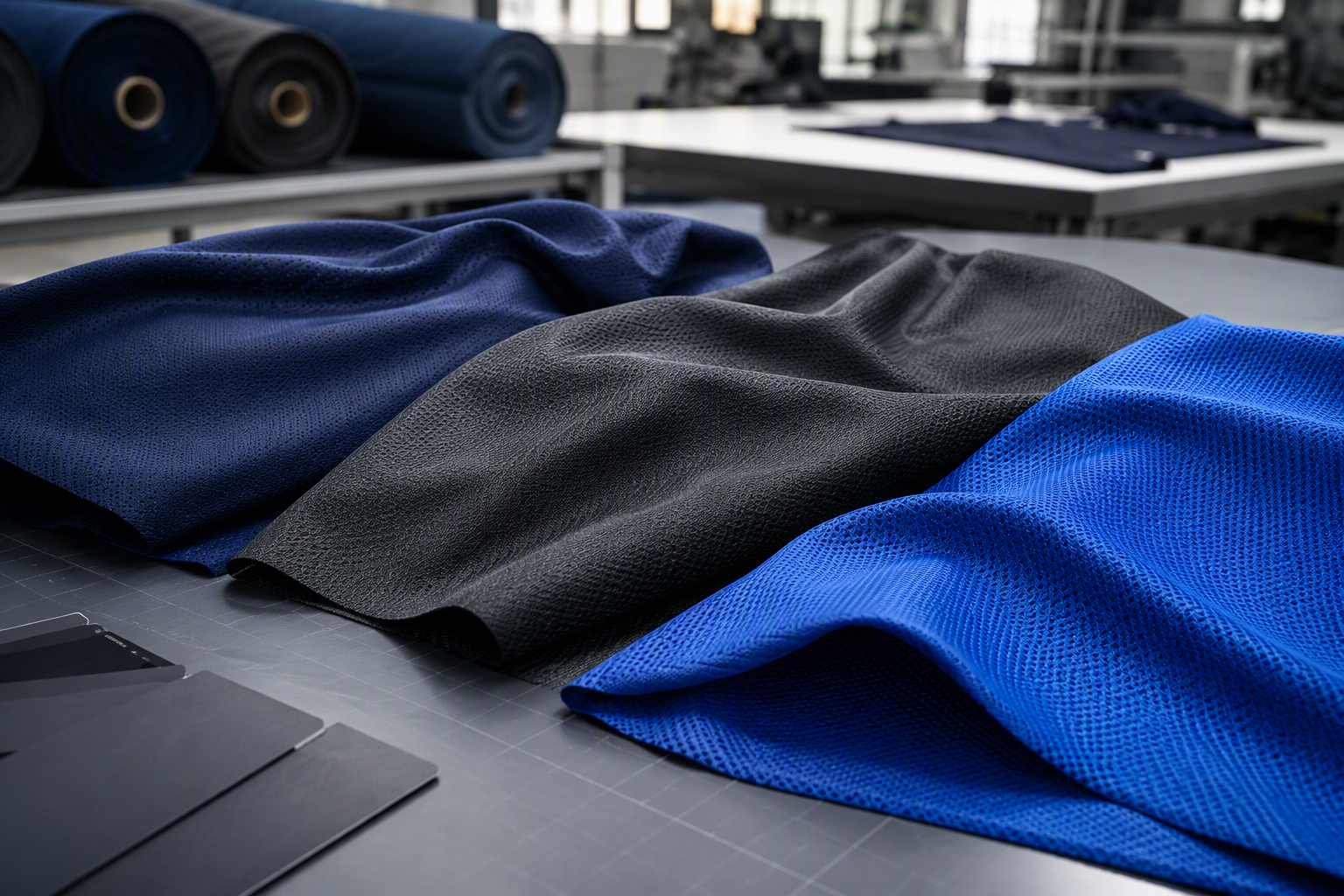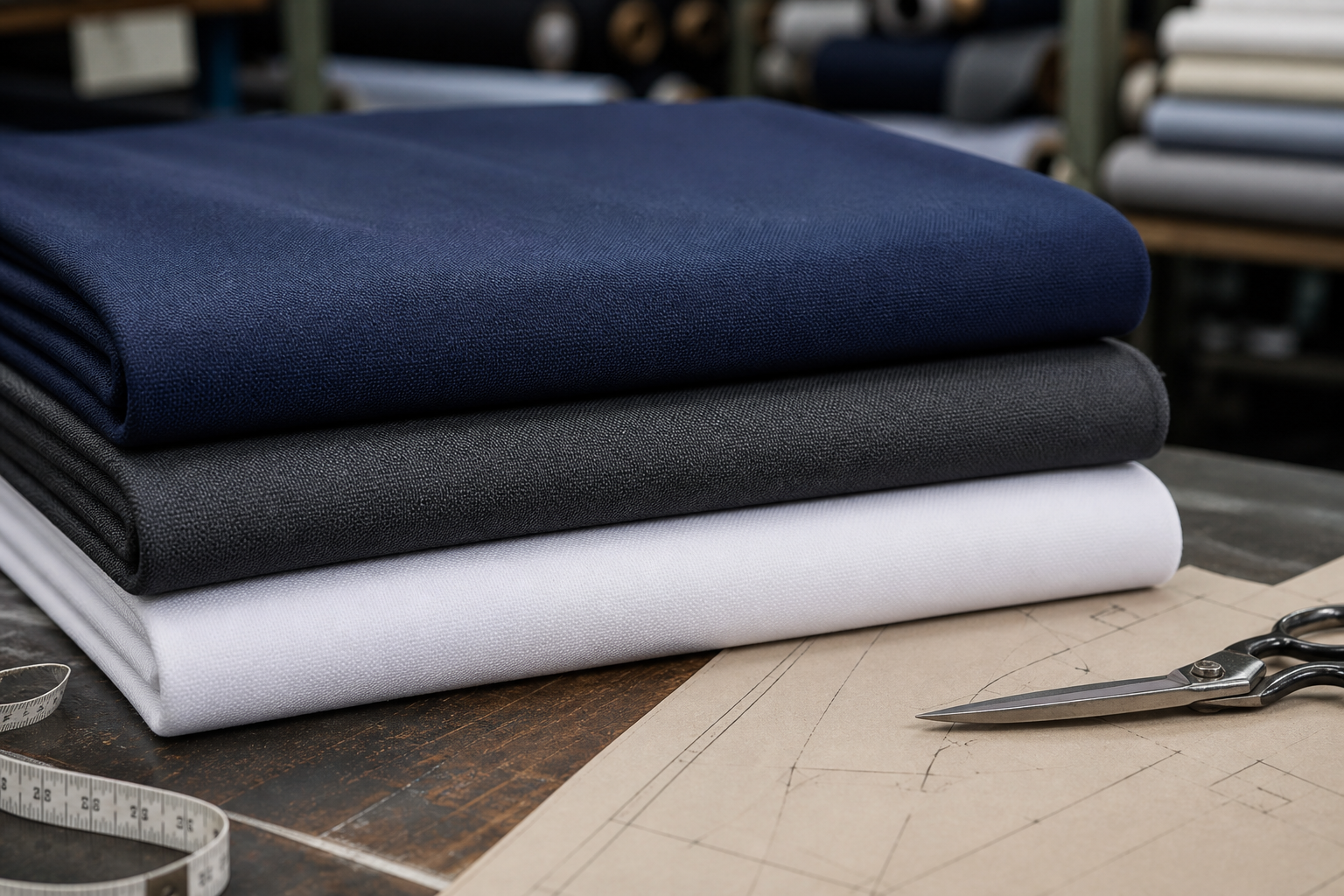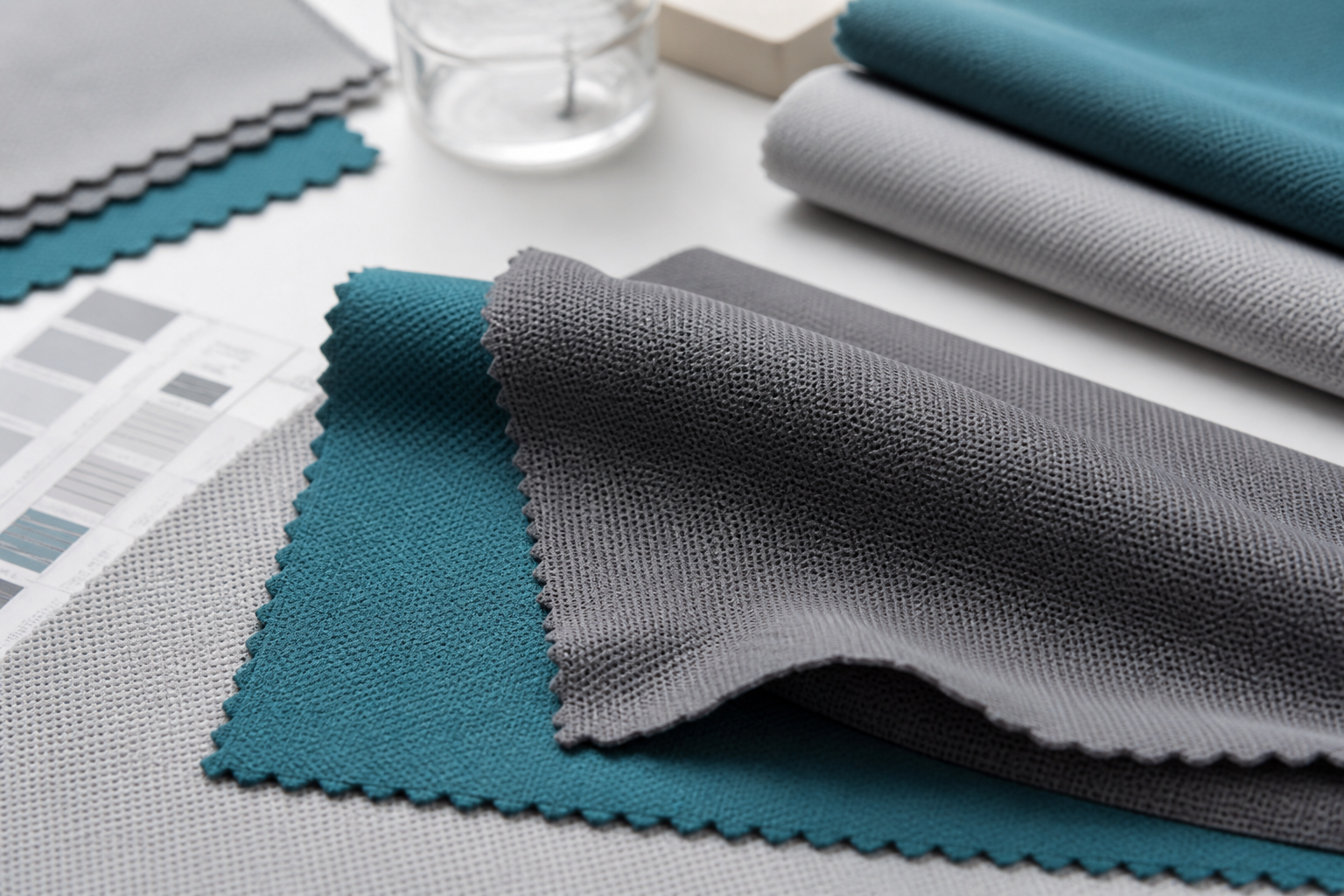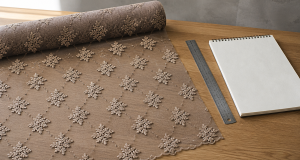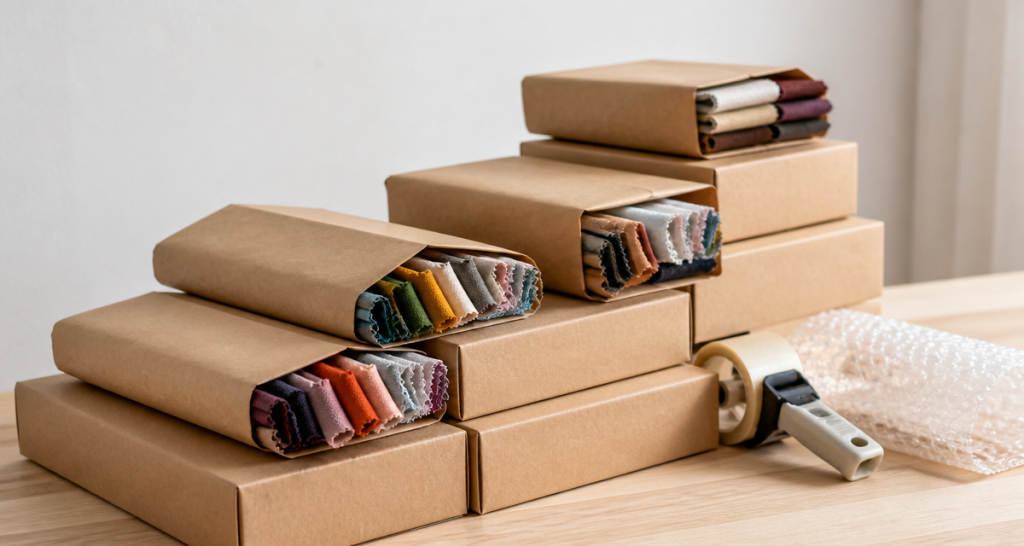
Fabric sample approval is the formal sign-off of a bulk-production sample before the mill runs your order. The practical answer for buyers is to approve a swatch cut from the actual production fabric, not a laboratory hand sample, and to record colour, weight, width, hand feel, and packaging on one signed sheet that both sides keep. Do this once, properly, and you remove almost every dispute that could arise after 200 yards are delivered. The sample is the contract; everything else is interpretation.
What Is Fabric Sample Approval?
Fabric sample approval is the process of reviewing and accepting a physical sample as the binding quality reference for a bulk order. It converts a description in an email into a physical object that both buyer and supplier can measure.
Few things in decorative fabric sourcing cause as much friction as an unapproved sample. Without one, "dense sequins", "soft hand", and "deep navy" mean different things in different factories. With one, quality becomes verifiable. Fabric sample approval also protects the mill, because it fixes the acceptable range and prevents endless re-grading of a shipment that was produced exactly to the agreed specification.
Key Takeaways
- Approve a swatch from bulk-production fabric, never a laboratory hand dip alone.
- Record colour, weight, usable width, hand feel, and packing on one approval sheet.
- Keep two signed copies: one for your file, one for the factory floor.
- State what is acceptable and what triggers a claim, including minor variations.
- Reference the approval date on every purchase order and reorder.
- Our decorative fabric minimum order quantity is 200 yards per colour.
How to Approve a Decorative Fabric Sample: Step-by-Step
- Define the spec before sampling. Write fibre, weight, width, colour standard, and hand feel as measurable values.
- Request a bulk-production swatch. Ask for a 30 cm by 30 cm piece cut from the actual production run, not a hand-made sample.
- Check colour in controlled light. Compare against your standard under D65 and again under end-use lighting.
- Weigh and measure. Confirm gsm and usable width using our roll inspection method.
- Assess the hand feel. Evaluate softness, stiffness, and surface finish against your target product.
- Review the packaging. Confirm roll core, roll length, and carton standards using our packaging standards.
- Test the sample. Wash, stretch, and hang the swatch to confirm it behaves as specified.
- Record everything. Complete the approval sheet and note any accepted deviations.
- Sign and distribute. Issue the countersigned sample to the factory before bulk starts.
Sample Approval Checklist Fields
| Field | Example value | Purpose |
|---|---|---|
| Sample reference | BPS-2026-021 | Traceability to the bulk lot |
| Colour reading | Delta E 0.9 under D65 | Turns colour into a number |
| Weight | 120 gsm measured | Confirms body and drape |
| Usable width | 124 cm minimum | Controls yield and cutting |
| Hand feel | Soft, low stiffness | Protects wearer comfort |
| Finishing | Matte, anti-snag | Confirms surface treatment |
| Packaging | Roll on 5 cm core | Prevents transit damage |
| Accepted deviations | Minor slubs allowed | Prevents false claims |
Sample Types Compared
| Sample type | Source | What it proves | Limitation |
|---|---|---|---|
| Lab dip | Laboratory dye bath | Colour direction only | Not production fabric |
| Counter sample | Sample room | Construction and finish | May not match bulk machine |
| Bulk-production sample | Actual production line | True colour, weight, and hand | Requires the run to start |
| Shipment sample | Finished bulk lot | Confirms final quality | Too late for design changes |
Common Sample Approval Failures
Approving a hand sample as if it were bulk
A sample-room piece is made by hand and rarely reflects production machines. Insist on a production swatch, and compare weights properly with our GSM and gram per yard guide.
Verbal approval with no record
Approvals given in chat messages vanish when staff change. Move every decision onto a signed sheet that references the sample number and date.
Quantity planning based on average width
Planning on the average rather than the minimum width loses panels. Reconcile your order size using our decorative fabric MOQ planning approach before confirming 200 yards.
What to Include in a Fabric Sample Approval Pack
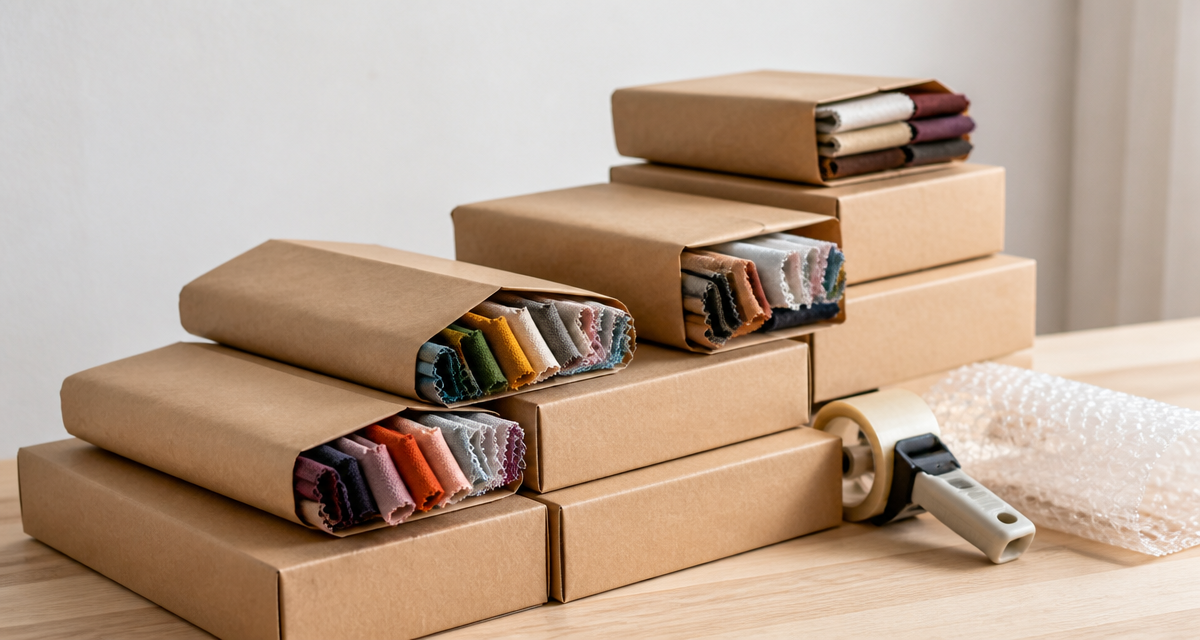
A complete sample approval pack contains a 30 cm by 30 cm swatch of the bulk-production fabric rather than a laboratory hand dip, plus the specification sheet, the care label wording, packaging photographs, and the roll or carton label sample. Add a colour reading taken under the agreed light source and a short note on the base fabric and finish actually used. When all of this travels with the sample, your buying team can approve it once, without a second round of questions that adds days to the schedule.
Sign-Off Records That Protect Your Bulk Order
Keep two signed copies of the approved sample, one for your file and one for the factory floor, and reference the approval date on every purchase order. If a dispute arises later, the counter-sample becomes the only objective evidence of what was agreed. Write down what is acceptable and what is not, including how much colour variation is tolerable, whether minor slubs are allowed, and which defects trigger a claim. Ambiguity is the cheapest thing to fix now.
Building a Sample Approval Timeline
Approval has a calendar, and treating it as a formality is how programmes slip. Build backward from your in-store date: allow time for the lab dip round, the counter sample, the bulk-production sample, and at least one revision cycle. Most delays come from discovering at the bulk-production stage that the base fabric or the finishing route changed, so confirm those two variables early and in writing rather than at the end.
Give colour and construction separate deadlines. Colour often needs two rounds to settle, while construction usually clears in one if the specification was clear. Running the two in parallel rather than in sequence typically saves a week, and it keeps the bulk machine booking protected from the small corrections that always appear.
Training Your Team on the Approval Standard
An approval only holds if the people receiving the goods and answering customers understand it. Brief merchandising, quality control, and customer service on the approved sample, the accepted tolerances, and the defects that justify a claim. When everyone reads the same sheet, inspection becomes consistent and disputes drop sharply, because nobody is judging the shipment against a personal memory of a swatch.
Review the standard whenever the base fabric, dye lot, or finishing route changes, and note the review date on the record. A sample approval is a living document rather than a one-off formality, and the discipline of keeping it current is what protects the next order as much as the current one. That habit, more than any single inspection technique, is what keeps a decorative fabric programme predictable.
Frequently Asked Questions
What is the difference between a lab dip and a sample?
A lab dip approves colour. A sample approves the whole fabric: colour, weight, width, hand feel, construction, and finish. You need both, and the sample should come from bulk production.
How long does fabric sample approval take?
Allow a few days for each round and budget for two rounds. Rushing the approval is how buyers end up accepting a shipment they cannot sell.
Should I approve before paying a deposit?
Ideally yes, for the quality benchmark at least. Many suppliers accept a deposit against a signed specification, with the approval sample due before bulk begins.
What if bulk differs from the approved sample?
That is exactly why you keep a counter-sample. Compare the bulk lot against it, document the difference, and reference the tolerance agreed on the approval sheet.
Do I need a new sample for a reorder?
Yes if the dye lot, base supplier, or machine changes. Use the original approval as the reference and confirm the new lot against it using our roll checks.
Sign the Sample, Secure the Order
Fabric sample approval is the cheapest insurance in decorative fabric sourcing. Approve a production swatch, measure it rather than describing it, write down what is acceptable, and keep signed copies on both sides. Then your 200-yard order arrives as the fabric you actually approved.
Request Sequin Fabric Samples with a full measurement and packaging report so your approval pack is complete on the first round.
Source direct on Alibaba - request bulk pricing, specifications, and production details in one place.
View Yunfan Textile on AlibabaContact: Morris — morris@yunfantextile.com — WhatsApp: +86 156 3752 5803 / +86 175 1619 6727