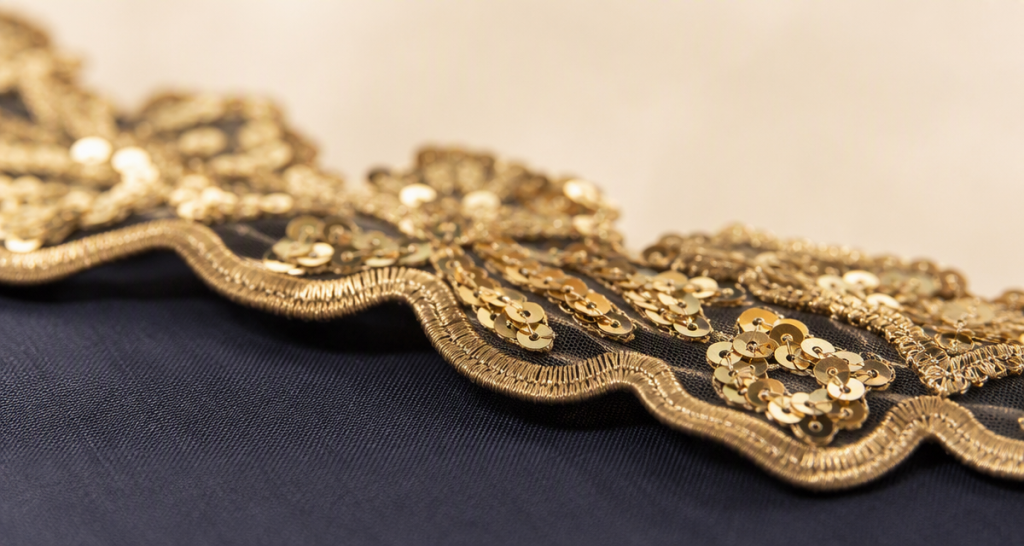
Sequin hole punching precision is the accuracy of the centre hole punched through each sequin, measured as hole position, diameter and edge quality. For B2B buyers, the practical answer is to specify a hole tolerance in millimetres and a burr limit, then verify both on the first production sequins. A sequin with an off-centre or burred hole will not lie flat, will not sew smoothly and will fail visual inspection on the finished garment.
Key Takeaways
- Hole position, hole diameter and edge quality are three separate checks.
- An off-centre hole tilts the sequin and breaks the light flow on the surface.
- Burrs and sharp edges abrade thread and cause needle breaks.
- Punch tooling wear is the main cause of drift during a long run.
- Specify a tolerance band and a burr limit in the purchase order.
- Inspect the first, middle and last sequins from each production lot.
What Is Sequin Hole Punching Precision?
Sequin hole punching precision describes how closely the punched hole matches the intended centre and size. Moreover, it covers the finish of the hole edge. The hole is what allows thread or a link to hold the sequin, so its accuracy controls how the sequin sits.
Three measurements define the result. First, hole position relative to the sequin centre. Second, hole diameter and its tolerance. Third, the burr or the sharp lip left on the edge. Therefore, a precise sequin must pass all three.
On fine micro-sequins, the tolerance window is tiny. Consequently, a small tooling error becomes a large defect rate. On larger paillettes, the same error may pass unnoticed. In practice, always set the tolerance by sequin size.
Why Sequin Hole Punching Precision Matters for B2B Buyers
Precision affects three outcomes. First, it affects flatness. A sequin with an off-centre hole does not lie flat, so the surface looks uneven under light. Second, it affects sewing. A burred hole grabs the thread and raises breaks.
Third, it affects appearance at inspection. Buyers check sequin alignment along a row. Therefore, small position errors that repeat across the field become visible as a wavy line. This is a common reason for rejected bulk lots.
There is a cost angle as well. Needle breaks and thread damage slow the embroidery line. Meanwhile, re-work and sorting add labour. As a result, a low unit price on imprecise sequins often costs more in production.
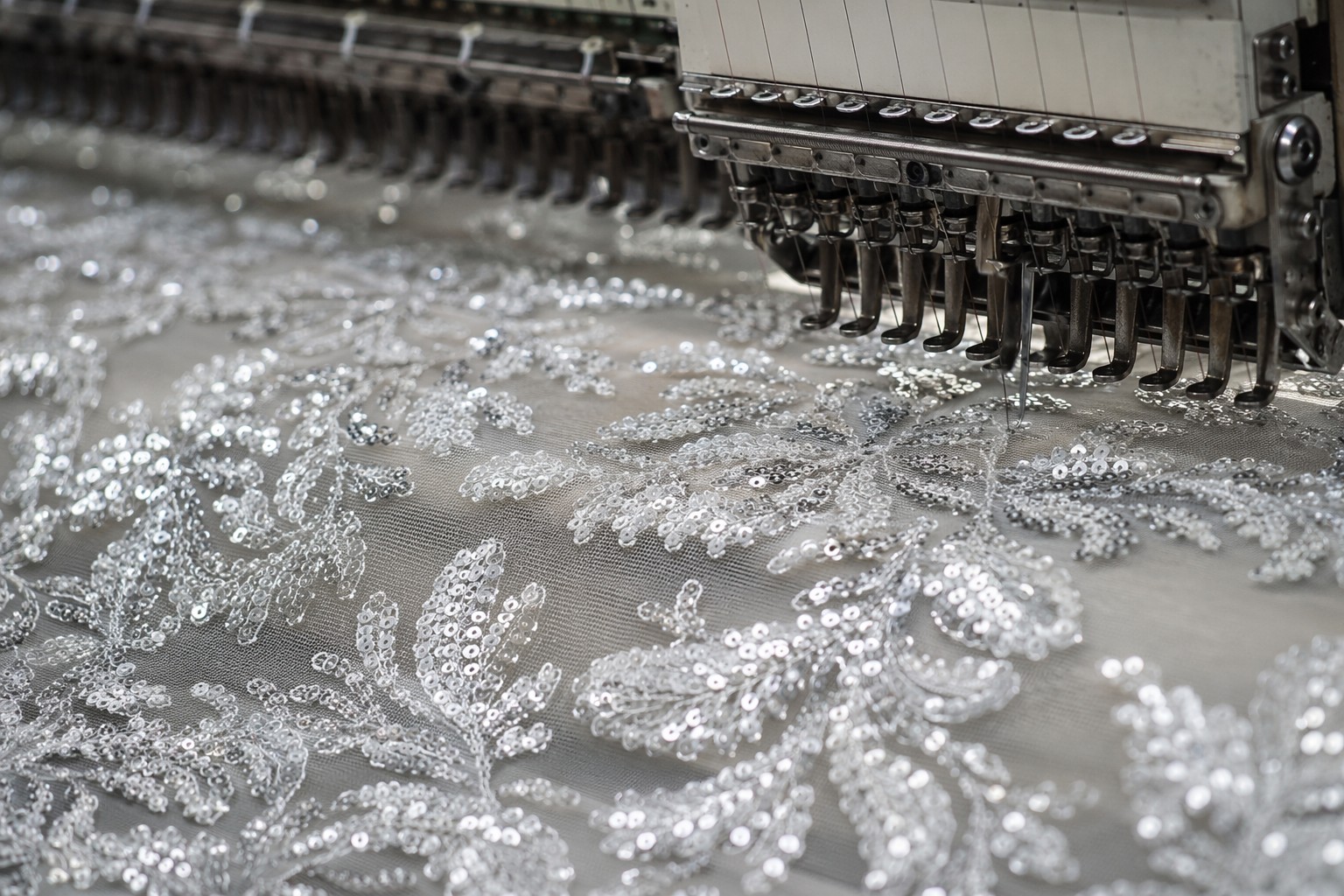
How to Check Sequin Hole Punching Precision Before Bulk
Use a short sequence and repeat it across the lot.
- Take a random handful of sequins from the production bag.
- Place them face up on a flat light table.
- Check hole position against the sequin centre with a loupe.
- Measure hole diameter with a pin gauge or a caliper.
- Run a fingertip over the hole edge and note any burr or sharp lip.
- Sew a short trial row and watch for thread catch or needle break.
- Photograph the sample beside a ruler or a reference sequin.
- Record the result and approve or reject the lot.
After that, repeat the check on the first, middle and last rolls of the lot. However, if the tooling has run a long shift, add an extra check at the end of the day.
Purchasing Checklist: Punching Precision Fields to Confirm
- Sequin size in millimetres
- Nominal hole diameter
- Hole position tolerance from centre
- Hole diameter tolerance
- Maximum burr or edge lip accepted
- Hole shape, such as round or oval
- Sequins per bag and bag weight
- Defect rate limit per lot
- Sample size for incoming inspection
- Reference sample kept by both sides
Moreover, keep this list in the specification sheet and repeat it on every order. It also connects to the sign-off routine in our guide to decorative fabric sample approval.
Comparing Punch Methods and Their Precision
| Method | Hole precision | Edge quality | Best for |
|---|---|---|---|
| Mechanical punch | High on small sequins | Depends on tool sharpness | High-volume micro-sequins |
| Laser cut | High on complex shapes | Sealed and smooth | Special shapes and holes |
| Die cut | Moderate | Can leave a small lip | Simple round sequins |
| Hand punch | Low to moderate | Variable | Small custom runs |
The table above is a guide, not a rule. Therefore, confirm the method and the tool condition before you approve bulk.
Common Punching Defects and How to Fix Them
Drifting holes are the first sign of tool wear. Consequently, ask for the tool to be re-sharpened or replaced before the next run. A dull tool also raises the burr level on the hole edge.
Burrs are the second issue. They abrade thread and cause needle breaks in embroidery. Meanwhile, an off-centre hole tilts the sequin and breaks the light flow. In addition, size drift across a lot points to inconsistent tool clamping.
Finally, check the film or coating. A brittle coating can crack around the hole and shed flakes. Therefore, test the coating after punching, not before. Our note on embroidery fabric usable width covers the related yield questions.
FAQ: Sequin Hole Punching Precision
What tolerance should I set for the sequin hole?
The right tolerance depends on sequin size. For small micro-sequins, keep the window tight and measure with a pin gauge. For large paillettes, a wider window is usually acceptable.
Why does an off-centre hole matter?
An off-centre hole tilts the sequin, so it does not lie flat. On a dense field, the tilt repeats and becomes visible as an uneven reflection or a wavy line.
How do I inspect hole edges quickly?
Run a fingertip over the hole edge and use a loupe under good light. Then sew a short row to confirm the thread does not catch on a burr.
Does hole precision change with sequin colour?
Not directly, but coatings differ. A brittle metallic coating can crack around the hole, so test the exact colour and finish you plan to order.
Conclusion: Put Hole Tolerance in the Specification
Sequin hole punching precision is invisible on a marketing photo but obvious on the finished garment. Therefore, specify hole position, hole diameter and burr limit in the order, then verify them on the first production sequins. Repeat the check across the lot and after any tool change. This keeps the surface flat, the thread intact and the bulk lot approved.
How to Write Hole Tolerance into the Specification
A hole tolerance should be a number, not a description. Moreover, it should cover position, diameter and edge. Therefore, write the three limits once and reuse them for every colour of that sequin.
Start with the sequin size. Then add the nominal hole diameter and its tolerance. After that, add the position tolerance from the centre. Finally, add the burr or lip rule for the edge.
Also, keep a reference sample. In practice, store an approved sequin in a small bag with the specification. As a result, incoming inspection has a physical target, not only a drawing.
Working with a Supplier on Sequin Punching
Punch quality is decided by the tool, not only by the operator. However, many buyers never ask about tool condition. Therefore, raise it in the first enquiry.
Next, ask how often the tool is sharpened or replaced. Meanwhile, ask how the supplier checks the hole after a long run. This tells you whether drift will be caught early.
Finally, agree on the incoming check. Ask for a small sample from each lot, sealed and labelled. Then confirm the hole limits on arrival. Consequently, a small check prevents a large rejection.
Does hole size change the sequin cost?
It can. A tight tolerance needs sharper tooling and more checks, so the price may rise. Therefore, set the tolerance to what the garment truly needs rather than to the tightest possible figure.
Should I check every sequin?
No. Full inspection is slow and costly. Instead, use random samples across the lot and re-check after any tool change. In practice, a small sample catches most drift.
Hole-punching tolerance is best controlled with a first-article inspection at the start of every production run. The operator should measure hole diameter, seam-to-hole distance and across-roll repeat with a calibrated steel rule or vision gauge against the approved artwork, recording readings at the first, middle and last meter of each roll. Dies wear over time, so a punch that starts fully within tolerance can drift across a long run; a documented die-change interval, typically every 300,000 to 500,000 strikes depending on sequin gauge and film hardness, keeps the pattern sharp and prevents distorted, fused or misaligned holes from reaching the buyer.
Source direct on Alibaba - request bulk pricing, specifications, and production details in one place.
View Yunfan Textile on AlibabaRequest Sequin Fabric Samples
Send us your sequin size, hole tolerance and order quantity, and we will prepare a sample set for review. Our MOQ is 200 yards.
Yunfan Textile B2B Contact
Contact: Morris
Email: morris@yunfantextile.com
WhatsApp: +86 156 3752 5803
WhatsApp: +86 175 1619 6727