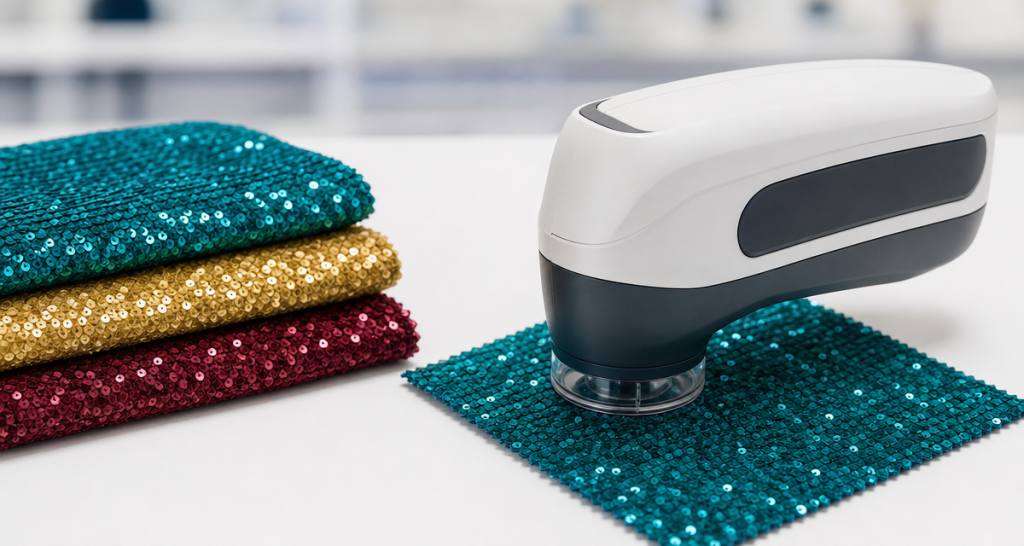
Fabric roll color shading is a visible colour difference between rolls that should look identical. For B2B buyers, the practical answer is to measure shade with an instrument against an approved standard, set a colour tolerance, and keep every roll from one dye lot. Two rolls can share a name and a code yet read differently under daylight. Therefore, shade control must be a document, not a conversation.
Key Takeaways
- Shading is a measurable colour difference between rolls, not a subjective opinion.
- An instrument reading beats the human eye for repeatable decisions.
- Light source changes what you see, so set one viewing condition.
- Keep all rolls of a matched order from a single dye lot.
- Set a colour tolerance and record it against an approved standard.
- Check shade under two lights to catch metamerism.
What Is Fabric Roll Color Shading?
Fabric roll color shading is the difference in colour between two rolls of the same article. Moreover, it can appear as a shift in depth, hue or brightness. It often shows up first along a seam when two rolls are joined in one garment or panel.
Shading has several causes. Dye uptake varies with fibre and water. Finishing heat or tension can also shift the tone. In addition, a surface decoration such as sequins or embroidery can change how light reflects from the cloth.
However, not all shading is a defect. A small shift may fall inside the agreed tolerance. Therefore, the buyer should define the tolerance before production, not after the rolls arrive.
Why Fabric Roll Color Shading Matters for B2B Buyers
Shading becomes a problem when panels that must match come from different rolls. On a decorative garment or a large drapery panel, a shade break is highly visible. Consequently, a lot that looked perfect in a warehouse photo can fail on the fitting floor.
There is also a production angle. If shading is found late, the buyer must sort, re-cut or re-order. Meanwhile, a second dye lot adds time and cost, and may not match the first at all.
Finally, shading affects trust. A buyer who discovers a shade break loses confidence in the whole order. Therefore, controlling shade protects both the product and the relationship.
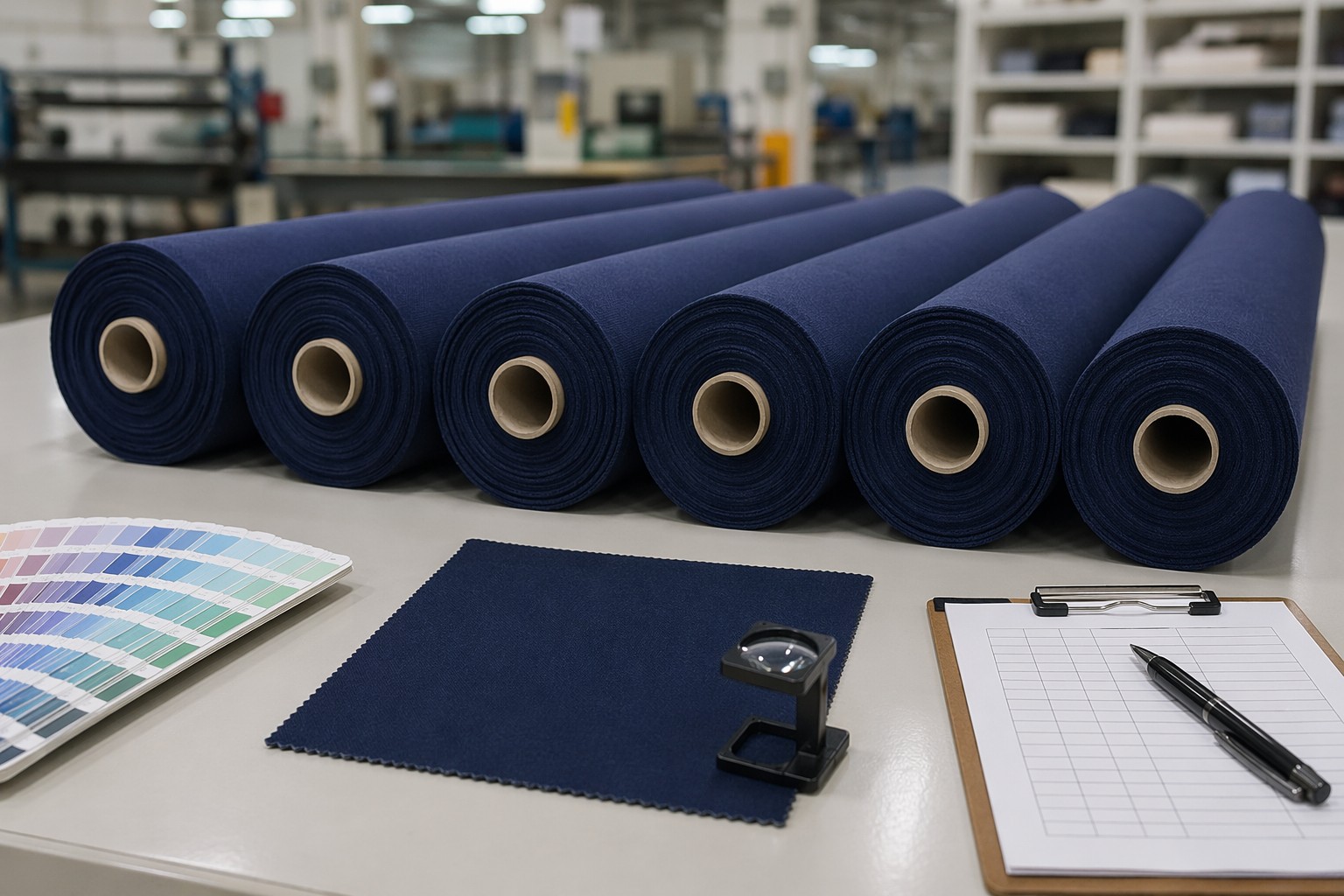
How to Measure and Control Fabric Roll Color Shading
Follow a fixed sequence so results stay comparable between lots.
- Approve a physical standard and keep one master swatch.
- Set the light source and viewing angle for every check.
- Measure the standard with a spectrophotometer and store the values.
- Measure a swatch from each roll of the production lot.
- Compare each reading with the standard and note the difference.
- Check the same swatches under a second light to catch metamerism.
- Sort and label rolls by shade group where a tiny shift is allowed.
- Record the result and release only rolls inside tolerance.
After that, keep the master swatch sealed and away from light. However, replace it if it fades, because a dull standard changes every future decision.
Purchasing Checklist: Color Shading Fields to Confirm
- Article code and colour name
- Approved physical standard and its storage
- Colour tolerance, expressed as a measurable limit
- Light source for the primary viewing condition
- Second light source for metamerism check
- Dye lot number and lot size
- Rolls per lot and rolls per shade group
- Shade group labelling on the roll and carton
- Accept and reject rule for shading
- Re-order rule to keep one dye lot per programme
Moreover, keep this list in the specification sheet and repeat it on every purchase order. It connects closely to the sign-off step in our guide to decorative fabric lab dip approval.
Comparing Shade Control Methods
| Method | Accuracy | Speed | Best for |
|---|---|---|---|
| Visual check under one light | Low to moderate | Fastest | Quick sorting on site |
| Spectrophotometer reading | High | Moderate | Matched panels and bulk lots |
| Two-light visual check | Moderate | Moderate | Catching metamerism |
| Shade group sorting | Moderate | Slower | Programmes that allow minor shifts |
The table above is a guide, not a rule. Therefore, choose the method that matches the risk of the order.
Common Color Shading Problems and How to Fix Them
Metamerism is the most confusing issue. Two rolls match under one light and differ under another. Consequently, always check shade under the light where the finished product will be seen.
Late discovery is the second problem. It usually means shade was checked only on the first roll. Meanwhile, a single reading per lot hides variation across the width. In addition, storage in direct light can fade rolls before they are cut.
Finally, check the decoration. Sequins and embroidery reflect light differently from the base cloth, so a shade that looks right on the ground can look wrong on the surface. Our note on sequin fabric wash care covers the handling side in detail.
FAQ: Fabric Roll Color Shading
How do I decide if shading is acceptable?
Compare each roll with the approved standard under the same light. If the difference sits inside the agreed tolerance, the roll passes. If it sits outside, reject or sort it.
Why do two rolls from the same code look different?
They may come from different dye lots, or from different positions in the same lot. Dye uptake and finishing conditions vary, so a small shift is normal.
Should I always order from one dye lot?
For matched panels, yes. Keeping one dye lot is the simplest way to avoid a shade break. Order a small buffer so a re-cut does not need a second lot.
Can I judge shading by eye alone?
The eye is useful, but it is not repeatable. In practice, use an instrument for the decision and the eye for confirmation under the final viewing light.
Conclusion: Control Fabric Roll Color Shading with a Standard
Fabric roll color shading is easy to ignore until a shade break appears on a finished panel. Therefore, approve a physical standard, set a tolerance, and check every roll under a fixed light. Then keep one dye lot per programme and label rolls by shade group. This routine turns colour from a risk into a controlled specification.
How to Write Color Tolerance into the Specification
Colour needs a number as much as a name. Moreover, it needs a light condition. Therefore, write the tolerance and the viewing light once and reuse them for the whole programme.
Start with the article code and the colour name. Then add the approved standard and its storage rule. After that, add the measurable tolerance and the light source. Finally, add the second light for the metamerism check.
Also, keep the standard clean. In practice, store it in a dark envelope away from windows. As a result, the reference stays true for the life of the programme.
Working with a Supplier on Shade Control
Shade control works best when the buyer plans for it. However, many problems begin with a late order or a tight buffer. Therefore, give the supplier a realistic quantity and a realistic window.
Next, ask how rolls are grouped. Meanwhile, ask whether a single dye lot can cover the whole order. This is the simplest way to avoid a shade break across matched panels.
Finally, agree on the labels. Ask for a shade group on every roll and carton. Then check the labels on arrival. Consequently, the cutting room can match panels without guesswork.
Why does colour look different on a screen?
Screens vary in brightness and colour. Therefore, never approve a colour from a digital image alone. In practice, approve a physical standard under the final viewing light.
Can shade drift within a single roll?
It can, especially at the roll ends and along the selvedge. Therefore, take readings from more than one point and check the ends before cutting matched panels.
To hold a tight shade band, suppliers should measure every roll on a spectrophotometer using a 10-degree observer, D65 illuminant and a defined aperture, then convert the readings to CIELAB values for a numeric comparison. Rolls that deviate by more than the agreed tolerance — commonly ΔE 1.0 for critical fashion programs and ΔE 1.5 for general decorative ranges — should be segregated for re-check or re-dye before shipment. Because metamerism can make two rolls match under daylight yet disagree under store lighting, a visual assessment in a controlled light booth should always accompany the instrument data before the shade band is signed off.
Source direct on Alibaba - request bulk pricing, specifications, and production details in one place.
View Yunfan Textile on AlibabaRequest Sequin Fabric Samples
Send us your colour standard, light condition and order quantity, and we will prepare a sample set for review. Our MOQ is 200 yards.
Yunfan Textile B2B Contact
Contact: Morris
Email: morris@yunfantextile.com
WhatsApp: +86 156 3752 5803
WhatsApp: +86 175 1619 6727