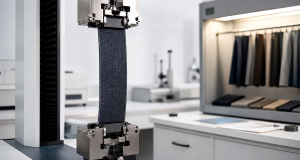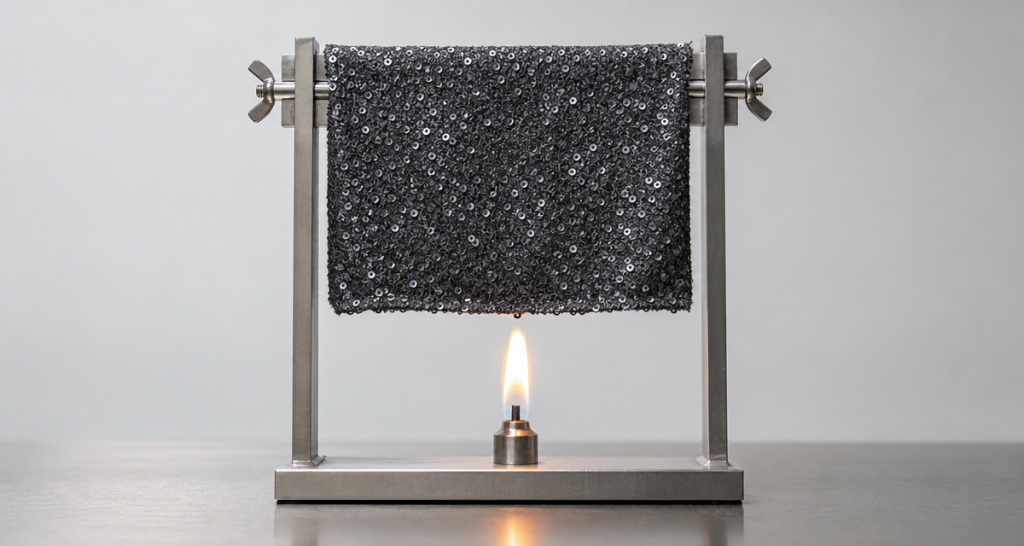
Sequin fabric flame retardancy is the measured resistance of a finished sequin fabric to ignition, flame spread and afterglow. For B2B buyers, the practical answer is simple: treat flame retardancy as a test result for the exact construction you will order, not as a property of the sequins alone. Confirm the base cloth, thread, adhesive and trim against the target standard before bulk. A test report for a swatch that differs from production proves nothing.
Key Takeaways
- Flame retardancy applies to the finished fabric build, not to the sequin film by itself.
- Test the same base cloth, sequin type, thread and trim that production will use.
- Different markets accept different standards, so confirm the target standard first.
- Surface decoration, weight and back coating all change how a fabric burns.
- Ask for the report number and the test date on every bulk order.
- Record the result in the approved specification so a repeat order stays compliant.
What Is Sequin Fabric Flame Retardancy?
Sequin fabric flame retardancy is the result of a laboratory test that measures how a decorated fabric behaves near a controlled flame. Moreover, it is a performance description of the whole material, not of a single component. The test looks at ignition time, flame spread, and how long the fabric glows after the flame is removed.
A sequin fabric is a layered structure. It combines a base mesh or woven ground, a dense field of sequins, and the thread that fixes each sequin in place. Therefore, each layer can change the result. For example, a heavy polyester mesh will behave differently from a light nylon tulle. Similarly, a metallic coating can alter how the surface reacts to heat.
This is why a buyer should never accept a general certificate. The document must describe the construction, the weight and the colour, because those details drive the outcome. In practice, the report should match the specification line by line.
Why Sequin Fabric Flame Retardancy Matters for B2B Buyers
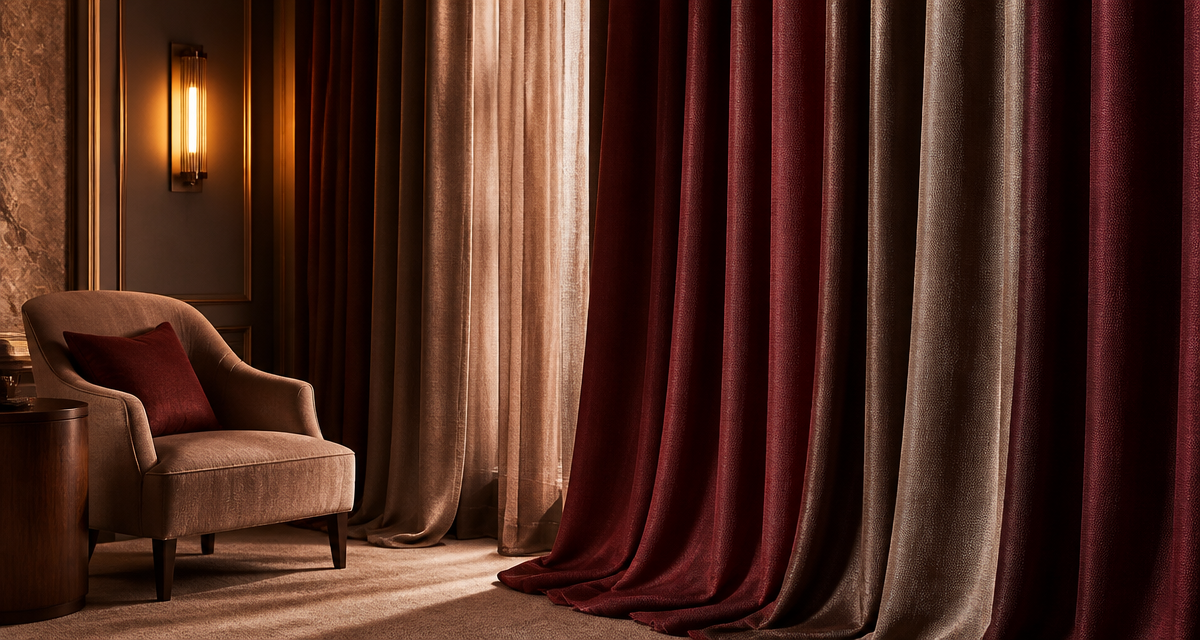
Flame performance decides access to certain markets. Contract interiors, hospitality venues and some public spaces require documented behaviour before a fabric is installed. Consequently, a fabric without the right report can be rejected at the border or on site.
The risk is not only regulatory. A failed test can stop a whole order after it has been produced. First, the mill must re-test. Second, the batch may need a different finish. Third, the delivery date moves. As a result, the total cost rises far beyond the price of the fabric.
There is also a commercial layer. Buyers who can show a valid report win tender work more easily. Meanwhile, buyers who cannot answer basic questions lose credibility in the first meeting. Therefore, flame documentation is both a barrier and an advantage.
How Flame Retardancy Standards Are Tested on Sequin Fabric
Testing follows a fixed sequence. It is repeatable, and it takes a single sample per test direction.
- Confirm the target standard and the market that requires it.
- Cut the sample from the actual production construction, including base cloth and sequins.
- Condition the sample in the standard atmosphere before testing.
- Expose the sample to the controlled flame for the specified time.
- Record ignition time, flame spread and afterglow duration.
- Repeat the test on the required number of specimens in each direction.
- Record the pass or fail result against the limit in the standard.
- Attach the report number, test date and sample description to the order file.
After that, compare the result with the limit that applies to the project. If the sample fails, do not re-test the same cloth hoping for a better figure. Instead, change the construction or the finish.
Purchasing Checklist: Flame Retardancy Fields to Confirm
- Target standard and the country or project that requires it
- Base cloth composition and weight
- Sequin type, size and surface finish
- Thread type and stitch density
- Adhesive or back coating, if any
- Colour and dye lot used for the test sample
- Number of specimens tested per direction
- Test report number and test date
- Whether the result applies to the exact bulk construction
- Re-test trigger for repeat or seasonal orders
Moreover, keep this list inside the specification sheet and repeat it on every purchase order. It also pairs well with the chemical checks covered in our guide to sequin fabric chemical resistance.
Comparing Flame Retardancy Approaches for Sequin Fabric
| Approach | How it works | Trade-off | Best for |
|---|---|---|---|
| Inherent base cloth | The ground fibre itself resists flame | Limited colour and hand options | Long-life contract fabric |
| Back coating | A finish applied behind the fabric | Can stiffen the drape | Drapery and upholstery |
| Trim selection | Choose low-risk sequins and thread | May reduce the sparkle range | Fashion and stagewear |
| Construction control | Tune weight and density of decoration | Slower pattern development | Orders with tight limits |
The table above is a starting point, not a rule. However, it helps a buyer ask the right question in the first enquiry.
Common Flame Retardancy Problems and How to Fix Them
Most failures trace back to a mismatch between sample and bulk. Therefore, start by checking that the tested construction equals the ordered construction. A heavier weight often burns differently from a light one.
Next, look at the finish. A coating that was applied on the sample may be thinner in bulk. Meanwhile, a change of thread supplier can shift the result. In addition, metallic sequins can raise surface heat, so confirm the exact sequin grade.
Finally, review storage and handling. Damp rolls and dusty surfaces behave differently in test. Consequently, keep the bulk fabric dry and clean, and re-test after any major change. Our note on sequin fabric wash care covers the handling side in detail.
FAQ: Sequin Fabric Flame Retardancy
Does flame retardancy apply to the sequins or the whole fabric?
It applies to the whole fabric. The base cloth, sequins, thread and any coating together decide the result, so a test on one layer alone cannot represent the finished material.
Can a supplier send a generic certificate instead of a test report?
No. A generic certificate does not describe your construction. Therefore, ask for a report that names the base cloth, weight, colour and sequin type you are ordering.
How often should flame retardancy be re-tested?
Re-test whenever the construction, finish, colour or supplier of a component changes. For steady repeat orders, confirm the report is still valid for the current build before shipping.
Does a heavier sequin fabric always perform better?
Not always. Weight changes how a fabric burns, but so do fibre type and finish. In practice, test the actual build rather than assuming that heavier is safer.
Conclusion: Treat Sequin Fabric Flame Retardancy as a Specification
Sequin fabric flame retardancy is not a marketing line. It is a documented property of one exact construction. Therefore, define the target standard, test the real build, and keep the report with the order file. Then repeat the check whenever anything changes. This single habit removes the most common cause of failed deliveries.
How to Write Sequin Fabric Flame Retardancy into the Specification
A specification only works when it is specific. Moreover, a flame clause should name the standard, the construction and the report. Therefore, write the clause once and reuse it on every order for that programme.
Start with the standard. Then add the base cloth, the weight and the sequin type. After that, add the required report details: the report number, the test date and the sample description. Finally, add a line that says the result must apply to the exact bulk construction.
Also, decide who holds the documents. In practice, attach the report to the purchase order and keep a copy with the shipping file. As a result, the compliance question is answered before it is asked.
Working with a Supplier on Flame Retardancy
Good suppliers welcome a clear flame clause. However, the conversation is easier when the buyer brings a defined standard and a defined construction. Therefore, send the base cloth and the sequin type with the enquiry, not only a colour name.
Next, ask how the supplier will test. Some constructions are tested as they are, while others need a finish first. Meanwhile, ask which laboratory issues the report and what sample size is needed. This avoids surprises later.
Finally, agree on the record. Ask for the report before shipping, and store it with the order file. Consequently, repeat orders stay consistent and quick to approve.
Is a flame-retardant finish permanent?
It depends on the finish and the care routine. Therefore, ask how many washes the finish is expected to survive and whether the test was done after washing. Do not assume a finish lasts the life of the garment.
Can I mix batches that passed on different dates?
Only when each batch matches the same construction and the same standard. In practice, keep one report per construction and re-test when the construction changes in any way.
Source direct on Alibaba - request bulk pricing, specifications, and production details in one place.
View Yunfan Textile on AlibabaRequest Sequin Fabric Samples
Send us your target standard, base cloth and order quantity, and we will prepare a sample set for review. Our MOQ is 200 yards.
Yunfan Textile B2B Contact
Contact: Morris
Email: morris@yunfantextile.com
WhatsApp: +86 156 3752 5803
WhatsApp: +86 175 1619 6727