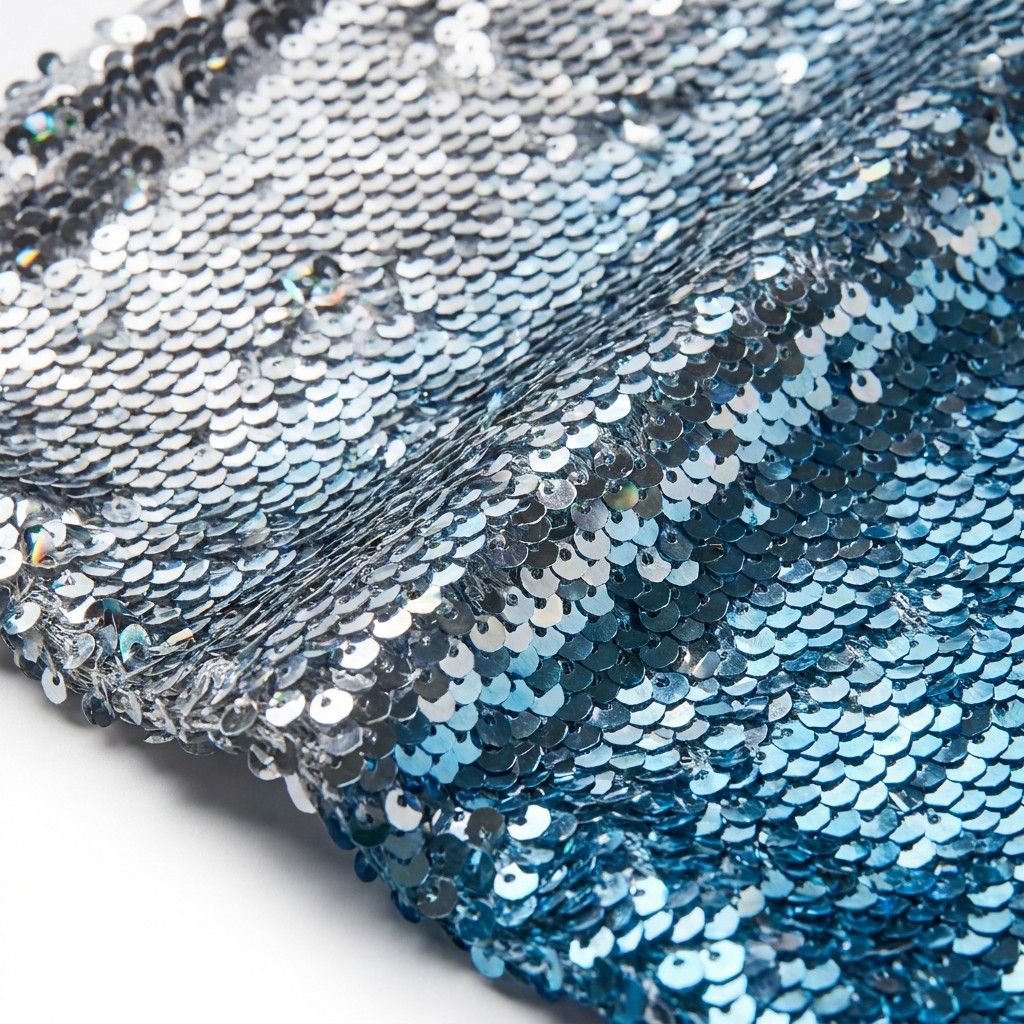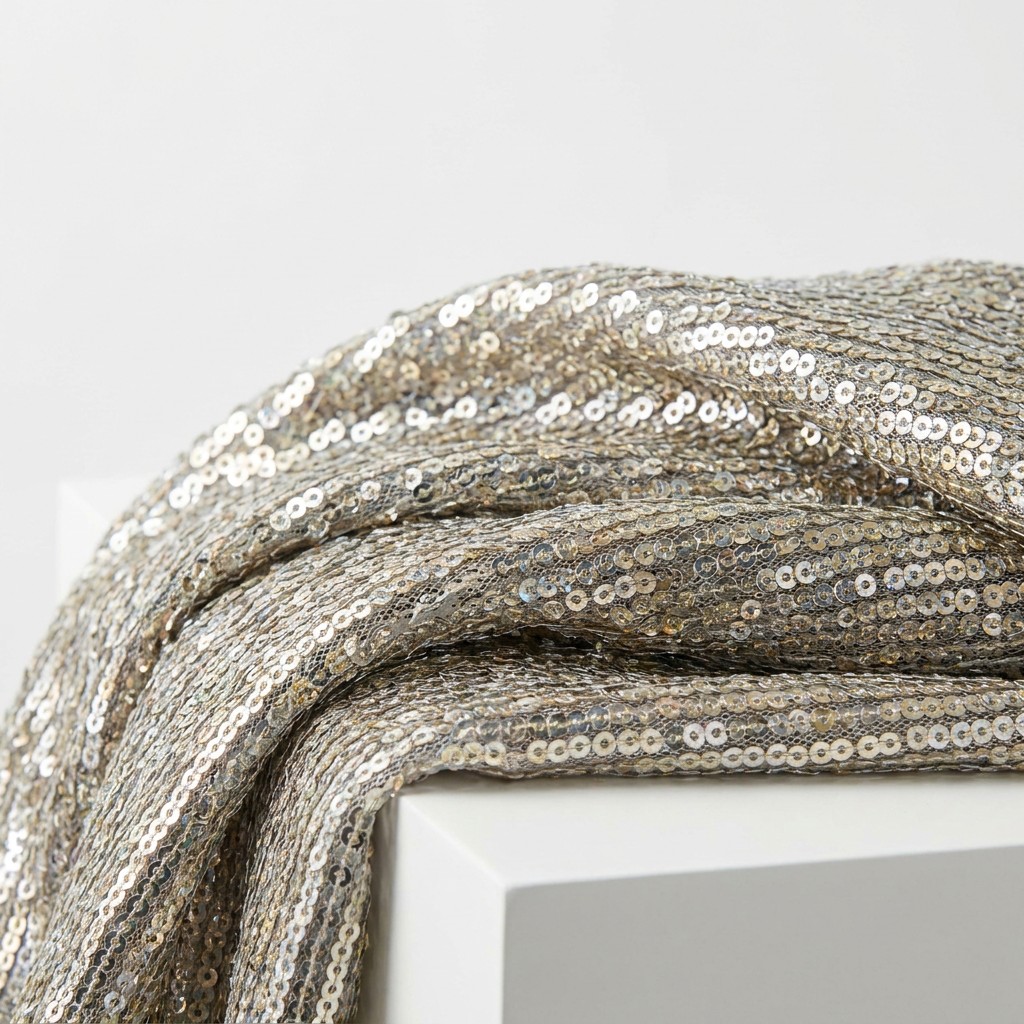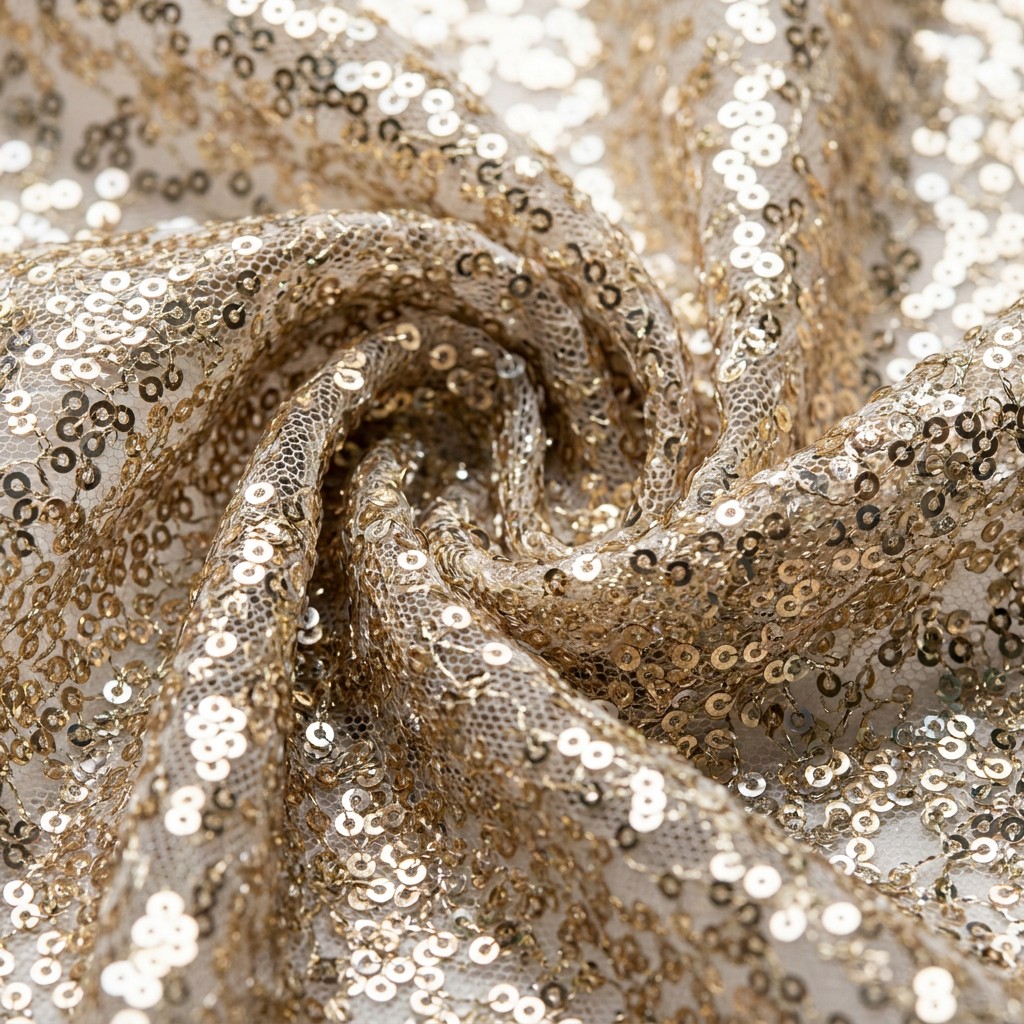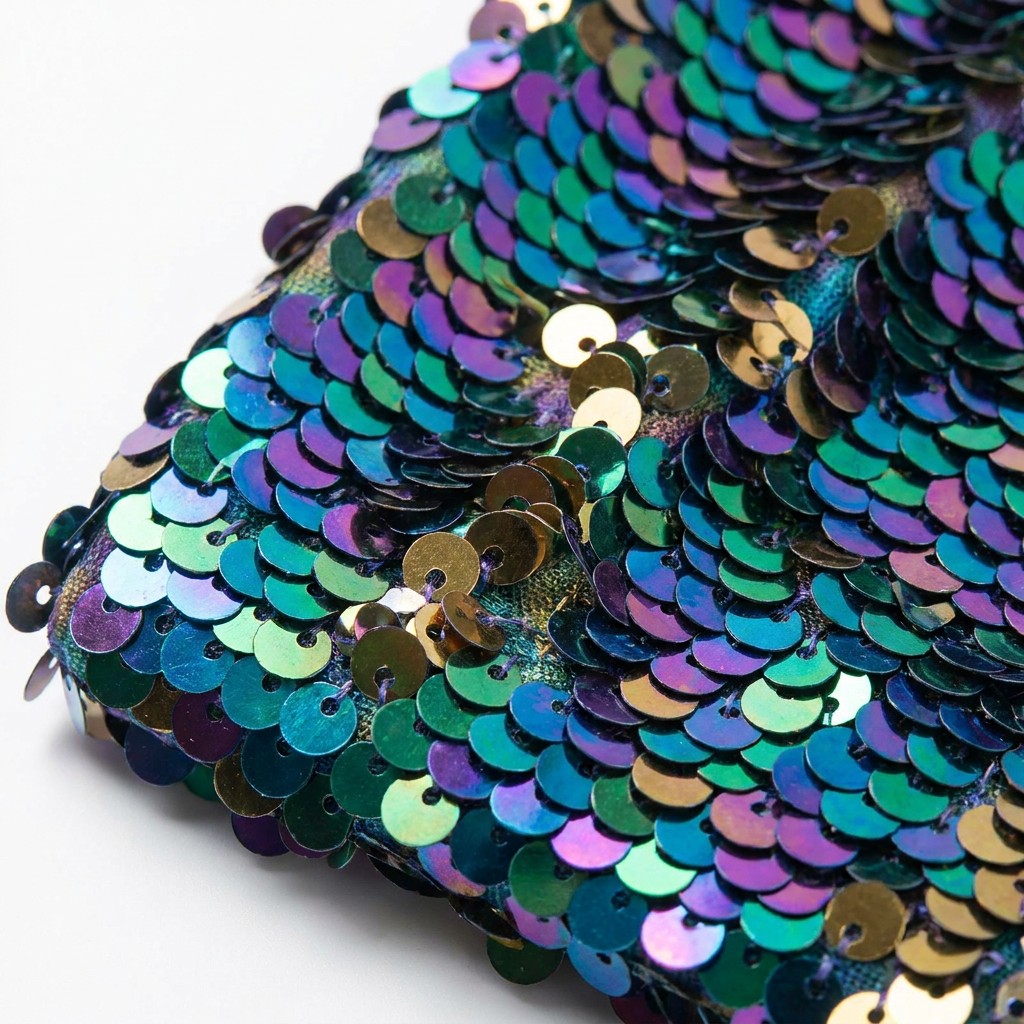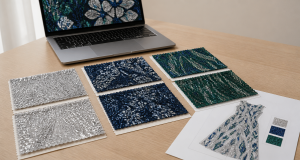
When you source embroidered fabric for a fashion collection, build the specification before you compare prices. Decide the final end use, the base fabric, the embroidery pattern and stitch type, the embroidery density, the required hand feel and drape, the usable width, the colour reference, the decorative weight the design can carry, and the samples and quality standards that will define the approved bulk standard. These nine answers keep supplier conversations short, comparable and easier to control.
This guide walks B2B buyers through the sourcing decisions for fashion, evening and stage collections, what to check on a sample, and what to confirm in writing before bulk.
Match the Fabric to the End Use
The same motif serves a fitted jacket, an evening gown and a stage costume very differently. Fashion pieces need a base that sews and presses cleanly, with embroidery flat enough for seams and edge stitching. Evening wear drapes over the body, so a softer base with moderate coverage keeps it fluid, while denser decoration at necklines or hems adds structure. Stage costumes face lighting and repeated handling, so durability, edge security and wrinkle behaviour matter as much as the look.
Describe the final product, market, cutting and sewing method, and whether it will be lined. If the collection compares shimmer constructions, our review of sequin versus beaded fabric for wholesale fashion collections clarifies which decorative family fits the brief.
Select the Base Fabric First
The base carries the embroidery and decides how the fabric moves, stretches, sews and wears. Transparent tulle and mesh create airy, layered looks for overlays and stage pieces; knit bases add stretch for fitted garments; woven bases give stability for tailored pieces. The same motif on two bases can look identical in a photo yet behave differently on a dress form.
State the base composition, target weight, transparency, stretch and hand feel, and confirm the usable width, which changes cutting yield and roll planning. If unsure, ask the supplier to embroider the same motif on two candidate bases for comparison.
Define Pattern Repeat, Registration and Placement
All-over patterns need a measurable repeat so your pattern cutter can estimate yield and match panels. Borders and large motifs need registration, the fixed point where the design starts across the width and along the roll; without it, centre-fronts, seams and hems drift. Ask for repeat size, usable design area, pattern direction and placement control.
For motifs that must match at seams, request a wider sample or a marked repeat and test alignment on your own pattern before bulk. Seam matching is one of the most common embroidered fabric problems, and it is solved at sampling, never after the yardage is cut.
Specify Thread, Stitch, Density and Decorative Weight
The thread changes look and behaviour: polyester and rayon give sheen, metallic adds sparkle but flexes less, cotton gives a matte finish. Stitch style matters too: satin reads as solid linework, tatami fills flat fields, chenille or 3D constructions raise the surface.
Density, how tightly stitches are packed, controls weight, hand feel, cost and flexibility: dense fills feel firm, open stitching stays light. Because embroidery adds weight over the base, confirm the finished weight per square metre including the decoration. On sheer bases, confirm whether the underside needs backing or lining to control transparency.
Inspect Edges, Snagging and Loose Threads
Raised embroidery snags on zippers, trims and surrounding garments in layered styling. Check motif edges: they should be secure, with no thread ends pulling loose and no gaps where the fill meets the outline. Rub the sample on a rough surface and fold it sharply to see whether threads lift or break. Confirm how the supplier finishes edges and protects rolls in transit.
Dense metallic threads break more easily under the needle, so ask the supplier's acceptable loose-thread level and how end-of-line inspection checks for them.
Confirm Colourfastness and Care
Embroidered fabric holds two colour stories, the base and the threads. Confirm the fastness tests relevant to your product, whether washing, dry cleaning, light, rubbing or perspiration, and ask which test methods the supplier follows for your construction. Do not assume results from a general catalogue: thread colours, metallics and dense areas behave differently.
Ask how colour is controlled across dye lots and thread batches and agree a shade tolerance before bulk. If the collection is washable or dry-clean only, say so in the specification.
Plan for Cutting and Sewing
Thick embroidery changes how fabric feeds under a needle, how seams press and how lining attaches. Dense motifs may need to be kept out of seam lines, and garments may need lining where embroidery touches skin. Ask for needle and backing guidance and test the sample on your production line before freezing the spec. Cutting yield depends on repeat and width, so share the actual pattern layout.
Sample Early: Digital References Cannot Replace Fabric
Digital swatches, photos and 3D renders are excellent for shortlisting motifs, colours and bases. They cannot show hand feel, drape, weight, transparency, stitch texture, thread sheen or behaviour on a machine, and screen colour is not thread colour.
Plan two approvals: a development strike-off confirms the look early, and a pre-production or bulk approval sample confirms the actual production construction before cutting starts. Compare samples under the lighting you will use and keep the approved swatch linked to the digital reference. For the points to verify before a large order, our guide to checking sequin fabric quality before bulk ordering lists what to inspect.
Confirm Everything in Writing Before Bulk
A sample in the hand is the start of the standard, not the whole standard. Confirm in writing: base composition, weight including decoration, usable width, roll length, repeat, threads, density, colours, shade tolerance, edge finishing, packing and inspection points. Keep the approved sample, specification and purchase order under one style reference.
Send the same detail in your first enquiry so the supplier can quote and sample in one round; our guide to preparing an RFQ for custom sequin fabric shows how to structure those fields.
How to Source Embroidered Fabric, Step by Step
- Write the product brief: end product, market, cutting and sewing method, care route.
- Fix the base fabric family, hand feel, transparency and width.
- Define motif: pattern, repeat, registration, thread style and density.
- Set colour references and agree shade tolerance.
- Request development strike-offs on shortlisted bases.
- Test cutting, sewing, edge and snagging behaviour on the sample.
- Approve a pre-production sample and lock the written spec.
- Agree inspection, packing and roll protection before dispatch.
Embroidered Fabric Sourcing Checklist
- End use and product brief written down.
- Base, composition, transparency, stretch and width confirmed.
- Hand feel and drape matched on a hanging sample.
- Pattern repeat and registration agreed.
- Thread types, stitch style, density and finished weight specified.
- Colour references and shade tolerance agreed.
- Colourfastness and care route confirmed.
- Edges, snagging and loose threads checked.
- Sewing and lining tested on your line.
- Strike-off and pre-production sample approved.
- Spec, approved sample and purchase order kept together.
Frequently Asked Questions
What should a buyer decide first when sourcing embroidered fabric?
The end use, because it determines base, density, weight and finish. Define the product before comparing constructions or prices.
How do I check embroidery density on a sample?
Check stitch spacing under a light, compare hand feel and finished weight, and confirm density in writing.
Can I judge embroidered fabric from photos or digital swatches?
Only for shortlisting. Digital references cannot show hand feel, drape, transparency or sewing behaviour, so approve a physical strike-off before bulk.
Why do embroidered motifs not match at the seams?
Usually because repeat or registration was not defined. Confirm the repeat, usable design area and starting point before sampling matching garments.
What causes loose threads or snagging on embroidered fabric?
Weak edge finishing, dense or raised areas, and unprotected packing. Check edges, rub and fold the sample, and ask how the supplier protects the surface.
What should be confirmed in writing before a bulk order?
Base composition, weight, width, roll length, repeat and registration, threads, density, colours, shade tolerance, finishing, packing and inspection points, with the approved sample.
Source Sequin Fabrics Directly for B2B Collections
Explore factory-direct sequin, embroidered and decorative textile options for fashion, event and custom collections.
Request Sequin Fabric Samples
Ready to develop embroidered fabric for a wholesale collection? Yunfan Textile supports global B2B buyers with sequin, embroidered and decorative fabric development. Submit your application, base fabric, embroidery type, colour, estimated quantity, finishing and testing requirements through the official consultation page, and the team will confirm the next steps with you.
Submit your requirements here: Yunfan Textile Consultation Page
Yunfan Textile B2B Contact
Website: https://www.yunfantextile.com/
B2B Contact: Wendy Jessie
WhatsApp/WeChat: +86 156 3752 5803
WhatsApp/WeChat: +86 175 1619 6727
Email: morris@yunfantextile.com
Email: morris@yunfantextile.com
Summary: Sourcing embroidered fabric starts with the end use and ends with an approved, written standard. Define the application, base, pattern, thread and density, weight, width, colour and care route, check physical samples for edges, snagging, loose threads, colourfastness and sewing behaviour, and confirm the specification in writing before bulk.
SEO keywords: embroidered fabric supplier, embroidered fabric wholesale, custom embroidery fabric, fashion collection fabric sourcing, embroidery fabric quality.