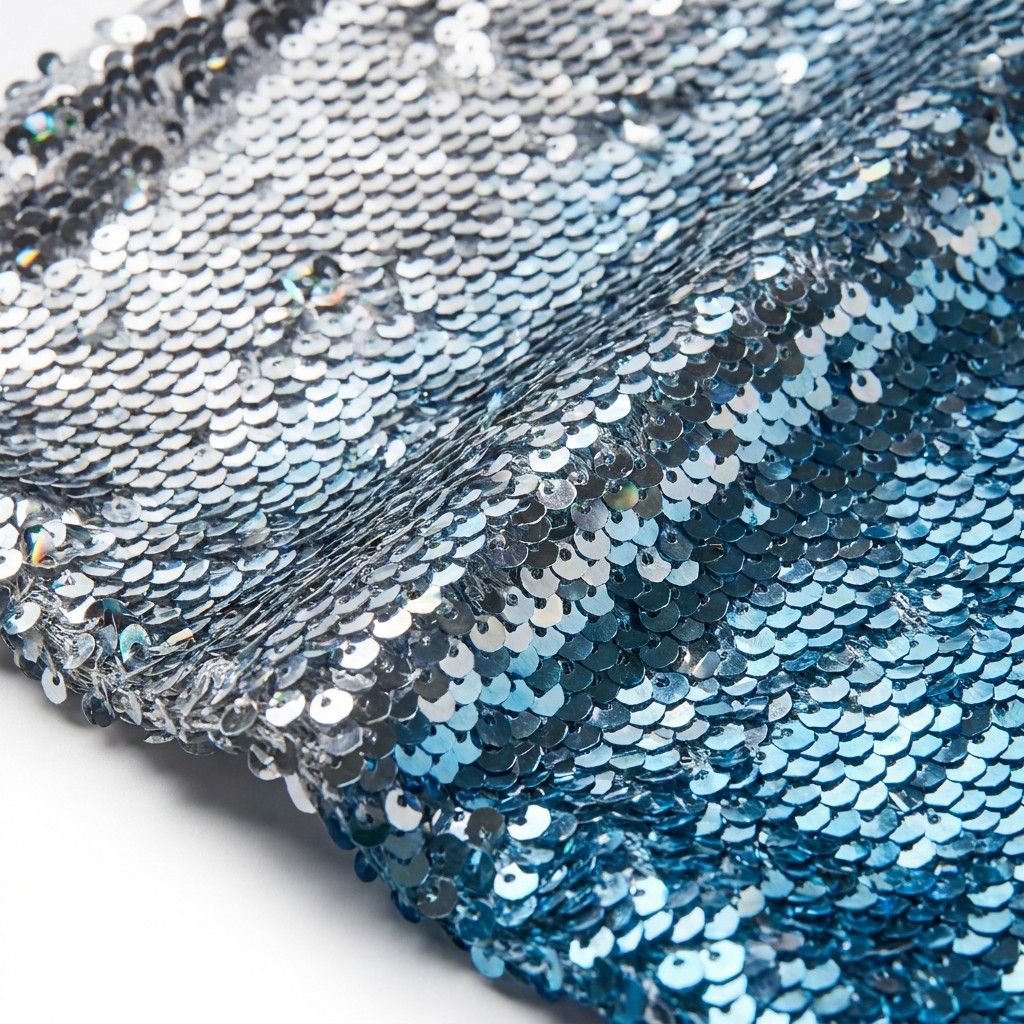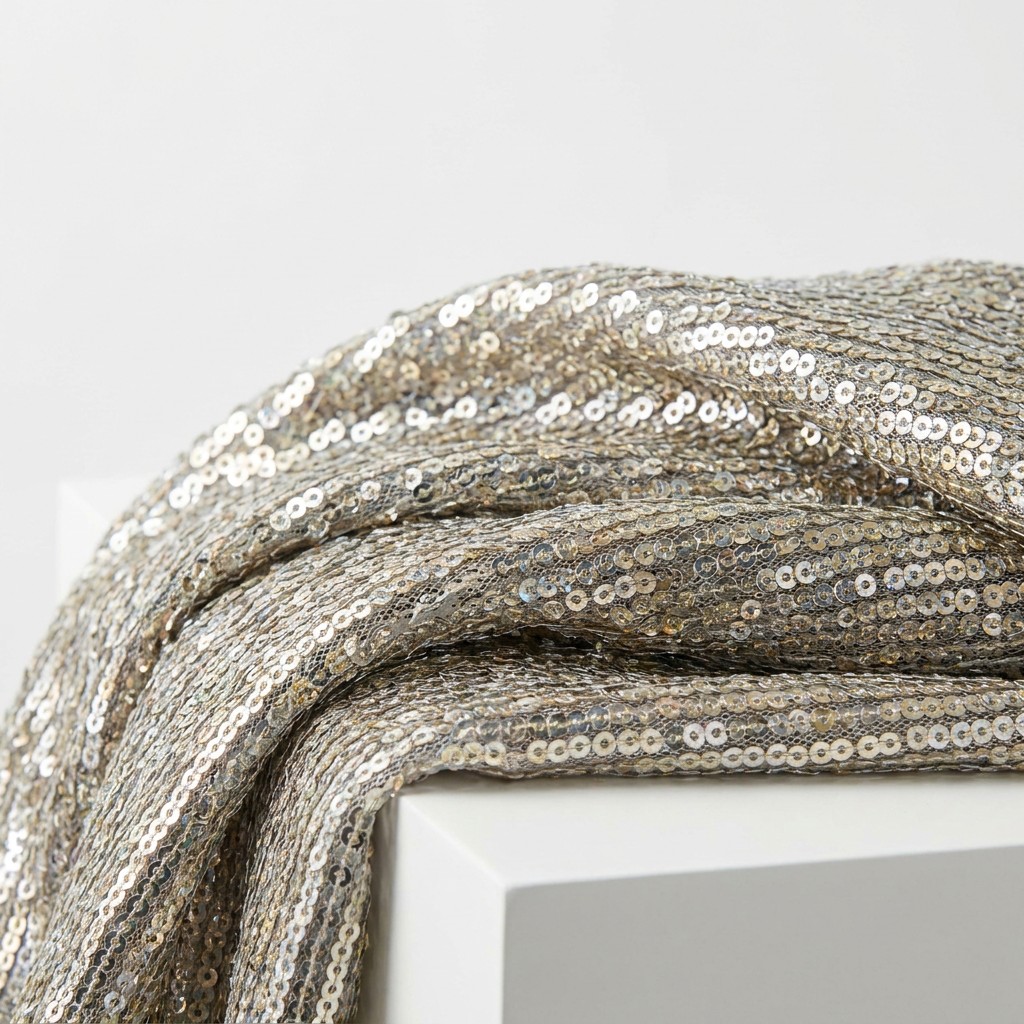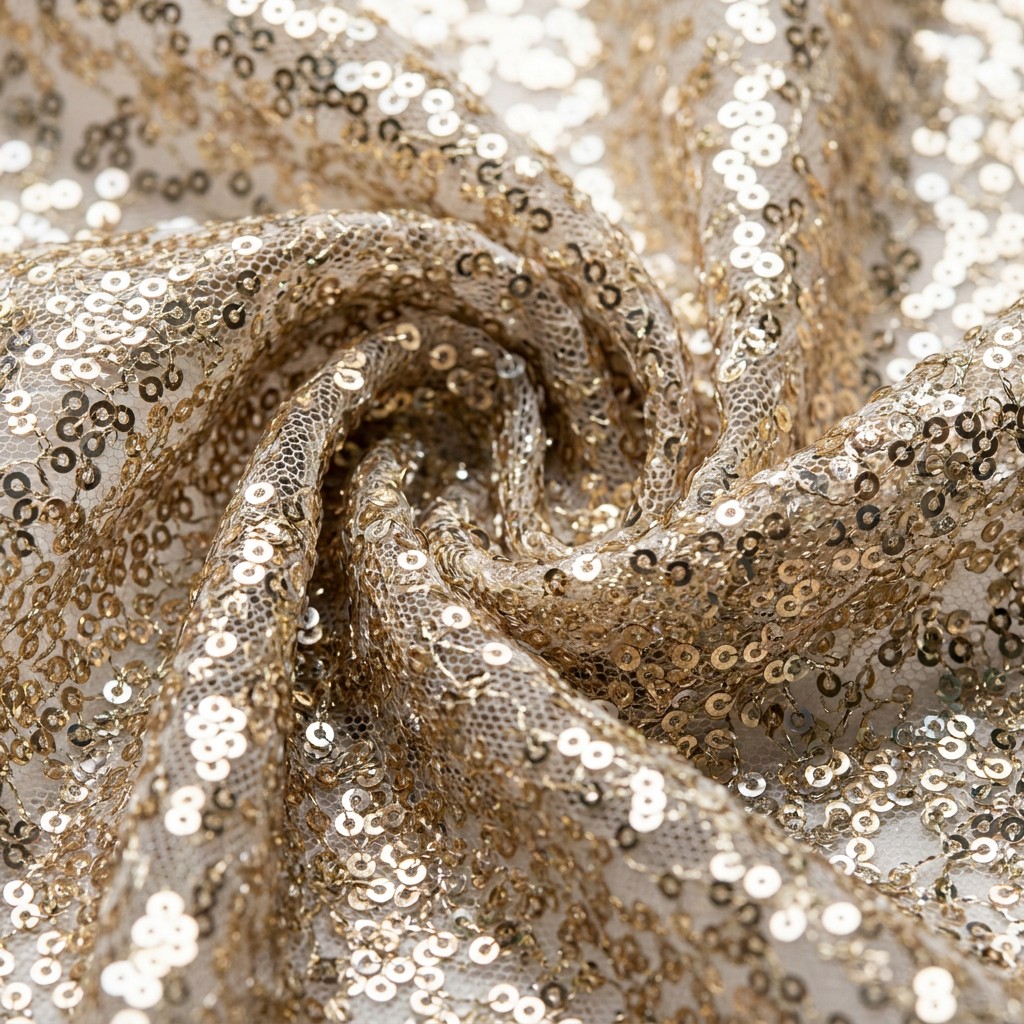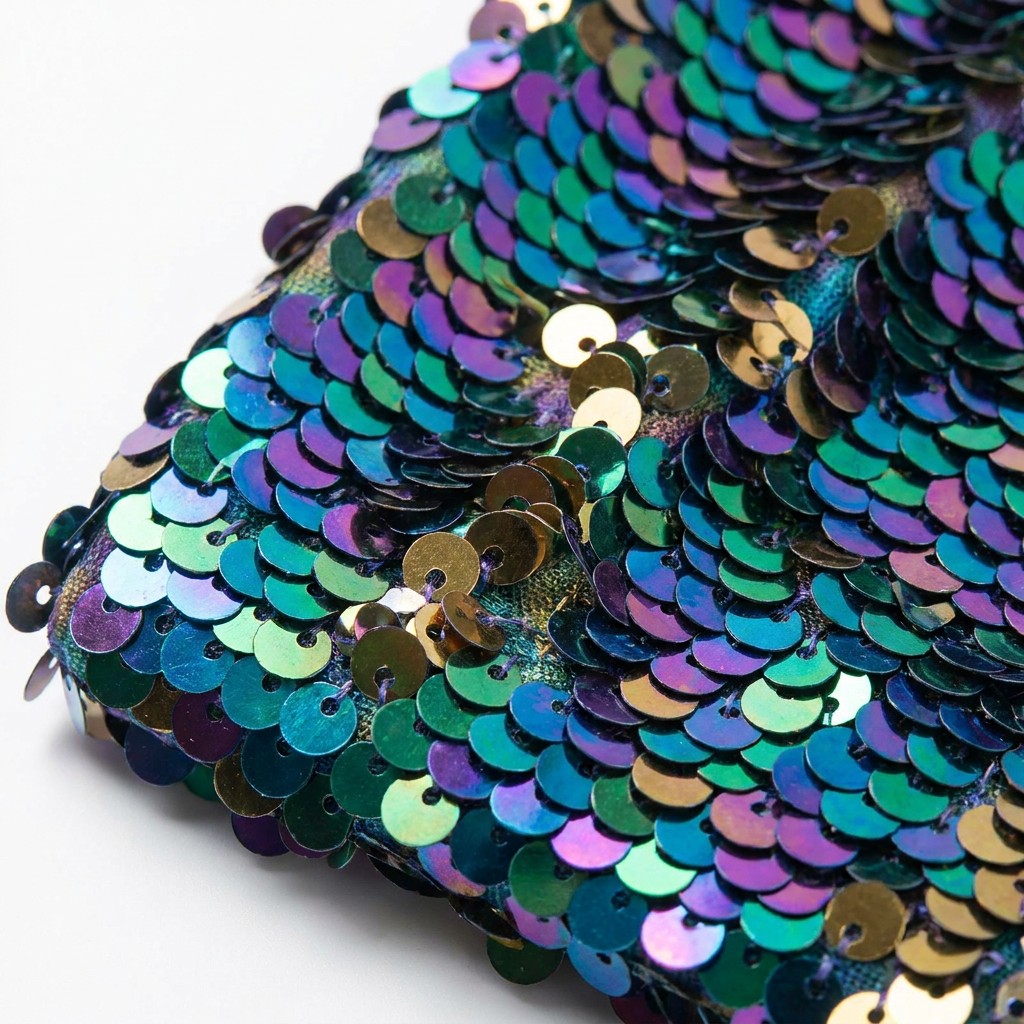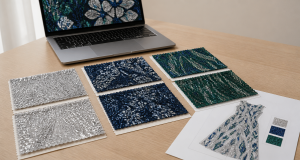
Digital sampling is the fast, low-risk first step in decorative fabric selection: it lets B2B buyers screen colours, patterns and sequin or embroidery directions before any physical material is made. It cannot replace physical approval. Screens flatten reflective surfaces, hide transparency and reveal nothing of drape, weight or hand feel, so for sequin, embroidered, beaded and printed fabrics the reliable route is the same — shortlist digitally, then approve real samples before any production commitment. This guide explains what digital references can and cannot confirm and the approval workflow that protects a bulk order.
What Digital Sampling Can Do
Digital sampling covers every reference that never leaves a screen: digitised colour references, rendered pattern previews, layout artwork, photographs of earlier developments and supplier digital swatch libraries. Used for screening, these references compress the early stages of a project and make each physical round more useful.
- Compare colour and finish directions — plain, metallic, iridescent, matte or pearlescent — side by side before any lab dip.
- Share patterns, motif scales and sequin or embroidery layouts instantly across time zones.
- Shortlist constructions so physical sampling starts from a clear written brief.
- Keep a shared visual record linking every later physical sample to the original direction.
What Digital Sampling Cannot Do
Every digital tool shares one limit: it describes light, not material. Screens and photographs cannot close these decisions:
- Confirm true colour — reflective and iridescent surfaces change with light and angle, and every screen reproduces colour differently.
- Show transparency — whether a tulle, mesh or organza base is sheer, semi-sheer or opaque is decided by the cloth.
- Convey lustre, sparkle intensity or depth, because reflected light cannot be reproduced on a flat display.
- Communicate texture, relief, weight, stiffness, drape, stretch or recovery — the properties that decide how a fabric moves.
- Verify attachment and durability — loose sequins, stitch density, beading security and snagging behaviour are physical.
- Predict production behaviour — cutting, sewing, needle handling, seam matching or print repeat registration.
Where Digital References and Physical Fabrics Diverge
Each construction has its own gap between screen and cloth — here are the four where it matters most.
Sequin fabrics
Colour and lustre come first: the same sequin can look pale in one photo and saturated in another, and no screen shows how light moves across a reflective disc. On cloth you also check base transparency, the weight and stiffness created by sequin size and density, sequin direction and spacing, and whether the fabric drapes or stands away. Sequin size drives several of these at once — compare our guide to 3mm, 5mm and 18mm sequin sizes before fixing the specification.
Embroidered fabrics
Images flatten embroidery. Thread sheen, stitch relief and motif depth disappear into a two-dimensional picture, and a dense design can read as a light one. In hand you judge stitch texture, how embroidery stiffens the base, transparency of unstitched areas and motif scale against your pattern pieces.
Beaded fabrics
Beads add weight, and weight changes drape: an elegant beaded panel in a photo can pull or sag when the bead load is high. On cloth you assess bead size and finish, security of stringing or attachment, movement and sound, transparency between beads, and the surface feel against skin or lining.
Printed fabrics
For printed bases, digital artwork shows pattern and colour direction, but only a print strike-off confirms colour registration, scale, placement and repeat against the real ground shade, along with base transparency and printed-surface hand feel.
The Five-Stage Approval Workflow
Decorative fabrics are usually developed in stages, and every stage should be confirmed in writing with the supplier — cost, timing and sample policy included. A practical route runs from digital shortlist to pre-bulk confirmation:
1. Digital shortlist
Collect colour, pattern and layout directions, compare constructions side by side, and agree which direction to develop. Then send a complete request covering application, base fabric, decorative type, colour, estimated quantity, finishing and testing. Our custom sequin fabric RFQ guide shows which fields make the brief quotable and sampleable.
2. Physical sample (development swatch or strike-off)
The first real cloth confirms the look and the hand. Check colour under your production lighting, then transparency, weight, drape, surface texture and how the decoration is attached to the base.
3. Production sample
Once the direction is approved, request a pre-production or production sample made with the actual bulk construction: same base, same decorative component, same finishing. This sample reflects what will be cut, not what was developed earlier.
4. Approval sample (sealed standard)
Approve the production sample and seal it as the reference. Keep the approved sample with the written specification and purchase order under one style reference, and file the digital reference alongside so the original intent stays visible.
5. Pre-bulk confirmation
Before production starts, confirm in writing the final specification, shade tolerance between rolls and batches, inspection points, packing and labelling, and how non-conforming rolls are handled. For multi-colour orders, keep an approval table — colour, construction, finish, sample date and status — so quality teams can re-check every colour on repeat orders.
Digital Reference vs Physical Sample: What Each Stage Confirms
The table shows where a digital reference is enough and where only cloth will do. Treat it as directional and ask your supplier what they can provide at each stage.
| Attribute | Digital reference | Physical sample confirms |
|---|---|---|
| Colour and shade | Direction only; screen-dependent | True shade under an agreed light source |
| Transparency | Not visible | Sheer, semi-sheer or opaque; layering effect |
| Lustre and sparkle | Approximate at best | Real reflection, movement and light angle |
| Texture and relief | Flat image | Thread, stitch, sequin and bead depth |
| Weight, drape and hand feel | Not measurable | Confirmed by touch and simple handling tests |
| Attachment and durability | Not visible | Loose sequins, snagging, stitch and bead security |
| Production behaviour | Not testable | Cutting, sewing, needle behaviour and seam matching |
Pre-Order Buying Checklist
Before you commit a decorative fabric to bulk, close these points on physical material and in writing:
- Colour approved on a physical swatch under production lighting.
- Base fabric confirmed: composition, GSM, usable width and roll length.
- Decorative detail confirmed: sequin size, shape, arrangement and finish; embroidery stitch type and density; bead size and attachment; print scale, placement and repeat.
- Transparency, drape, weight and hand feel matched to the end use on a real sample.
- Attachment and durability checked: loose sequins, snagging, stitch and beading security.
- One sealed approval sample kept as the bulk standard, next to the digital reference.
- Production sample agreed before bulk cutting starts.
- Shade tolerance, inspection points and non-conforming roll handling agreed in writing.
- Price, sample policy, MOQ and lead time confirmed in writing for every stage.
For the detailed checks behind these points, see our guide to verifying sequin fabric quality before bulk ordering.
FAQ: Digital Sampling and Physical Approval
Can I approve fabric colour from a digital swatch?
No. A digital swatch is a direction, not a colour standard. Approve colour on a physical swatch or lab dip under an agreed light source, and archive the digital reference with the approved sample.
Why does the same sequin fabric look different on screen and in hand?
Sequin surfaces reflect light, so colour and lustre change with light direction, viewing angle and screen calibration. Physical colour comes from dye, film and finish, which no RGB screen reproduces exactly.
What is the difference between a development sample and a production sample?
A development sample confirms look, hand feel and general construction. A production, or pre-production, sample is made with the actual bulk materials and finishing, so it is the reference for what will be cut.
Does digital sampling reduce the number of physical sample rounds?
Yes, when used for screening. Comparing options digitally means physical rounds start from a tighter brief, but final approval still has to be physical for reflective, textured and layered fabrics.
Which decorative fabrics are hardest to judge from images?
Reflective and raised surfaces — sequin, beaded and heavy embroidery — plus constructions where a sheer base shows through. These change most with light and angle, so approve them on physical samples.
What should I include when requesting a physical sample?
Your application, base fabric, sequin or embroidery type, colour reference, estimated quantity, finishing and testing requirements. The more complete the brief, the more relevant the first sample.
Source Sequin Fabrics Directly for B2B Collections
Explore factory-direct sequin, embroidered and decorative textile options for fashion, event and custom collections.
Request Sequin Fabric Samples
Ready to move a decorative fabric collection from digital shortlist to physical approval? Submit your application, base fabric, sequin or embroidery type, colour, estimated quantity, finishing and testing requirements through the official consultation page, and the team will confirm the next steps with you.
Submit your requirements here: Yunfan Textile Consultation Page
Yunfan Textile B2B Contact
Website: https://www.yunfantextile.com/
B2B Contact: Wendy Jessie
WhatsApp/WeChat: +86 156 3752 5803
WhatsApp/WeChat: +86 175 1619 6727
Email: morris@yunfantextile.com
Email: morris@yunfantextile.com
Summary: Digital sampling is the fast, low-cost way to screen colours, patterns and decorative directions, but it cannot replace physical approval for sequin, embroidered, beaded and printed fabrics. Shortlist digitally, then move through physical, production and sealed approval samples, and confirm every specification, tolerance and inspection point in writing before bulk. Keep the approved sample with the written specification and purchase order, and archive the digital reference beside it.
SEO keywords: digital sampling decorative fabric, digital sampling vs physical samples, decorative fabric sample approval, sequin fabric sampling, B2B decorative fabric sourcing