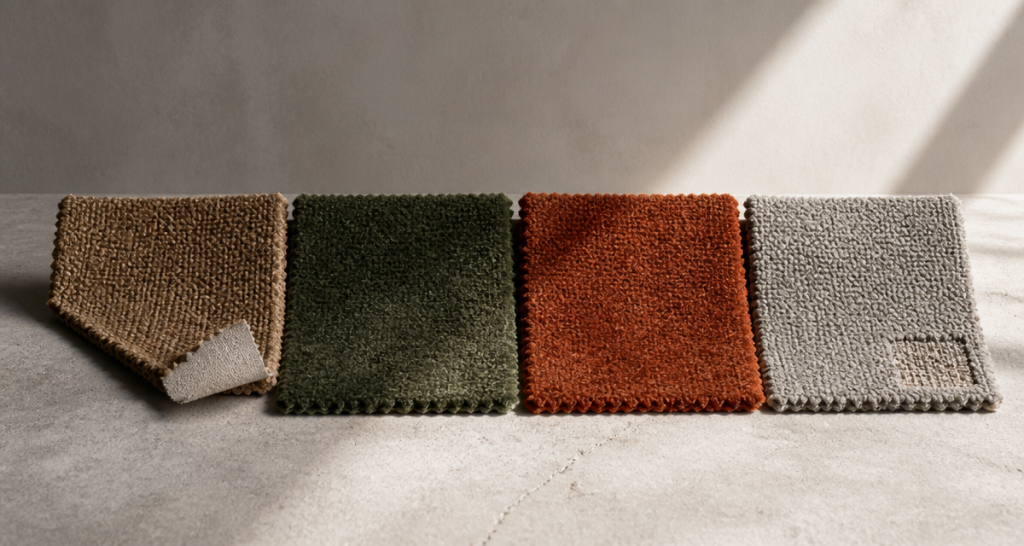
Choosing an upholstery fabric supplier is a commercial decision, not only a design decision. Furniture brands, hospitality contractors, interior studios, and textile wholesalers need to compare surface appearance, construction, sampling, communication, and repeat-order processes before approving a material. In 2026, buyers are paying closer attention to tactile texture, adaptable color, practical specifications, and clearer B2B sourcing communication.
Why upholstery sourcing is becoming more detailed
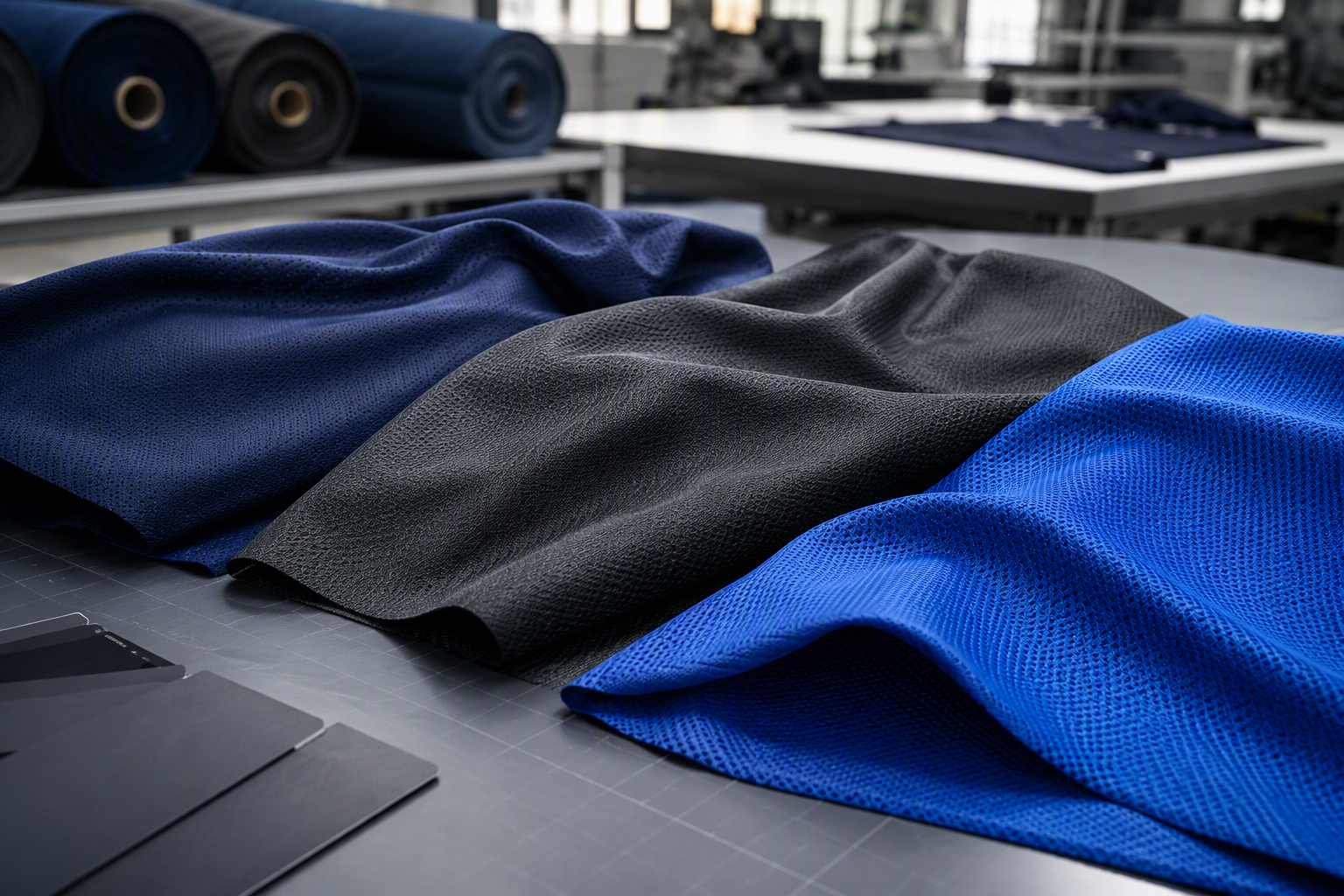
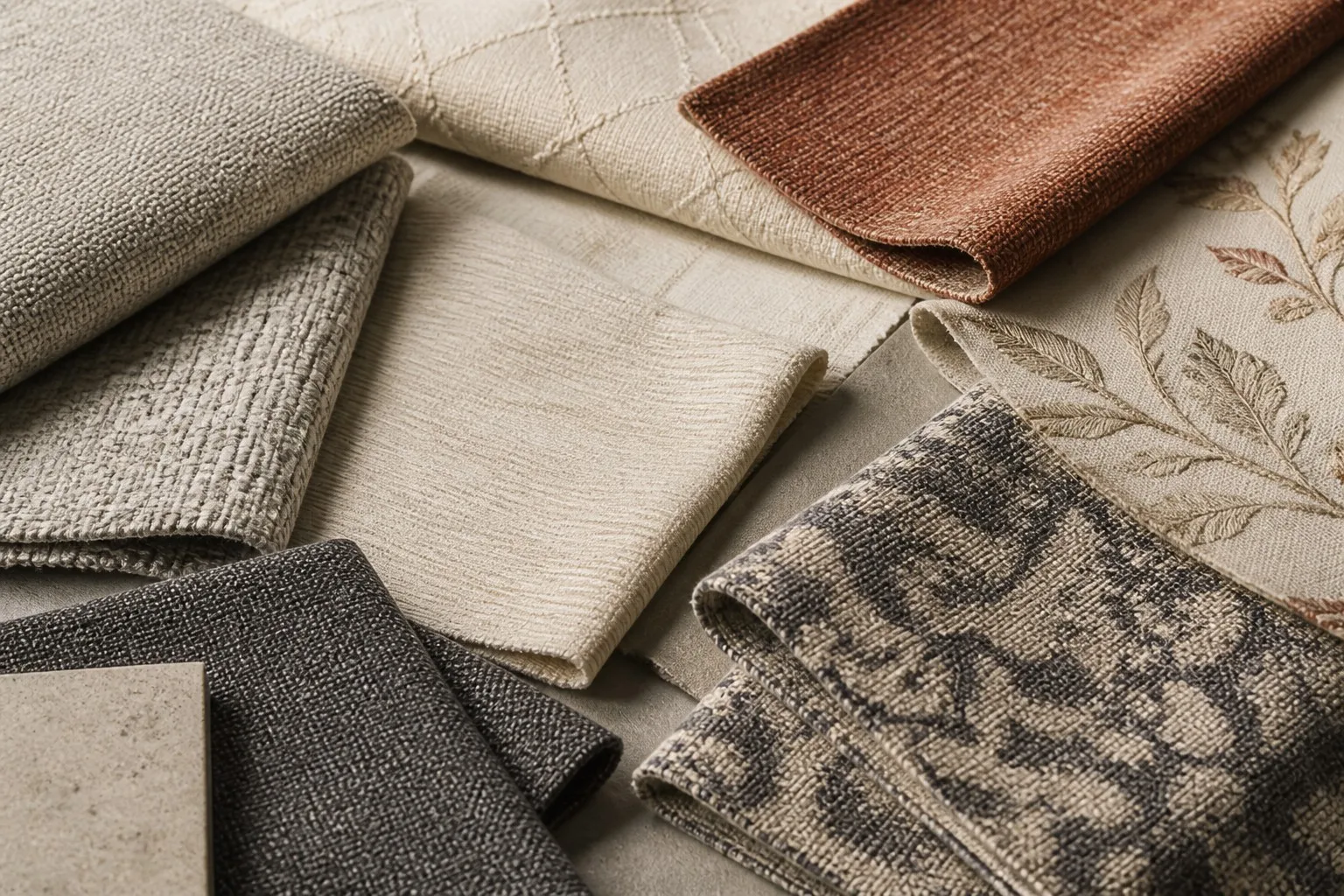
Commercial interiors are using texture to create visual depth across sofas, accent chairs, cushions, headboards, curtains, and wall panels. Woven structures, subtle embroidery, relief effects, and controlled pattern repeats can help a collection feel distinctive without requiring every item to use the same fabric. This creates more opportunities for coordinated fabric programs, but it also means buyers need to compare construction details rather than relying on a single product photo.
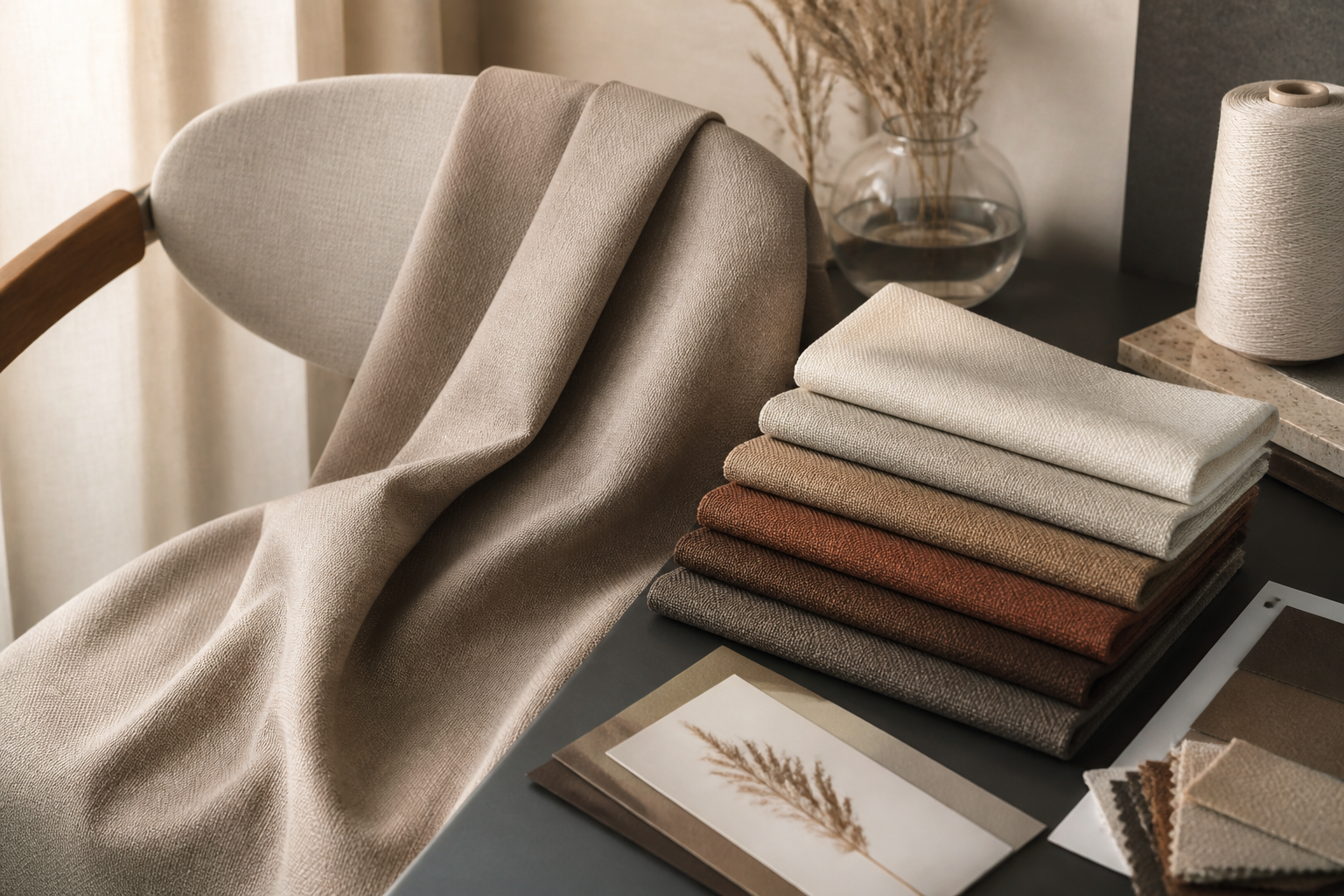
Color direction is becoming more flexible as well. Warm neutrals, muted earth tones, charcoal accents, and carefully placed contrast colors can work across different interior concepts. For buyers, the goal is to find a supplier that can discuss both the visual direction and the technical questions behind a usable commercial fabric.
Five points to compare before placing an order
1. Application and performance requirements
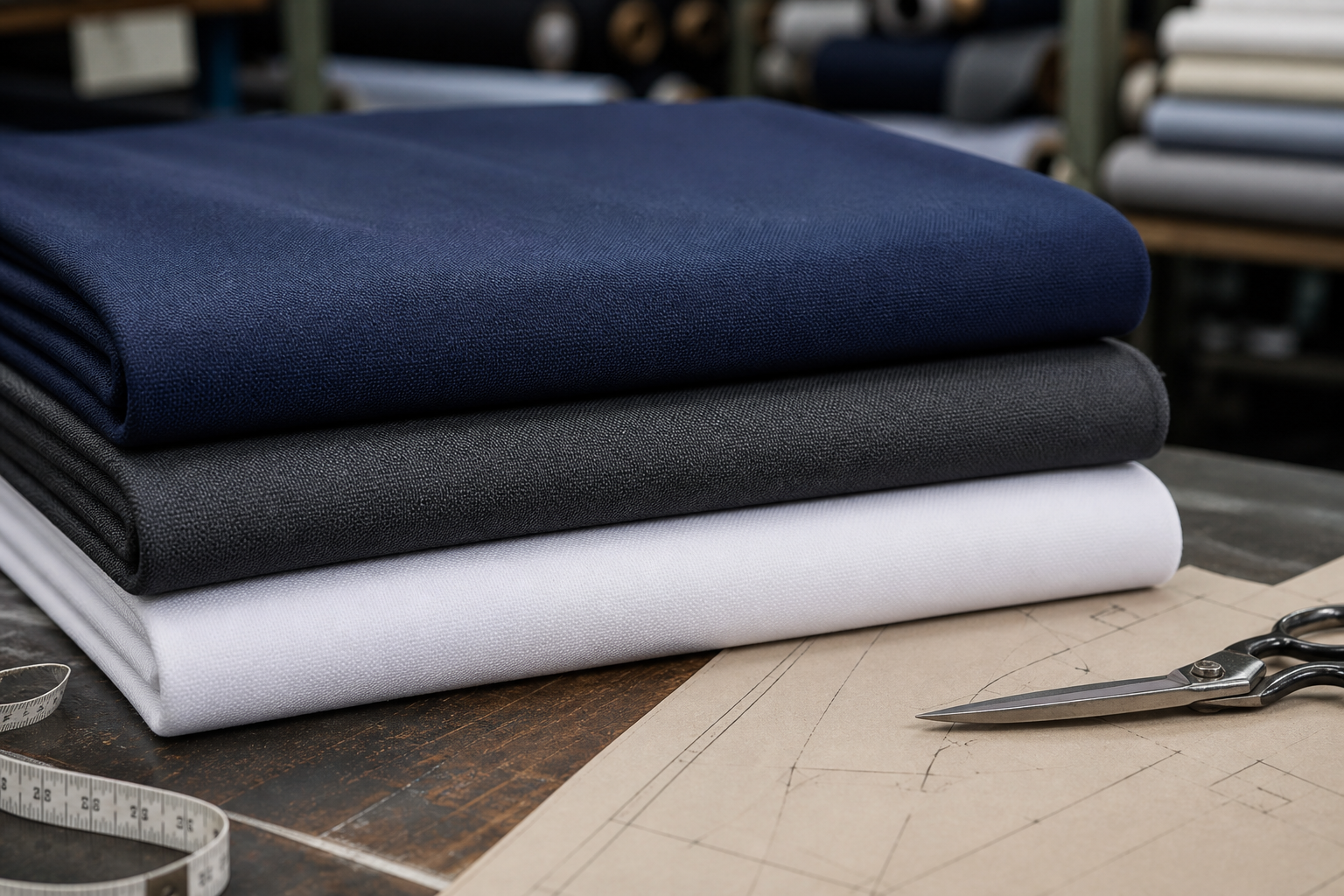
Start by explaining the end use. Furniture upholstery, decorative cushions, curtains, wall panels, and hospitality textiles may require different fabric characteristics. Share the environment, expected contact level, preferred hand feel, usable width, weight range, and care expectations. Clear application information helps an upholstery fabric supplier recommend relevant options.
2. Base cloth and surface construction
Review composition, weave, backing stability, usable width, drape, and surface density. For embroidered or textured materials, examine thread appearance, pattern repeat, stitch placement, and the way the surface behaves when folded or sewn. A close-up image may look attractive while hiding how the fabric performs at a larger scale, so physical samples remain important.
3. Sampling and approval control
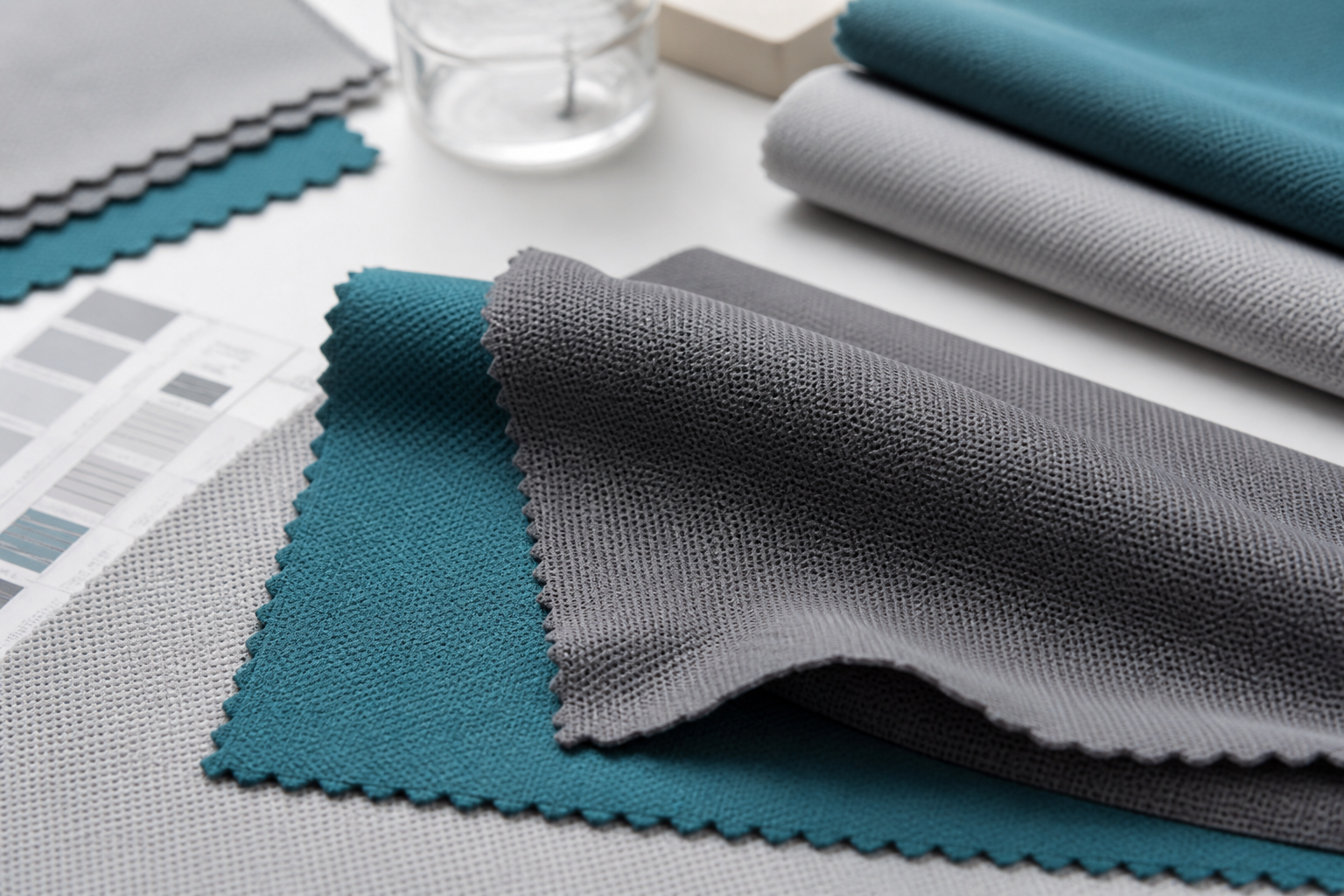
A practical sampling process should allow buyers to compare color, texture, hand feel, drape, and finishing under realistic conditions. Keep an approved sample and record the relevant specifications. If a pattern, color, base fabric, or finishing detail changes during development, document the change before moving forward.
4. Quality communication
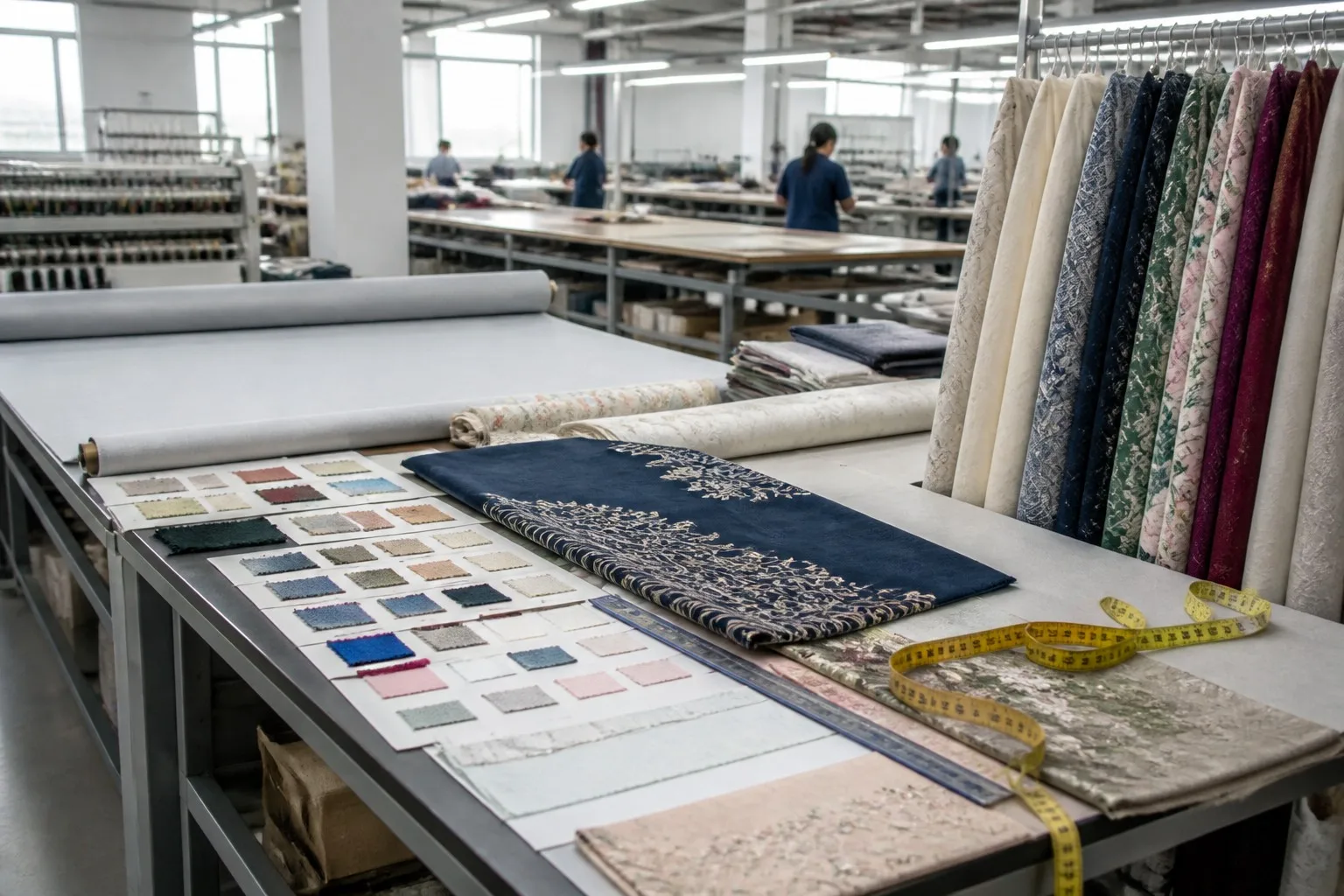
Ask how the supplier records specifications, communicates production changes, and manages inspection. For commercial interior fabric projects, photos of sampling, fabric inspection, packing, and material preparation can make the workflow easier to understand. The objective is not to rely on broad claims; it is to create a clear sequence of approvals and checkpoints.
5. Repeat-order readiness
Many furniture and hospitality projects require additional yardage after the first order. Ask how project references are identified and how approved samples are used in later conversations. A clear record of construction, color direction, and finishing expectations can make repeat sourcing more efficient.
Prepare a stronger B2B sourcing brief
Before contacting a custom textile manufacturer, prepare:
- End use and project environment
- Preferred composition, width, weight, and hand feel
- Color references, artwork, or inspiration images
- Pattern scale, surface effect, and finishing expectations
- Estimated quantity, sample requirement, destination, and timeline
A complete brief makes supplier recommendations more relevant and gives buyers a consistent basis for comparing quotations. It also helps identify unanswered technical questions before sampling.
Why factory-direct communication can help
Direct communication with a textile factory can make customization, sampling, and inspection discussions more efficient. Yunfan Textile supports international B2B buyers sourcing embroidery fabrics, decorative textiles, upholstery-related materials, and home textile fabrics. Our team can review reference images, discuss sample needs, and help buyers narrow down suitable fabric directions while keeping final technical approval with the buyer.
Explore our embroidery fabric collection and decorative fabric collection. For samples, construction questions, custom colors, or project support, visit our website consultation page.
A practical next step
Request a focused group of samples, compare technical details alongside appearance, and keep one approved reference for future communication. This approach helps furniture, hospitality, and interior buyers build a sourcing process that is clearer, more consistent, and easier to scale across a collection.
Source Directly from Our Alibaba Store
Get factory-direct pricing, free samples, and Alibaba Trade Assurance protection.
Need help comparing fabric options? Contact Yunfan Textile for samples and customization support.
Contact Yunfan Textile for B2B Sourcing
🌐 Website: https://www.yunfantextile.com/
📌 B2B Contact: Jessie wendy
📱 WhatsApp/WeChat: +86 175 1619 6727 / +86 156 3752 5803
📧 Email: morris@yunfantextile.com
📧 Email: morris@yunfantextile.com