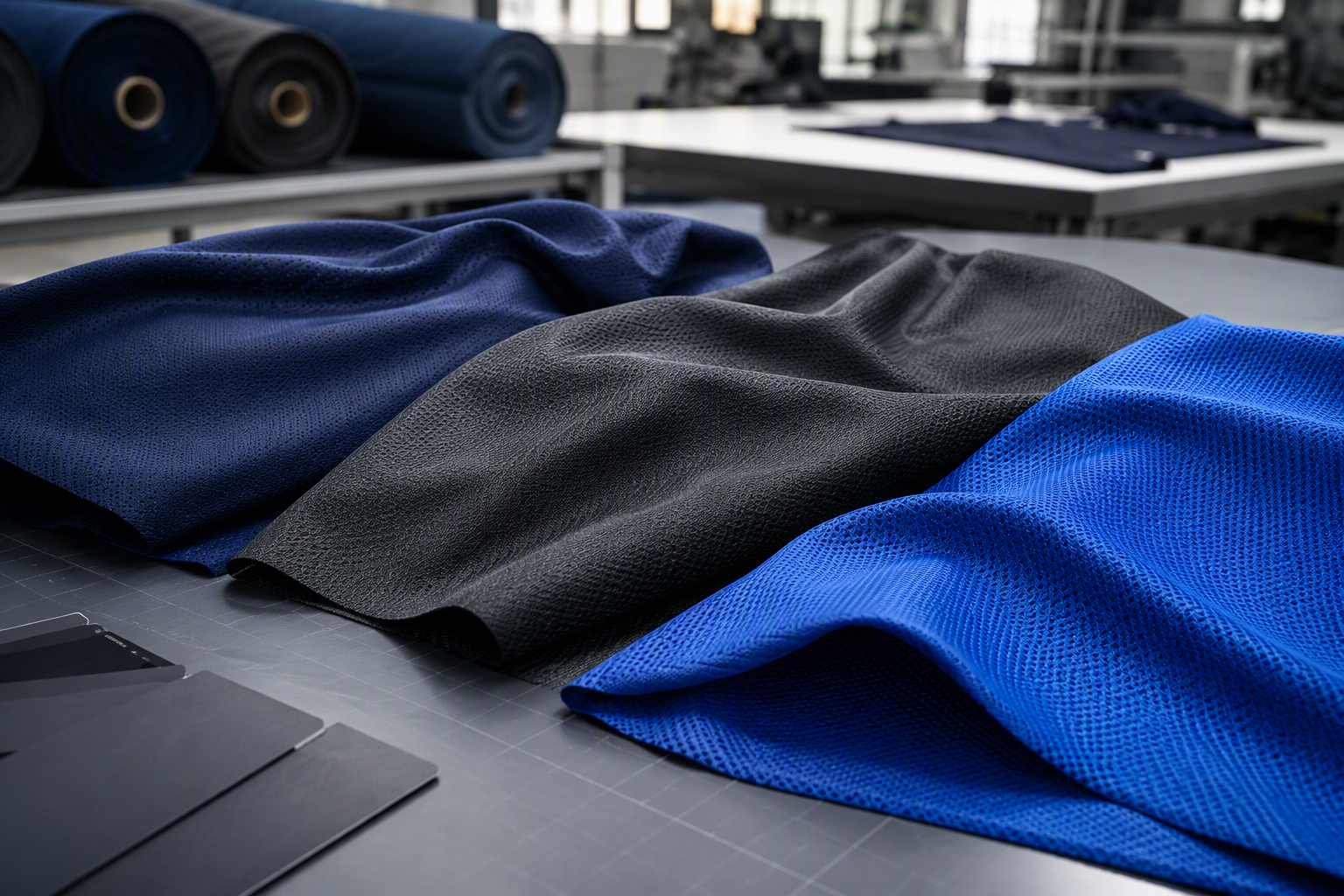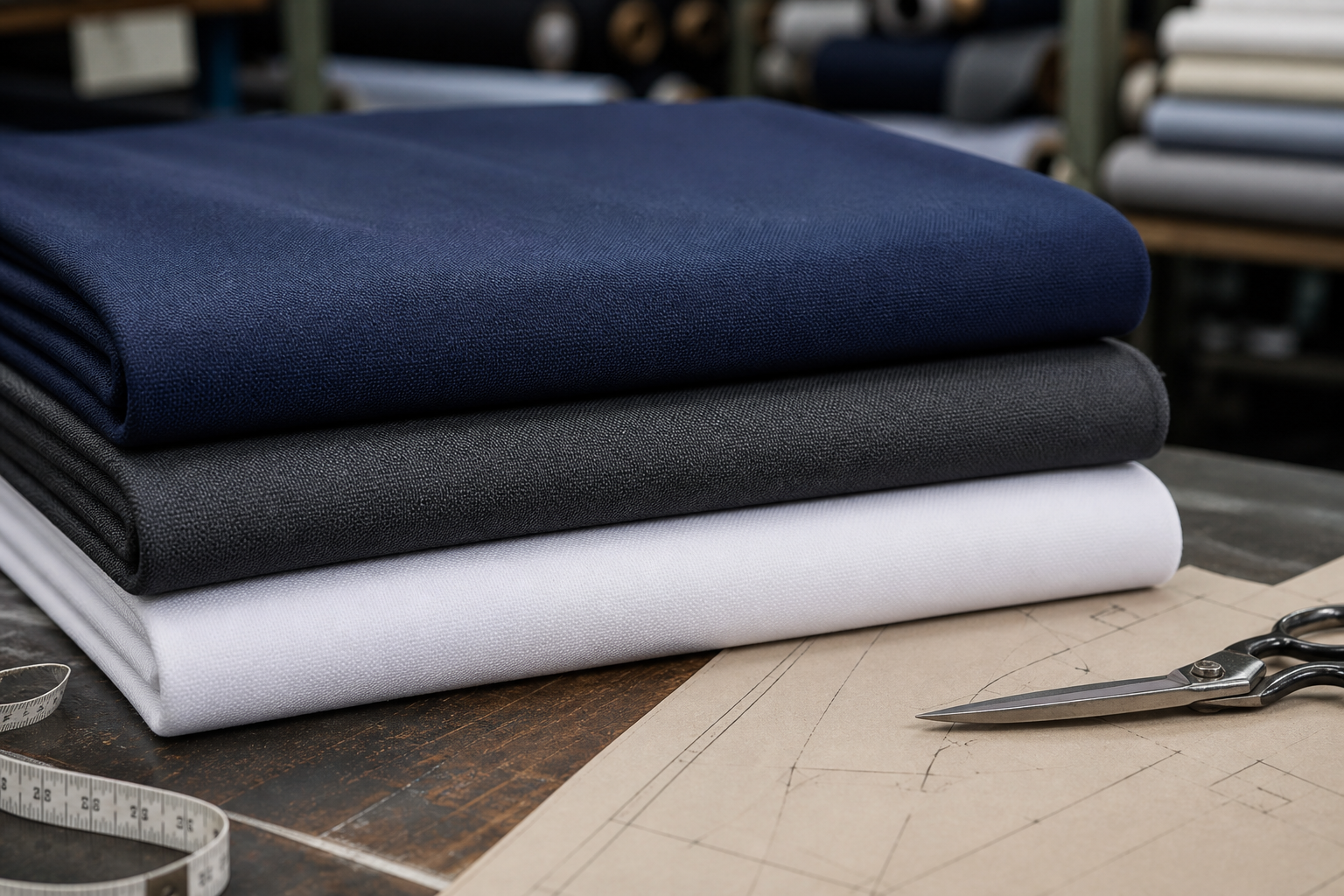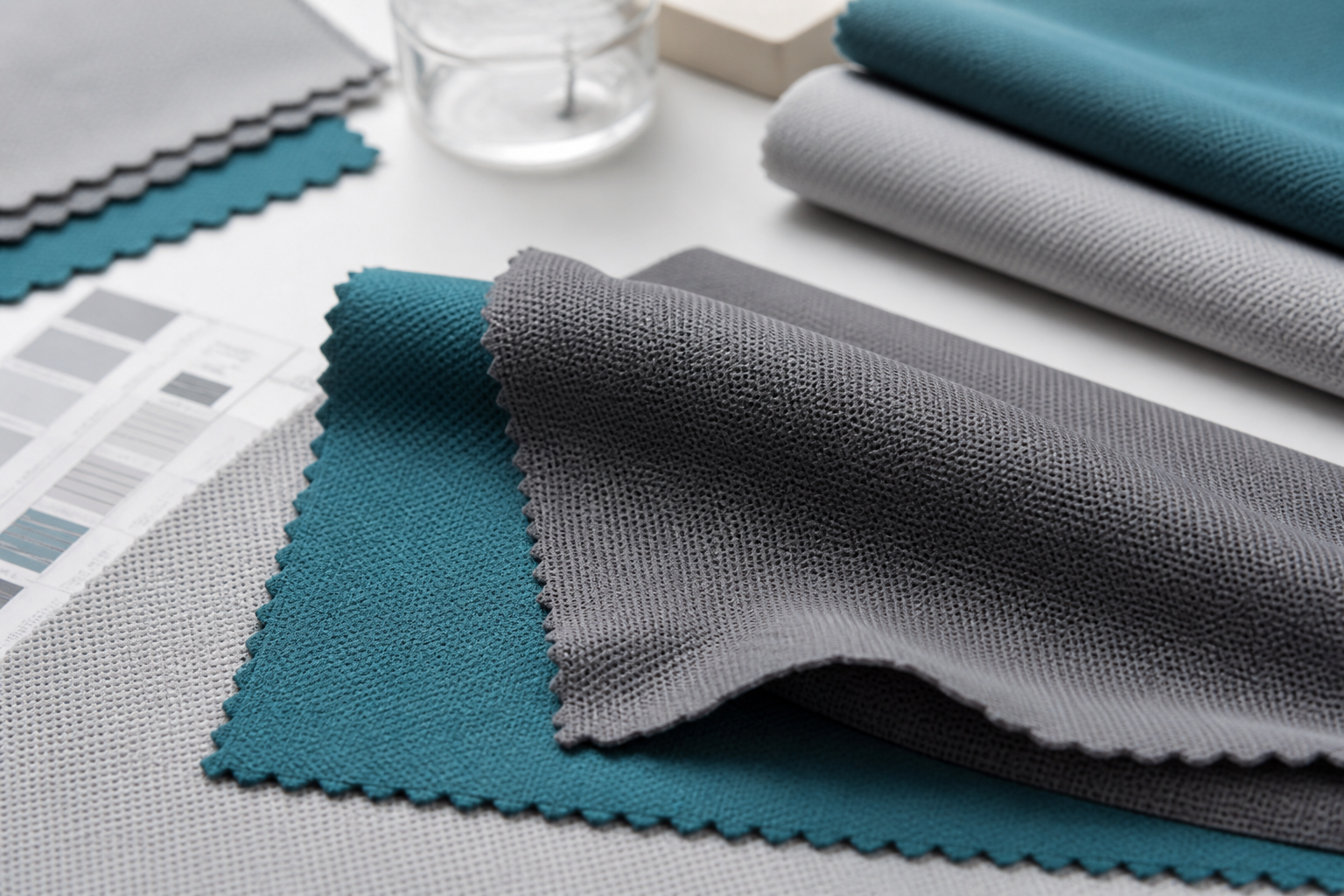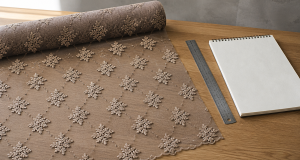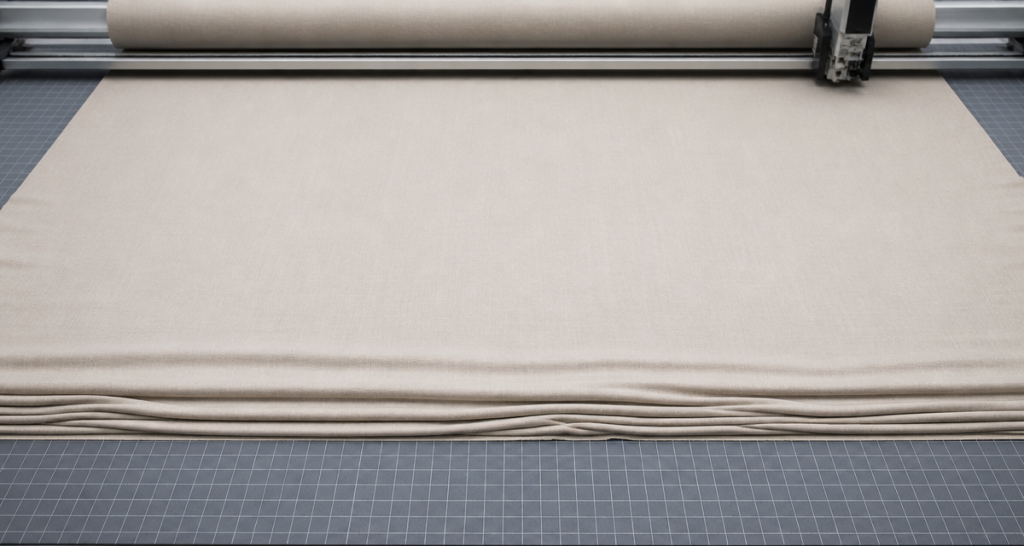
Fabric salvage usability is the share of a roll that can actually be sold after defects, width variation and edge damage are removed, and it is the number that decides your real landed cost. The procurement answer is to buy usable metres rather than billed metres: define a defect map, agree a usable-width rule, and require a salvage allowance in the order. Two suppliers can quote the same price per metre and deliver very different usable yield, so the cheaper invoice is often the more expensive fabric.
This guide explains how salvage usability is measured, which defects reduce it fastest, and how to write salvage terms into your next purchase order.
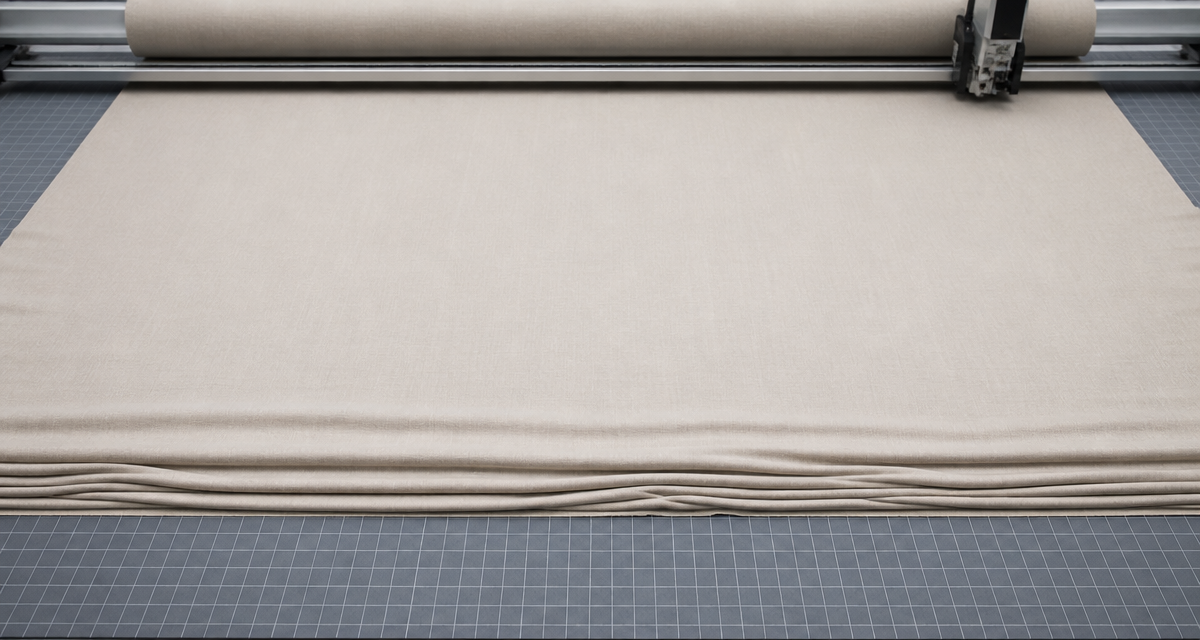
What Is Fabric Salvage Usability?
Fabric salvage usability describes how much of a delivered roll can be used without cutting around a defect. Every roll contains some proportion of fabric that is technically present but commercially unusable: selvedge distortion, dye bands, needle marks, splice points, creases and edge damage.
Two figures describe the result. Billed metres are what the invoice states. Usable metres are what remains after defects are removed. The difference is the salvage loss, and it is usually expressed as a percentage. A roll with a 4 percent salvage loss is not a defective roll; it is a normal roll with a normal allowance. A roll with a 20 percent loss is a problem that should have been caught before shipment.
Key Takeaways
- Salvage usability converts billed metres into usable metres, which is the only figure that affects cost per garment or per panel.
- Edge and selvedge defects usually cost less than internal defects, because they can be trimmed.
- Pattern repeats that break across a defect cost more, because a whole repeat must be discarded.
- Salvage loss should be agreed as a maximum percentage in the order, not negotiated after delivery.
- Measure salvage on production rolls at the factory, where it can still be corrected.
What Reduces Salvage Usability
Defects fall into a small number of families, and each one carries a different salvage cost.
1. Edge and selvedge damage
Frayed, curled or distorted selvedge is the cheapest defect to absorb, because the affected strip can be trimmed. Large fabric width is an advantage here, since the trim consumes a smaller proportion of each metre.
2. Width variation along the roll
Width that fluctuates from one end of the roll to the other forces cutters to plan against the narrowest point. Buyers should specify a width tolerance and confirm it at several points, not only at the roll head.
3. Internal defects: holes, pulls and needle marks
Internal defects are the most expensive because they cannot be trimmed away. Each one consumes an island of fabric around it. Large paillettes and dense embroidery make internal defects harder to see, so they are often found only at the cutting table.
4. Pattern repeat breaks
When a defect interrupts a repeating motif, the whole repeat is lost rather than a single square centimetre. Embroidery, jacquard and border designs are the most exposed, because a broken repeat cannot be matched at the seam.
5. Shade bands and dye variation
A visible shade change within a roll forces the cutter to keep sections separate, which reduces nesting efficiency and increases waste even when no physical defect exists.
6. Roll-end and core damage
Crushed cores, flattened roll ends and transit creases ruin the first and last metres. Protective packaging and correct core diameter protect this margin directly.
How to Measure Usable Yield: Step by Step
- Define the usable width. Agree how many centimetres must be trimmed from each selvedge.
- Walk the roll. Inspect the full face under even light and mark every defect with a sticker or a pin.
- Classify each defect. Record type, size and position along the roll.
- Convert defects to area. Add the discard margin required around each defect for your pattern.
- Subtract from the roll area. The remainder is the usable area for that roll.
- Repeat across the lot. Measure at least three rolls per dye lot to build a salvage average.
- Compare with the agreed limit. If the average exceeds the order allowance, raise it before shipment.
- Record the result. Attach the salvage figure to the inspection report so the next order starts from data.
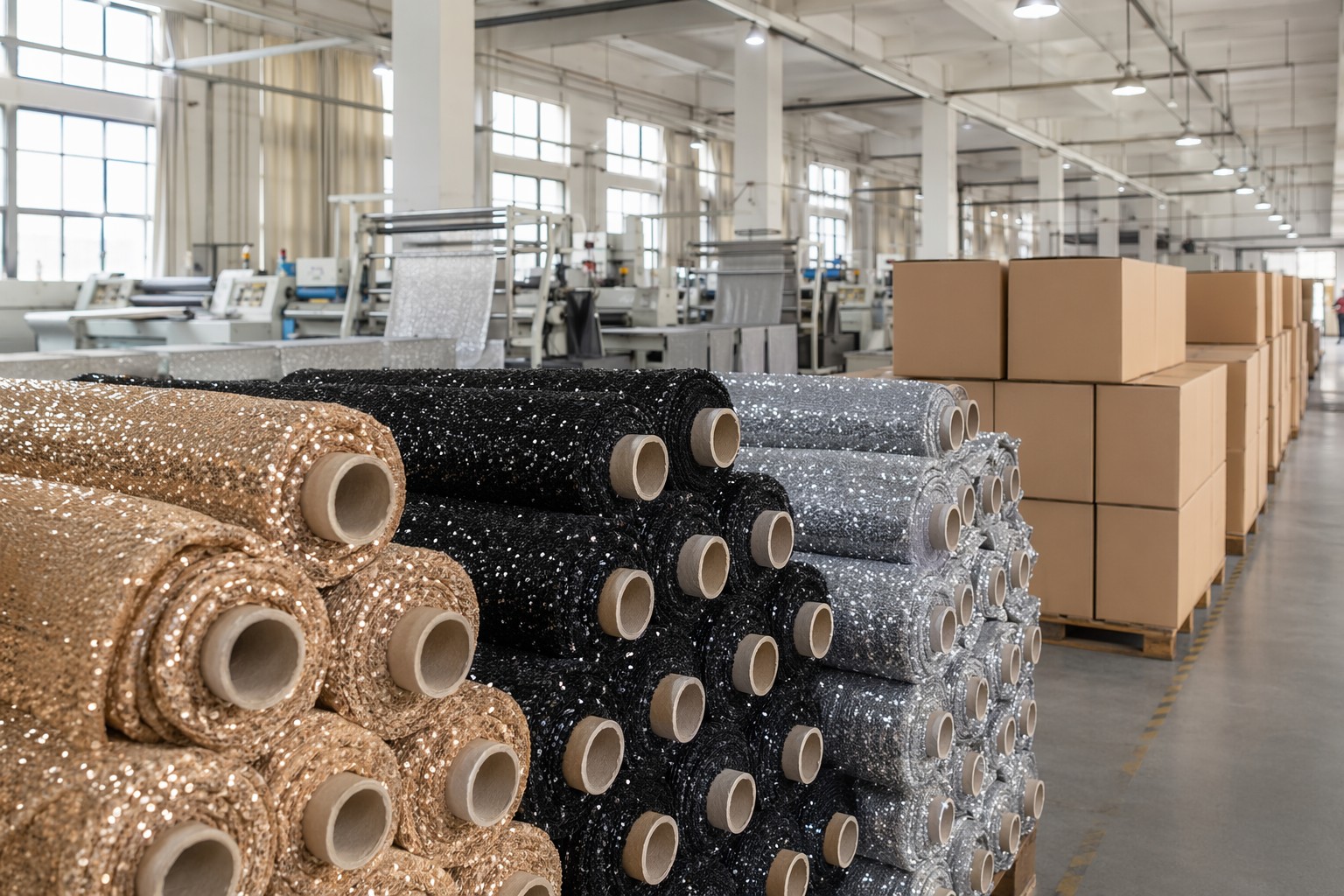
Defect Classification for Salvage Assessment
| Class | Typical defect | Salvage impact | Action at the factory |
|---|---|---|---|
| Minor | Small selvedge fray, light crease | Under 2 percent | Trim at the cutting stage |
| Moderate | Width variation, isolated pull | 2 to 6 percent | Mark and cut around |
| Major | Hole, broken repeat, splice | 6 to 15 percent | Replace the affected section |
| Critical | Extended dye band, torn roll end | Above 15 percent | Reject or re-roll before shipment |
Classifying defects turns a subjective argument into an arithmetic one. A supplier can accept the arithmetic even when it resists a general complaint.
Order Fields That Protect Usable Yield
| Field | Example value | Why it matters |
|---|---|---|
| Usable width | Stated trim per selvedge | Defines the start of measurement |
| Salvage allowance | Maximum percentage per lot | Caps billable loss |
| Defect map | Attached to each roll | Allows cutting planning in advance |
| Width tolerance | Plus or minus stated millimetres | Stops narrow-point surprises |
| Pattern repeat integrity | Continuous repeat requirement | Protects design matching |
| Roll-end protection | Core and wrap specification | Preserves first and last metres |
FAQ
What counts as a normal salvage loss?
It depends on the construction and the design. Simple continuous fabrics absorb a small loss, while large repeats and dense decoration absorb more. Agree the figure against your own cut plan rather than an industry default.
Should salvage loss be measured per roll or per lot?
Both. Per-roll figures expose outliers, while per-lot averages set the commercial allowance. Measuring only the lot average hides a single unusable roll.
Is it better to buy wider fabric to absorb defects?
Often yes. Extra width can be trimmed at the selvedge, and the trim consumes proportionally less of a wide roll. Confirm the usable width before comparing prices.
Who should pay for a high salvage loss?
If the loss exceeds the agreed allowance, the supplier should replace the affected metreage or credit it. That is why the allowance must be written into the purchase order in advance.
Can salvage usability be improved after delivery?
Only by trimming and re-planning, which costs labour and time. Prevention at the factory, through roll inspection and re-rolling, is far cheaper.
How Salvage Loss Changes Your Cut Plan
Salvage loss is not an abstract percentage. It changes the number of garments, panels or tablecloths a roll can produce, and therefore the price you must charge for each one.
Work through the arithmetic once with real numbers. If a roll delivers 100 billed metres, a 5 percent salvage loss leaves 95 usable metres. If your marker consumes 1.4 metres per unit, the billed roll yields about 71 units, while the usable roll yields about 67. The difference of four units per roll is the true cost of the lost fabric, and it is usually larger than the discount that was negotiated to win the order in the first place.
Repeats amplify the effect. With a large pattern repeat, one internal defect can destroy a full repeat rather than a single square centimetre, so measured salvage loss can double for the same physical defect. Border designs and engineered placements are the most exposed, which is why the salvage allowance should always be agreed against the actual cut plan rather than against a generic industry figure.
Two practical habits reduce the damage. First, ask for a defect map with each roll so cutting can be planned before the fabric is spread. Second, group rolls from the same dye lot so any shade banding is contained within one batch instead of spreading across a production run.
Conclusion: Buy Usable Metres, Not Billed Metres
Decorative fabric salvage usability turns a vague quality complaint into a measurable cost. Define the usable width, classify the defects, measure the salvage loss on production rolls and cap it in the order. Buyers who negotiate on usable metres pay for the fabric they can cut, while those who negotiate on price alone pay for fabric they discard. Our quality control routine and sourcing guide set out how those measurements travel with each shipment.
Want to compare usable yield on real production rolls? Request Sequin Fabric Samples and share your cut plan, and we will send swatches with the salvage and width data for that construction.
Source direct on Alibaba - request bulk pricing, specifications, and production details in one place.
Contact Morris at morris@yunfantextile.com, or message on WhatsApp: +86 156 3752 5803 or +86 175 1619 6727.