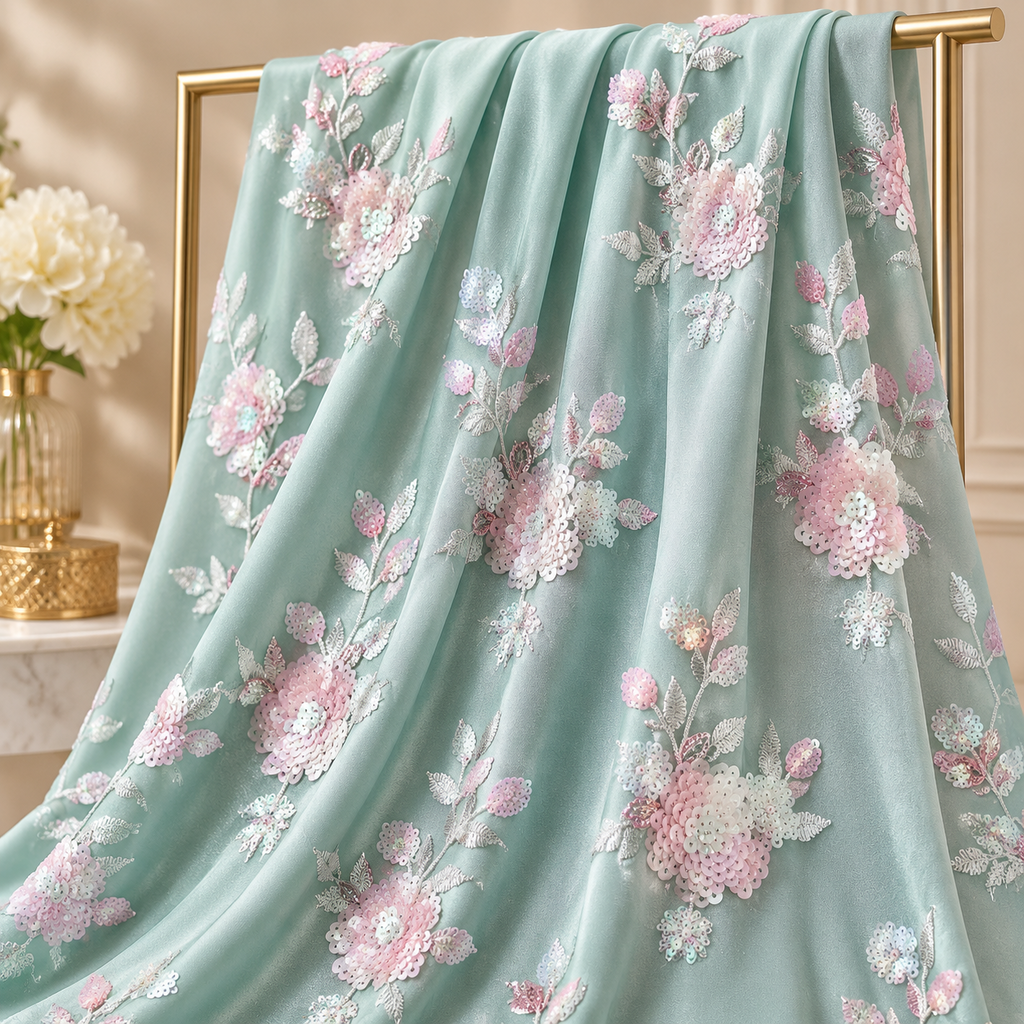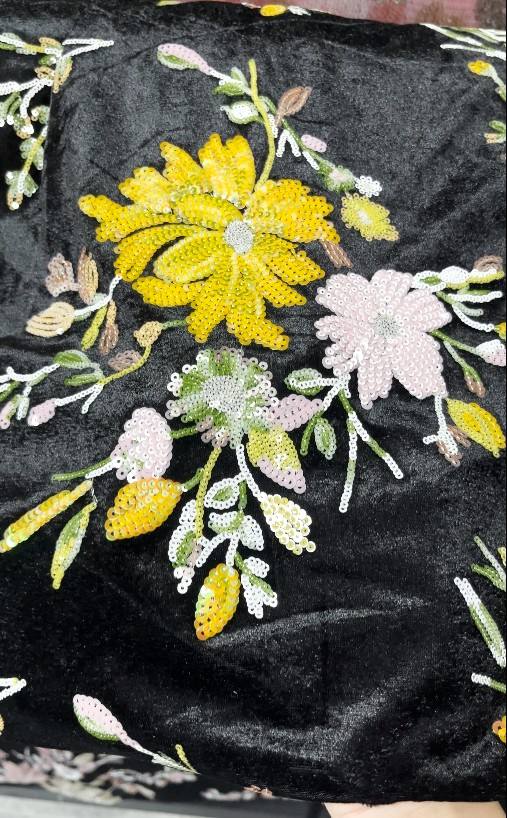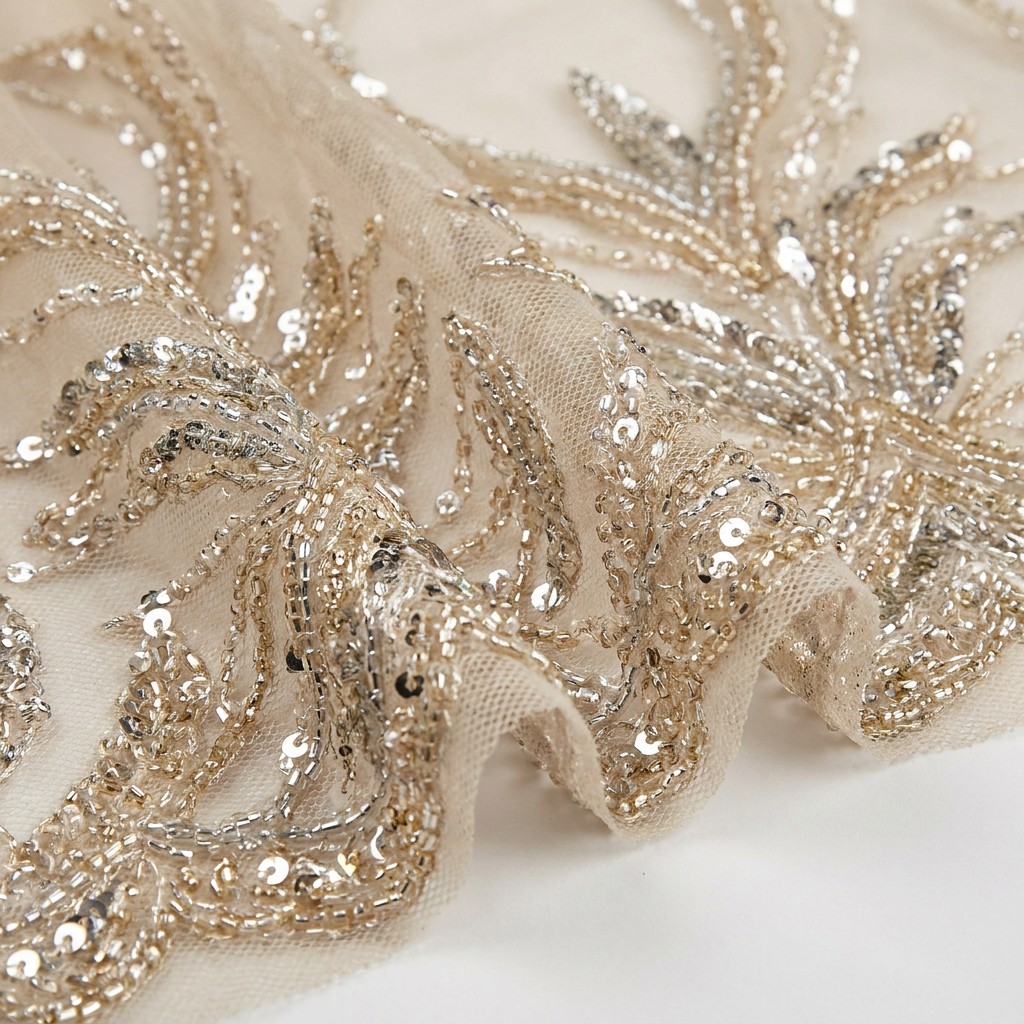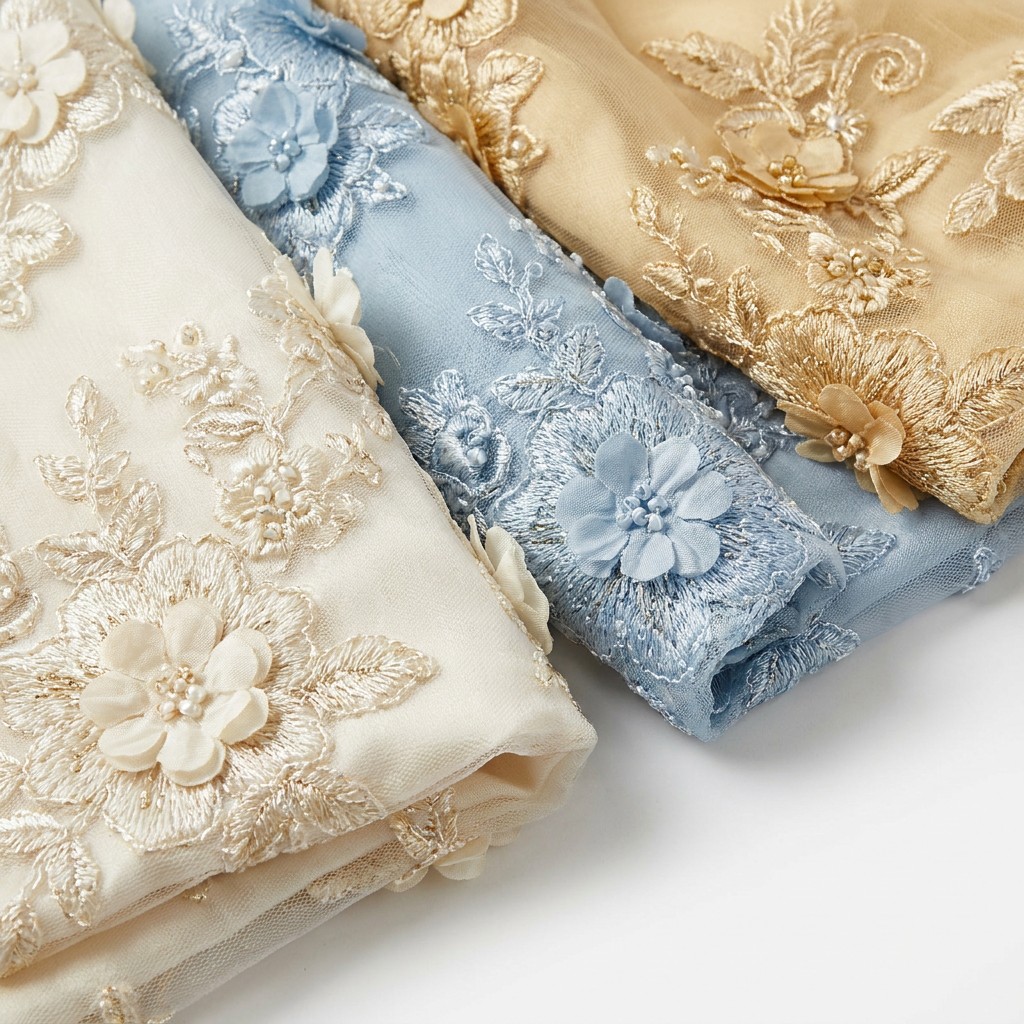
Beaded lace bursting strength guides safe sourcing for bridal tulle buyers. Specifically, this guide explains seams, underlay, testing, and approval steps.

Beaded lace bursting strength fundamentals
Dense beads add weight and stress around every stitched seam. Therefore, engineers match thread, needle, density, and backing carefully.
Operators mark the seam line before each laboratory test. However, buyers must compare the same construction across every sample.
Seam construction controls
Designers select stable tulle with consistent mesh openings. Furthermore, machinists use balanced tension across the complete seam.
Inspectors measure stitch length, bead spacing, and seam allowance. In addition, technicians record thread type beside each specimen.
Testing and rupture prevention
Technicians cut specimens across several beaded zones. Specifically, they test the centre, edge, and joining points separately.
Quality teams pull each seam with a calibrated tensile machine. Consequently, the report shows peak force, extension, and failure location.
Underlay and reinforcement choices
Engineers add light underlay when mesh stretch threatens stability. As a result, the seam carries weight without sudden distortion.
Operators avoid excessive adhesive near decorative surfaces. Moreover, controlled reinforcement keeps the hand feel soft and flexible.
Production inspection for bulk orders
Inspectors sample the first roll and the final roll. Therefore, teams can identify tension drift before packing begins.
Supervisors compare bead density against the approved reference. In fact, this simple check catches skipped beads and loose clusters.
Approval evidence for buyers
Buyers request the method, specimen count, and acceptance limit. Specifically, they also request photographs beside the signed sample.
Purchasing teams retain two cuttings with every order record. However, they should never approve a bulk lot from one small swatch.
Practical sourcing checklist
Confirm fibre content, width, GSM, bead size, and finish. Furthermore, confirm the 200-yard MOQ before sample development starts.
Ask the mill to repeat the agreed seam test. Consequently, production teams can compare each new lot fairly.
For related guidance, visit our quality control category. In addition, review our embroidery fabric range for sourcing options.
Conclusion for apparel teams
Reliable beaded lace combines stable construction with measured seam performance. Therefore, clear records help buyers order confidently and reduce claims.
Request a controlled sample before cutting any bridal collection. Moreover, align design, production, and quality teams around one approved reference.