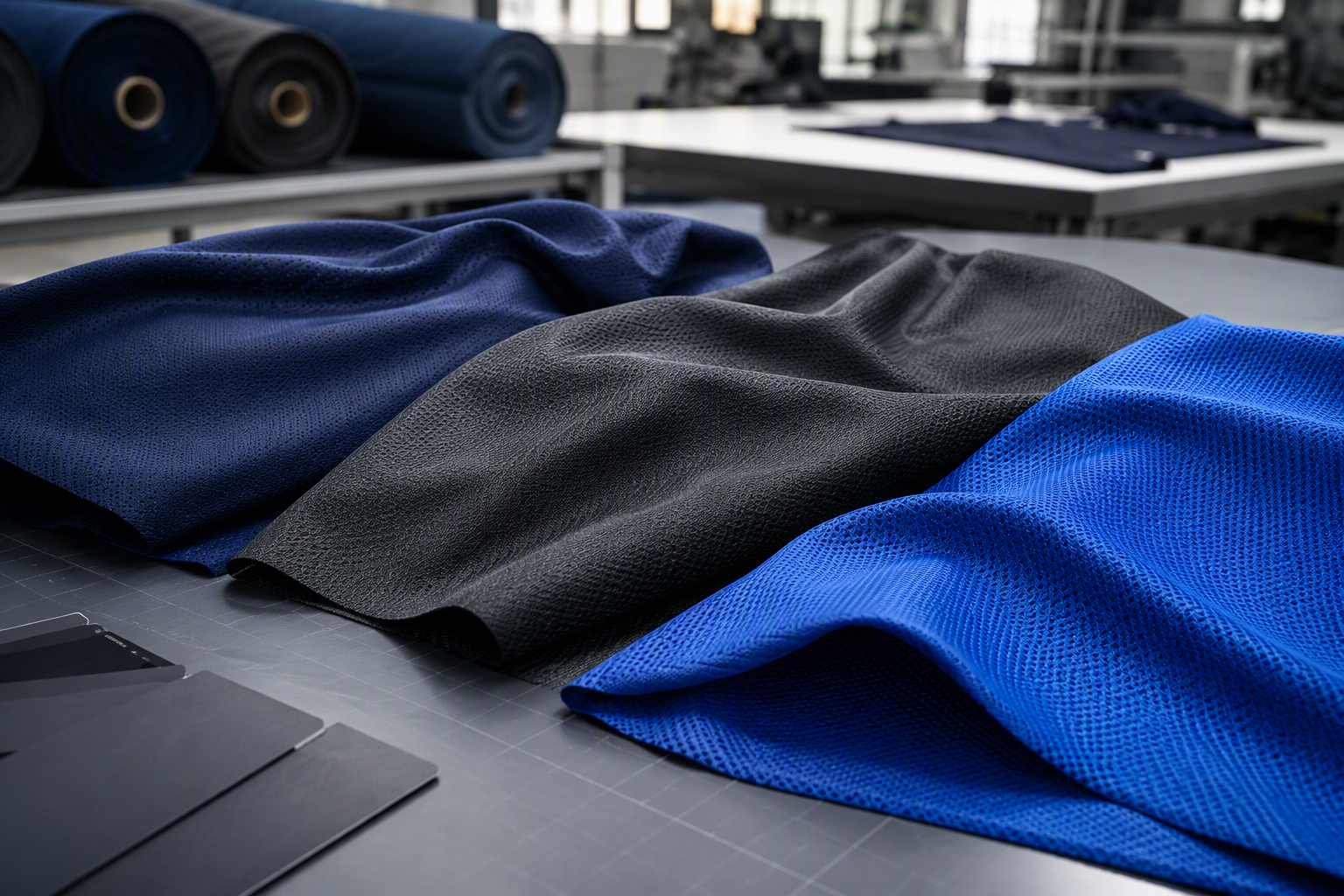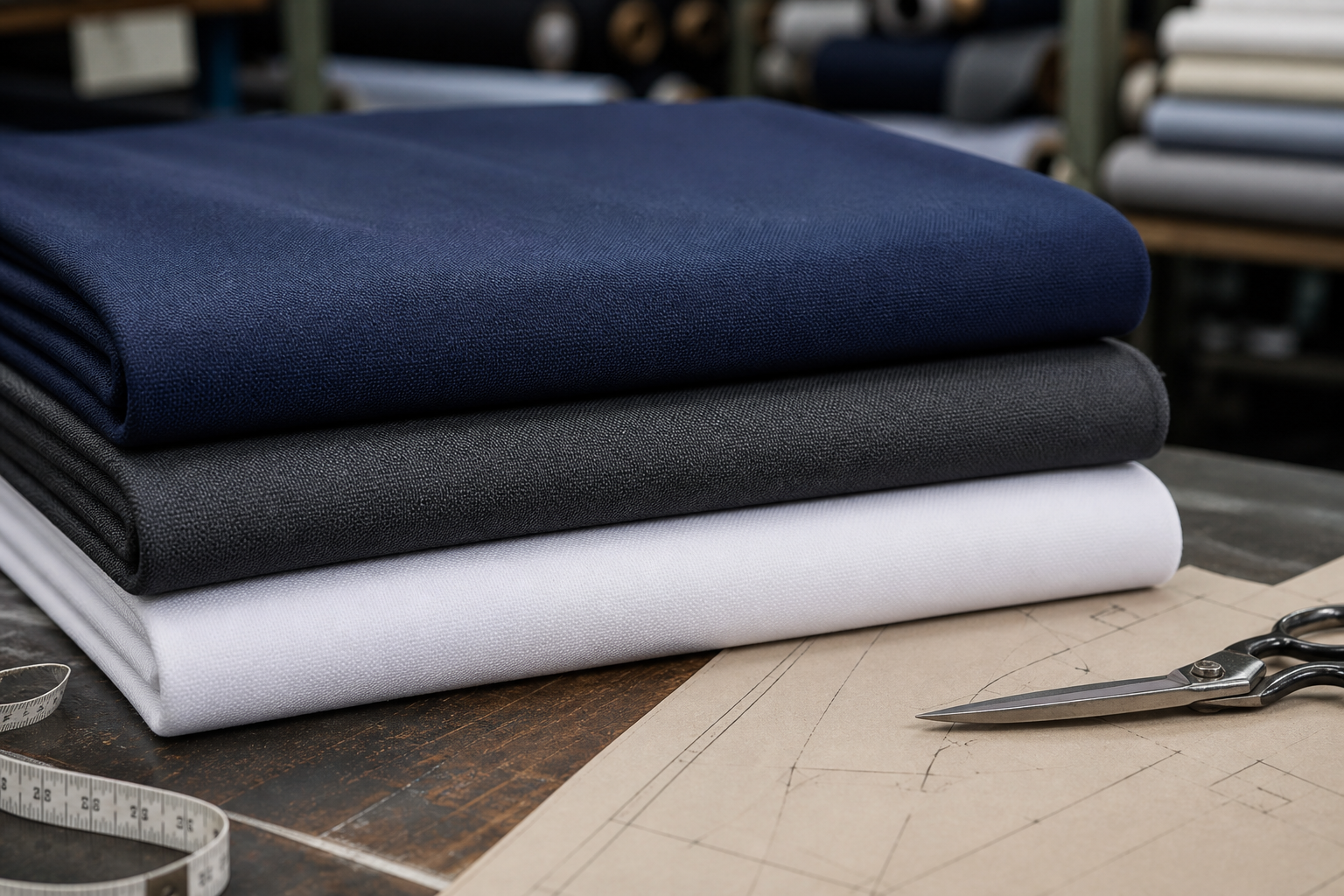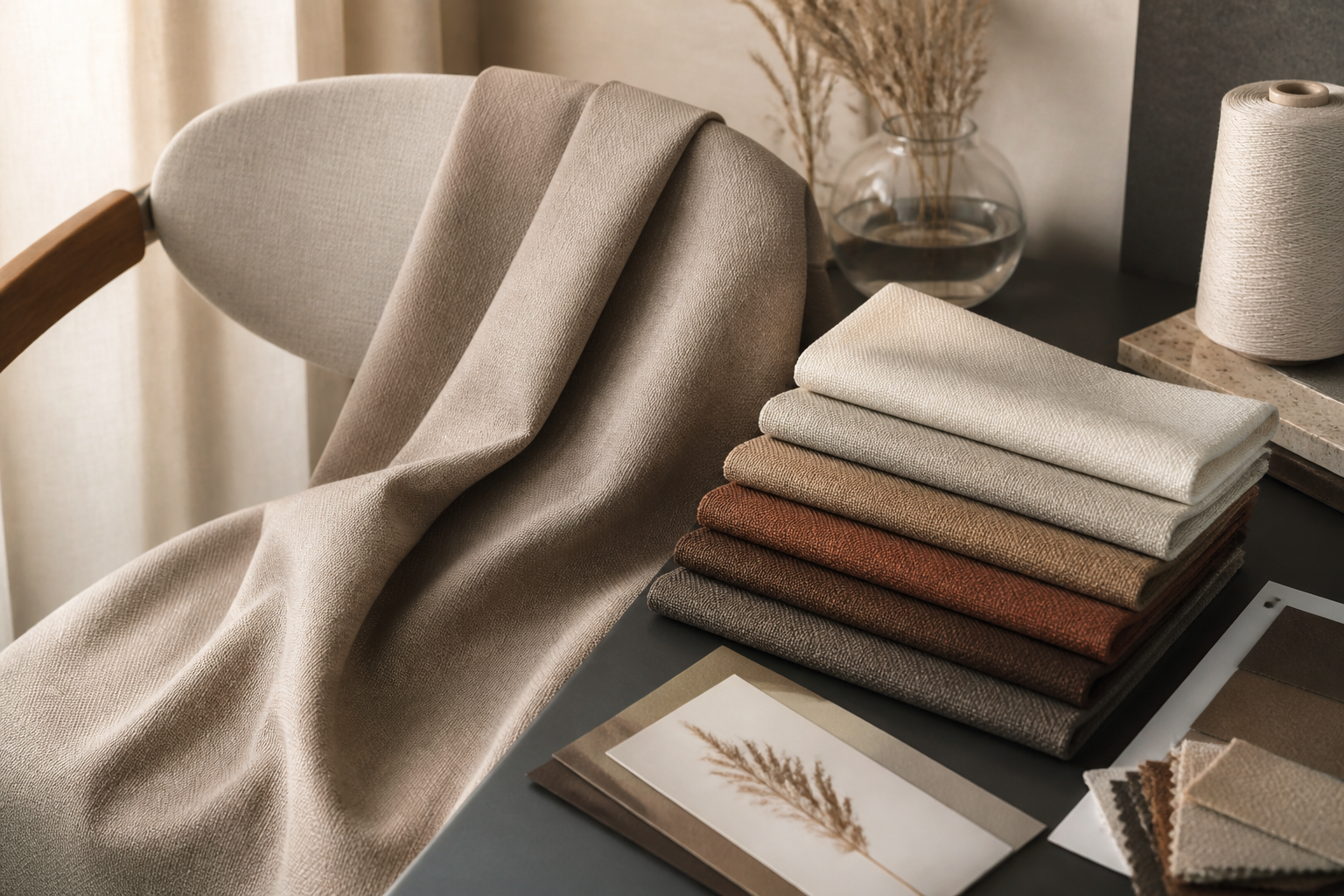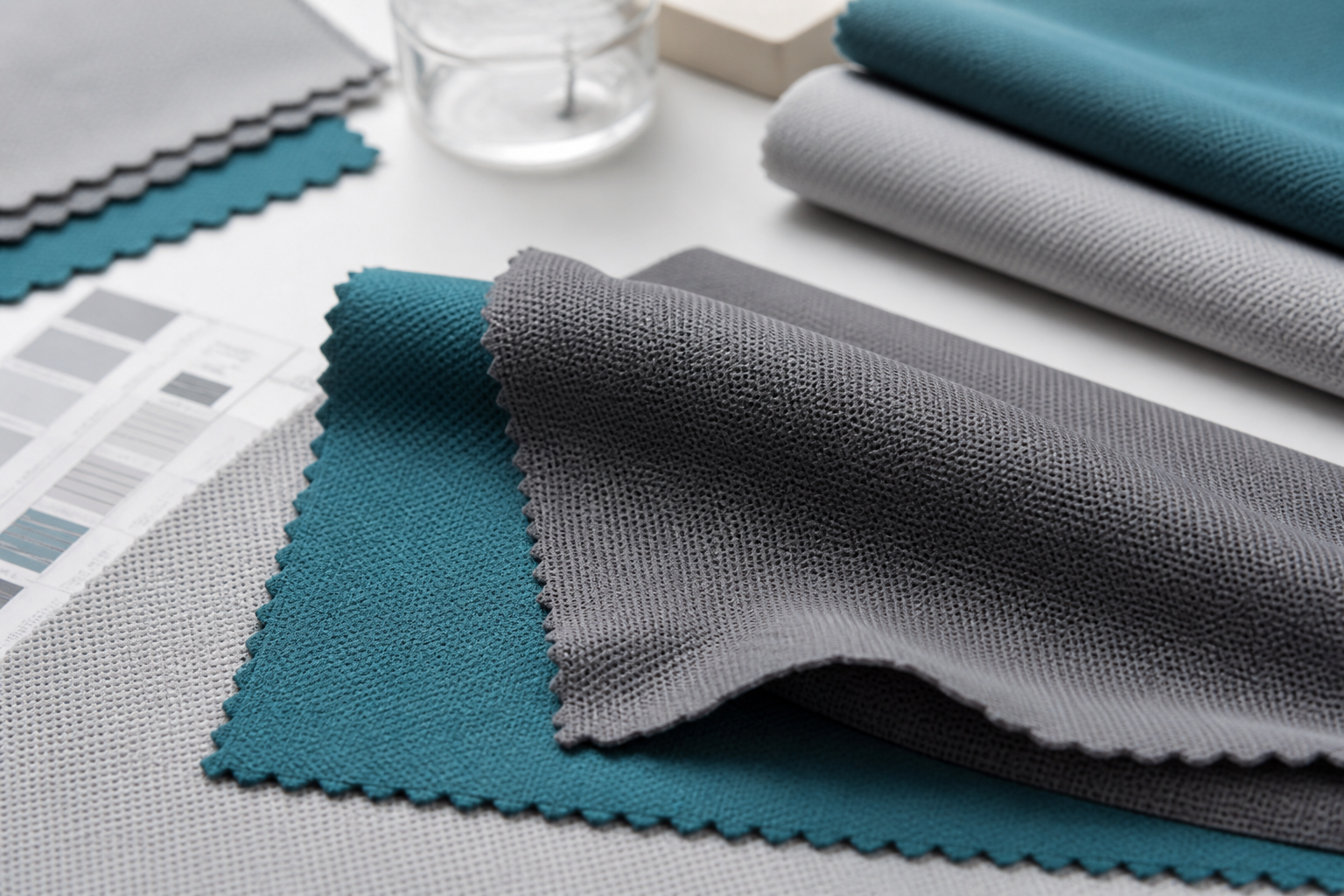
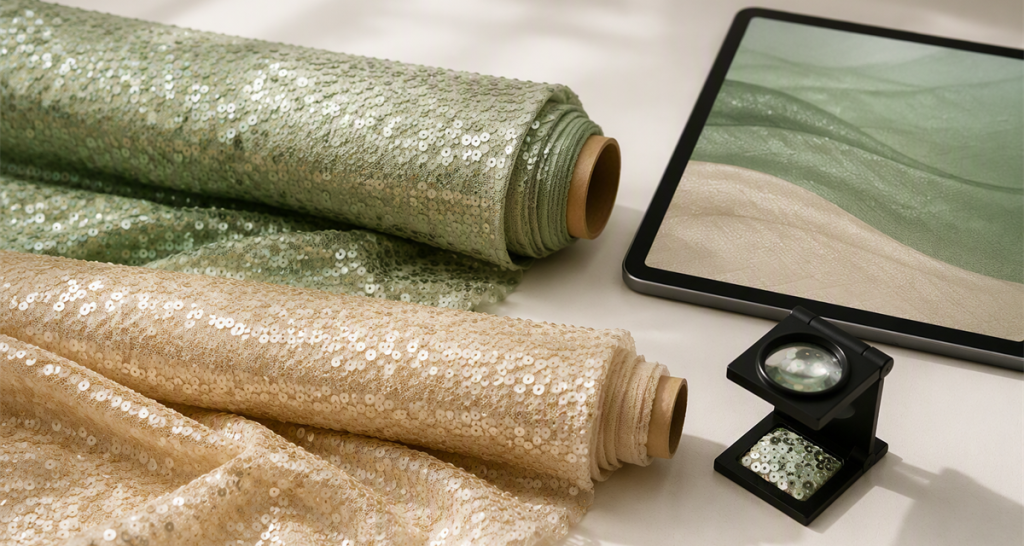
For fashion brands, event suppliers, and textile wholesalers, 2026 is bringing a more technical approach to fabric sourcing. Buyers still want visual impact, but they also need measurable quality, responsible materials, reliable lead times, and documentation that can support global compliance. This is especially clear in the market for sustainable sequin fabric wholesale, recycled polyester textiles, embroidered mesh, and custom decorative fabrics.
Yunfan Textile works with international buyers who are moving beyond simple price comparisons. A successful sourcing program now evaluates the complete production system: fiber and sequin material, GSM, usable width, color consistency, sample approval, MOQ, packaging, and shipment planning. The following trends are shaping B2B fabric purchasing for 2026 and the 2026/27 fashion cycle.
1. Sustainable Sequin Fabric Is Becoming a Specification, Not Just a Marketing Claim
Recycled polyester sequins, recycled PET mesh, and lower-impact embroidery materials are increasingly requested during product development. Buyers want to know what the base fabric contains, whether the sequin construction is durable, and which documents can support their sustainability claims. For a wholesale sequin fabric supplier, this means sustainability must be connected to traceable specifications and consistent bulk production.
For high-volume collections, buyers should ask for the recycled content percentage, composition, GSM range, usable width, colorfastness information, and available certification documentation. A 3mm or 5mm sequin fabric may be lightweight and suitable for dresses or costumes, while velvet-backed or heavily embroidered constructions require a higher GSM and a different handling method. Clear technical data helps designers select the right material before sampling.
2. Digital Sampling Is Reducing Development Risk
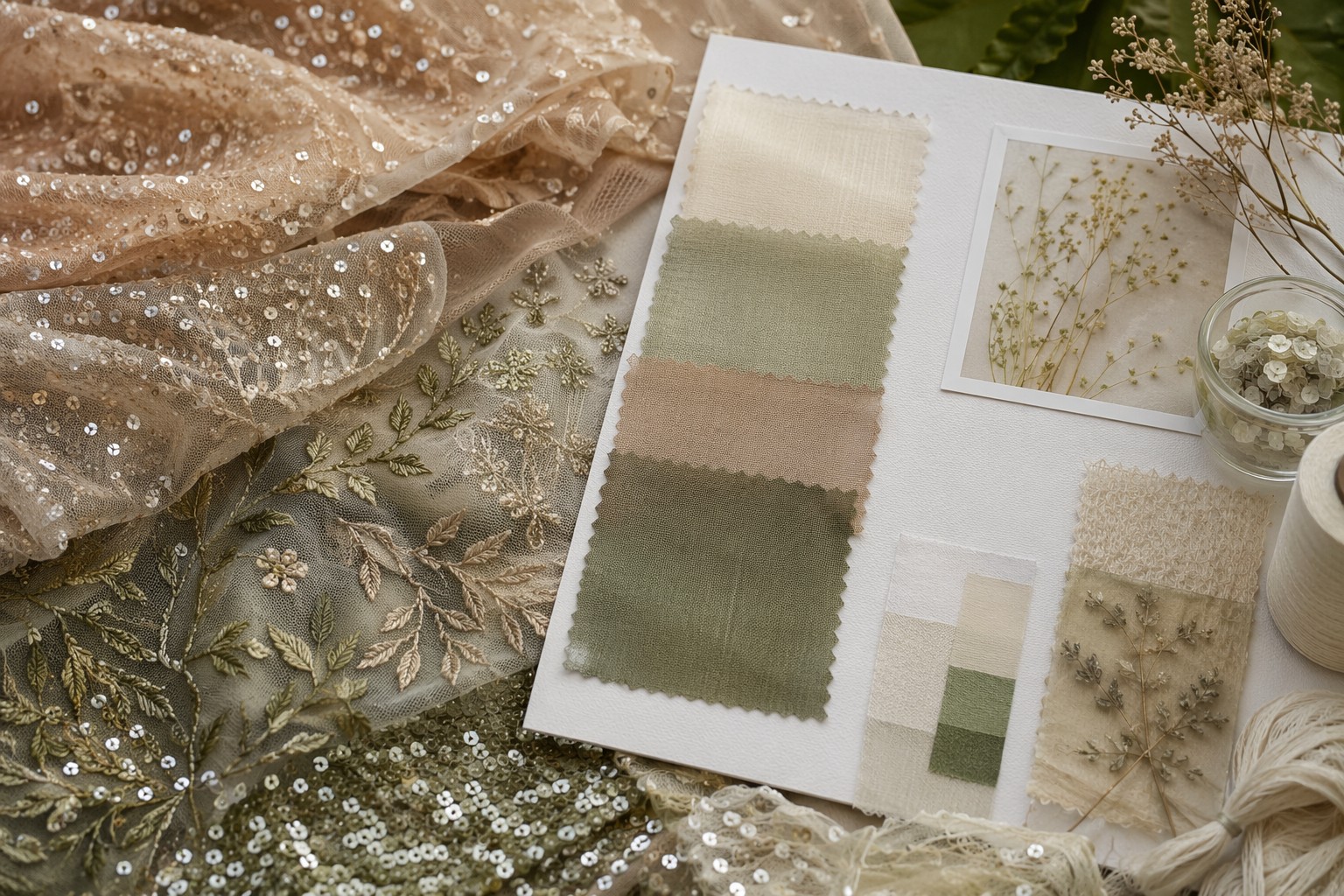
Digital sampling is becoming a practical tool for fashion companies managing multiple collections. High-resolution fabric images, digital swatches, and 3D-ready material references allow teams in different countries to compare color, texture, and pattern direction before requesting a physical sample. This does not replace physical approval, but it can reduce unnecessary courier shipments and shorten the early development cycle.
For B2B buyers, the best workflow combines digital review with a controlled physical sample. A buyer can first confirm the sequin size, embroidery density, background mesh, and color direction online, then request a final swatch book or sample header for hand-feel, drape, and reflective performance. This approach is particularly useful for OEM and ODM programs where several designs must be compared at the same time.
3. Quality Control Must Be Planned Before Bulk Production
In 2026, professional sourcing teams are asking factories to define quality checkpoints before placing a bulk order. Important checkpoints include pre-production sample approval, GSM testing, usable-width measurement, sequin attachment strength, shade matching, roll inspection, and packaging protection. For embroidered and sequin fabrics, buyers should also review pattern repeat, stitch tension, edge quality, and the consistency between the approved A4 swatch and the finished rolls.
A reliable sequin fabric manufacturer should be able to explain how it controls production across different machines and shifts. It should also provide a clear process for handling shade variation, damaged rolls, short shipments, and rework. These details are not administrative extras; they directly affect cutting efficiency, garment yield, delivery planning, and the final cost of a collection.
4. Flexible Manufacturing Supports More Commercial Applications
Sequin and embroidery fabrics are now used across eveningwear, bridal collections, performance costumes, hospitality interiors, event backdrops, pillow covers, and retail displays. This wider application range increases demand for custom widths, different backing fabrics, flame-retardant options, recycled materials, and coordinated color cards.
When comparing suppliers, buyers should confirm whether the factory can support custom sequin sizes, Pantone color matching, embroidery layouts, packaging requirements, and repeat orders. A supplier with in-house development and production coordination can usually respond more effectively than a trading desk that depends on several disconnected subcontractors.
How to Prepare a Better B2B Fabric Inquiry
A complete inquiry should include the target application, fabric composition, preferred GSM, usable width, color references, estimated quantity, delivery market, sample requirements, and target launch date. Sharing this information early allows the factory to recommend a realistic construction instead of quoting an unsuitable fabric based only on a product photo.
For more background, read our guide to sustainable sequin fabric and B2B wholesale sourcing. Buyers can also request technical swatches and discuss OEM/ODM development directly with Yunfan Textile.
Source Directly from Our Alibaba Store
Get factory-direct pricing, free samples, and Alibaba Trade Assurance protection.
Contact Yunfan Textile for B2B Sourcing
🌐 Website: https://www.yunfantextile.com/
📌 B2B Contact: Jessie wendy
📱 WhatsApp/WeChat: +86 175 1619 6727 / +86 156 3752 5803
📧 Email: morris@yunfantextile.com
📧 Email: morris@yunfantextile.com