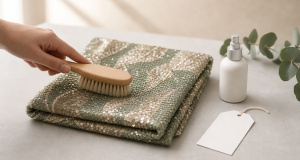
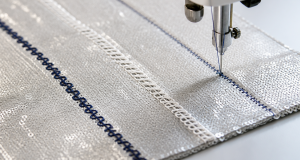
Sourcing high-grade stretch sequin fabric wholesale requires balancing dynamic elastic recovery, sequin anchor stability, base mesh durability, and precise production tolerances. For apparel designers, dancewear manufacturers, and evening wear brands, procuring stretchable sequin textiles at volume often introduces critical production hurdles. For example, garment factories frequently encounter broken needle threads during elastic stretching, sequin detachment around curved pattern seams, and inconsistent modulus tension across different dye lots. Furthermore, conventional textile suppliers often impose excessive minimums that prevent agile fashion labels from launching flexible capsule collections. Therefore, partnering directly with an integrated manufacturing facility eliminates these obstacles by providing transparent four-point quality control protocols, rapid laboratory strike-off sampling, and an accessible baseline factory MOQ of 200 yards per custom colorway.
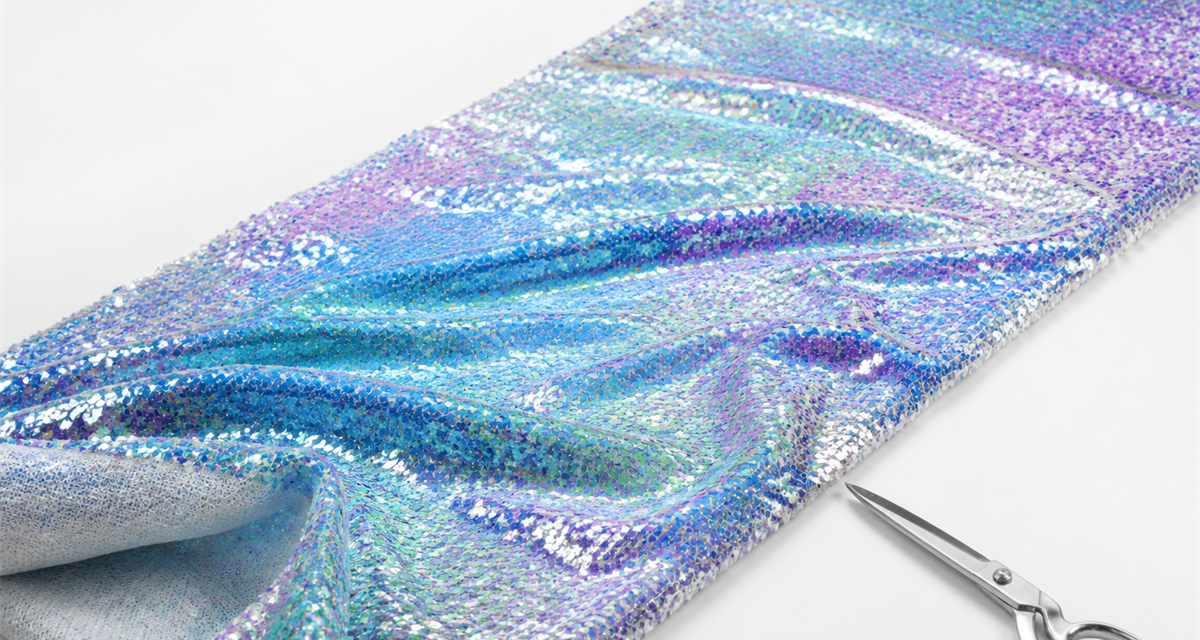
Understanding Stretch Sequin Fabric Wholesale Construction: Spandex Bases, Polymers, and Locking Stitches
Stretch sequin fabric is an advanced composite textile where computerized embroidery machinery anchors metallic, holographic, or matte discs onto multidirectional elastic backings. In commercial B2B garment engineering, the longevity, drape, and shape retention of form-fitting garments depend entirely on the synergy between three critical material elements: the nylon-spandex base mesh, the thermal-grade polymer film, and the high-elasticity embroidery locking thread.
1. Elastic Base Mesh Formulations
The chemical composition and knitting structure of the underlying substrate establish the mechanical elongation limit and recovery rate:
- 4-Way Stretch Nylon-Spandex Mesh: Performance apparel relies on an 85% nylon / 15% elastane tricot knit (180–240 GSM). Consequently, this backing provides 120% to 150% multidirectional stretch recovery, ensuring catsuits, leotards, and dresses conform smoothly without sagging.
- Polyester-Elastane Power Netting: Formulated with 90% polyester and 10% elastane (120–160 GSM). Specifically, this base offers 2-way horizontal stretch with warp tensile resistance for structured bridal bodices and corsetry.
- Stretch Velvet and Tricot Backings: Heavier bases (240–320 GSM) combining micro-velvet fibers with elastane yarns provide opacity, thermal comfort, and rich color depth for luxury evening jackets. You can explore our complete range of sequin fabric collections across diverse elastic substrates.
2. Sequin Film Polymers: Virgin PET versus PVC
Selecting the correct polymer chemistry prevents surface cracking, thermal warping, and discoloration during garment finishing and industrial care:
- 100% Virgin PET (Polyethylene Terephthalate): The mandatory benchmark for export-ready apparel. Moreover, virgin PET sequins endure continuous ironing temperatures up to 150°C (302°F), maintain intense UV color stability, and resist degradation from commercial dry-cleaning solvents (perchloroethylene).
- PVC (Polyvinyl Chloride) Films: While PVC provides a lower unit cost for temporary stage props, it softens rapidly above 70°C (158°F). Consequently, steam ironing quickly distorts PVC sequins and can release persistent synthetic odors that fail international brand compliance standards.
3. Embroidery Thread Selection and Stitch Mechanics
- Lock-Stitch Embroidery with High-Tenacity Polyester: Multi-head embroidery equipment utilizes interlocking top and bobbin threads (40s/2 core-spun polyester). Therefore, even when pattern cutters slice through sequin rows during garment assembly, the remaining discs along adjacent seam lines stay firmly anchored without unravelling.
- Elastic Chain-Stitch Configurations: Continuous loop chain stitches allow maximum flexibility. However, without dedicated automated back-tack finishing at pattern borders, a single snag can trigger sequential thread release across the entire garment panel.
Key Takeaways for B2B Stretch Sequin Fabric Wholesale Sourcing
- Mandate 100% Virgin PET Polymer: Always specify heat-resistant PET sequins over PVC to ensure seamless garment steam pressing, dry cleaning, and durable stage performance.
- Specify 4-Way Stretch Recovery Tolerance: Verify that the fabric demonstrates at least 95% elastic recovery after 100% elongation, preventing saggy knees, loose waistbands, or deformed armholes.
- Inspect Back-Tack Edge Locking: Require the manufacturer to employ automated multi-head lock-stitching to prevent sequin shedding during pattern cutting and industrial overlock sewing.
- Standardize Laboratory Dip Validation and MOQ: Work with flexible manufacturing partners offering a standard 200-yard MOQ per custom colorway, supported by physical strike-off swatches within 3 to 5 business days.
5-Step Stretch Sequin Fabric Wholesale Procurement Workflow
Procuring commercial-grade stretch sequin fabric wholesale textiles requires precise technical alignment between fashion development teams and mill engineers. Follow this five-stage manufacturing workflow to safeguard production timelines and product quality:
- Step 1: Technical Specification Submission
Initially, buyers provide detailed design packs indicating substrate composition, total target GSM, clear stretch width (e.g., 130 cm usable embroidery area on 150 cm overall width), sequin diameter, and standardized Pantone/CSI color references. - Step 2: CAD Digitizing & Strike-Off Sampling
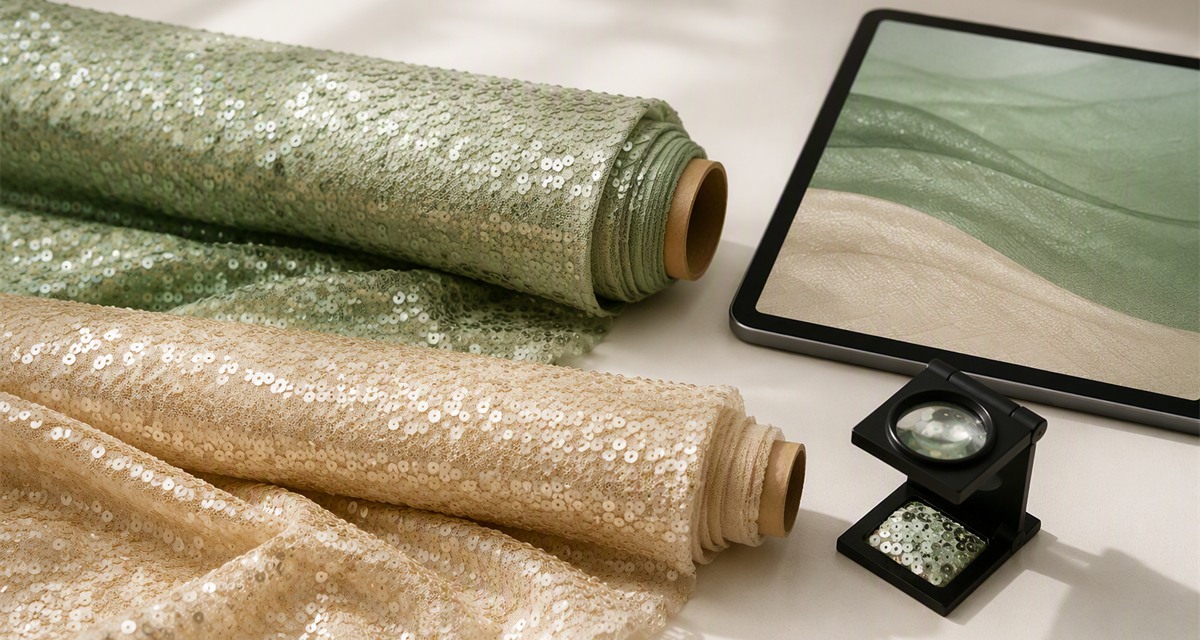
Next, our engineering team digitizes the CAD pattern and stitches a 1-yard production strike-off on actual multi-head machinery. Quality auditors inspect this swatch in standard D65 light booths to verify exact color matching, sequin luster, and stretch recovery. - Step 3: Tension Calibration and Substrate Pre-Setting
Before initiating full-scale embroidery, technicians pre-set the elastic base mesh on electronic tension frames to eliminate uneven bowing. In addition, quality controllers test raw elastane tenacity and PET disc thickness according to strict B2B textile manufacturing standards. - Step 4: Inline 4-Point System Defect Grading
Throughout the embroidery run, automated optical sensors and experienced inspectors track missing sequins, broken needles, skipped stitches, and tension distortions under ASTM D5430 standards. - Step 5: Bolt Finishing, Calendering, and Protective Packaging
Finally, workers roll finished stretch sequin bolts onto rigid cardboard cores with interleaving protective film, ensuring disc edges do not snag the elastic backing during global air or sea transit.
Technical Specifications and Material Tolerance Matrix
When engineering form-fitting garments, apparel developers must compare key performance characteristics across different stretch sequin fabric wholesale varieties:
| Technical Parameter | 4-Way Spandex Mesh Sequin | Heavy Stretch Velvet Sequin | Reversible Stretch Tricot Sequin |
|---|---|---|---|
| Base Composition | 85% Nylon, 15% Spandex | 92% Polyester, 8% Elastane | 88% Polyester, 12% Spandex |
| Sequin Composition | 100% Virgin PET Film | 100% High-Grade PET | Dual-Color Reversible PET |
| Available Sequin Sizes | 2mm, 3mm, 5mm Micro-Discs | 3mm, 5mm Standard Paillettes | 5mm Reversible Dual-Sided |
| Fabric Weight (GSM) | 240 – 320 GSM (±5%) | 360 – 480 GSM (±5%) | 320 – 420 GSM (±5%) |
| Total / Usable Width | 150 cm / 135 cm | 148 cm / 130 cm | 150 cm / 132 cm |
| Stretch Elongation & Recovery | 4-Way (120% Stretch, 96% Recovery) | 2-Way (60% Stretch, 94% Recovery) | 4-Way (90% Stretch, 95% Recovery) |
| Thermal Resistance | Up to 140°C (284°F) | Up to 150°C (302°F) | Up to 145°C (293°F) |
| Recommended Silhouettes | Dancewear, catsuits, bodycon dresses | Luxury evening jackets, stage capes | Graphic performance costumes |
| Standard Factory MOQ | 200 Yards / Custom Color | 200 Yards / Custom Color | 200 Yards / Custom Color |
B2B Quality Control Checklist and Defect Tolerances
To guarantee zero-defect garment cutting, apparel quality managers apply standardized inspection criteria under our verified quality control testing standards:
| Inspection Dimension | Testing / Evaluation Protocol | Acceptable Quality Tolerance (AQL) | Failure Rejection Trigger |
|---|---|---|---|
| Elastic Fatigue Test | ASTM D3107 Dynamic Stretch Rig | > 95% recovery after 500 stretch cycles | Permanent substrate deformation > 5% |
| Sequin Adhesion Under Stretch | ASTM D3939 Surface Snag Test | Zero sequin pop-off at 100% elongation | > 2 detached discs per square yard |
| Washing Colorfastness | AATCC 61 (2A Test) / ISO 105-C06 | Grade 4.0 or higher (Gray Scale) | Pigment bleeding onto adjacent elastane mesh |
| Rubbing Colorfastness (Crocking) | AATCC 8 / ISO 105-X12 Crocking Test | Dry Crocking: Grade 4.5 / Wet: Grade 4.0 | Metallic foil peeling under friction |
| Effective Usable Width | Calibrated Metric Steel Measure | Minimum 135 cm continuous sequin zone | Unstitched salvage border exceeding 8 cm |
| Weight Uniformity (GSM) | Circular GSM Cutter & Digital Scale | ±5% across 5 test quadrants per roll | Density variation exceeding ±8% |
| Needle Fragment Detection | High-Sensitivity Conveyor Metal Scan | 100% Pass (0.8mm Ferrous Ball Standard) | Any embedded metallic needle fragment |
Frequently Asked Questions (FAQ)
What is the minimum order quantity (MOQ) for custom stretch sequin fabric wholesale?
Our unified factory minimum order quantity is strictly 200 yards per custom colorway, base mesh composition, or specialized sequin motif. Consequently, this accessible MOQ empowers indie fashion designers and established fashion houses to develop bespoke performance lines without excessive upfront inventory risk.
Can you develop custom stretch sequin patterns and Pantone colors from physical swatches?
Yes, certainly. Our professional engineering team in Ruzhou, Henan provides precision spectrophotometer color matching and custom CAD embroidery programming. In addition, physical strike-off swatches are delivered within 3 to 5 business days upon receiving your target Pantone code, base fabric swatch, or vector artwork for custom decorative fabrics.
How does Yunfan Textile prevent sequin popping when stretch garments are worn?
Our factory utilizes multi-head computerized lock-stitch machines paired with flexible high-tenacity core-spun polyester thread. Furthermore, our programmable stitch spacing accounts for elastane extension, ensuring that sequins glide smoothly across the expanding mesh without snapping lock threads or popping off during intense movement.
What international physical testing standards apply to export-ready stretch sequin fabric?
All finished production bolts undergo rigorous laboratory verification based on recognized global standards. Specifically, technicians implement AATCC 61 and ISO 105 for wash fastness, ASTM D3107 for elastic elongation recovery, and ASTM D5430 for 4-point visual defect inspection.
Conclusion
In summary, securing a reliable supply of stretch sequin fabric wholesale textiles requires partnering with a specialized manufacturing mill that masters elastic tension control, virgin PET polymer stability, and multi-head lock-stitch durability. By defining clear technical criteria for 4-way stretch recovery, colorfastness, and needle protection, apparel brands dramatically reduce production defects and accelerate garment production cycles. Yunfan Textile provides agile B2B manufacturing, rigorous four-point quality control, and dedicated customer support to power your creative textile collections.
Direct B2B Sourcing on Alibaba
Explore our full catalogue of custom sequin fabrics, order verified production samples, and trade with Trade Assurance on our official Alibaba store.
View Yunfan Textile on Alibaba →Request Fabric Samples & Custom Sourcing Consultation
Request sequin fabric samples and share your target GSM, width, sequin size, and colour reference.
Talk to Morris directly:
- Email: morris@yunfantextile.com
- WhatsApp 1: +86 156 3752 5803
- WhatsApp 2: +86 175 1619 6727