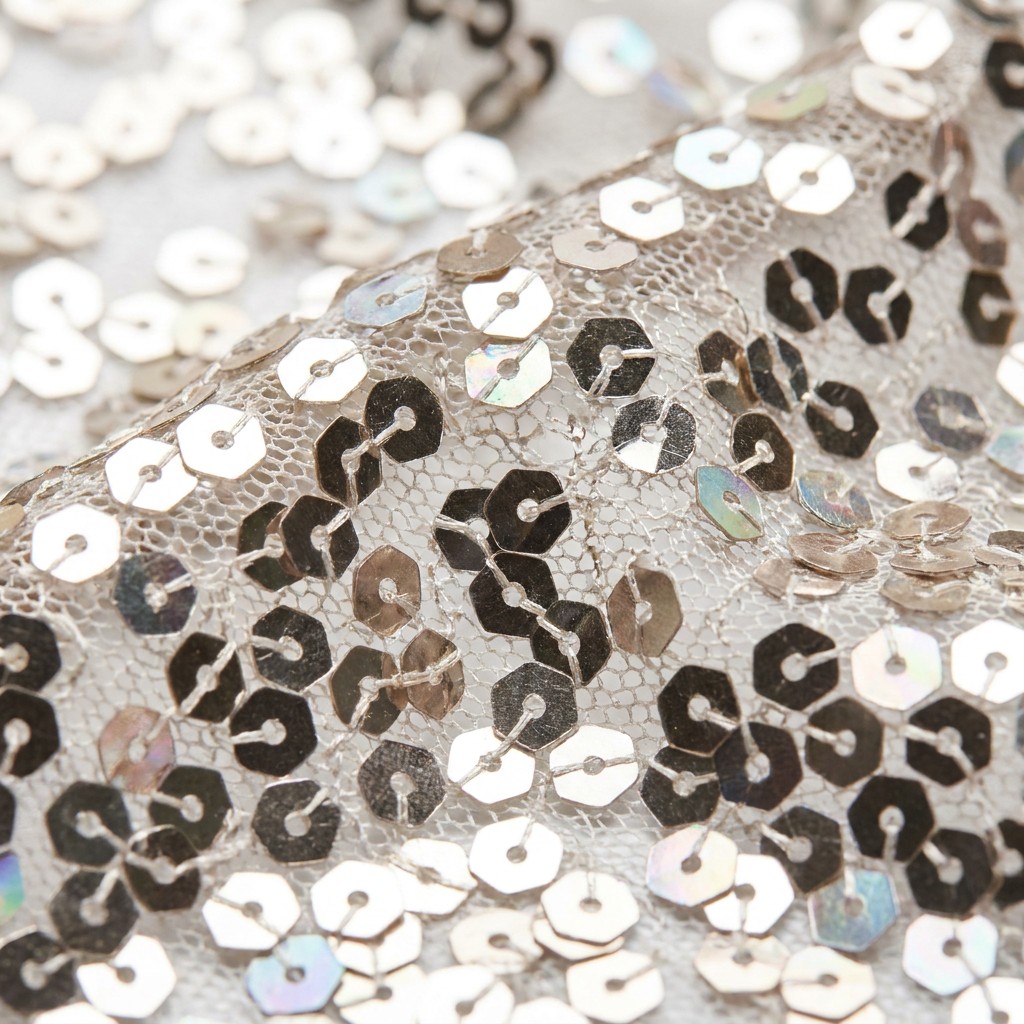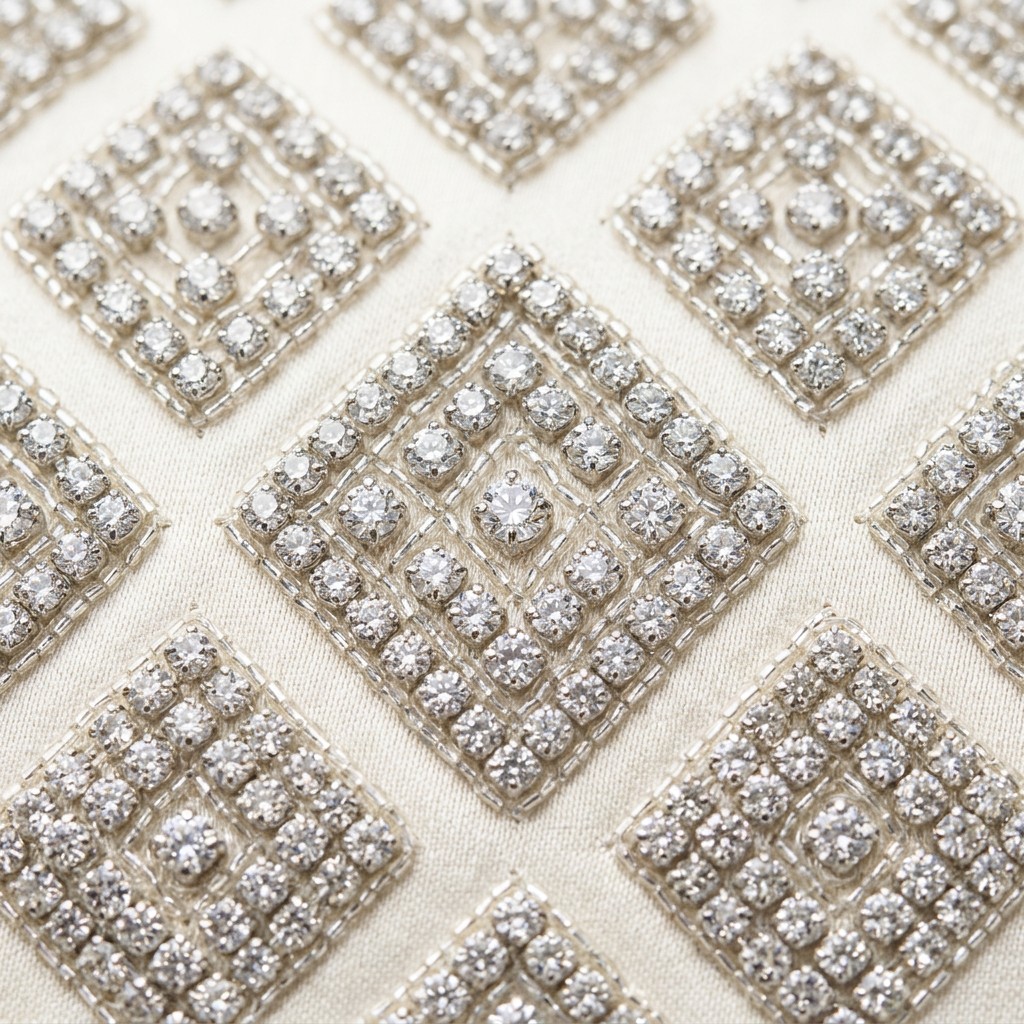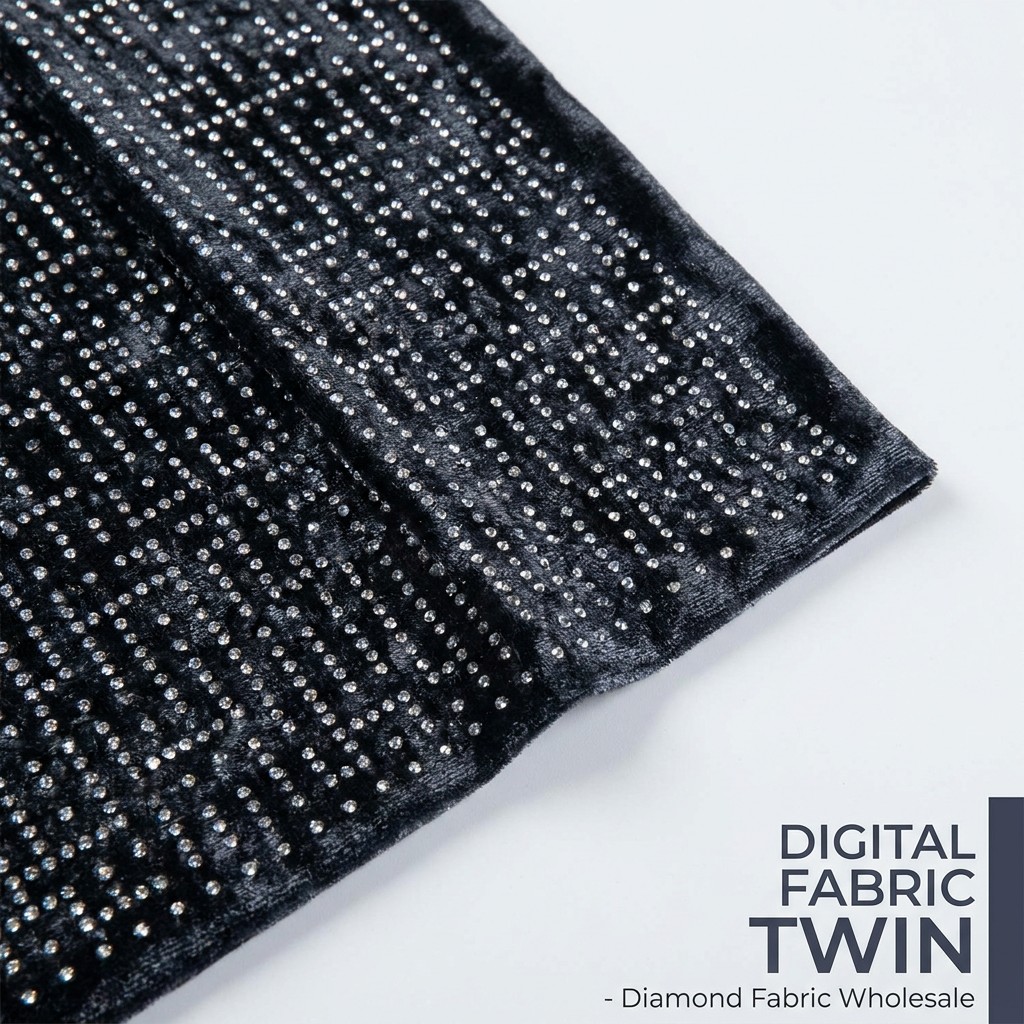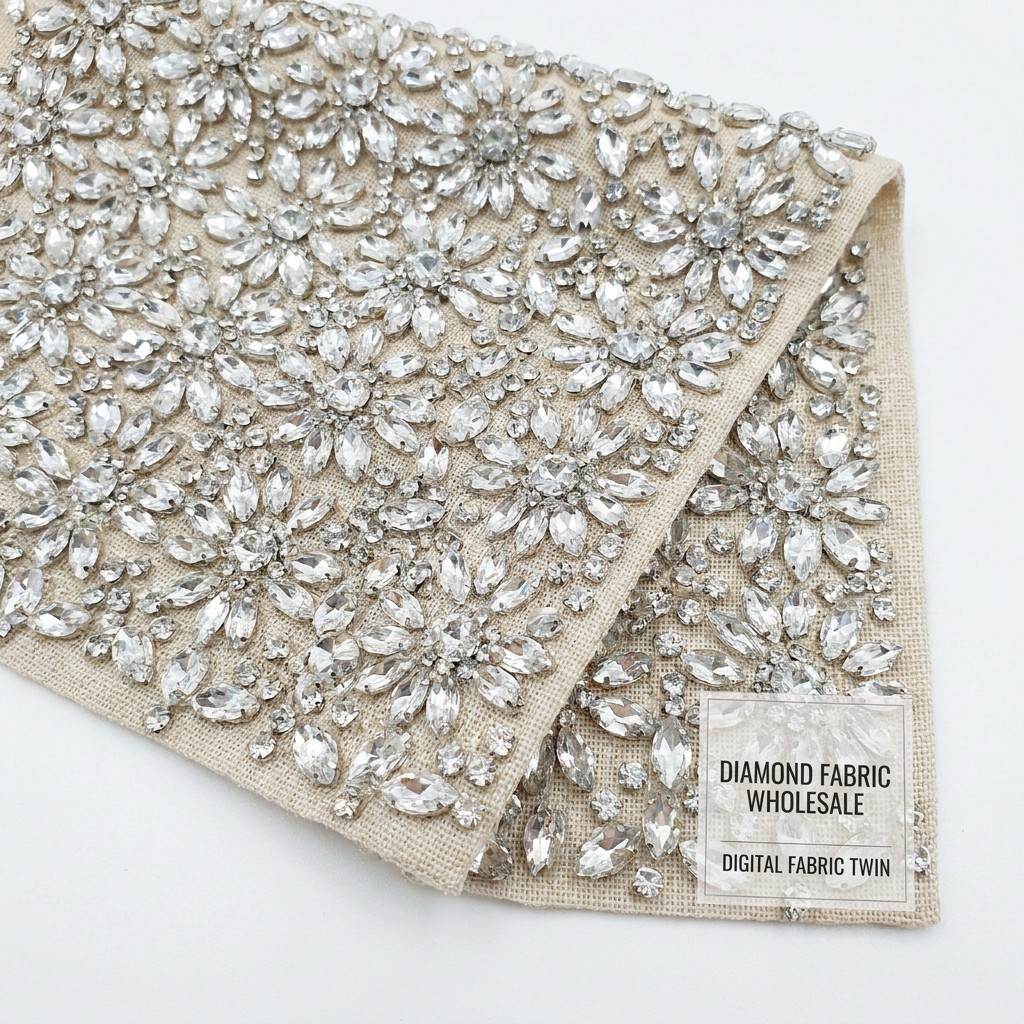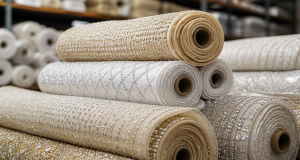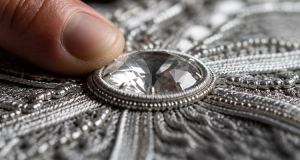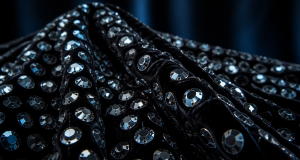
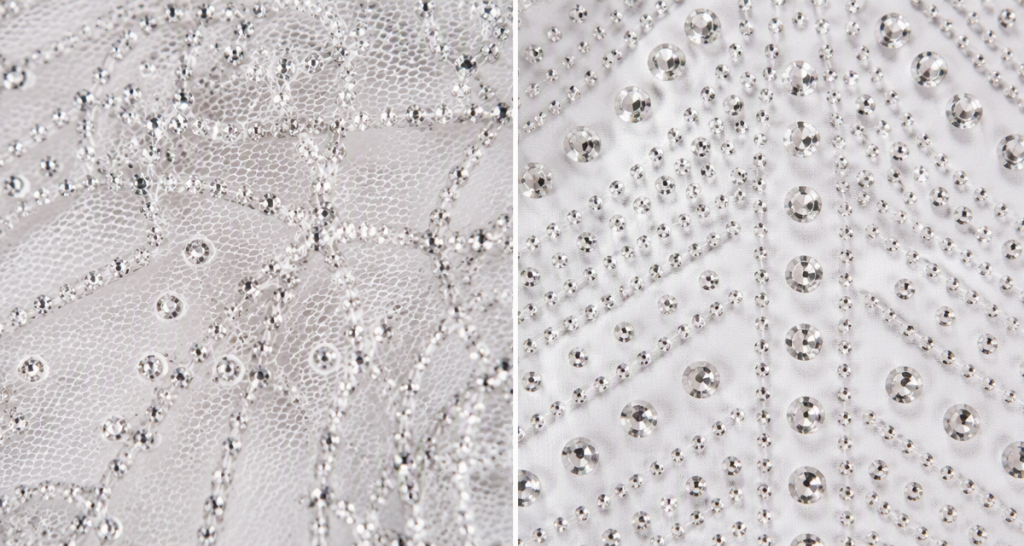
Both fabrics sparkle. They are not the same product. Understanding the difference between rhinestone mesh fabric and hot-fix diamond fabric is the difference between a gown that drapes beautifully and a production headache.
Two Products, Two Supply Chains
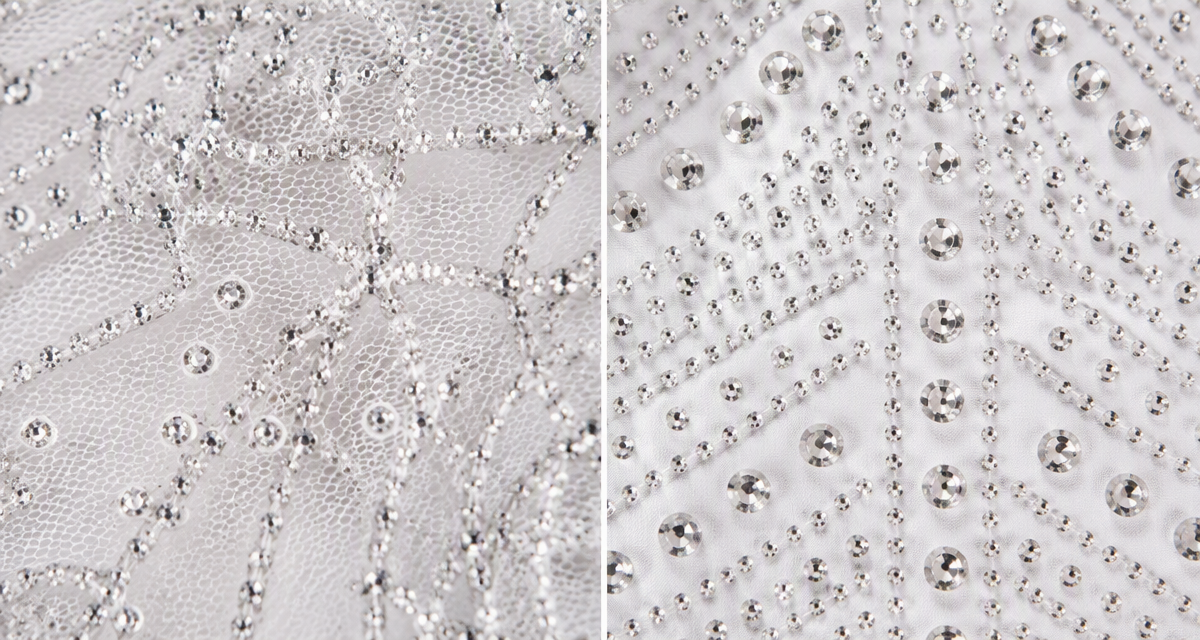
'Rhinestone mesh' and 'hot-fix diamond fabric' are often used interchangeably, and that is where buying mistakes begin. Rhinestone mesh is a net or tulle base with rhinestones attached to its surface, typically stitched or glued in place. Hot-fix diamond fabric refers to stones applied with a heat-activated adhesive — the fabric either carries stones fused onto the base, or acts as a transfer medium for applying stones onto a garment at the pressing stage.
For bridal diamond fabric buyers, the practical difference is process: one is a ready-to-sew embellished fabric, the other may require an additional application step and different handling. Knowing which one you are quoting is the first filter.
Rhinestone Mesh: The Workhorse of Bridal Embellishment
Rhinestone mesh fabric is widely used in bridal because it behaves predictably. It is sewn into overlays, bodices, and skirts like any other embellished textile, and the stones are secured during production, so the fabric arrives ready for the cutting table. Weight is manageable, the pattern repeats consistently across the roll, and sampling is fast. For bridal designers who need consistent sparkle across a full gown without extra application labour, rhinestone mesh is usually the default.
Hot-Fix Diamond Fabric: Speed and Precision at Scale
Hot-fix diamond fabric takes a different route. Stones are pre-coated with heat-activated glue and applied under heat and pressure — either to the fabric base during production, or onto the finished garment by the maker. In bridal production, hot-fix is valued where precision placement matters: controlled stone patterns, logos, or embellishment that must align with seams and darts. The catch: heat application adds a production step, and heat-sensitive base fabrics need careful testing before pressing.
Weight, Drape, and Durability: A Practical Comparison
- Weight: rhinestone mesh is generally lighter and more breathable — a real advantage in an all-day wedding dress.
- Drape: glued hot-fix application can stiffen the base; stitched rhinestone mesh keeps more movement.
- Durability: stones fused with quality hot-melt adhesive survive wear well, but a poorly applied transfer is worse than a well-stitched stone. Test both on your actual base fabric.
- Care: both require professional dry cleaning in most cases. Confirm care instructions with the supplier in writing.
Which One Fits Your Bridal Line?
Choose rhinestone mesh when you need full-surface sparkle, straightforward sewing, repeatable quality across metres, and a lighter hand feel. Choose hot-fix diamond fabric when you need precise pattern placement, high-speed application of a defined design, or a two-stage workflow where stones are applied at the garment stage. For couture pieces, many designers combine both: mesh for the main body, hot-fix for structured details such as belts, collars, and hem bands.
How to Sample Both Routes Efficiently
Order sample lengths of both constructions on the same base fabric, and test them side by side: check weight, drape on a dress form, and stone retention with a pull and rub test. If your design includes seams or darts, ask for a sample that crosses those lines. Confirm MOQ and lead time for each option at the same time — bridal calendars rarely forgive late fabric. With both samples in hand, the choice stops being theoretical and becomes a matter of handling, cost per gown, and your production team's confidence.
Conclusion
There is no universally better fabric — only a better fit for your construction, your timeline, and your dress. Define the end use, test both options on your base, and let the sample decide.
FAQ
Q: Can rhinestone mesh be washed?
A: Most embellished bridal fabrics are dry-clean only. Ask the supplier for care instructions specific to your stone and adhesive type, and test a sample before production.
Q: Will hot-fix stones stay on through a full wedding day?
A: With quality hot-melt adhesive and correct pressing temperature, retention is generally strong. Ask for adhesion test data and test on your actual fabric before bulk.
Q: Which option is cheaper per gown?
A: It depends on stone density, base fabric, and your labour. Rhinestone mesh usually costs less to sew; hot-fix shifts cost into the application step. Compare total cost per gown, not fabric price alone.
Q: Can I get a custom pattern in either fabric?
A: Custom layouts are possible in both, subject to tooling and MOQ. Confirm pattern feasibility with the supplier before design lock.
Q: What is the lead time for bridal quantities?
A: Lead time is confirmed after sampling and depends on base fabric and stone availability — typically 2-6 weeks for standard constructions and longer for custom patterns.
Get a Recommendation for Your Gown
Send us your sketch and base fabric details. Our team will recommend the right embellishment route and send a sample with adhesion data, MOQ, and lead time for your exact gown construction.
Related Sourcing Resources
- Diamond Fabric Wholesale – Diamond Material Fabric Supplier
- Diamond Fabric Wholesale – Rhinestone Embellished Textile
- Diamond Beading Fabric Wholesale – Luxury Diamond Bead Textile
- 15mm Diamond-Cut Sequin Fabric Wholesale – Haute Couture & Evening Gown
Sourcing note: MOQ varies by product and customization. Confirm the exact minimum, lead time, and sample details with our team after your specification is reviewed.