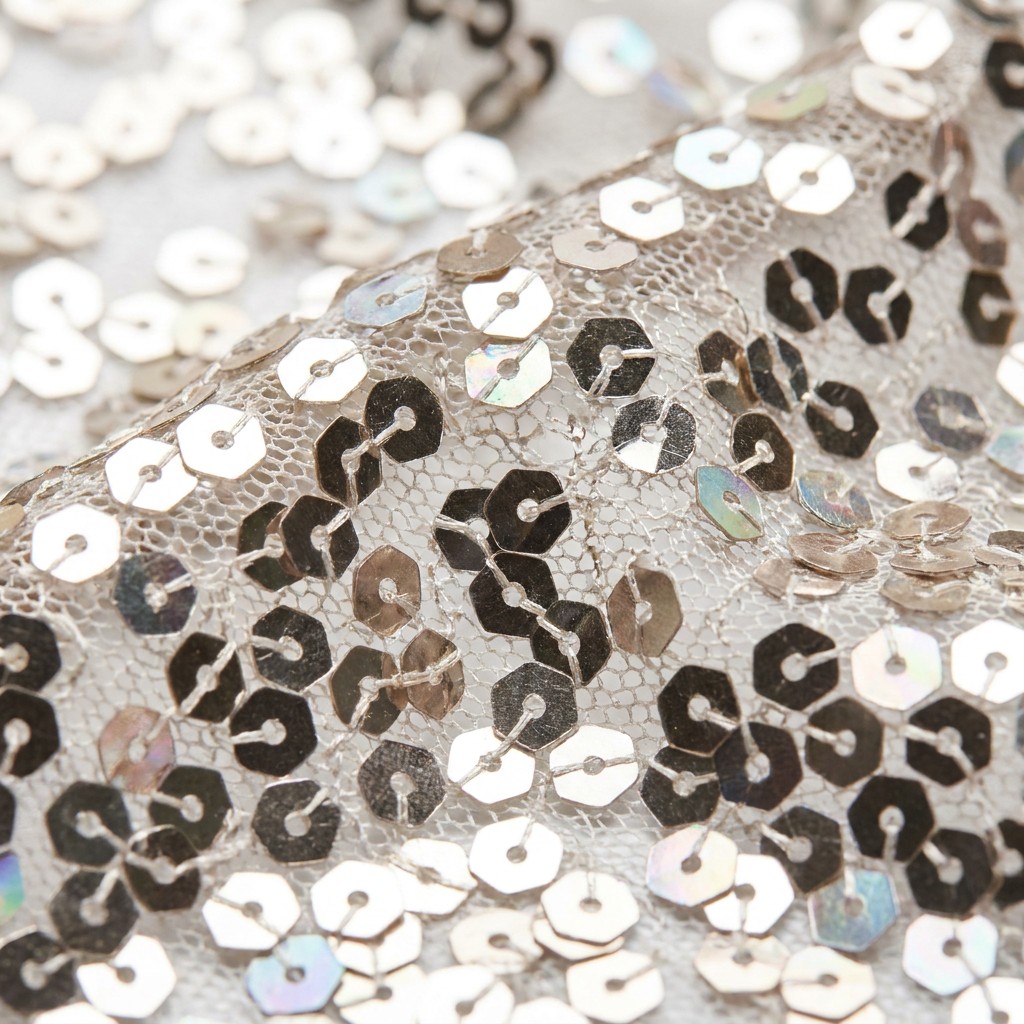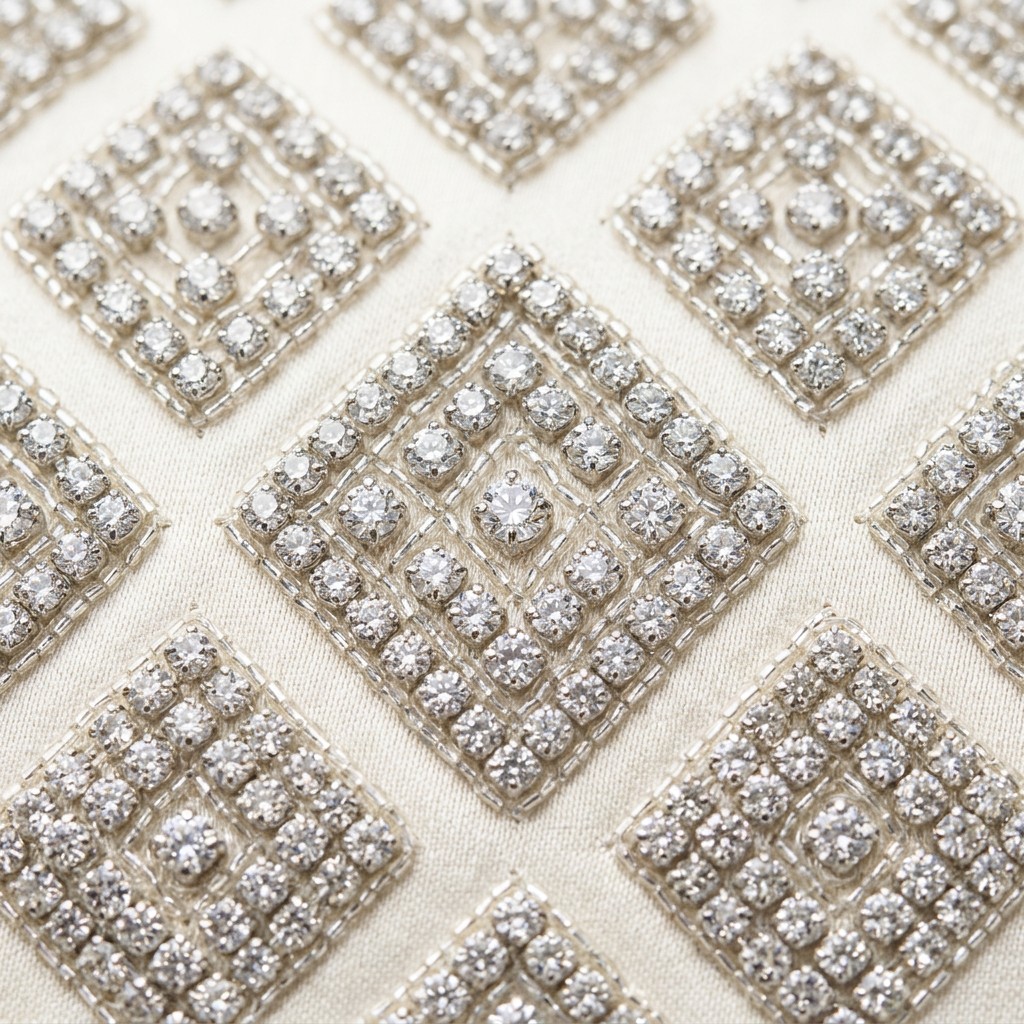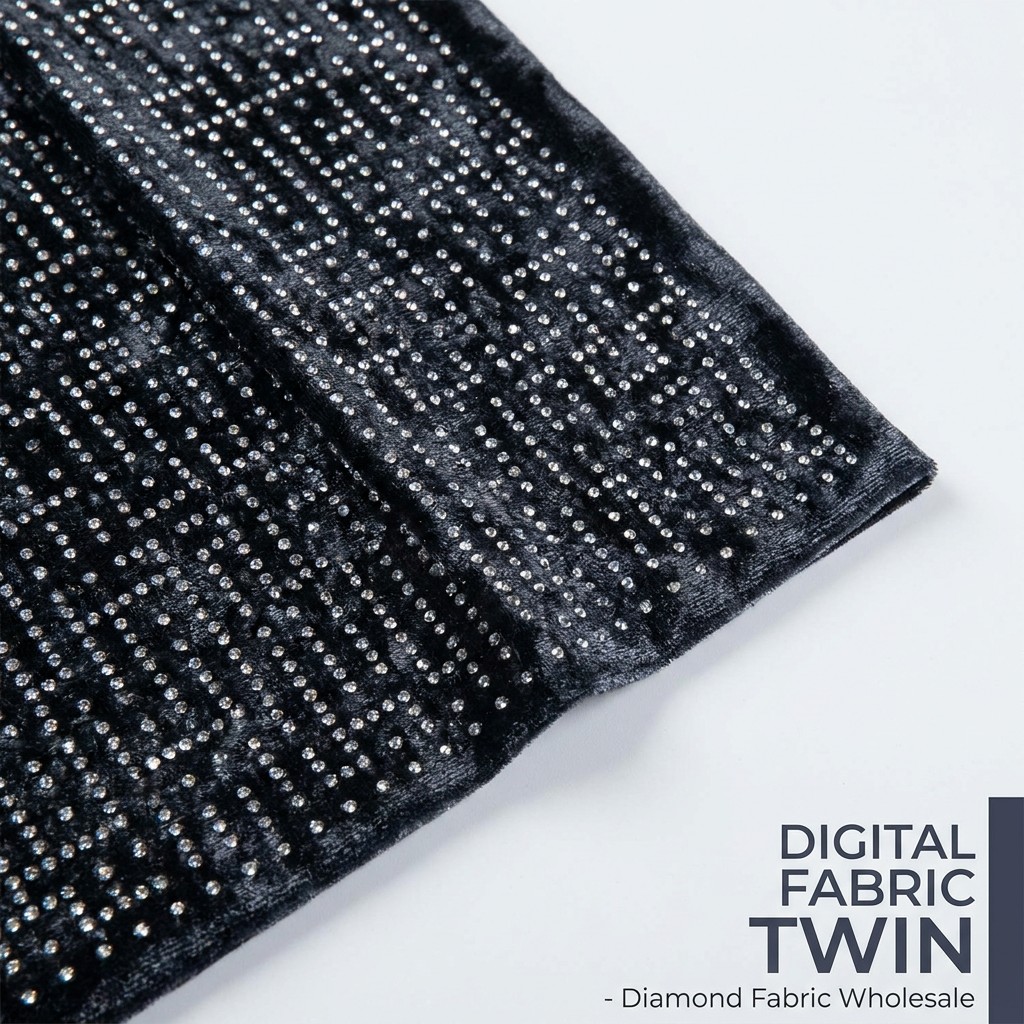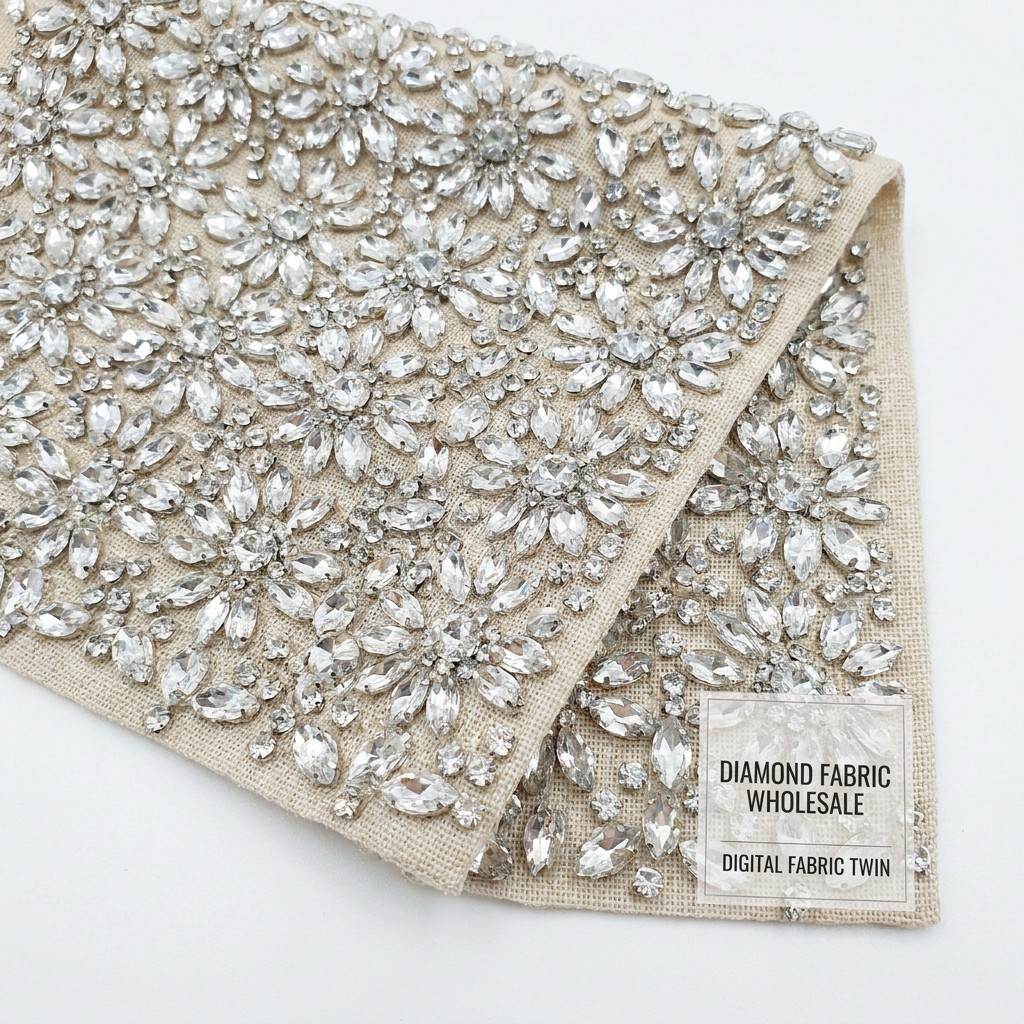
The most expensive fabric in your range is the one that fails on the first wear. Stone retention is a measurable, manageable quality issue — here is how serious buyers control it with a proper rhinestone adhesion test on diamond embroidery fabric.
Why Stones Fall Off: The Three Root Causes
Stone loss rarely has a single cause. The three most common are:
- Adhesive failure — the glue or hot-melt did not cure or did not bond to the base fabric.
- Mechanical weak points — stones placed on high-flex areas such as seams, darts, or stretch zones with no reinforcement.
- Handling damage — abrasion in transit, poor packing, or pressing at the wrong temperature during garment making.
Each cause has a different fix, which is why guessing is expensive.
The 5.5N Adhesion Benchmark: What It Measures and What It Misses
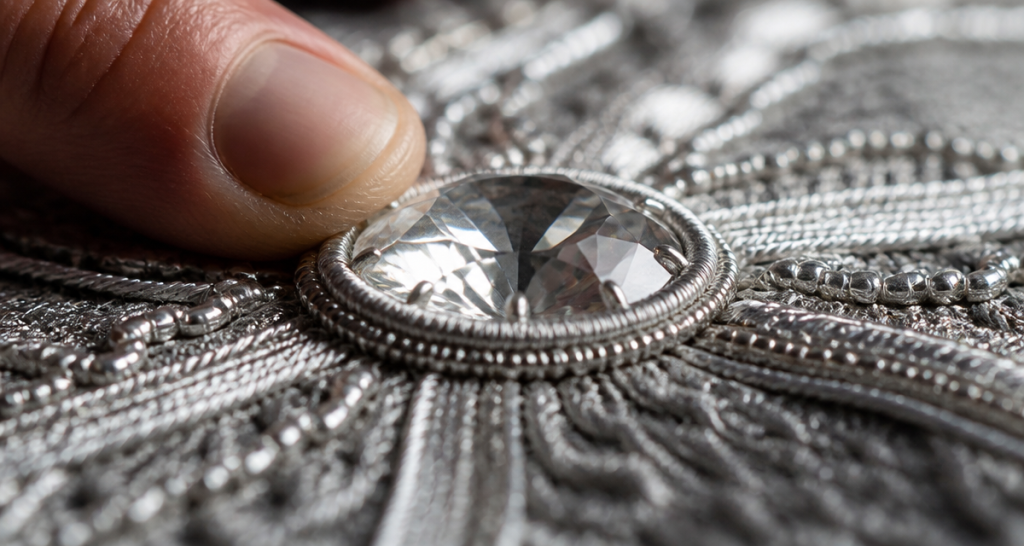
A widely used commercial benchmark for stone retention is the peel-force test: pulling a stone from the fabric and measuring the force required, with 5.5 newtons (N) commonly cited as an acceptable threshold for glued or hot-fix stones. The number works as a screening tool — it separates obviously weak bonds from acceptable ones. What it misses is the real-world picture: repeated flexing, temperature change, and abrasion. A stone that passes a single pull test can still shed after a season of wear. Treat 5.5N as a floor, not a guarantee, and pair it with flex and abrasion checks on your actual base fabric.
Building a QC Process Around Retention
- Incoming inspection: test adhesion on every new base fabric and stone batch before production starts. Bases with silicone finishes or coatings can reject adhesive.
- In-process checks: during production, pull-test samples at regular intervals — adhesive and press settings drift over a long run.
- Pre-shipment inspection: test random metres from the actual lot, not the sales sample. Check edge rows, fold lines, and pattern boundaries, where stones are most exposed.
- Documentation: ask for lot-specific test results in writing, so you have both recourse and data for the next order.
Design and Handling Pitfalls That Shorten Stone Life
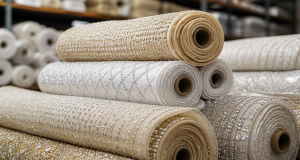
Some shedding is designed in. Stone rows that cross seam allowances, dense stone fields on stretch fabrics, and stones placed where a zipper or hook scrapes them are all failure points you can eliminate at the design stage. On the production side, the biggest offender is pressing: ironing directly over stones at high temperature can degrade adhesive and crack stones. Use a press cloth, low heat, and steam off the stone field. Packing matters too — rolls should be wound face-in with protective interleaving where stones are large or heavy.
What to Ask Your Supplier Before Bulk Production
- What adhesion test do you run, and can you share lot data?
- What failure threshold do you consider acceptable, and what is your reject policy above it?
- Which bases and stone types does your adhesive system actually bond to?
- Can you simulate flex or abrasion testing on my intended construction?
- How do you pack to prevent transit shedding?
If a supplier cannot answer these without hesitation, the risk sits with you.
Conclusion
Stone retention is not luck. It is a spec, a test, and a habit. Define the threshold, verify the lot, and protect the design — and your diamond embroidery will still be intact at the last wear, not just the first.
FAQ
Q: Is 5.5N a mandatory industry standard?
A: It is a commonly referenced commercial benchmark rather than a universal legal standard. Confirm the test method and threshold your supplier uses, and match both to your end use.
Q: Can stones be re-applied after shedding?
A: Occasionally, with the right adhesive and equipment, but rework is rarely cost-effective at scale and can damage the base. Prevention through QC is cheaper.
Q: Does stone retention depend on the base fabric?
A: Strongly. Coatings, fibre type, and weave density all affect adhesive bonding. Always test adhesion on the final base fabric, not a generic sample.
Q: How can I test adhesion myself?
A: A hand pull test at a 45-degree angle plus a rub test on a sample metre is a practical first check. For formal verification, use a calibrated pull tester following your supplier's method.
Q: What packing prevents stones shedding in transit?
A: Face-in winding, protective interleaving, and firm but not over-compressed rolls. Ask your supplier to confirm the packing spec in writing.
Source a Durable Diamond Embroidery
Need a durable diamond embroidery for a demanding collection? Send us your base fabric and construction details — we will produce a sample with adhesion data, MOQ, and a confirmed lead time before you commit to bulk.
Related Sourcing Resources
- Diamond Fabric Wholesale – Diamond Material Fabric Supplier
- Diamond Fabric Wholesale – Rhinestone Embellished Textile
- Diamond Beading Fabric Wholesale – Luxury Diamond Bead Textile
- 15mm Diamond-Cut Sequin Fabric Wholesale – Haute Couture & Evening Gown
Sourcing note: MOQ varies by product and customization. Confirm the exact minimum, lead time, and sample details with our team after your specification is reviewed.