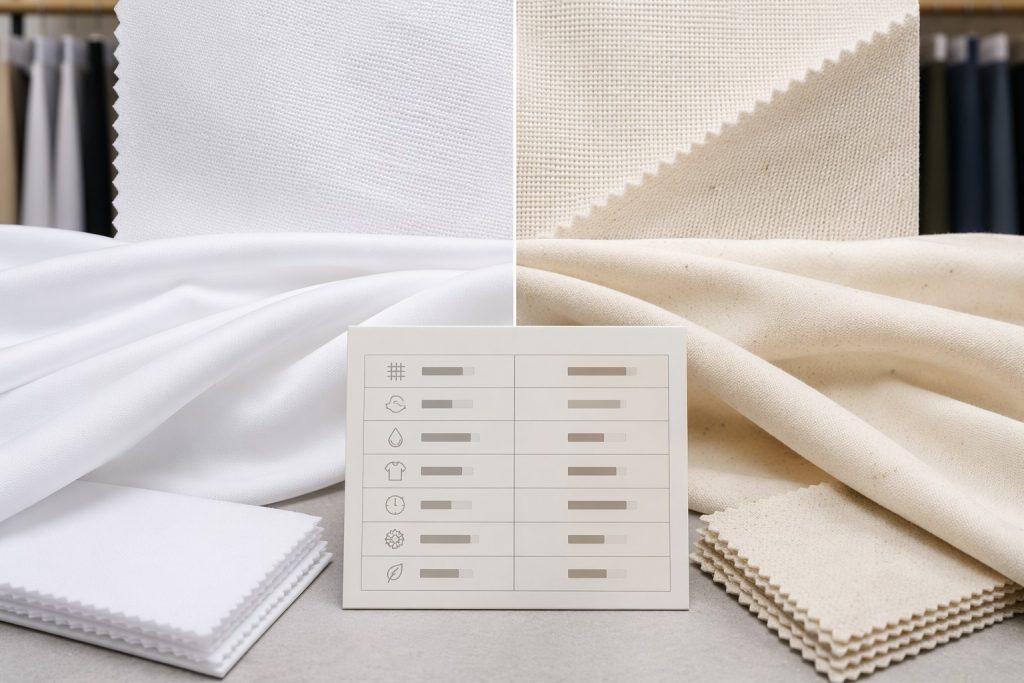
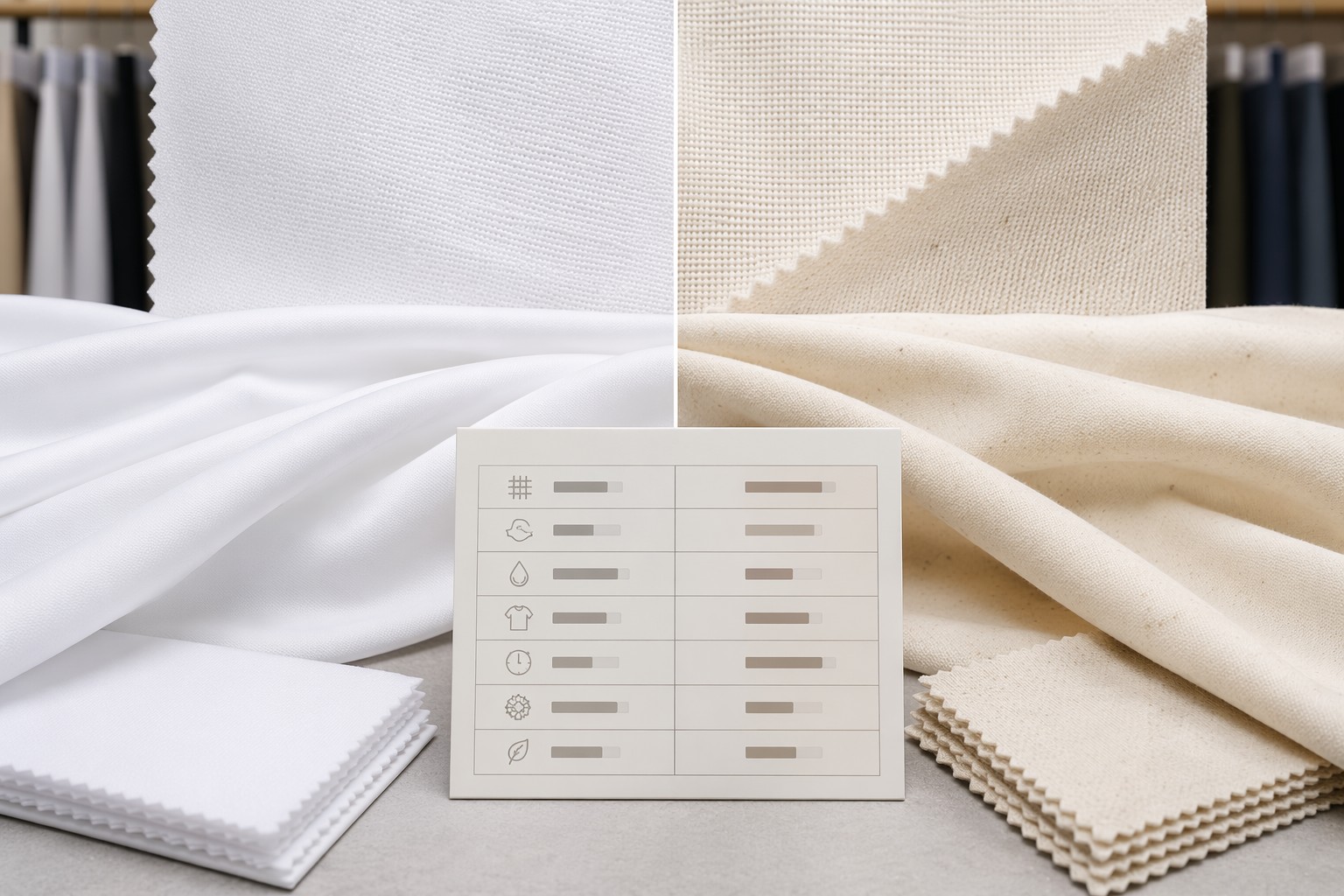
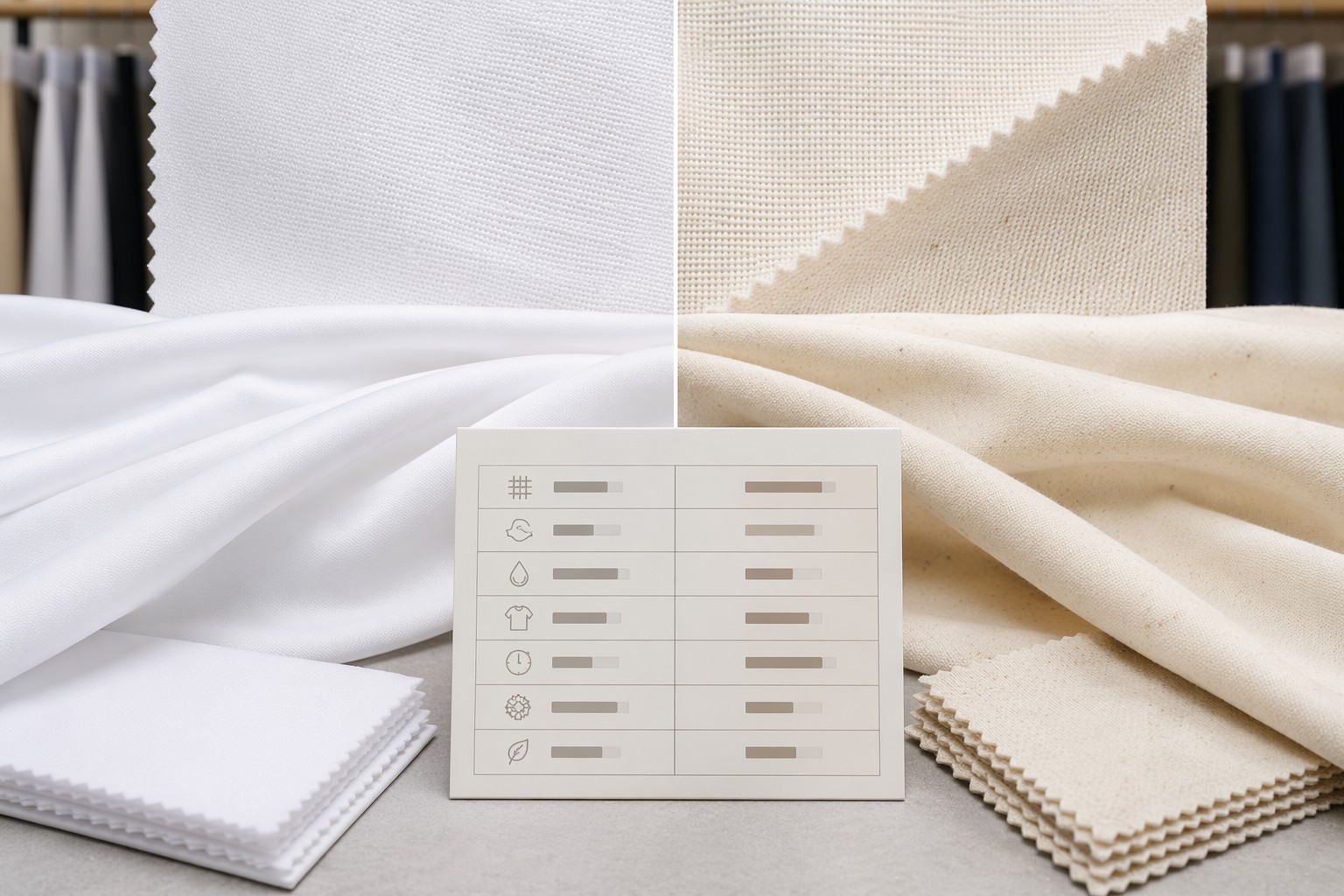
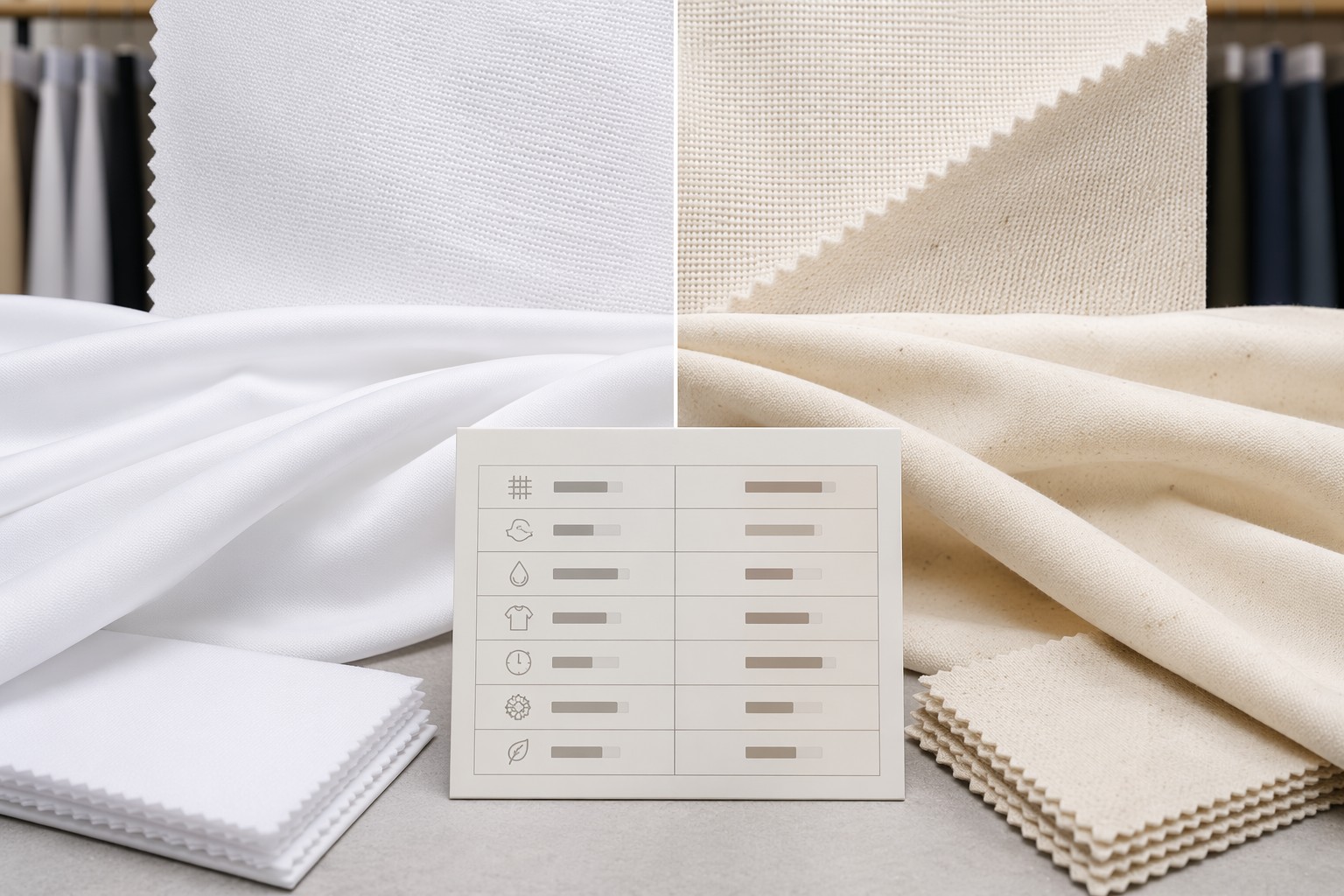
Polyester and cotton are the two most widely used textile fibers in the world. For wholesale buyers — whether sourcing for apparel, workwear, home textiles, or promotional products — understanding the practical differences between these materials is essential for making the right sourcing decision for each product category.
This guide compares polyester and cotton fabric across the most important criteria for B2B buyers: durability, care, comfort, cost, sustainability, and application suitability.
Fiber Origin and Production
Cotton is a natural fiber harvested from the cotton plant, primarily grown in the US, India, China, and Brazil. It is a renewable resource but requires significant water, land, and pesticide inputs in conventional farming. Organic cotton reduces chemical inputs but commands a price premium and has lower yields.
Polyester is a synthetic fiber produced from petroleum-derived terephthalic acid and ethylene glycol through a chemical polymerization process. It is produced at massive industrial scale with highly consistent fiber properties. Recycled polyester (rPET), made from post-consumer plastic bottles, is a growing segment that reduces the fossil fuel dependency of standard polyester production.
Head-to-Head Comparison
| Property | Polyester | Cotton |
|---|---|---|
| Durability | Higher — resists abrasion and tearing | Good but wears faster under heavy use |
| Wrinkle resistance | Excellent — holds shape naturally | Poor — wrinkles easily, requires ironing |
| Moisture absorption | Low — moisture-wicking in performance constructions | High — absorbs and holds moisture |
| Breathability | Lower in standard constructions | Higher — more breathable in hot weather |
| Softness (skin feel) | Variable — depends on yarn and finish | Naturally soft, especially after washing |
| Color fastness | Excellent — colors stay bright through washing | Good but fades faster than polyester |
| Shrinkage | Minimal — dimensionally stable | Shrinks unless pre-shrunk or sanforized |
| Drying speed | Fast — low moisture retention | Slow — holds water after washing |
| Price (per yard wholesale) | Lower — more cost-efficient at scale | Higher — subject to crop price volatility |
| Sustainability | Petroleum-based; rPET option available | Natural but water/pesticide intensive |
When to Choose Polyester
Polyester is the better choice when:
- Durability is the priority – workwear, uniforms, and activewear that undergo frequent washing and hard use
- Easy care is required – wrinkle resistance and fast drying reduce operational costs in hospitality, healthcare, and institutional settings
- Color vibrancy must be maintained – promotional products, branded merchandise, event apparel
- Budget is a constraint – polyester delivers more yards per dollar than comparable cotton constructions
- Moisture management is needed – performance sportswear, outdoor apparel, technical workwear
When to Choose Cotton
Cotton is the better choice when:
- Skin comfort is the priority – underwear, childrenswear, bedding, and any product worn directly against skin for extended periods
- Breathability matters – warm-weather apparel and products marketed in hot climates where air circulation is a key consumer concern
- Natural fiber positioning is part of the brand story – premium apparel, organic product lines, sustainable collections
- Printability is important – cotton accepts pigment and reactive dyes with excellent color definition; preferred for detailed screen printing and DTG printing
Polyester-Cotton Blends
Blended fabrics (typically 65% polyester / 35% cotton, or 50/50) are widely used because they combine the durability and easy care of polyester with the breathability and soft feel of cotton. Blends are the standard fabric for:
- Workwear shirts and trousers
- Promotional T-shirts
- School uniforms
- Casual apparel at mid-price points
Sourcing Polyester Fabric Wholesale
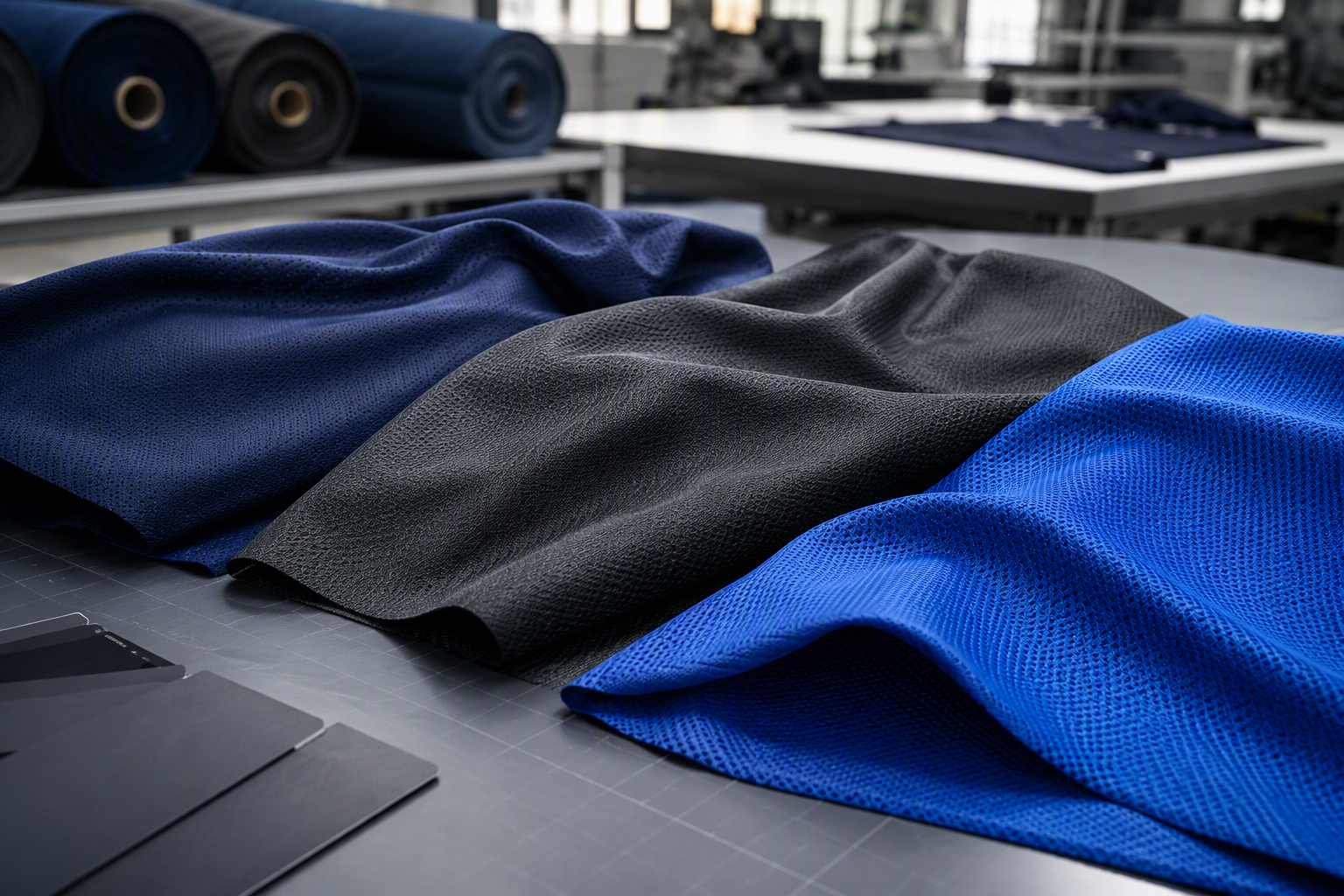
Yunfan Textile manufactures polyester fabric wholesale in a wide range of constructions — from lightweight moisture-wicking mesh to heavier polyester twill and microfiber — for apparel, sportswear, and home textile applications. Contact us for samples and pricing.
Related Sourcing Note
The strategic sourcing of textiles like the ones discussed in "Polyester Fabric vs Cotton – Which Is Better for Wholesale Buyers?" is crucial for maintaining a competitive edge in the global fashion and decor markets. As a professional manufacturer, Yunfan Textile emphasizes the importance of understanding the technical specifications and trend forecasts associated with Polyester Mesh and Wholesale Sequin Fabric. For B2B buyers, sourcing from a reliable factory ensures not only competitive wholesale pricing but also consistent quality across large-scale orders.
Our Premium Embroidery collection is specifically curated to meet the demands of international designers who prioritize both aesthetic brilliance and structural durability. Whether you are developing stage costumes, high-end bridal wear, or versatile home textiles, our production team provides the expertise needed to navigate complex material requirements. We recommend that procurement teams focus on fabric weight, texture density, and color fastness when evaluating Wholesale Sequin Fabric options.
At Yunfan Textile, we are committed to supporting your brand's growth through sustainable and innovative textile solutions. To experience our quality firsthand, you are invited to Request Free Swatches for your upcoming projects. Furthermore, all our transactions are fully protected by Alibaba Trade Assurance, providing a secure and transparent procurement process for our global partners. For custom development or bulk inquiries, please contact our sourcing team to discuss how we can bring your creative visions to life with our premium fabric selections.
Interested in wholesale orders with Trade Assurance?
Visit Our Alibaba Gold Supplier StoreContact Yunfan Textile for B2B Sourcing
🌐 Website: https://www.yunfantextile.com/
📌 B2B Contact: Jessie wendy
📱 WhatsApp/WeChat: +86 175 1619 6727 / +86 156 3752 5803
📧 Email: morris@yunfantextile.com
📧 Email: morris@yunfantextile.com