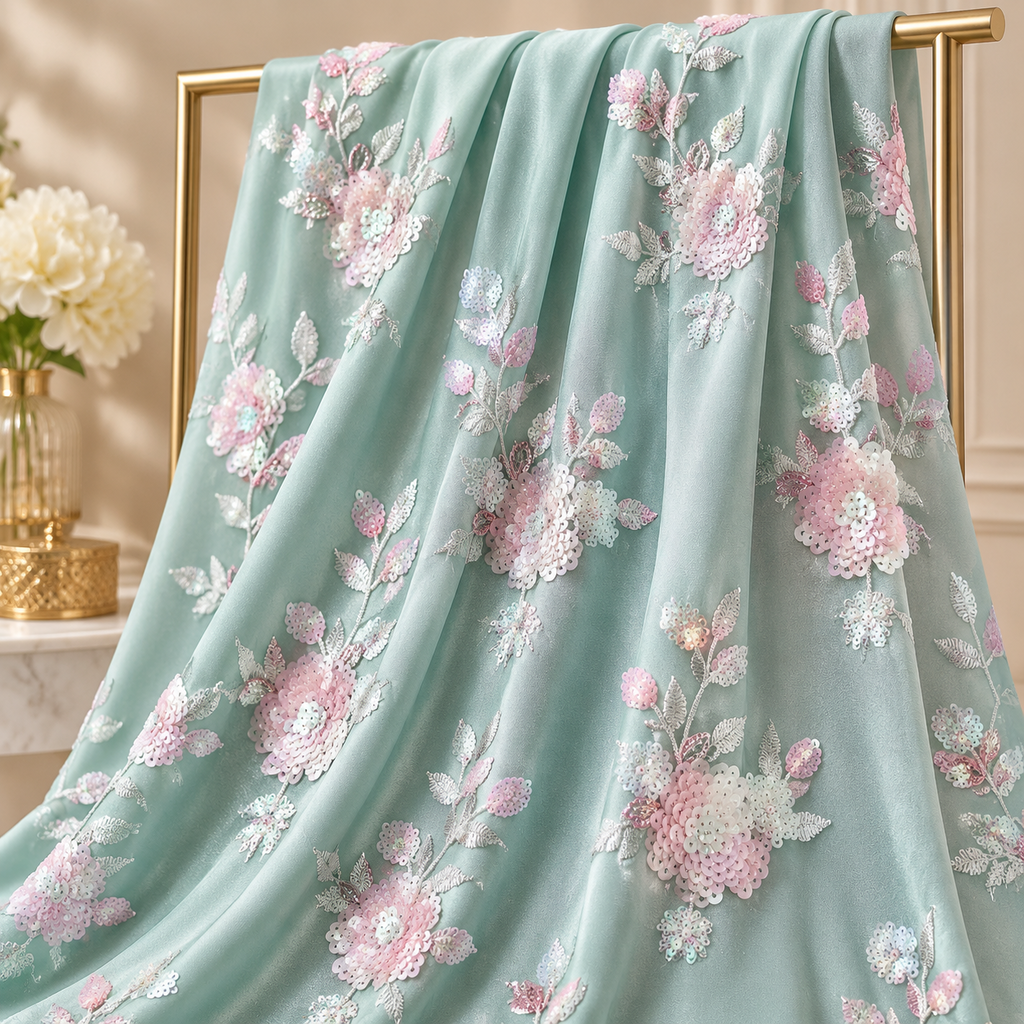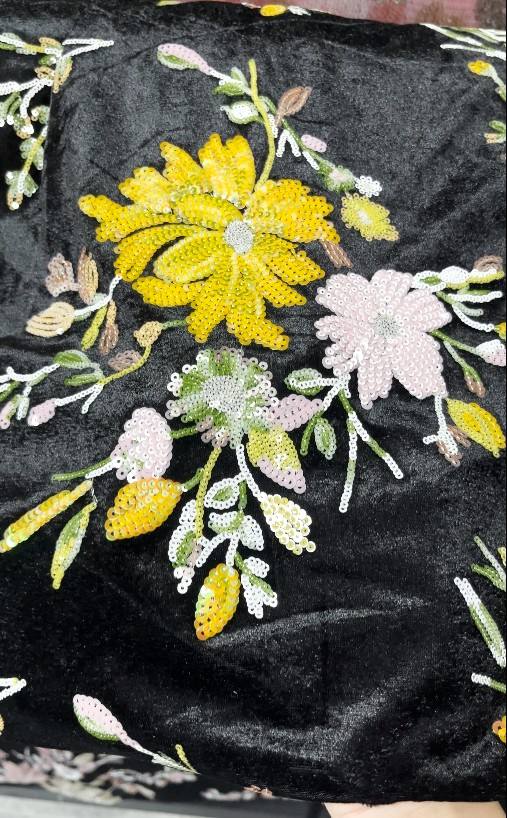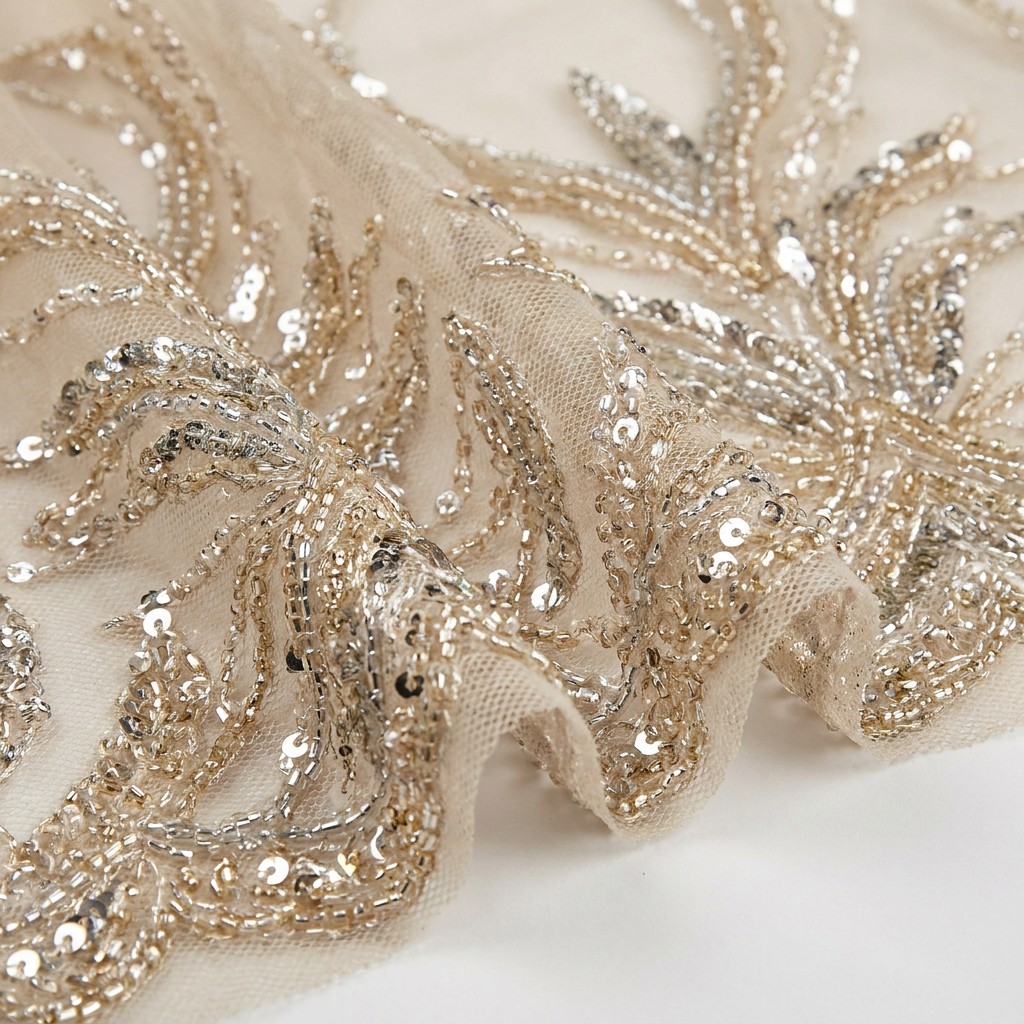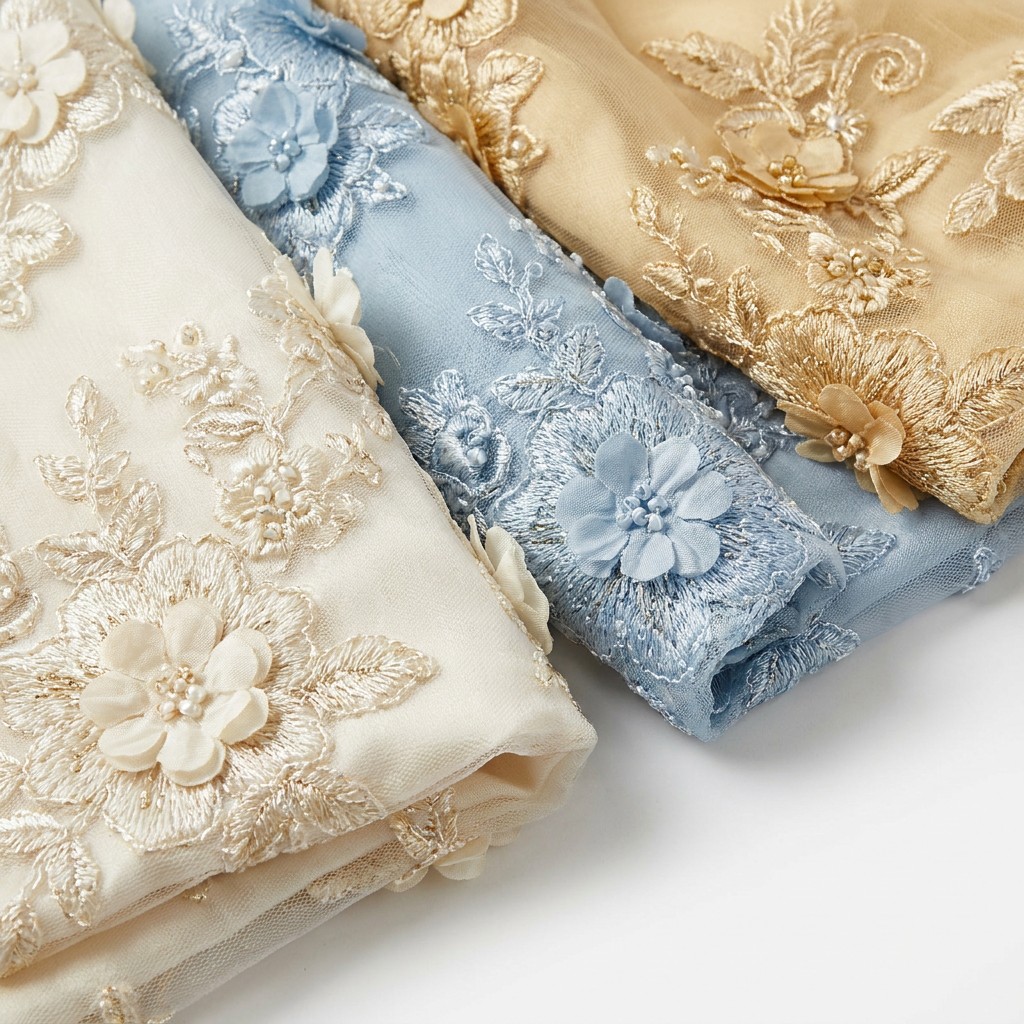
organza applique wash shrinkage is a production control question for buyers who need repeatable decorative fabric performance. This guide connects material science, machine settings, factory testing, and shipment approval. It is written for apparel brands, costume teams, sourcing managers, and quality inspectors who need clear evidence before a bulk order. The recommended minimum order is 200 yards.
What Is organza applique wash shrinkage?
Organza applique wash shrinkage is the dimensional mismatch between laser-cut polyester organza petals and a nylon mesh base after laundering, drying, and agitation. In practical terms, the failure appears when a decorative surface and its support fabric respond at different rates to a machine force, heat cycle, liquid, or light source. Therefore, a supplier must control the construction, process window, and inspection method together. A single attractive strike-off cannot prove bulk consistency.
For B2B approval, the team should define the fabric width, usable width, GSM, base composition, decoration density, colour reference, and tolerance before sampling. Then, the mill should record lot numbers and retain a signed standard. This sequence gives purchasing and production teams one shared reference when they compare lab results, pilot garments, and packed rolls.
Why organza applique wash shrinkage Matters in Bulk Production
A multi-tiered petal applique combines thin, heat-set organza with a more elastic or mobile mesh support. The organza remembers its heat history. Nylon can relax, absorb moisture, and move under agitation. When the two layers recover differently, petals can curl, overlap, flatten, or pull the embroidery ground into a visible wave.
Laser cutting changes the petal edge as well as the outline. Excessive energy can create a brittle edge that cracks during washing. Low energy can leave loose filaments that catch and distort the tier. The supplier should validate speed, power, focus, and gas flow on the exact organza lot before approving the production recipe.
AATCC 135 and ISO 6330 give the dimensional-change framework. Mark length and width reference points across the applique and the base. Wash the specimen using the agreed cycle, detergent, load, extraction, and drying method. Measure after conditioning, not while the panel is warm or damp. Report each layer and the assembled panel separately.
An 180°C high-temperature setting or pre-shrink process can stabilize polyester organza when the equipment and finish permit it. Use a controlled dwell and even tension. Over-setting can flatten the petal memory or change lustre. Under-setting leaves later wash shrinkage. The process engineer should compare free fabric, stitched applique, and finished garment panels.
Petal uprightness needs a defined gauge. For example, measure the vertical height from the base plane to the petal tip at fixed points. Also record tier spacing, edge curl angle, overlap, and any detached stitch. A qualitative phrase such as “three-dimensional” is not enough for a repeatable B2B approval.
The embroidery sequence affects distortion. Dense satin stitches can pull the mesh toward the centre. A stabilizer can improve registration but may change wash response if it remains in the garment. Balance stitch density, underlay, hoop tension, and compensation. Inspect the panel after hoop release before laundering so the factory can separate embroidery tension from fibre shrinkage.
For production, run a wash pilot using panels from the beginning, middle, and end of the lot. Photograph the same view before and after washing. Measure the total panel, the base mesh, and at least three petals. Keep one unwashed control. This evidence makes it easier to decide whether a failure comes from the material lot, setting recipe, or sewing process.
The final acceptance sheet should cover clean laser edges, secure petal attachment, stable tier height, no severe curl, no mesh puckering, and dimensional change within the agreed range. If care instructions require gentle washing or flat drying, confirm that the finished garment meets the label plan. A supplier should never use a harsher claim than the tested construction supports.
Industrial Test Method and Acceptance Window
A robust test plan starts with conditioning. Condition specimens for at least 24 hours at the agreed laboratory climate, cut from the left, centre, and right of the roll, and label every direction. Test both the decoration and the base because the visible fault often begins in the hidden layer. Use the named method in the purchase specification, record the instrument, operator, date, and lot, and photograph any failure before rework.
| Control point | Method or setting | B2B acceptance target | Evidence |
|---|---|---|---|
| Dimensional change | AATCC 135 / ISO 6330 after conditioning | Within signed length and width tolerance | Before/after measurement sheet |
| Heat setting | 180°C controlled pre-shrink trial | Stable shape without gloss or flattening | Recipe and temperature log |
| Petal geometry | Height, curl angle, tier spacing | Within approved uprightness gauge | Panel measurement record |
| Embroidery workmanship | Edge, stitch security, mesh tension | No loose edge or major distortion | Pre- and post-wash photos |
The control limit should be practical rather than cosmetic. A buyer can approve a narrow technical tolerance when the supplier proves that the tolerance predicts garment performance. Conversely, a perfect laboratory result has little value if operators change needle type, press temperature, thread, detergent, or lighting during production. Freeze the approved recipe and audit the first, middle, and last rolls.
Factory Quality-Control Checklist
| Stage | Inspector action | Release rule |
|---|---|---|
| Pre-production | Confirm signed lab dip, construction sheet, MOQ 200 yards, and approved trim or thread. | No open specification or unapproved substitute. |
| Pilot run | Inspect three fabric zones and run a representative seam, press, wash, rub, or tension trial. | All critical defects remain within the agreed tolerance. |
| Bulk running | Check machine settings, lot identity, roll edges, surface appearance, and test frequency. | Quarantine any roll with a trend toward the limit. |
| Final audit | Use a four-point appearance review and attach test records to the packing list. | Release only traceable, dry, protected rolls. |
For every nonconformity, record the defect code, location, affected metres, probable cause, containment action, and preventive action. A good corrective report links the defect to a controllable variable. Examples include stitch density, tension, dwell time, bath pH, coating cure, or an incorrect material lot. This approach prevents a visual repair from hiding a repeatable process risk.
Key Takeaways for Sourcing Teams
First, approve a measurable construction and a signed visual standard. Second, test specimens from multiple roll positions rather than one convenient swatch. Third, connect the laboratory limit to the actual garment operation. Finally, retain traceability from sample to bulk shipment. With these controls, Yunfan Textile can review target GSM, width, colour, decoration density, and production schedule before confirming a 200 yards order.
FAQ: What should a buyer send for sampling?
Send the target end use, base composition, finished width, GSM range, colour reference, decoration scale, and expected finishing route. Also send a physical standard when colour or handle matters. Morris can then match the technical brief to a controlled sample and explain the test evidence before bulk production.
FAQ: How should a team approve a borderline result?
Do not approve a borderline result by email alone. Repeat the test with a retained specimen, compare the result with the signed standard, and review the risk in the intended garment process. If the result remains outside the limit, ask for a documented corrective action and a new sample. This protects delivery timing and reduces claims.
FAQ: What information supports a fast quotation?
Share the focus application, quantity, target width, GSM, colour, finish, packing preference, destination, and deadline. A complete brief avoids avoidable sample cycles. The minimum order for this programme is 200 yards, while final pricing depends on construction, decoration, testing, and packing requirements.
Read the Quality Control category for inspection planning and the Embroidery Fabric category for related decorative constructions. These resources help product teams compare process evidence, not only photographs.
Source direct on Alibaba - request bulk pricing, specifications, and production details in one place.
organza applique wash shrinkage is a production control question for buyers who need repeatable decorative fabric performance. This guide connects material science, machine settings, factory testing, and shipment approval. It is written for apparel brands, costume teams, sourcing managers, and quality inspectors who need clear evidence before a bulk order. The recommended minimum order is 200 yards.
What Is organza applique wash shrinkage?
Organza applique wash shrinkage is the dimensional mismatch between laser-cut polyester organza petals and a nylon mesh base after laundering, drying, and agitation. In practical terms, the failure appears when a decorative surface and its support fabric respond at different rates to a machine force, heat cycle, liquid, or light source. Therefore, a supplier must control the construction, process window, and inspection method together. A single attractive strike-off cannot prove bulk consistency.
For B2B approval, the team should define the fabric width, usable width, GSM, base composition, decoration density, colour reference, and tolerance before sampling. Then, the mill should record lot numbers and retain a signed standard. This sequence gives purchasing and production teams one shared reference when they compare lab results, pilot garments, and packed rolls.
Why organza applique wash shrinkage Matters in Bulk Production
A multi-tiered petal applique combines thin, heat-set organza with a more elastic or mobile mesh support. The organza remembers its heat history. Nylon can relax, absorb moisture, and move under agitation. When the two layers recover differently, petals can curl, overlap, flatten, or pull the embroidery ground into a visible wave.
Laser cutting changes the petal edge as well as the outline. Excessive energy can create a brittle edge that cracks during washing. Low energy can leave loose filaments that catch and distort the tier. The supplier should validate speed, power, focus, and gas flow on the exact organza lot before approving the production recipe.
AATCC 135 and ISO 6330 give the dimensional-change framework. Mark length and width reference points across the applique and the base. Wash the specimen using the agreed cycle, detergent, load, extraction, and drying method. Measure after conditioning, not while the panel is warm or damp. Report each layer and the assembled panel separately.
An 180°C high-temperature setting or pre-shrink process can stabilize polyester organza when the equipment and finish permit it. Use a controlled dwell and even tension. Over-setting can flatten the petal memory or change lustre. Under-setting leaves later wash shrinkage. The process engineer should compare free fabric, stitched applique, and finished garment panels.
Petal uprightness needs a defined gauge. For example, measure the vertical height from the base plane to the petal tip at fixed points. Also record tier spacing, edge curl angle, overlap, and any detached stitch. A qualitative phrase such as “three-dimensional” is not enough for a repeatable B2B approval.
The embroidery sequence affects distortion. Dense satin stitches can pull the mesh toward the centre. A stabilizer can improve registration but may change wash response if it remains in the garment. Balance stitch density, underlay, hoop tension, and compensation. Inspect the panel after hoop release before laundering so the factory can separate embroidery tension from fibre shrinkage.
For production, run a wash pilot using panels from the beginning, middle, and end of the lot. Photograph the same view before and after washing. Measure the total panel, the base mesh, and at least three petals. Keep one unwashed control. This evidence makes it easier to decide whether a failure comes from the material lot, setting recipe, or sewing process.
The final acceptance sheet should cover clean laser edges, secure petal attachment, stable tier height, no severe curl, no mesh puckering, and dimensional change within the agreed range. If care instructions require gentle washing or flat drying, confirm that the finished garment meets the label plan. A supplier should never use a harsher claim than the tested construction supports.
Industrial Test Method and Acceptance Window
A robust test plan starts with conditioning. Condition specimens for at least 24 hours at the agreed laboratory climate, cut from the left, centre, and right of the roll, and label every direction. Test both the decoration and the base because the visible fault often begins in the hidden layer. Use the named method in the purchase specification, record the instrument, operator, date, and lot, and photograph any failure before rework.
| Control point | Method or setting | B2B acceptance target | Evidence |
|---|---|---|---|
| Dimensional change | AATCC 135 / ISO 6330 after conditioning | Within signed length and width tolerance | Before/after measurement sheet |
| Heat setting | 180°C controlled pre-shrink trial | Stable shape without gloss or flattening | Recipe and temperature log |
| Petal geometry | Height, curl angle, tier spacing | Within approved uprightness gauge | Panel measurement record |
| Embroidery workmanship | Edge, stitch security, mesh tension | No loose edge or major distortion | Pre- and post-wash photos |
The control limit should be practical rather than cosmetic. A buyer can approve a narrow technical tolerance when the supplier proves that the tolerance predicts garment performance. Conversely, a perfect laboratory result has little value if operators change needle type, press temperature, thread, detergent, or lighting during production. Freeze the approved recipe and audit the first, middle, and last rolls.
Factory Quality-Control Checklist
| Stage | Inspector action | Release rule |
|---|---|---|
| Pre-production | Confirm signed lab dip, construction sheet, MOQ 200 yards, and approved trim or thread. | No open specification or unapproved substitute. |
| Pilot run | Inspect three fabric zones and run a representative seam, press, wash, rub, or tension trial. | All critical defects remain within the agreed tolerance. |
| Bulk running | Check machine settings, lot identity, roll edges, surface appearance, and test frequency. | Quarantine any roll with a trend toward the limit. |
| Final audit | Use a four-point appearance review and attach test records to the packing list. | Release only traceable, dry, protected rolls. |
For every nonconformity, record the defect code, location, affected metres, probable cause, containment action, and preventive action. A good corrective report links the defect to a controllable variable. Examples include stitch density, tension, dwell time, bath pH, coating cure, or an incorrect material lot. This approach prevents a visual repair from hiding a repeatable process risk.
Key Takeaways for Sourcing Teams
First, approve a measurable construction and a signed visual standard. Second, test specimens from multiple roll positions rather than one convenient swatch. Third, connect the laboratory limit to the actual garment operation. Finally, retain traceability from sample to bulk shipment. With these controls, Yunfan Textile can review target GSM, width, colour, decoration density, and production schedule before confirming a 200 yards order.
FAQ: What should a buyer send for sampling?
Send the target end use, base composition, finished width, GSM range, colour reference, decoration scale, and expected finishing route. Also send a physical standard when colour or handle matters. Morris can then match the technical brief to a controlled sample and explain the test evidence before bulk production.
FAQ: How should a team approve a borderline result?
Do not approve a borderline result by email alone. Repeat the test with a retained specimen, compare the result with the signed standard, and review the risk in the intended garment process. If the result remains outside the limit, ask for a documented corrective action and a new sample. This protects delivery timing and reduces claims.
FAQ: What information supports a fast quotation?
Share the focus application, quantity, target width, GSM, colour, finish, packing preference, destination, and deadline. A complete brief avoids avoidable sample cycles. The minimum order for this programme is 200 yards, while final pricing depends on construction, decoration, testing, and packing requirements.
Read the Quality Control category for inspection planning and the Embroidery Fabric category for related decorative constructions. These resources help product teams compare process evidence, not only photographs.
Request Sequin Fabric Samples and share your target GSM, width, sequin size, and colour reference.
Talk to Morris directly:
Email: morris@yunfantextile.com
WhatsApp: +86 156 3752 5803
WhatsApp: +86 175 1619 6727