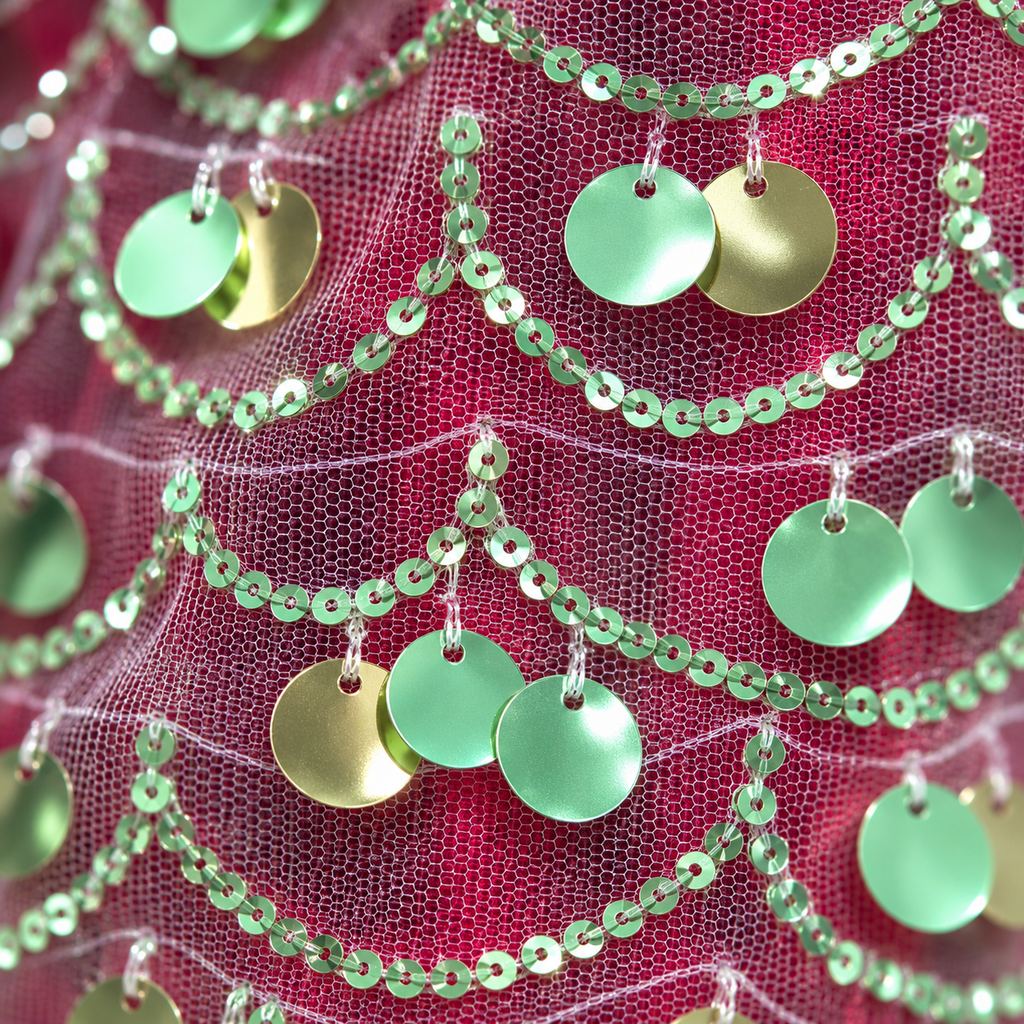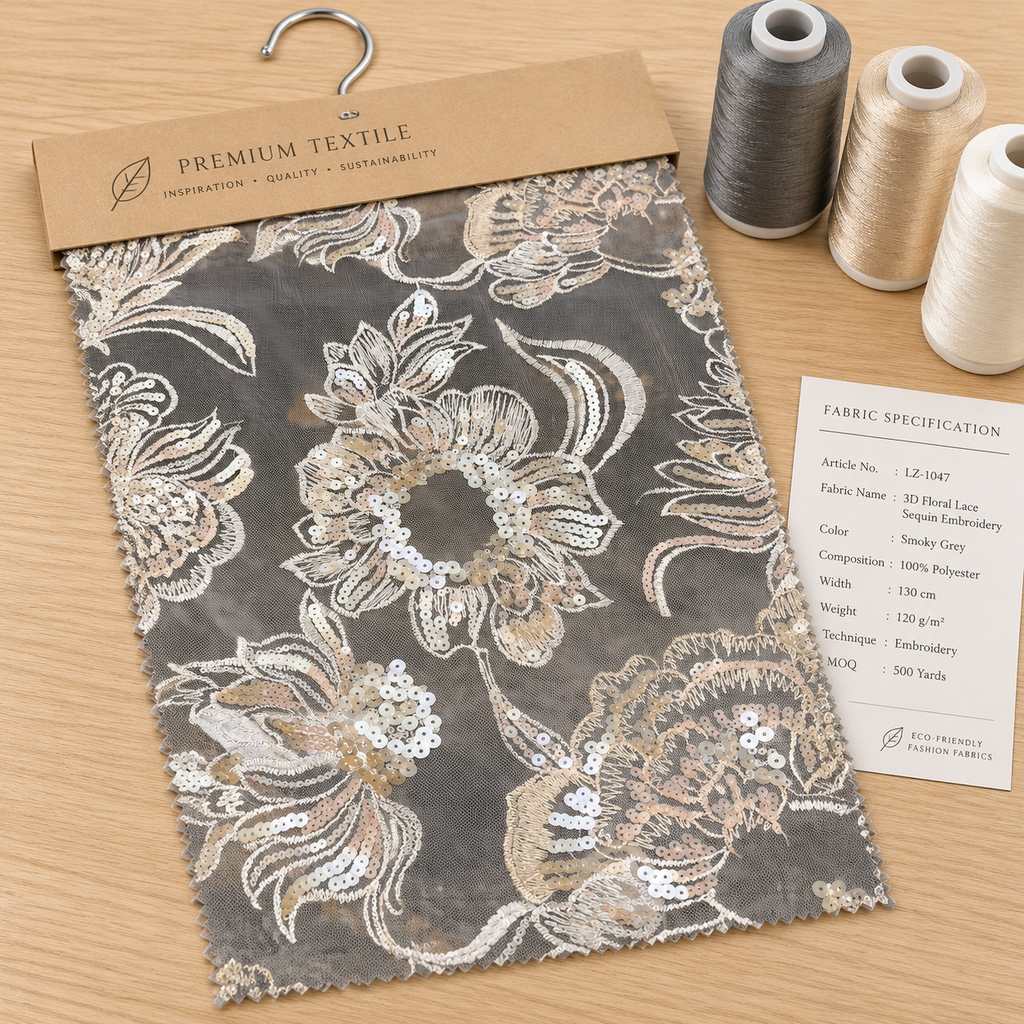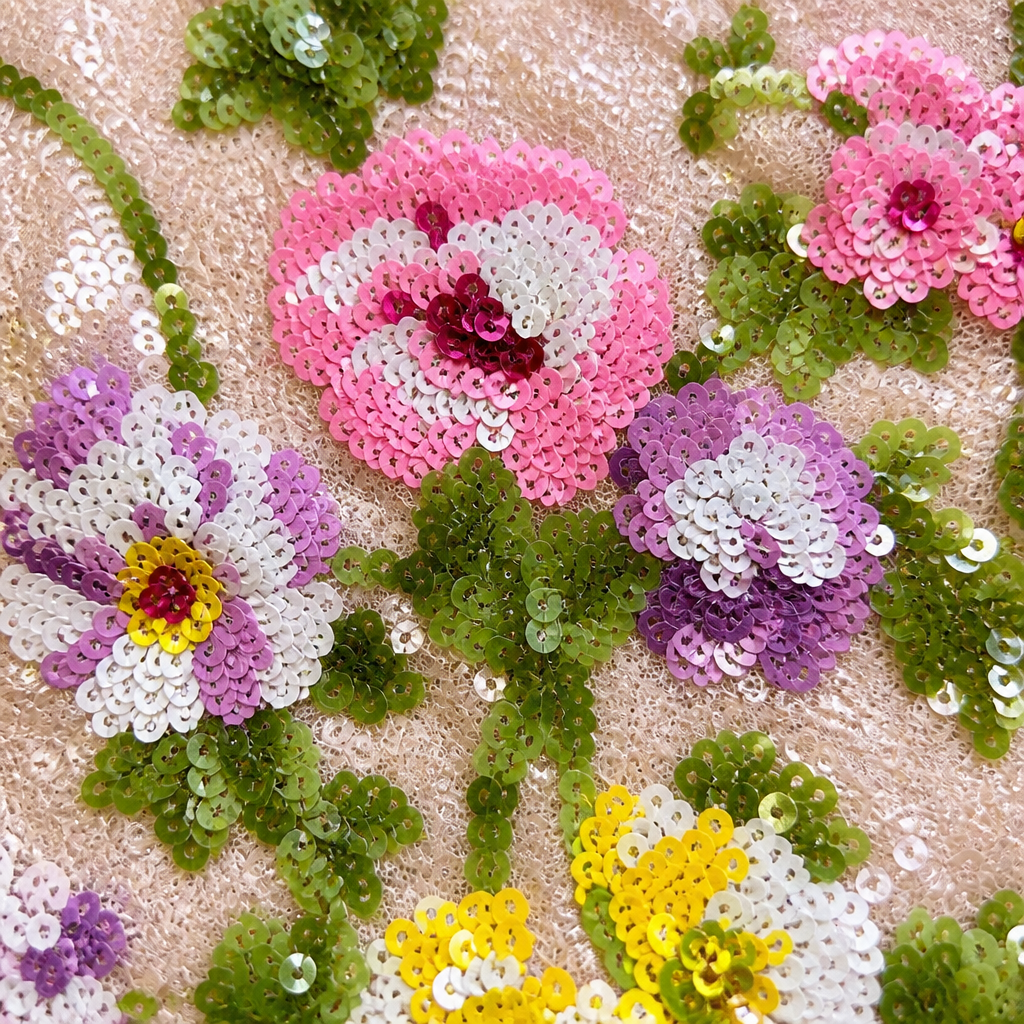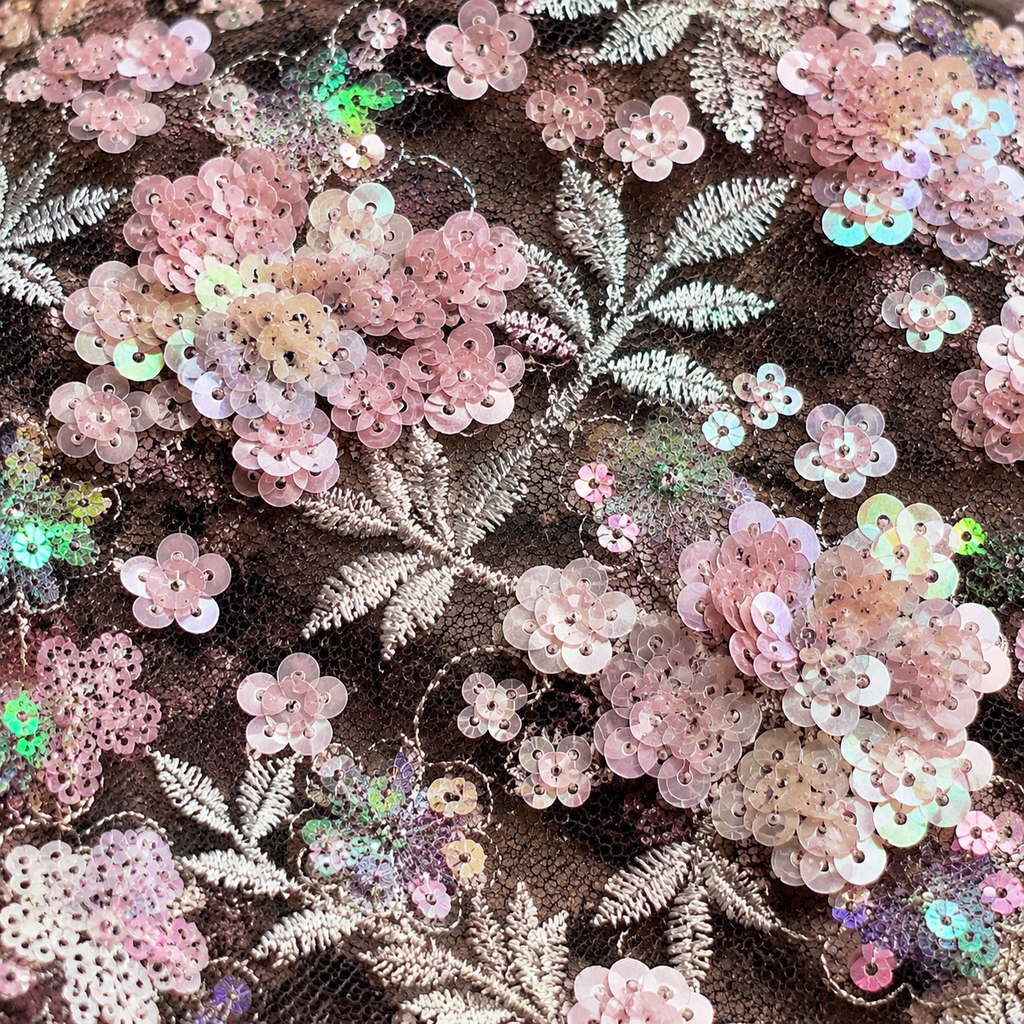
Furthermore, metallic sequin crocking fastness is a production control question for buyers who need repeatable decorative fabric performance.
Specifically, This guide connects material science, machine settings, factory testing, and shipment approval.
Consequently, It is written for apparel brands, costume teams, sourcing managers, and quality inspectors who need clear evidence before a bulk order.
Therefore, The recommended minimum order is 200 yards.
What Is metallic sequin crocking fastness?
In addition, Metallic sequin crocking fastness is the resistance of a matte metallic surface and its colour system to transfer during dry or wet rubbing.
As a result, In practical terms, the failure appears when a decorative surface and its support fabric respond at different rates to a machine force, heat cycle, liquid, or light source.
Moreover, a supplier must control the construction, process window, and inspection method together.
For example, A single attractive strike-off cannot prove bulk consistency.
In contrast, For B2B approval, the team should define the fabric width, usable width, GSM, base composition, decoration density, colour reference, and tolerance before sampling.
Similarly, Then, the mill should record lot numbers and retain a signed standard.
Furthermore, This sequence gives purchasing and production teams one shared reference when they compare lab results, pilot garments, and packed rolls.
Why metallic sequin crocking fastness Matters in Bulk Production
Specifically, Matte metallic sequins use a coloured or pigmented surface with controlled reflectance.
Consequently, Water can soften a coating, mobilize unfixed colour, and increase friction.
Therefore, A rubbing cloth then picks up colour from the surface.
In addition, Pressure, stroke count, moisture level, and the roughness of the mating fabric all change the transfer result.
As a result, A visual bleed can come from several sources.
Moreover, The topcoat may soften.
For example, Metallic pigment may detach.
In contrast, Dye from the backing may migrate through a porous sequin or thread area.
Similarly, The inspector should identify whether colour transfer comes from the sequin face, the base fabric, a coating edge, or a mixture.
Furthermore, Each cause needs a different corrective action.
Specifically, AATCC 8 and ISO 105-X12 provide the wet and dry crocking framework.
Consequently, Use the specified rubbing finger, pressure, stroke direction, and test cycle.
Therefore, Condition the fabric first.
In addition, Prepare water at the defined pick-up, weigh or verify the wet cloth, and dry it under controlled conditions before assessing the grey-scale result.
As a result, A rotary vertical crockmeter can provide repeatable movement across a representative surface.
Moreover, Calibrate the load and stroke, use a clean rubbing cloth for each specimen, and avoid placing the same sequin ridge under every test.
For example, Record sequin orientation, specimen direction, moisture, cycles, and operator.
In contrast, A test without traceable setup details is weak evidence for a bulk claim.
Similarly, A heat-cured melamine-crosslinked protective topcoat can improve surface cohesion when compatible with the sequin chemistry.
Furthermore, Cure temperature and dwell must suit the PET substrate and colour layer.
Specifically, Too little cure leaves a soft film.
Consequently, Too much heat can warp sequins, change the matte effect, or reduce adhesion to the base.
Therefore, Confirm the coating recipe with a pilot panel.
Production Readability and Control Check
In addition, Set Grade 4.5 or better on the agreed grey-scale staining assessment as the preferred release target.
As a result, Test both a high-exposure sequin area and a seam or fold area.
Moreover, The garment factory should also test the finished assembly because pressing, adhesive, lining, and wet handling can alter friction.
For example, Keep a retained untested swatch and a tested swatch for comparison.
In contrast, Bulk inspection should combine instrument results with a controlled visual review.
Similarly, Check the face, reverse, fold lines, and contact zones.
Furthermore, Look for dull patches, coating marks, pinholes, and colour transfer to a white cloth after controlled handling.
Specifically, Trend the results by lot.
Consequently, A falling result before the specification limit is an early warning, not a reason to wait for failure.
Therefore, When a lot fails, quarantine it and review raw-material identity, topcoat mix, cure profile, humidity, and packing pressure.
In addition, Rework is acceptable only after a documented trial proves that the corrected surface still meets appearance, adhesion, and flexibility needs.
As a result, Do not brush off transferred pigment and ship the roll without a retest.
Industrial Test Method and Acceptance Window
Moreover, A robust test plan starts with conditioning.
For example, Condition specimens for at least 24 hours at the agreed laboratory climate, cut from the left, centre, and right of the roll, and label every direction.
In contrast, Test both the decoration and the base because the visible fault often begins in the hidden layer.
Similarly, Use the named method in the purchase specification, record the instrument, operator, date, and lot, and photograph any failure before rework.
| Control point | Method or setting | B2B acceptance target | Evidence |
|---|---|---|---|
| Wet rubbing | AATCC 8 / ISO 105-X12, controlled moisture | Grey-scale staining Grade 4.5+ target | Crockmeter record and cloth |
| Topcoat cure | Melamine-crosslinked coating pilot | Cohesive matte surface without warp | Cure profile and adhesion check |
| Surface review | Face, fold, seam, and contact zones | No visible transfer or soft coating | Lot photos and audit sheet |
| Release decision | Compare test, standard, and trend | Quarantine any failed lot | Signed disposition record |
Furthermore, The control limit teams should keep practical rather than cosmetic.
Specifically, A buyer can approve a narrow technical tolerance when the supplier proves that the tolerance predicts garment performance.
Consequently, Conversely, a perfect laboratory result has little value if operators change needle type, press temperature, thread, detergent, or lighting during production.
Therefore, Freeze the approved recipe and audit the first, middle, and last rolls.
Factory Quality-Control Checklist
| Stage | Inspector action | Release rule |
|---|---|---|
| Pre-production | Confirm signed lab dip, construction sheet, MOQ 200 yards, and approved trim or thread. | No open specification or unapproved substitute. |
| Pilot run | Inspect three fabric zones and run a representative seam, press, wash, rub, or tension trial. | All critical defects remain within the agreed tolerance. |
| Bulk running | Check machine settings, lot identity, roll edges, surface appearance, and test frequency. | Quarantine any roll with a trend toward the limit. |
| Final audit | Use a four-point appearance review and attach test records to the packing list. | Release only traceable, dry, protected rolls. |
In addition, For every nonconformity, record the defect code, location, affected metres, probable cause, containment action, and preventive action.
As a result, A good corrective report links the defect to a controllable variable.
Moreover, Examples include stitch density, tension, dwell time, bath pH, coating cure, or an incorrect material lot.
For example, This approach prevents a visual repair from hiding a repeatable process risk.
Key Takeaways for Sourcing Teams
In contrast, First, approve a measurable construction and a signed visual standard.
Similarly, Second, test specimens from multiple roll positions rather than one convenient swatch.
Furthermore, Third, connect the laboratory limit to the actual garment operation.
Specifically, Finally, retain traceability from sample to bulk shipment.
Consequently, With these controls, Yunfan Textile can review target GSM, width, colour, decoration density, and production schedule before confirming a 200 yards order.
FAQ: What should a buyer send for sampling?
Therefore, Send the target end use, base composition, finished width, GSM range, colour reference, decoration scale, and expected finishing route.
In addition, Also send a physical standard when colour or handle matters.
As a result, Morris can then match the technical brief to a controlled sample and explain the test evidence before bulk production.
FAQ: How should a team approve a borderline result?
Moreover, Do not approve a borderline result by email alone.
For example, Repeat the test with a retained specimen, compare the result with the signed standard, and review the risk in the intended garment process.
In contrast, If the result remains outside the limit, ask for a documented corrective action and a new sample.
Similarly, This protects delivery timing and reduces claims.
FAQ: What information supports a fast quotation?
Furthermore, Share the focus application, quantity, target width, GSM, colour, finish, packing preference, destination, and deadline.
Specifically, A complete brief avoids avoidable sample cycles.
Consequently, The minimum order for this programme is 200 yards, while final pricing depends on construction, decoration, testing, and packing requirements.
Read the Quality Control category for inspection planning and the Embroidery Fabric category for related decorative constructions. These resources help product teams compare process evidence, not only photographs.
Source direct on Alibaba - request bulk pricing, specifications, and production details in one place.
Therefore, metallic sequin crocking fastness is a production control question for buyers who need repeatable decorative fabric performance.
In addition, This guide connects material science, machine settings, factory testing, and shipment approval.
As a result, It is written for apparel brands, costume teams, sourcing managers, and quality inspectors who need clear evidence before a bulk order.
Moreover, The recommended minimum order is 200 yards.
What Is metallic sequin crocking fastness?
For example, Metallic sequin crocking fastness is the resistance of a matte metallic surface and its colour system to transfer during dry or wet rubbing.
In contrast, In practical terms, the failure appears when a decorative surface and its support fabric respond at different rates to a machine force, heat cycle, liquid, or light source.
Similarly, a supplier must control the construction, process window, and inspection method together.
Furthermore, A single attractive strike-off cannot prove bulk consistency.
Specifically, For B2B approval, the team should define the fabric width, usable width, GSM, base composition, decoration density, colour reference, and tolerance before sampling.
Consequently, Then, the mill should record lot numbers and retain a signed standard.
Therefore, This sequence gives purchasing and production teams one shared reference when they compare lab results, pilot garments, and packed rolls.
Why metallic sequin crocking fastness Matters in Bulk Production
In addition, Matte metallic sequins use a coloured or pigmented surface with controlled reflectance.
As a result, Water can soften a coating, mobilize unfixed colour, and increase friction.
Moreover, A rubbing cloth then picks up colour from the surface.
For example, Pressure, stroke count, moisture level, and the roughness of the mating fabric all change the transfer result.
In contrast, A visual bleed can come from several sources.
Similarly, The topcoat may soften.
Furthermore, Metallic pigment may detach.
Specifically, Dye from the backing may migrate through a porous sequin or thread area.
Consequently, The inspector should identify whether colour transfer comes from the sequin face, the base fabric, a coating edge, or a mixture.
Therefore, Each cause needs a different corrective action.
In addition, AATCC 8 and ISO 105-X12 provide the wet and dry crocking framework.
As a result, Use the specified rubbing finger, pressure, stroke direction, and test cycle.
Moreover, Condition the fabric first.
For example, Prepare water at the defined pick-up, weigh or verify the wet cloth, and dry it under controlled conditions before assessing the grey-scale result.
In contrast, A rotary vertical crockmeter can provide repeatable movement across a representative surface.
Similarly, Calibrate the load and stroke, use a clean rubbing cloth for each specimen, and avoid placing the same sequin ridge under every test.
Furthermore, Record sequin orientation, specimen direction, moisture, cycles, and operator.
Specifically, A test without traceable setup details is weak evidence for a bulk claim.
Consequently, A heat-cured melamine-crosslinked protective topcoat can improve surface cohesion when compatible with the sequin chemistry.
Therefore, Cure temperature and dwell must suit the PET substrate and colour layer.
In addition, Too little cure leaves a soft film.
As a result, Too much heat can warp sequins, change the matte effect, or reduce adhesion to the base.
Moreover, Confirm the coating recipe with a pilot panel.
Production Readability and Control Check
For example, Set Grade 4.5 or better on the agreed grey-scale staining assessment as the preferred release target.
In contrast, Test both a high-exposure sequin area and a seam or fold area.
Similarly, The garment factory should also test the finished assembly because pressing, adhesive, lining, and wet handling can alter friction.
Furthermore, Keep a retained untested swatch and a tested swatch for comparison.
Specifically, Bulk inspection should combine instrument results with a controlled visual review.
Consequently, Check the face, reverse, fold lines, and contact zones.
Therefore, Look for dull patches, coating marks, pinholes, and colour transfer to a white cloth after controlled handling.
In addition, Trend the results by lot.
As a result, A falling result before the specification limit is an early warning, not a reason to wait for failure.
Moreover, When a lot fails, quarantine it and review raw-material identity, topcoat mix, cure profile, humidity, and packing pressure.
For example, Rework is acceptable only after a documented trial proves that the corrected surface still meets appearance, adhesion, and flexibility needs.
In contrast, Do not brush off transferred pigment and ship the roll without a retest.
Industrial Test Method and Acceptance Window
Similarly, A robust test plan starts with conditioning.
Furthermore, Condition specimens for at least 24 hours at the agreed laboratory climate, cut from the left, centre, and right of the roll, and label every direction.
Specifically, Test both the decoration and the base because the visible fault often begins in the hidden layer.
Consequently, Use the named method in the purchase specification, record the instrument, operator, date, and lot, and photograph any failure before rework.
| Control point | Method or setting | B2B acceptance target | Evidence |
|---|---|---|---|
| Wet rubbing | AATCC 8 / ISO 105-X12, controlled moisture | Grey-scale staining Grade 4.5+ target | Crockmeter record and cloth |
| Topcoat cure | Melamine-crosslinked coating pilot | Cohesive matte surface without warp | Cure profile and adhesion check |
| Surface review | Face, fold, seam, and contact zones | No visible transfer or soft coating | Lot photos and audit sheet |
| Release decision | Compare test, standard, and trend | Quarantine any failed lot | Signed disposition record |
Therefore, The control limit teams should keep practical rather than cosmetic.
In addition, A buyer can approve a narrow technical tolerance when the supplier proves that the tolerance predicts garment performance.
As a result, Conversely, a perfect laboratory result has little value if operators change needle type, press temperature, thread, detergent, or lighting during production.
Moreover, Freeze the approved recipe and audit the first, middle, and last rolls.
Factory Quality-Control Checklist
| Stage | Inspector action | Release rule |
|---|---|---|
| Pre-production | Confirm signed lab dip, construction sheet, MOQ 200 yards, and approved trim or thread. | No open specification or unapproved substitute. |
| Pilot run | Inspect three fabric zones and run a representative seam, press, wash, rub, or tension trial. | All critical defects remain within the agreed tolerance. |
| Bulk running | Check machine settings, lot identity, roll edges, surface appearance, and test frequency. | Quarantine any roll with a trend toward the limit. |
| Final audit | Use a four-point appearance review and attach test records to the packing list. | Release only traceable, dry, protected rolls. |
For example, For every nonconformity, record the defect code, location, affected metres, probable cause, containment action, and preventive action.
In contrast, A good corrective report links the defect to a controllable variable.
Similarly, Examples include stitch density, tension, dwell time, bath pH, coating cure, or an incorrect material lot.
Furthermore, This approach prevents a visual repair from hiding a repeatable process risk.
Key Takeaways for Sourcing Teams
Specifically, First, approve a measurable construction and a signed visual standard.
Consequently, Second, test specimens from multiple roll positions rather than one convenient swatch.
Therefore, Third, connect the laboratory limit to the actual garment operation.
In addition, Finally, retain traceability from sample to bulk shipment.
As a result, With these controls, Yunfan Textile can review target GSM, width, colour, decoration density, and production schedule before confirming a 200 yards order.
FAQ: What should a buyer send for sampling?
Moreover, Send the target end use, base composition, finished width, GSM range, colour reference, decoration scale, and expected finishing route.
For example, Also send a physical standard when colour or handle matters.
In contrast, Morris can then match the technical brief to a controlled sample and explain the test evidence before bulk production.
FAQ: How should a team approve a borderline result?
Similarly, Do not approve a borderline result by email alone.
Furthermore, Repeat the test with a retained specimen, compare the result with the signed standard, and review the risk in the intended garment process.
Specifically, If the result remains outside the limit, ask for a documented corrective action and a new sample.
Consequently, This protects delivery timing and reduces claims.
FAQ: What information supports a fast quotation?
Therefore, Share the focus application, quantity, target width, GSM, colour, finish, packing preference, destination, and deadline.
In addition, A complete brief avoids avoidable sample cycles.
As a result, The minimum order for this programme is 200 yards, while final pricing depends on construction, decoration, testing, and packing requirements.
Read the Quality Control category for inspection planning and the Embroidery Fabric category for related decorative constructions. These resources help product teams compare process evidence, not only photographs.
Moreover, Request Sequin Fabric Samples and share your target GSM, width, sequin size, and colour reference.
Talk to Morris directly:
Email: morris@yunfantextile.com
WhatsApp: +86 156 3752 5803
WhatsApp: +86 175 1619 6727