Moisture-Wicking Fabric Technical Guide for Sportswear Buyers
Moisture-wicking fabric performance depends on fiber, fabric construction, GSM, finishing and garment use. This technical guide helps sportswear buyers compare polyester, nylon, stretch and recycled-content options, define the data to request, and evaluate samples before bulk production.
How Moisture-Wicking Fabric Works
Moisture-wicking fabric moves sweat away from the skin to the outer surface of the fabric, where it spreads and evaporates faster than it would if it stayed against the skin. Two mechanisms do most of the work:
- Fiber structure – synthetic fibers such as polyester and nylon absorb less moisture than natural fibers, so sweat travels along the fiber surface instead of soaking into the fiber. Some fibers are engineered with channels or grooves that accelerate this movement.
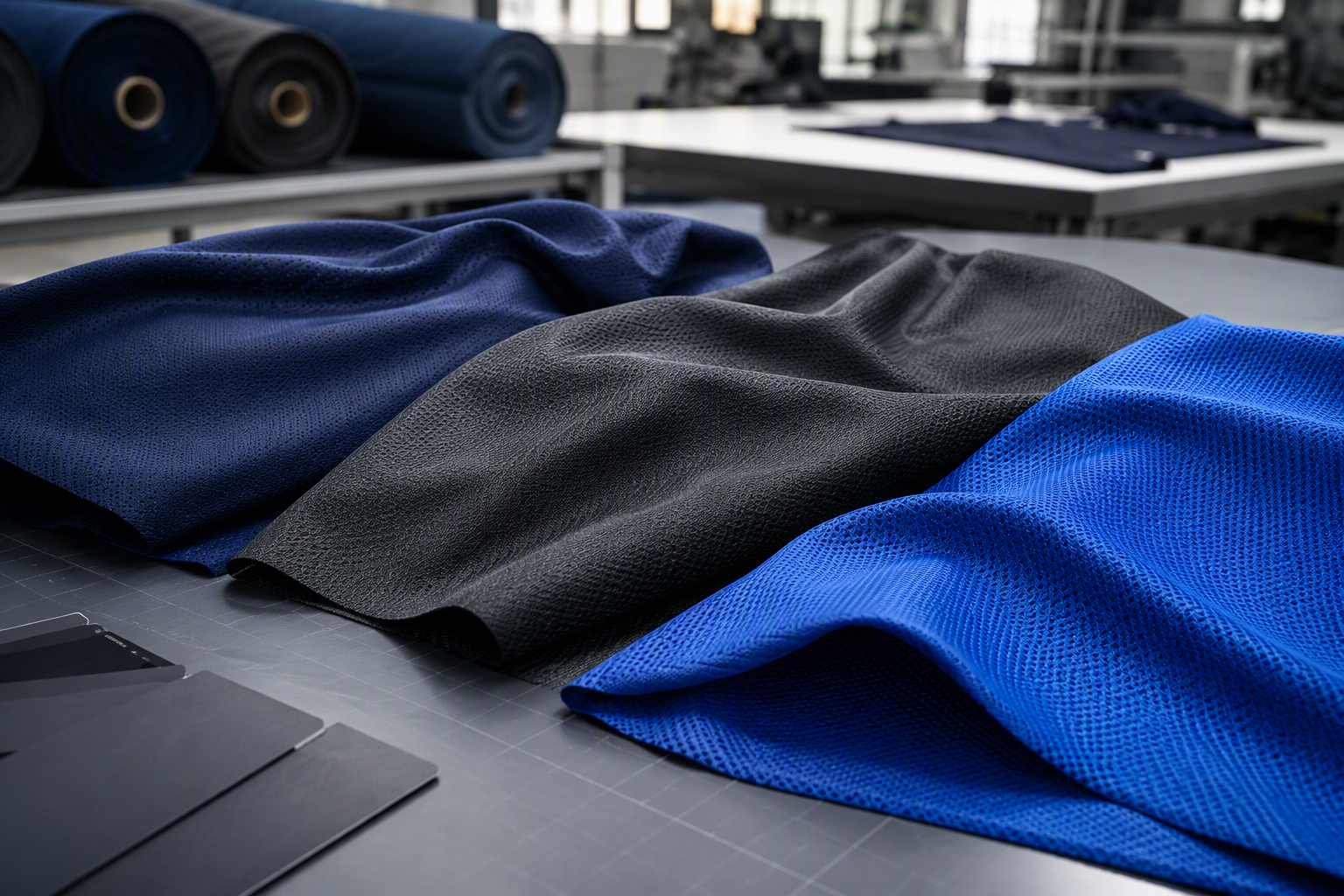
- Fabric construction – knit structures such as mesh and waffle constructions increase surface area, which speeds up evaporation. A tighter weave can slow evaporation even when the fiber itself wicks well.
In practice, performance depends on construction and finish as much as on the fiber itself, so treat test data and finished samples as the reference rather than relying on generic claims.
Moisture-Wicking Fabric Types and Constructions
Different fiber types and knit constructions suit different garments. For each option below, confirm the applicable parameters — composition, GSM, width, finish and test data — directly with the supplier before bulk sourcing.
Polyester
The most widely used moisture-wicking fiber. Lightweight, durable and naturally low in absorbency, which makes it a practical starting point for base layers, activewear and team apparel. Recycled-content polyester options are also available; confirm the recycled content and any applicable certification documents with the supplier. Check moisture-wicking polyester fabric specifications for weight, width and finish before sampling.
Nylon
Softer hand feel than polyester, with higher abrasion resistance and better recovery. Commonly used in premium activewear, swimwear and outdoor technical garments. Nylon is generally more expensive, so confirm how price, GSM and performance data fit your program before bulk sourcing.
Polyester-Spandex Blends
Adding spandex (elastane) to a polyester base creates a stretch wicking fabric with better recovery. Typical for compression wear, yoga pants, cycling shorts and fitted athletic tops. Confirm the spandex percentage, stretch and recovery behavior, and how the stretch athletic fabric performs after washing and dyeing.
Jersey
A single-knit structure that is light, soft and breathable, and a common choice for running tops and everyday activewear. Confirm the GSM and wicking finish, since jersey performance varies noticeably with fabric weight.
Interlock
A double-knit structure with a smoother surface and more body than jersey. Suited to training wear and garments that need a more structured drape. Confirm weight, dimensional stability and how the construction affects drying speed.
Mesh / Birdseye
Open knit structures that increase airflow and speed up evaporation. Widely used for ventilation panels, team uniforms and high-intensity sportswear. Confirm hole size, stretch and shrinkage so the mesh matches the garment pattern and sewing process.
Piqué
A textured knit often used for polo shirts and uniforms. Offers a balanced combination of structure, breathability and appearance. Confirm the piqué weight, stitch density and colorfastness for your intended use.
GSM, Drying Speed and Performance Data to Request
GSM (grams per square meter) is the starting point for matching fabric weight to end use, but it is only part of the picture:
- GSM and end use – lighter fabrics suit running and high-intensity sport; medium weights suit training and team uniforms; heavier weights suit outerwear layers. Confirm the GSM range against your target garment before sampling.
- Wicking rate vs absorption vs drying speed – wicking rate describes how quickly moisture moves from the inner to the outer surface; absorption describes how much moisture the fabric holds; drying speed describes how quickly it releases moisture. They are different measurements, so ask which test method applies to each.
- Colorfastness, pilling and dimensional stability – common purchasing check items that affect how the garment looks and holds up after washing.
- Test methods and reports – ask the supplier which test methods apply and request the corresponding reports. Avoid relying on grade promises that are not supported by an applicable test report.
- Compliance documents – certification and compliance documents such as OEKO-TEX Standard 100 or GRS for recycled content are document types buyers should verify with the supplier for their target market, rather than assumptions about any specific fabric.
How to Evaluate a Moisture-Wicking Fabric Sample
Work through the sample with the same checks you would apply to production fabric:
- Check hand feel, thickness and breathability against your target garment.
- Wash the sample and compare dimensions and appearance before and after washing.
- Check for color change after sweat, friction and washing.
- Test stretch and recovery, especially for garments with fitted silhouettes.
- Confirm the sample works with your target pattern, sewing and finishing process.
Questions to Ask Before Bulk Sourcing
Use these questions to frame the conversation with any supplier, including Yunfan Textile:
- What are the composition, GSM, width and construction of the fabric?
- Which test data is available, and which test methods were used?
- What is the process for stock colors versus custom colors?
- How are MOQ and lead time confirmed for your specific product and customization?
- How are packaging, inspection and repeat-batch quality managed?
MOQ varies by product and customization. Lead time is confirmed after sample and order details. For the buying process behind these questions, see our moisture-wicking fabric wholesale supplier guide.
Request Samples and Technical Information
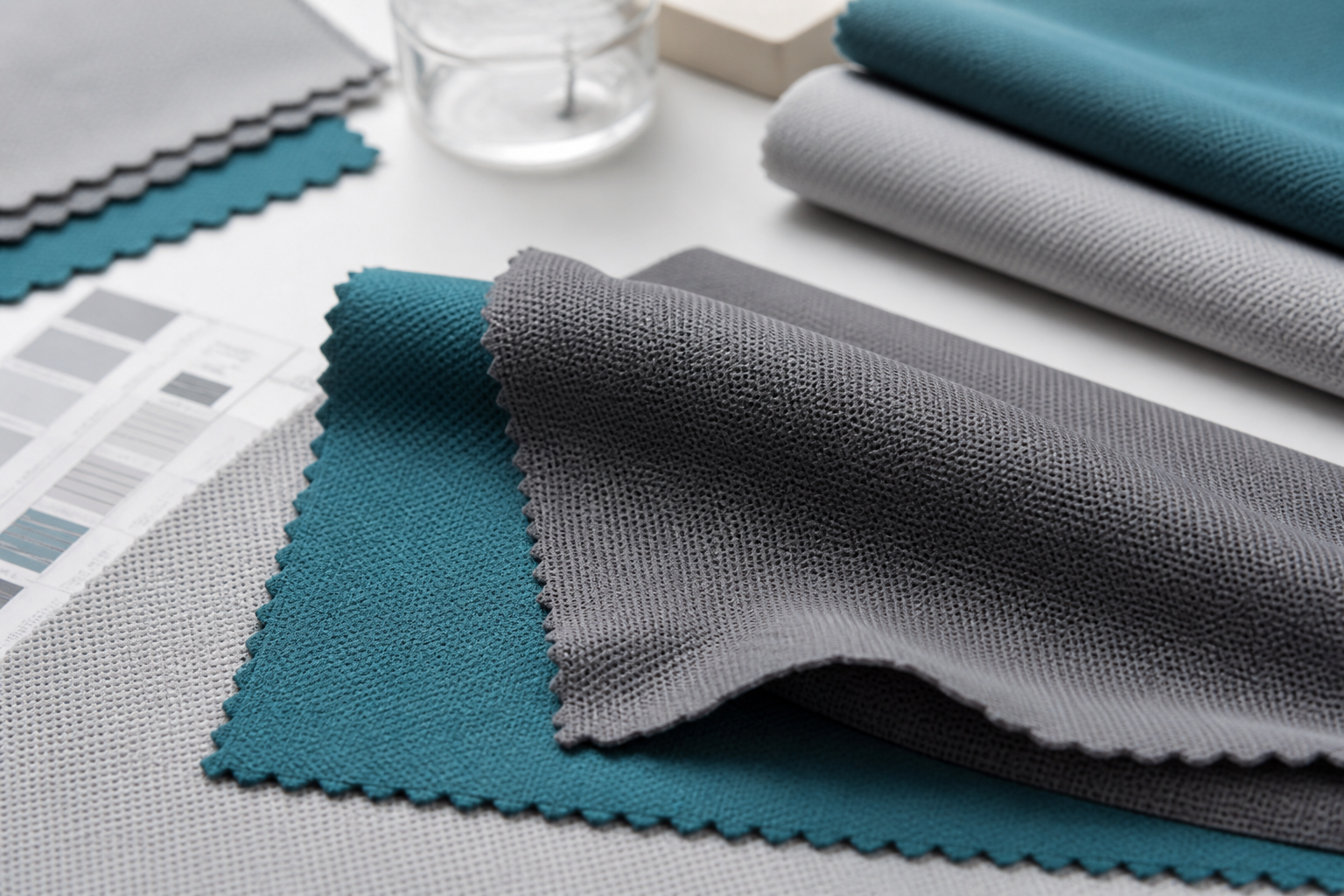
Request moisture-wicking fabric swatches and confirm the technical specifications for your sportswear, uniform or outdoor apparel program. Request technical samples and our team will confirm composition, GSM, construction and the applicable test data before you move to bulk sourcing.