For stage, event and fashion projects, the brief comes before the fabric. Define the visual effect, the lighting and viewing distance, how much the piece moves or drapes, the acceptable weight, the way the fabric will be cut, sewn, finished or installed, the durability the job demands, the quantities you need, and the final garment or installation use. Only when these points are written down can you compare sequin, embroidered, beaded and printed or mesh options with confidence.
Stage Costumes, Event Backdrops and Fashion Collections: Three Different Briefs
Each project type sets different priorities; the same decorative fabric rarely satisfies all three, so work through the brief, not the product name.
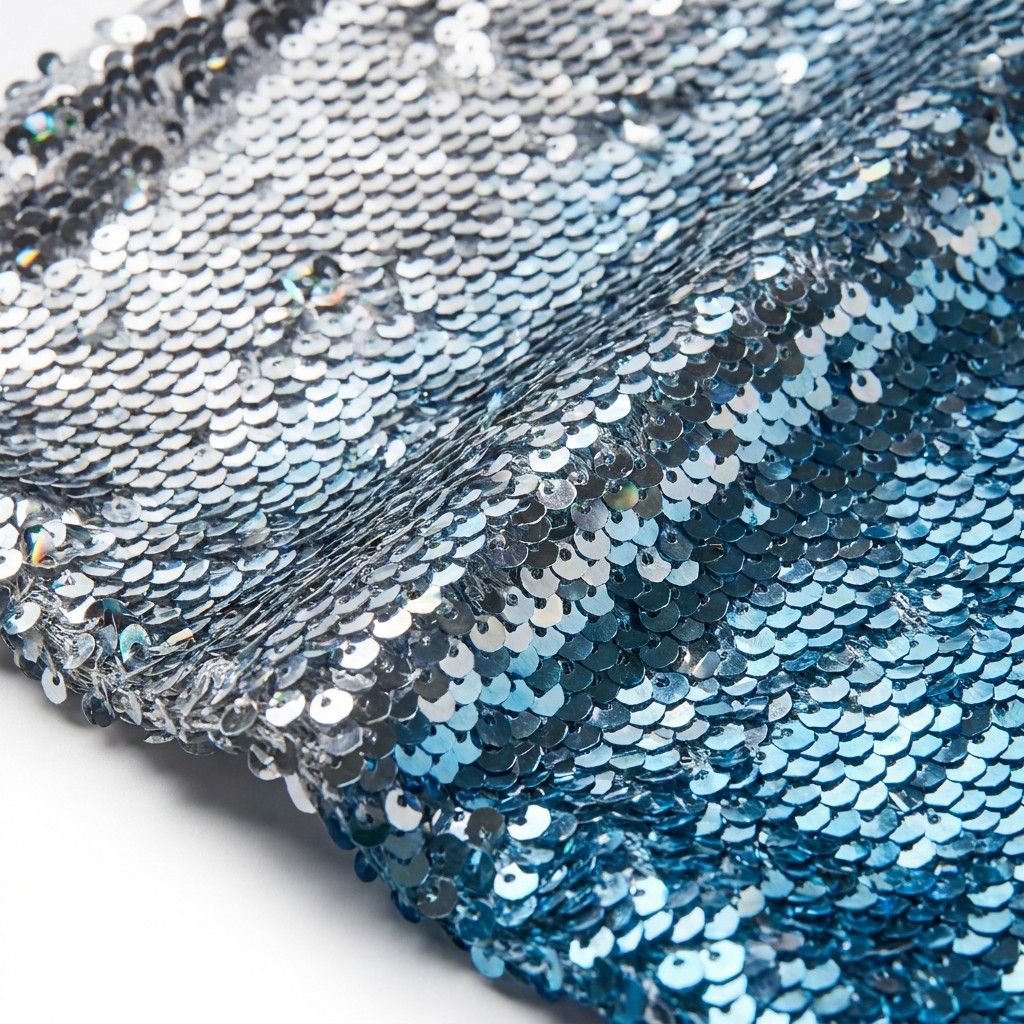
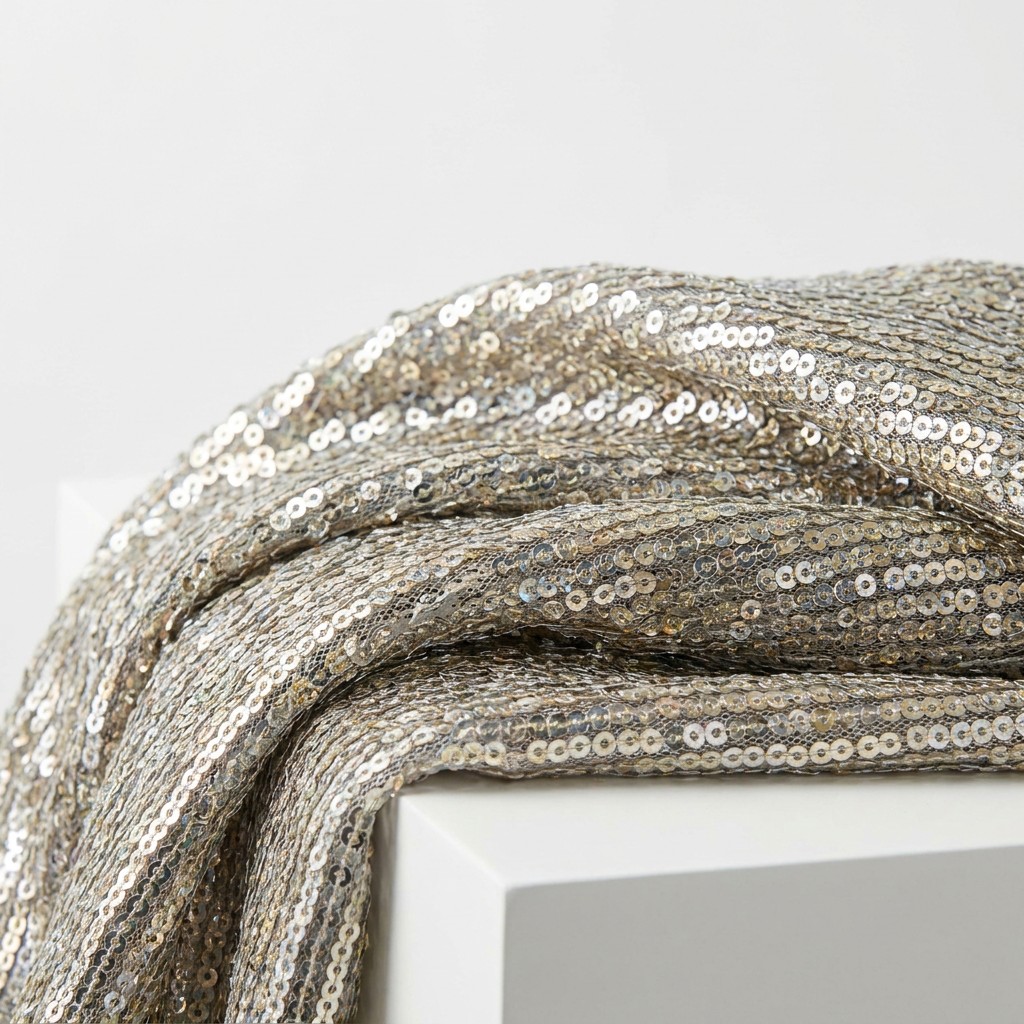
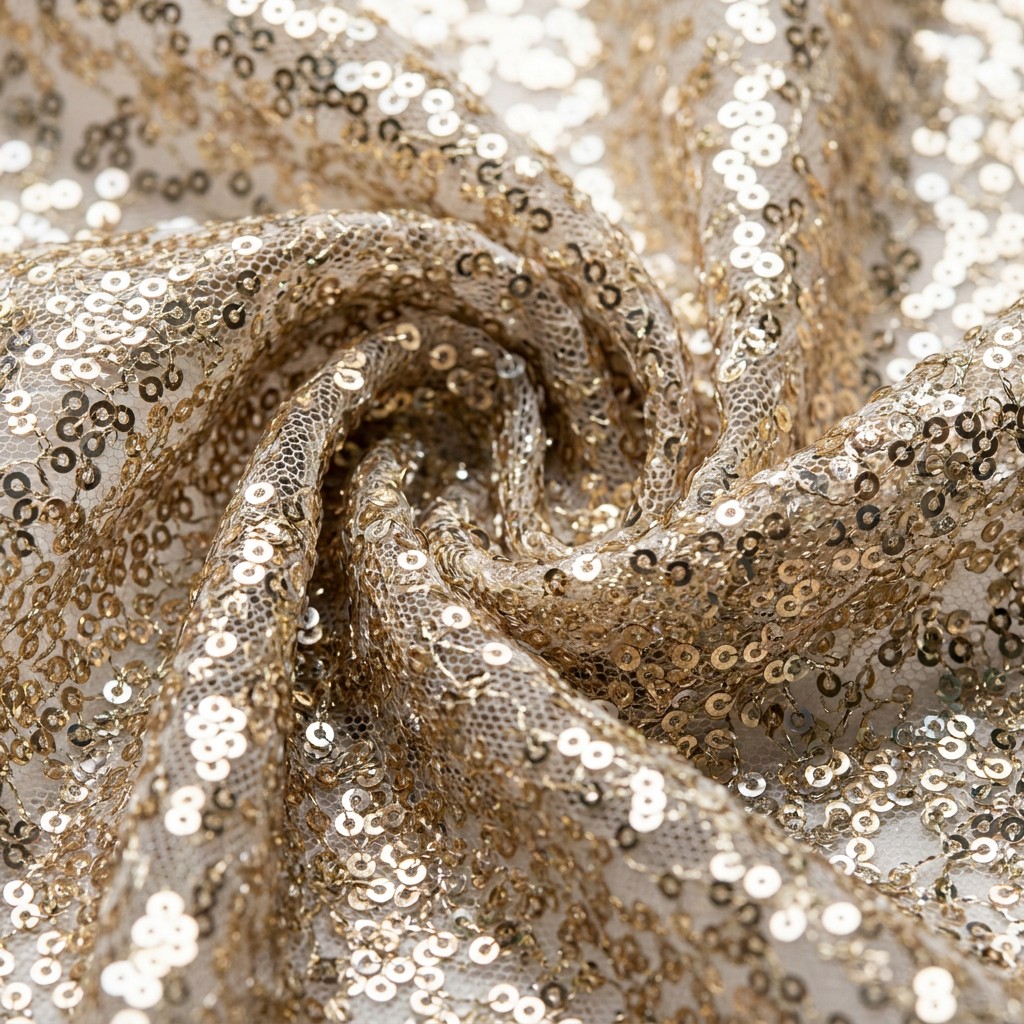
Stage costumes and stagewear. The garment must flash under moving spotlights and read from the back of a large venue, yet stay light enough to move in and robust enough for repeated shows, quick changes and touring. Dense sequin coverage on a flexible mesh or tulle base gives the broad, even shine that carries across a room; spaced or fine sequins and embroidered details suit moments when the audience is close enough to see texture. When the choice is between continuous shine and dimensional beading, review how sequin and beaded fabric compare for wholesale collections before shortlisting.
Event backdrops and decoration. Backdrops, stage curtains, photo walls and installations are judged at a distance, across large areas, under event lighting rather than daylight. Priorities shift to usable width, consistency between rolls, weight per installed area, edge finishing, and survival through folding, transport, setup, teardown and cleaning between events. Because surfaces are large, printed or mesh-based fabrics carry detailed visuals at lower installed weight than dense beading, while sequin constructions add controlled sparkle where the design calls for it.
Fashion collections. Garments put the fabric close to the viewer and to the body, so drape, weight, hand feel, transparency, comfort, sewing behaviour and care decide whether a design works on the runway, in e-commerce photography and in repeat production. Beaded and embroidered constructions add depth but also weight and stiffness around the decoration, so seam placement and lining need planning before the specification is fixed.
A Selection Framework for Sequin, Embroidered, Beaded and Printed Fabrics
Start with four families, then filter each one by base fabric, coverage and finishing against the brief:
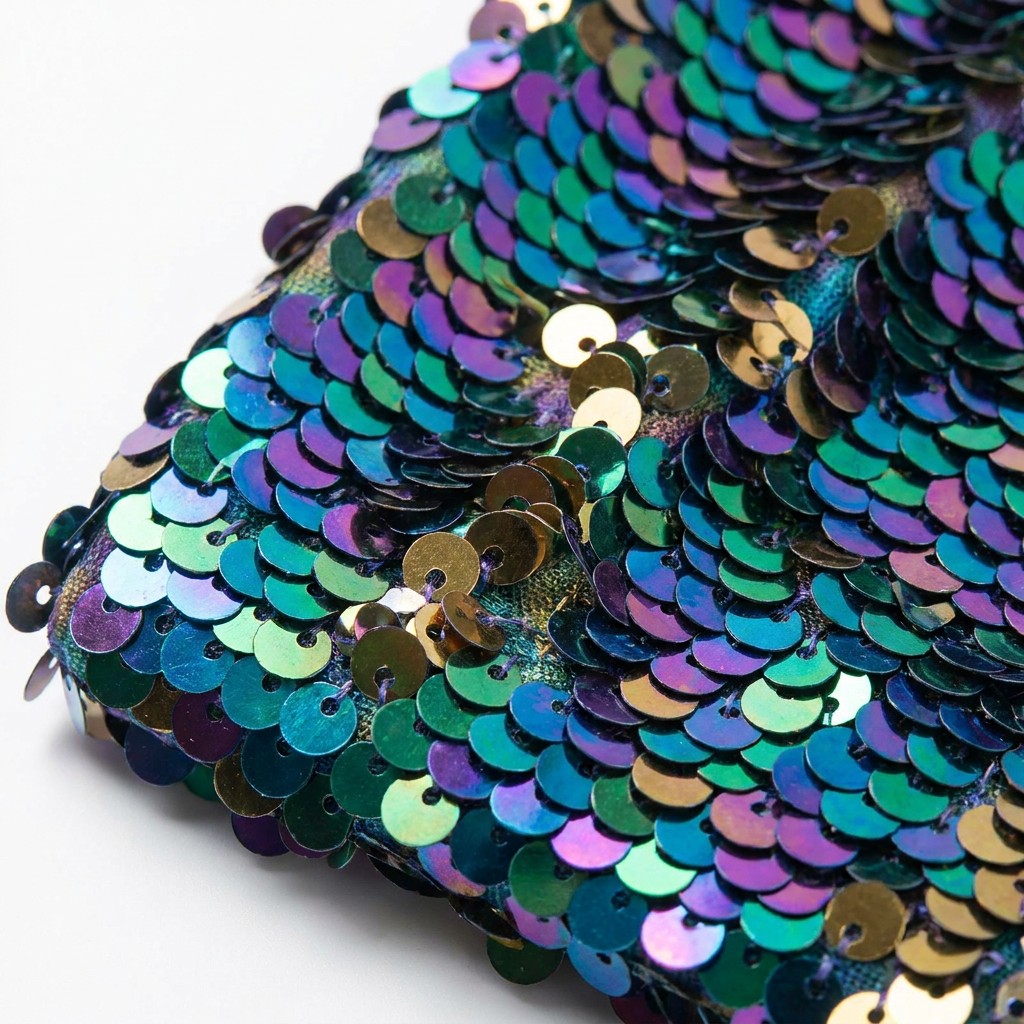
- Sequin fabric. Flat discs create continuous, uniform shine that reads from a distance; size, density and base decide weight, stiffness and drape. See how 3mm, 5mm and 18mm sequin sizes behave on different bases when matching discs to viewing distance and movement.
- Embroidered fabric. Stitched motifs add thread texture and controlled pattern placement for borders, centres and focal panels; weight concentrates around the embroidery, and loose threads need checking before bulk.
- Beaded fabric. Beads catch light point by point and build raised texture best appreciated at close range; these fabrics run heavier around beadwork, and bead loss is a real risk when attachment is weak.
- Printed and mesh fabrics. Flat prints deliver fine detail, colour and imagery at low added weight, and mesh adds transparency and layering; practical for large event surfaces and lightweight garments, though they lack the physical depth of applied decoration.
After shortlisting, confirm base construction, usable width, weight, attachment and finishing on a written specification, then judge hand feel, drape and shine on a physical sample under your real lighting.
Lustre, Transparency, Drape, Weight and Risks Only a Sample Shows
Applied decoration changes how light, structure and movement behave. Judge these points on fabric in your hand:
- Lustre and light. Sequin, metallic and foil surfaces reflect differently under spotlights, LED washes and daylight; check colour depth and glare at the real viewing distance, not on a screen.
- Transparency and opacity. Mesh and tulle bases reveal what sits behind them, so decide lining, layering or backdrop requirements in the brief.
- Drape and movement. A flat swatch cannot show how a panel hangs, floats or recovers; request hanging or yardage samples for costumes, curtains and flowing garments.
- Weight and structure. Coverage density, not the family name, decides whether a fabric feels light or needs extra garment, frame or rigging support.
- Durability risks. Watch for snagging of sequin edges and embroidery, dropped sequins, bead loss, and creasing during transport and storage. Rub, bend and shake a sample corner by hand, then ask the supplier how end-of-line inspection checks for loose pieces and what acceptable level is quoted, in writing.
Digital References, Physical Samples, RFQ and Pre-Bulk Confirmation
Digital swatches and photos are fast for shortlisting colours, motifs and effects, but they cannot reproduce reflectivity, hand feel, drape, transparency or attachment security, or predict behaviour on a cutting table or sewing machine. Use digital references to narrow the list, then approve a physical sample as the working standard for the order.
A well-structured RFQ keeps every supplier answering the same points. Our guide to preparing an RFQ for custom sequin fabric explains how to state application and end use, base fabric, sequin or embroidery type and size, colour reference, width and weight, estimated quantity, finishing, sample needs and testing in one document.
Before bulk, confirm the construction in writing: composition, usable width, GSM, decoration details, colour tolerance between rolls, packing and inspection points, with the approved sample kept under one style reference. Run the quality checks that matter before bulk ordering with your supplier, and keep the agreement on record.
Scenario Comparison at a Glance
| Consideration | Stage costumes | Event backdrops and decoration | Fashion collections |
|---|---|---|---|
| Primary priority | Shine and movement | Scale, consistency and handling | Drape, comfort and close-up finish |
| Lighting and distance | Spotlights, mid to long viewing distance | Event lighting, large viewing area | Mixed retail and editorial light, close-up |
| Weight and drape | Must move with the performer | Weight per installed area matters | Dictates silhouette and fit |
| Decoration preference | Dense sequin for flash; spaced or fine for texture | Printed or mesh for detail; sequin for sparkle | Beaded or embroidered accents; balanced sequin |
| Finishing and processing | Seams, linings, quick changes | Edges, joins, folding and transport | Cutting, sewing and care requirements |
| Main risks to manage | Snagging, dropped sequins | Shade differences between rolls | Bead loss, stiffness around motifs |
Treat the table as directional guidance for typical constructions, and confirm every point for your exact product with the supplier.
Decorative Fabric Procurement Checklist
- Write the brief: visual effect, lighting, viewing distance, movement, weight limit, finishing and installation or garment use.
- Shortlist one or two decorative families against the brief, not against a photograph.
- Request the written specification: base, width, GSM, decoration type and size, attachment method.
- Ask for hanging and yardage samples, not only flat swatches, when drape matters.
- Judge lustre, transparency, drape, weight and snagging under your real lighting.
- Send a complete RFQ with estimated quantity, finishing and testing requirements.
- Approve one sealed sample and record the written standard before bulk production.
- Agree inspection points, colour tolerance and packing protection in writing.
Frequently Asked Questions
What should be decided before choosing decorative fabric for a stage, event or fashion project? The brief comes first: visual effect, lighting, viewing distance, movement and drape, acceptable weight, finishing and processing method, durability, quantity, and the final installation or garment use. Every construction choice is tested against these points.
Which decoration reads best under stage lighting and from a distance? Dense sequin coverage gives the broadest, most uniform flash, while beaded and embroidered texture reads at closer range. The right answer depends on the distance of the audience and the lighting plan, so evaluate samples under your real conditions.
Why can digital swatches not replace a physical sample? Screens cannot show reflectivity, hand feel, drape, transparency or how decoration is attached, or predict behaviour on the sewing machine. Use digital references to shortlist, then approve a physical sample before any bulk commitment.
What causes dropped sequins and bead loss, and how is the risk reduced? Weak attachment, thin stitching and abrasion during transport are common causes. Check the attachment method, rub and shake a sample corner, and confirm with the supplier how end-of-line inspection detects loose pieces and what acceptable level is quoted.
What should an RFQ for decorative fabric include? Application and end use, base fabric, sequin or embroidery type and size, colour reference, width and weight, estimated quantity, finishing, sample policy and any testing requirements.
Why confirm quality before a bulk order? Small differences in sequin size, spacing, base or attachment appear only after the goods are cut, when the cost belongs to the buyer. A sealed sample, a written specification and an agreed inspection plan protect both sides before production starts.
Source Sequin Fabrics Directly for B2B Collections
Explore factory-direct sequin, embroidered and decorative textile options for fashion, event and custom collections.
Request Sequin Fabric Samples
Developing decorative fabric for stage, event or fashion projects? Yunfan Textile supports global B2B buyers with sequin, embroidered and decorative textile development. Submit your application, base fabric, sequin or embroidery type, colour, estimated quantity, finishing and testing requirements through the official consultation page, and the team will confirm the next steps with you.
Submit your requirements here: Yunfan Textile Consultation Page
Yunfan Textile B2B Contact
Website: https://www.yunfantextile.com/
B2B Contact: Wendy Jessie
WhatsApp/WeChat: +86 156 3752 5803
WhatsApp/WeChat: +86 175 1619 6727
Email: morris@yunfantextile.com
Email: morris@yunfantextile.com
Summary: Selecting decorative fabric for stage, event and fashion projects is a brief-led decision. Define visual effect, lighting, distance, movement, weight, finishing, durability, quantity and end use first; compare constructions on physical samples; confirm the specification in writing before bulk.
SEO keywords: decorative fabric for stage, stage costume fabric, event decoration fabric, decorative textile, sequin fabric for events, fashion collection fabric