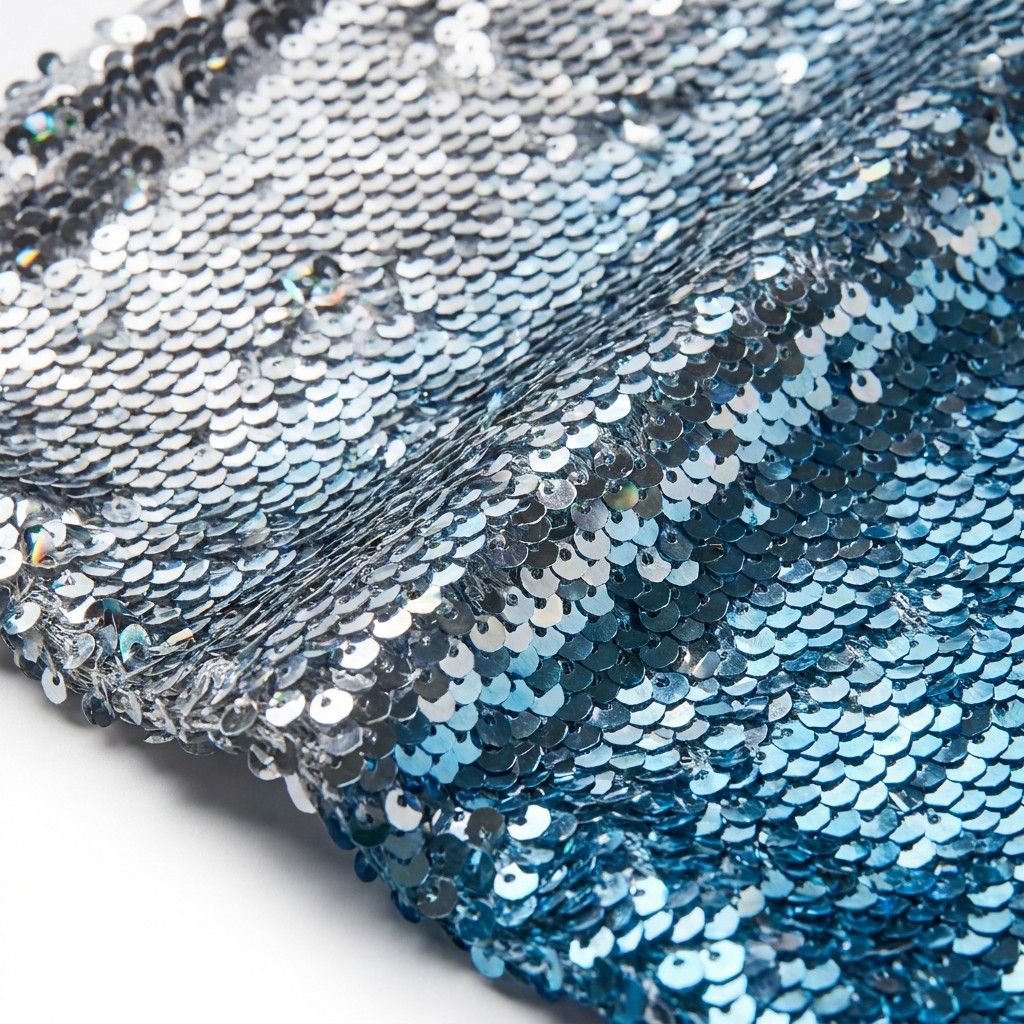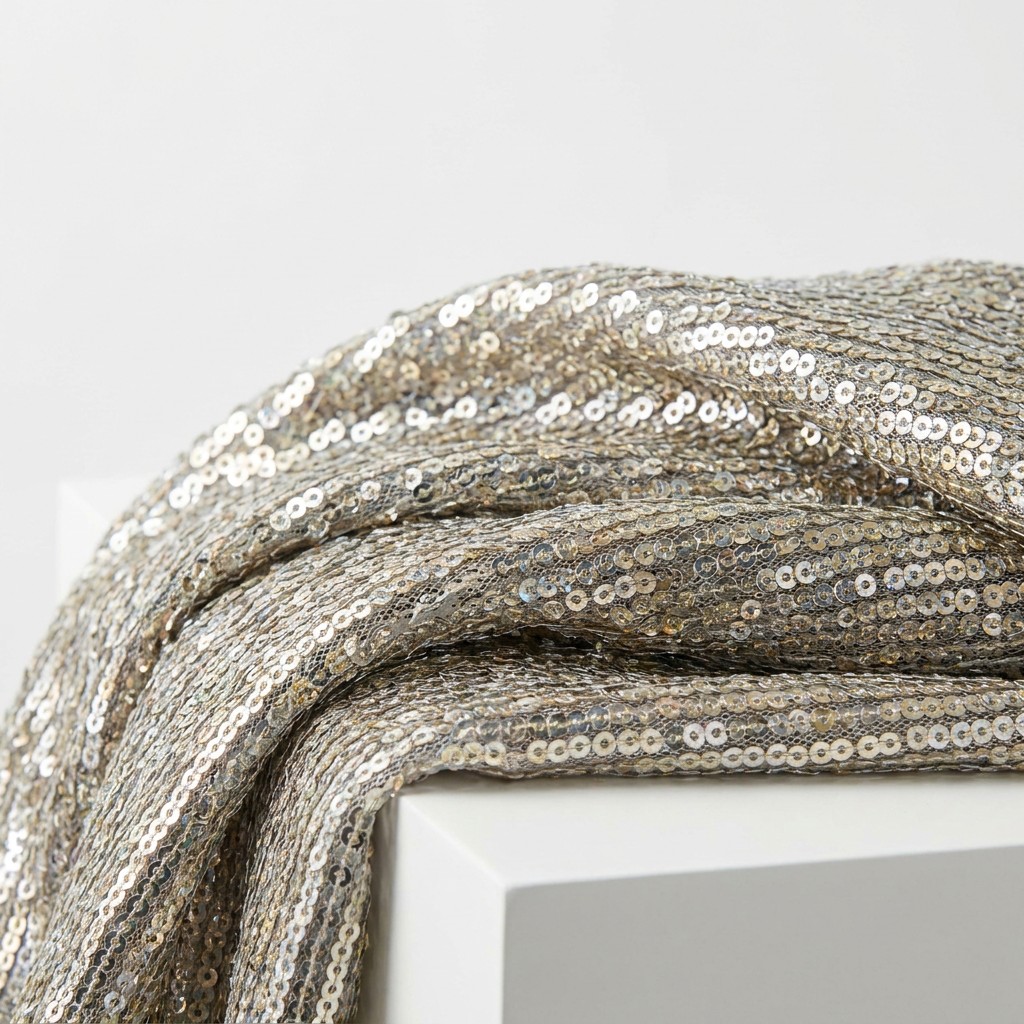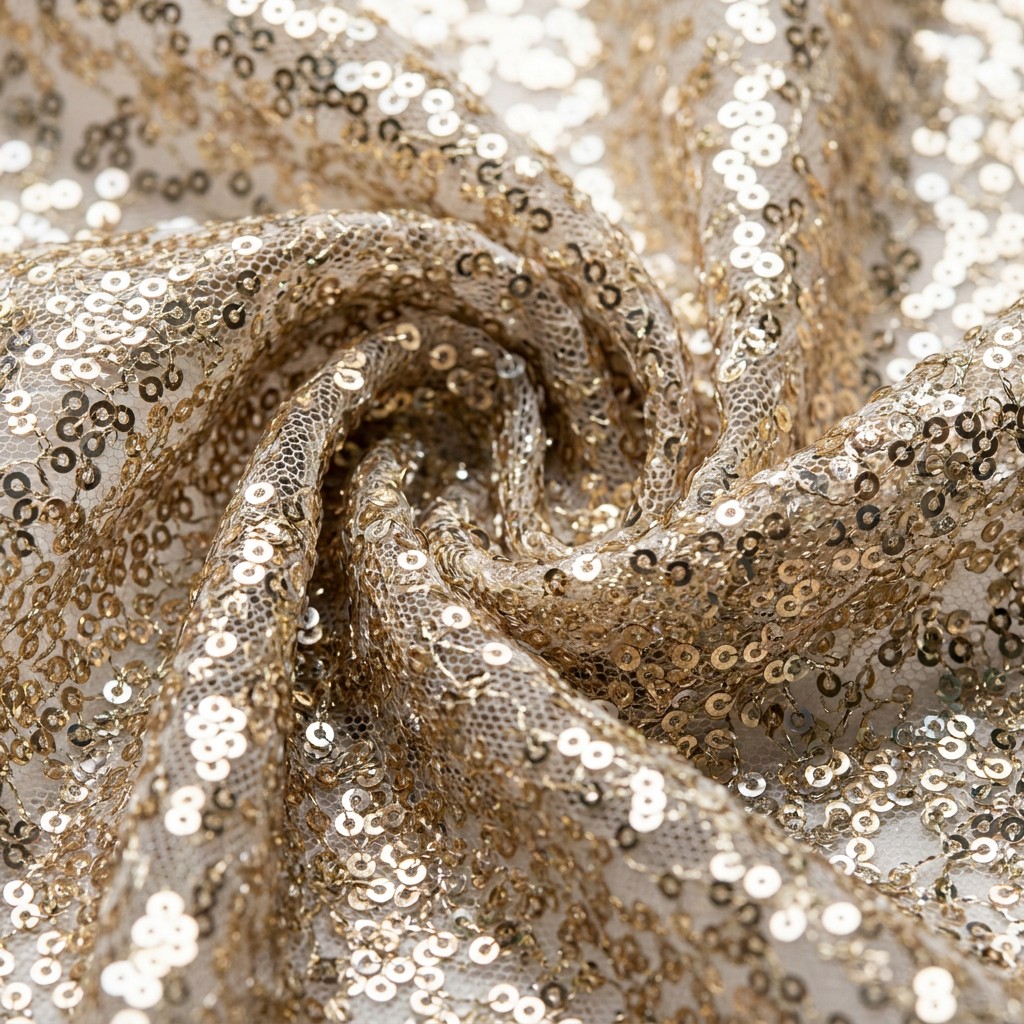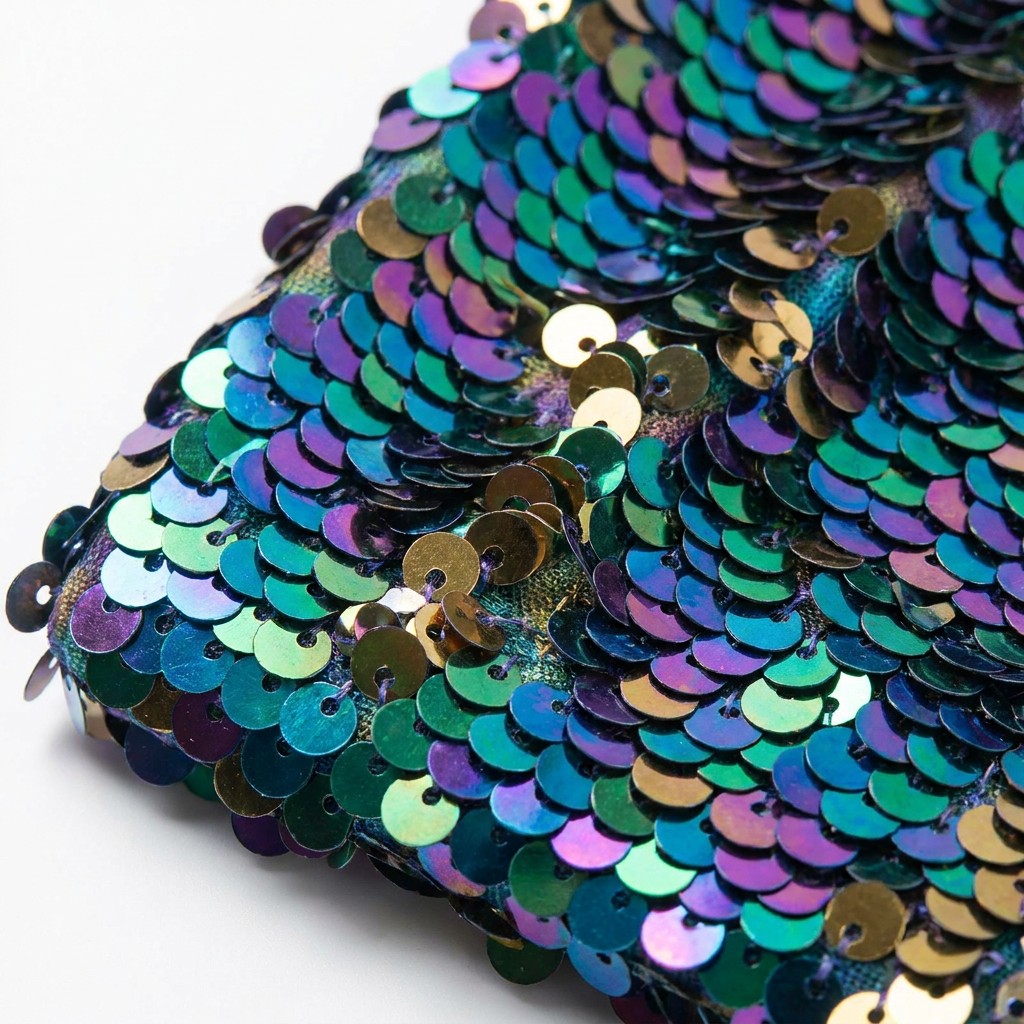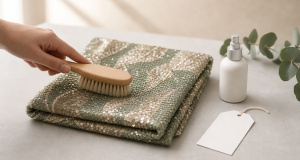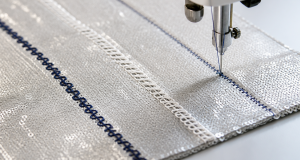
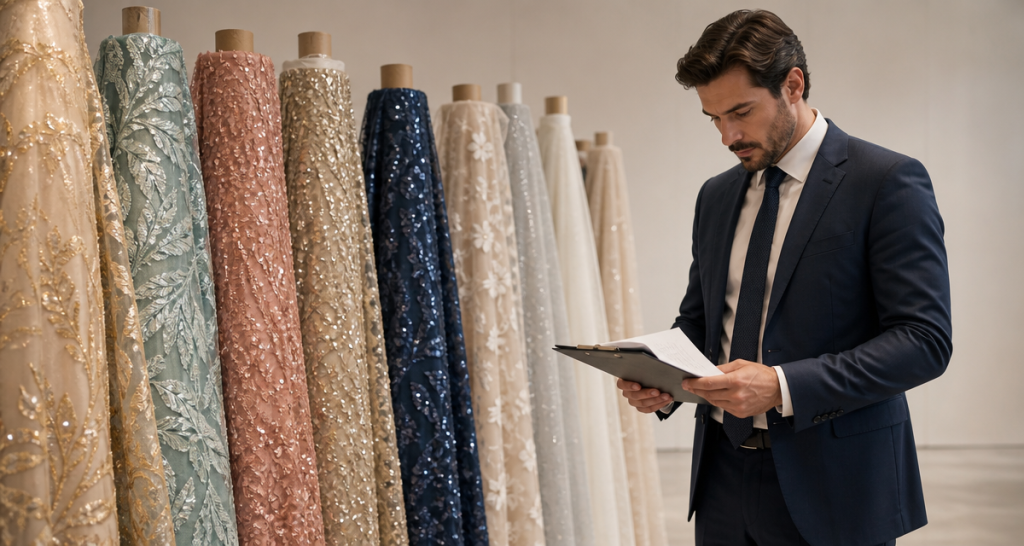
Choosing a decorative fabric supplier is not only a matter of comparing a sample price. For fashion brands, event suppliers, interior studios, and wholesale distributors, the right manufacturing partner must translate a creative idea into a repeatable specification, a stable production process, and a shipment that matches the approved reference. This is especially important when sourcing sequin, embroidery, velvet, mesh, and other high-surface-effect textiles for commercial collections.
Why Supplier Evaluation Matters for Decorative Textiles
Decorative fabrics can contain multiple variables: a base cloth, embroidery or sequin placement, thread or embellishment colour, backing, finishing, width, and packaging. A small change in any one of these variables can affect appearance, cutting, sewing, or the final product. A reliable decorative fabric manufacturer should therefore be able to explain how the material is made and how the approved standard will be controlled during bulk production.
For B2B buyers, a useful evaluation process begins before the purchase order. Ask the factory to provide a clear product specification and confirm whether the same construction can be produced consistently at the required quantity. The goal is not to remove every development question. It is to identify those questions early enough to protect the collection timeline.
Six Questions to Ask a Fabric Factory
- What is the exact composition and base construction? Confirm the fibre content, base fabric, backing, finishing, and usable width rather than relying on a short product title.
- Which measurements define the approved sample? Record GSM, width, stretch if applicable, motif repeat, sequin size or embroidery density, and the approved colour reference.
- How is custom artwork reviewed? For custom embroidery or placement designs, ask how artwork, strike-offs, sampling, and production approvals are coordinated.
- What quality points are checked before shipment? Agree on checks for shade variation, missing stitches, loose embellishments, stains, holes, uneven surface effects, roll length, and edge condition.
- How are repeat orders matched? A dependable supplier should keep an approved reference and communicate any material or process change before production.
- Can the supplier support the intended order plan? Discuss sampling, MOQ, production timing, packing, inspection, and shipping documents before confirming the order.
Build a Practical Approval File
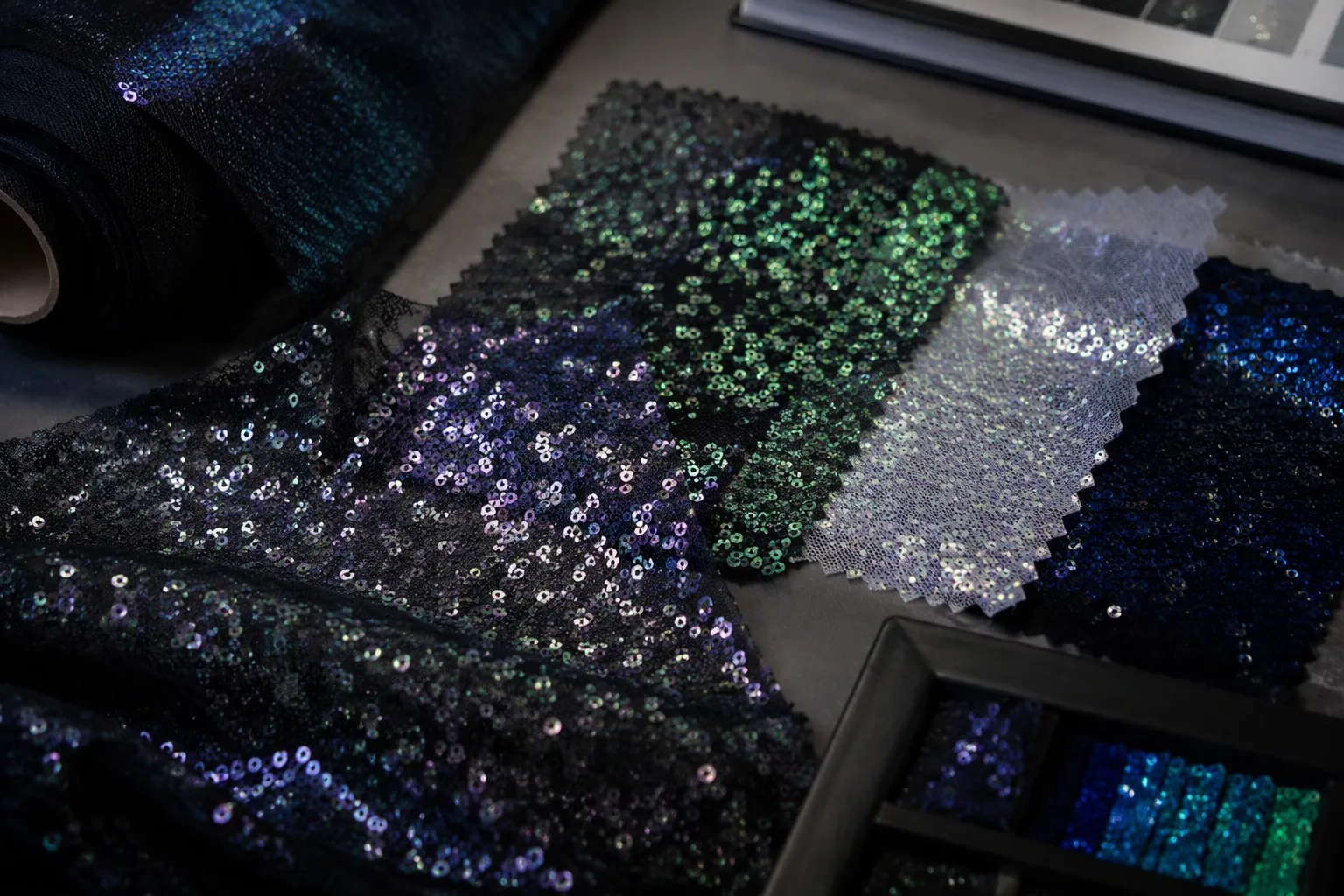
A simple approval file can include the original inquiry, factory quotation, material composition, GSM, usable width, artwork or colour reference, physical sample photos, strike-off comments, packing instructions, and inspection requirements. Keeping these details together gives the buyer and supplier a shared production reference. It also makes it easier to compare a new sample with the approved version when a repeat order is planned.
For higher-risk developments, buyers should also compare the supplier's communication process. Confirm who approves artwork, who records the final sample, and who reports production exceptions. A clear escalation path is valuable when a colour, width, or surface effect changes during manufacturing. It helps the purchasing team make a documented decision instead of relying on scattered messages.
It is also useful to separate development checks from shipment checks. During sampling, review hand feel, appearance, construction, and suitability for cutting and sewing. Before shipment, review roll identification, quantity, packing condition, shade consistency, and any agreed inspection points. This two-stage approach gives the buyer practical control without turning every order into an unnecessarily complex audit.
When comparing quotations, look beyond the unit price. A complete comparison should include sample charges, MOQ, lead time, packing, inspection support, payment terms, and the cost of correcting an inconsistent bulk order. A supplier that explains these items clearly can help a brand plan a more realistic landed cost and production schedule.
For repeat business, retain the approved sample and specification sheet together with the purchase order. Record any approved variation, such as a new colourway or modified motif scale, so the next development starts from a known reference. This simple documentation habit can improve internal handover between design, purchasing, quality, and logistics teams.
Yunfan Textile works with global B2B buyers on sequin, embroidery, mesh, velvet, home textile, and decorative fabric development. Our process supports sample communication, custom production, specification confirmation, and pre-shipment quality control. Buyers can request fabric swatches and discuss the best construction for apparel, events, interiors, accessories, or coordinated collections.
Source Directly from Our Alibaba Store
Browse factory-direct textile options and request samples for your next B2B project.
Request a Factory-Direct Fabric Review
To discuss decorative fabric sourcing, use our website consultation page. Include the intended application, preferred fabric effect, target composition, approximate quantity, and delivery market so our team can recommend relevant samples and specifications.
Yunfan Textile B2B Contact
Website: https://www.yunfantextile.com/
B2B Contact: Wendy Jessie
WhatsApp/WeChat: +86 156 3752 5803
WhatsApp/WeChat: +86 175 1619 6727
Email: morris@yunfantextile.com
Email: morris@yunfantextile.com
The best decorative fabric supplier is the one that makes creative development measurable. By confirming construction, approving physical references, defining inspection points, and planning repeat-order communication, B2B buyers can reduce avoidable quality surprises and build a more reliable textile supply chain.
SEO keywords: decorative fabric manufacturer, B2B fabric supplier evaluation, sequin fabric factory, custom textile manufacturer, wholesale decorative fabric sourcing.