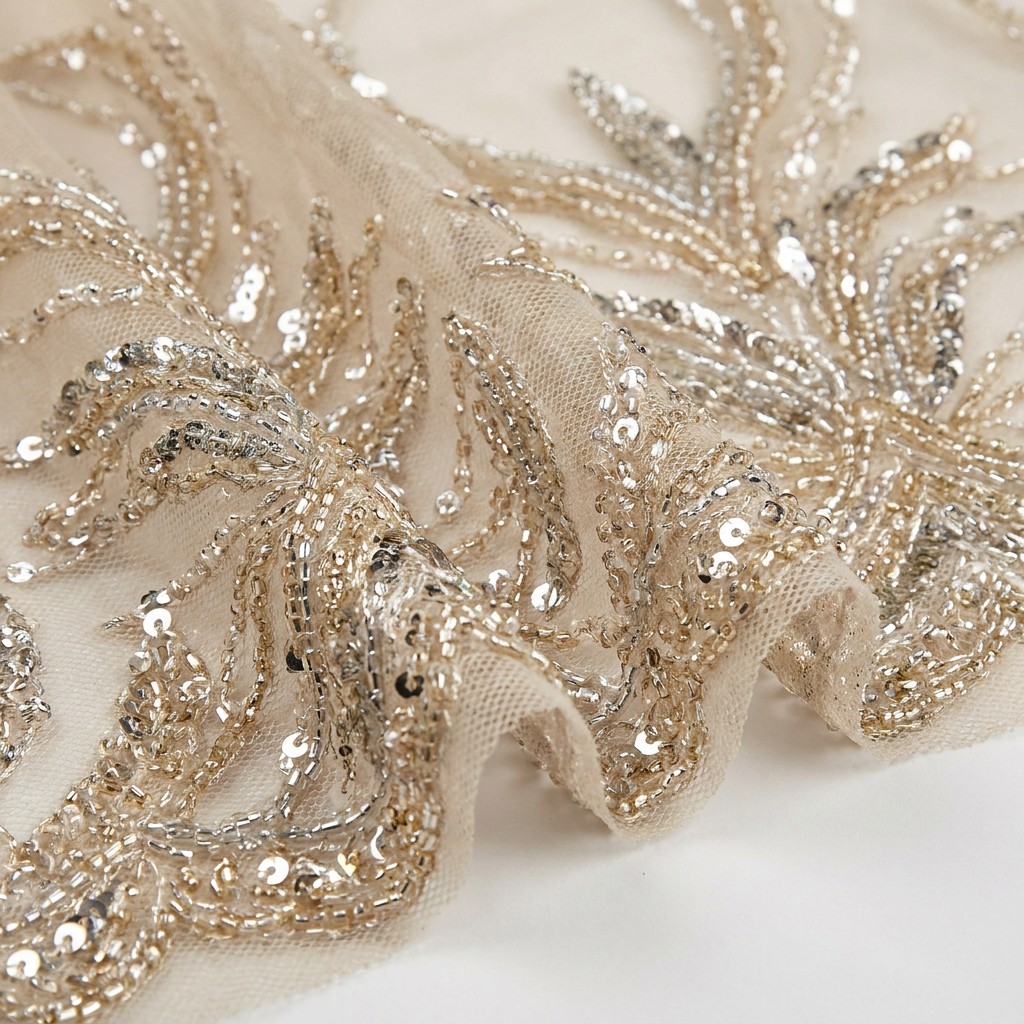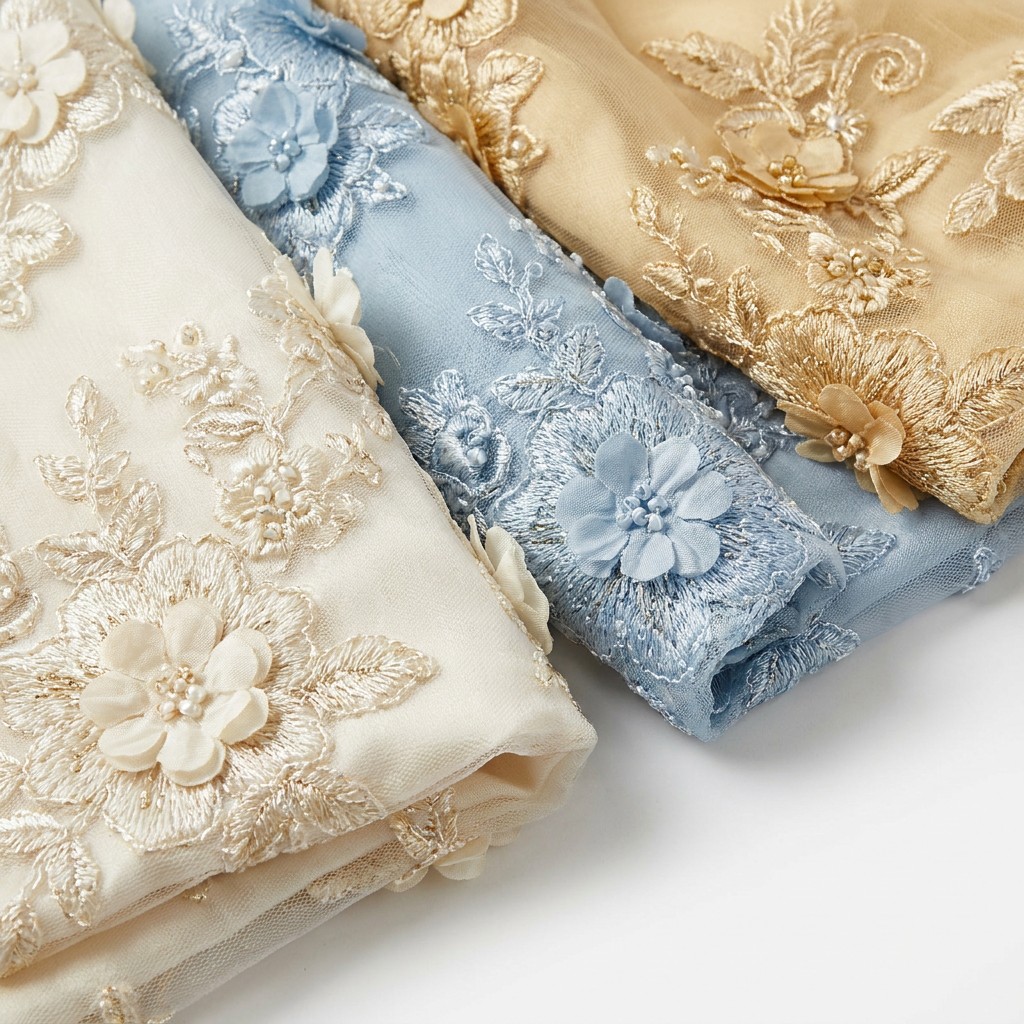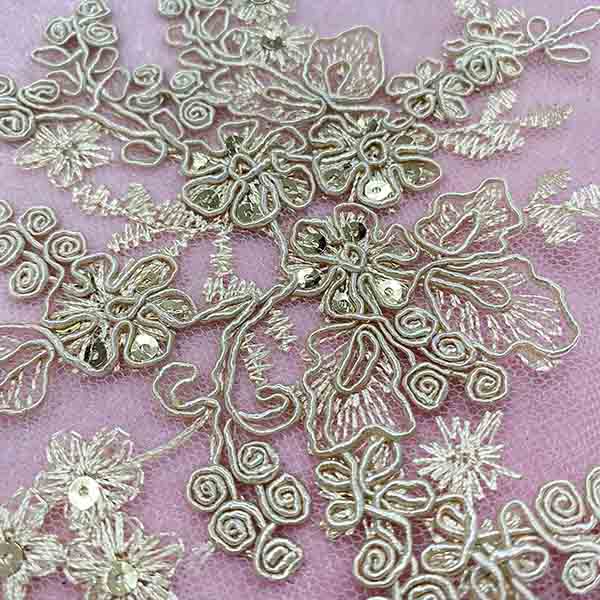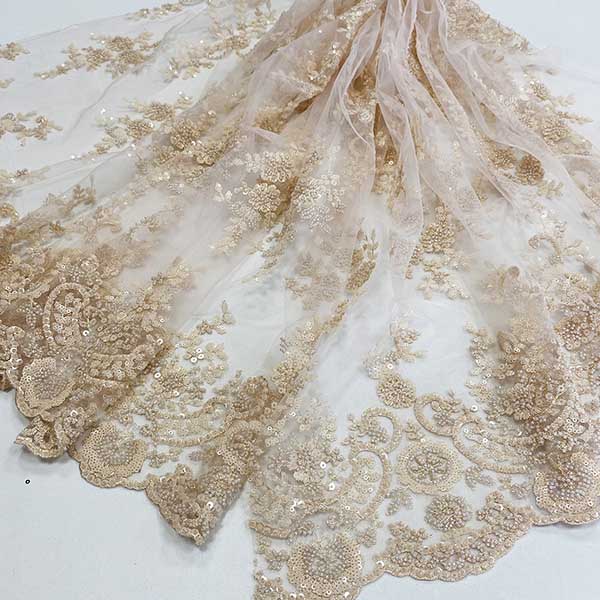
Sourcing architectural organza embroidery fabric wholesale requires balancing crisp organza substrate tension, delicate thread stitch density, dimensional puckering prevention, and strict manufacturing tolerances. For luxury bridal couturiers, evening wear designers, and runway fashion labels, purchasing embroidered organza textiles at scale introduces critical production hurdles. For example, garment factories frequently encounter fabric puckering around dense floral motifs, needle hole perforation tearing, and distorted scalloped borders during steam finishing. Working directly with an integrated B2B flexible manufacturing partner provides transparent quality control protocols, tailored base organza weights, and a baseline MOQ of 200 yards per custom design.
Understanding Organza Embroidery Fabric Wholesale Specifications
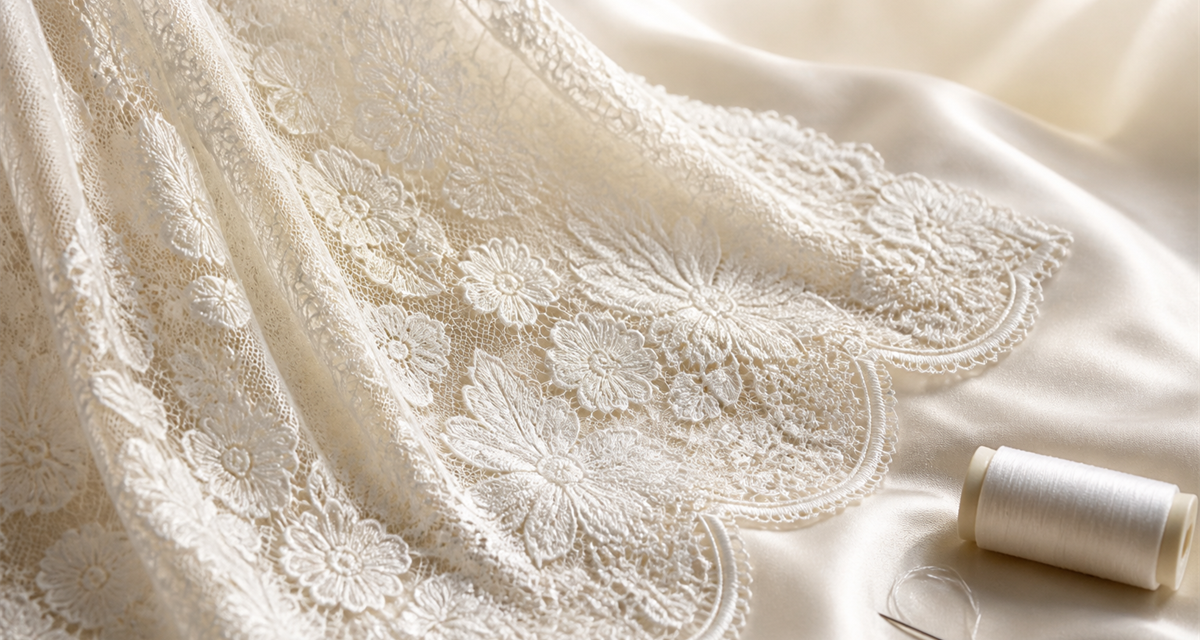
Organza embroidery fabric is a high-structure decorative textile where multi-head computerized embroidery machines stitch intricate floral, corded, or sequined motifs onto sheer, crisp organza backings. In commercial B2B garment engineering, structural silhouette support, ethereal transparency, and seam stability depend directly on three foundational pillars:
1. Base Organza Substrate Engineering
The yarn twist and weave density of the underlying organza determine mechanical crispness and resistance to stitch perforation:
- 100% High-Filament Polyester Organza (20D/24F or 30D/36F): The luxury standard for structured bridal ballgowns, voluminous sleeves, and layered evening skirts (35–55 GSM). Consequently, this synthetic organza provides superior crisp hand feel, tear resistance, and stable dimensional recovery under industrial steam pressing.
- Silk-Polyester Blend Organza Backings: Formulated with 30% Mulberry silk and 70% polyester (40–60 GSM). Specifically, this backing delivers unmatched natural softness, subtle organic sheen, and luxurious skin touch for high-fashion runway collections.
- Metallic-Sheen Organza Foundations: Woven with ultra-fine lurex monofilament yarns (30–45 GSM) to provide radiant background sparkle beneath dense matte embroidery threads.
2. Embroidery Thread Chemistry and Tension Control
Selecting certified embroidery yarns directly prevents thread breakage, loop puckering, and color bleeding:
- Trilobal Polyester and Rayon Filament Yarns (120D/2): Mandatory for vibrant motif embroidery. Moreover, trilobal polyester threads endure high-speed automated stitching, resist laundry detergents, and provide brilliant light reflection.
- Metallic Lurex and Cotton Cord Underlays: In addition, heavier decorative cordings are secured using fine nylon lock-stitches (40s/2 or 60s/3) with automated electronic tension compensation to prevent sheer organza from wrinkling around dense motifs.
3. Micro-Needle Engineering and Perforation Prevention
To eliminate needle cutting marks along motif borders, computerized embroidery machinery utilizes specialized slim-point needles (DBxK5 size 65/9 or 70/10) with polished chrome plating, ensuring smooth penetration without slicing delicate organza yarns.
Key Takeaways for B2B Organza Embroidery Procurement
- Specify Exact Organza Crispness and GSM: Clearly define base organza weight (35 GSM, 45 GSM, or 55 GSM) and hand feel (soft drape vs. stiff architectural volume) to match your garment's silhouette requirements.
- Require Anti-Puckering Tension Calibration: Ensure the manufacturing mill employs electronic thread tension controls to prevent sheer organza from gathering or distorting around dense motif clusters.
- Verify Seam and Scallop Tear Strength: Insist on reinforced edge lock-stitching along scalloped borders to prevent fraying or tearing during pattern cutting.
- Leverage Direct Factory MOQs: Partner with integrated mills offering a flexible 200-yard minimum order quantity per custom embroidery pattern, complete with physical strike-offs delivered within 5–7 working days.
5-Step Organza Embroidery Fabric Wholesale Procurement Workflow
- Step 1: Technical Specification Submission
In the initial stage, buyers submit CAD artwork or reference swatches indicating motif dimensions, thread composition (rayon, metallic, or cotton), base organza GSM, and Pantone color codes. - Step 2: Strike-Off Sampling & Tension Optimization
Next, our engineering team digitizes the pattern and produces a 1-yard strike-off on actual machinery. Quality auditors inspect this swatch under standard D65 light booths to evaluate motif crispness, transparency, and hand feel. - Step 3: Organza Pre-Setting & Tension Calibration
Before mass embroidery begins, technicians heat-set the base organza to stabilize grainlines. In addition, needle sharpness is verified to prevent yarn slicing. - Step 4: Inline 4-Point System Defect Inspection
During the embroidery run, automated optical sensors and experienced inspectors monitor for needle perforations, skipped stitches, broken cords, and fabric puckering across the entire bolt length. - Step 5: Bolt Finishing and Packaging
Finally, workers roll finished organza embroidery bolts onto rigid cardboard tubes with protective interleaving paper, ensuring crisp sheer fabrics do not wrinkle or crush during maritime transit.
Technical Specifications & Material Tolerance Matrix
| Technical Parameter | Standard Polyester Organza | Silk-Blend Organza Embroidery | Metallic Corded Organza |
|---|---|---|---|
| Base Composition | 100% Polyester Organza | 30% Silk, 70% Polyester | Polyester & Lurex Organza |
| Embroidery Yarns | 120D/2 Trilobal Rayon / Poly | Fine Spun Silk & Rayon | Metallic Lurex & Soutache Cord |
| Total Fabric Weight (GSM) | 80 – 140 GSM (±5%) | 90 – 160 GSM (±5%) | 140 – 220 GSM (±5%) |
| Usable / Total Width | 130 cm / 150 cm | 135 cm / 150 cm | 125 cm / 145 cm |
| Puckering Angular Deviation | < 1.5% under steam press | < 1.2% under steam press | < 1.8% under steam press |
| Thermal Tolerance | Up to 150°C (302°F) | Up to 130°C (266°F) | Up to 140°C (284°F) |
| Recommended Applications | Bridal gowns, sheer sleeves | Couture overlays, runway skirts | Evening blazers, statement capes |
| Factory MOQ | 200 Yards / Custom Design | 200 Yards / Custom Design | 200 Yards / Custom Design |
Quality Control in Organza Embroidery Fabric Wholesale Production
To guarantee that exported embroidered organza bolts meet exacting bridal and evening wear standards, our factory quality control team executes thorough physical evaluations:
| Inspection Dimension | Testing / Evaluation Method | Tolerance & Acceptance Criteria | Actionable Failure Trigger |
|---|---|---|---|
| Organza Perforation Integrity | Optical Light Table Visual Scan | Zero needle cutting runs or split yarns | > 1 visible needle hole tear per 10 yards |
| Colorfastness to Washing | AATCC 61 (2A Test) / ISO 105-C06 | Grade 4.0 or higher (AATCC Gray Scale) | Visible dye bleeding from motif onto sheer ground |
| Colorfastness to Crocking | AATCC 8 / ISO 105-X12 (Crockmeter) | Dry Rubbing: Grade 4.5 / Wet Rubbing: Grade 4.0 | Thread color transfer under friction |
| Usable Width Verification | Calibrated Steel Ruler Measurement | Minimum 130 cm clear embroidery area | Unembroidered border exceeding 10 cm per selvedge |
| Weight Consistency (GSM) | Circular GSM Cutter & Digital Balance | ±5% variation across 5 sample points per roll | Weight deviation exceeding ±8% of target GSM |
| Needle Fragment Detection | Conveyor Metal Detector | 100% Metal Detection Pass (0.8mm Fe probe) | Any ferrous needle tip detected in roll |
For additional details regarding our embroidery processes, explore our B2B textile manufacturing standards, discover our embroidery fabric collections, or view our premium custom decorative fabrics engineered for global fashion brands.
Frequently Asked Questions (FAQ)
What is the minimum order quantity (MOQ) for custom organza embroidery fabric wholesale?
Our unified factory minimum order quantity is strictly 200 yards per custom embroidery motif, base organza weight, or Pantone colorway. Furthermore, we support split colorway production on identical base fabrics (e.g., 100 yards Ivory + 100 yards Blush Pink) to assist fashion designers with collection variety.
Can you match embroidered organza fabrics to specific bridal satin or crepe swatches?
Yes. Our R&D team in Ruzhou, Henan specializes in custom color matching against physical fabric swatches. In addition, physical strike-offs and lab dip verification swatches are typically produced within 5–7 working days.
How does Yunfan Textile prevent sheer organza from puckering around dense motifs?
We program computerized stitch sequencing that balances stitch density across motif zones and utilize electronic tension regulators. Consequently, the organza remains perfectly smooth and flat without post-production gathering.
What testing standards govern your exported organza embroidery rolls?
Every production roll is evaluated under international textile standards, including ASTM D5430 for 4-point visual defect inspection, AATCC 61/8 for colorfastness, and ASTM D3939 for snagging resistance.
Conclusion
In summary, securing a reliable supply of organza embroidery fabric wholesale textiles requires partnering with an experienced manufacturing mill that masters slim-needle penetration, automated tension synchronization, and defect-free bolt rolling. By defining clear technical criteria for organza crispness, motif density, and needle protection, fashion brands reduce assembly defects and deliver breathtaking bridal and evening wear. Yunfan Textile provides end-to-end B2B fabric development, strict 4-point system quality inspections, and reliable global logistics support.
Direct B2B Sourcing on Alibaba
Explore our full catalogue of custom embroidered organza and lace fabrics, order verified production samples, and trade with Trade Assurance on our official Alibaba store.
Request Fabric Samples & Custom Sourcing Consultation
Request organza embroidery fabric samples and share your target GSM, width, motif size, and colour reference.
Talk to Morris directly:
- 📧 Email: morris@yunfantextile.com
- 💬 WhatsApp 1: +86 156 3752 5803
- 💬 WhatsApp 2: +86 175 1619 6727