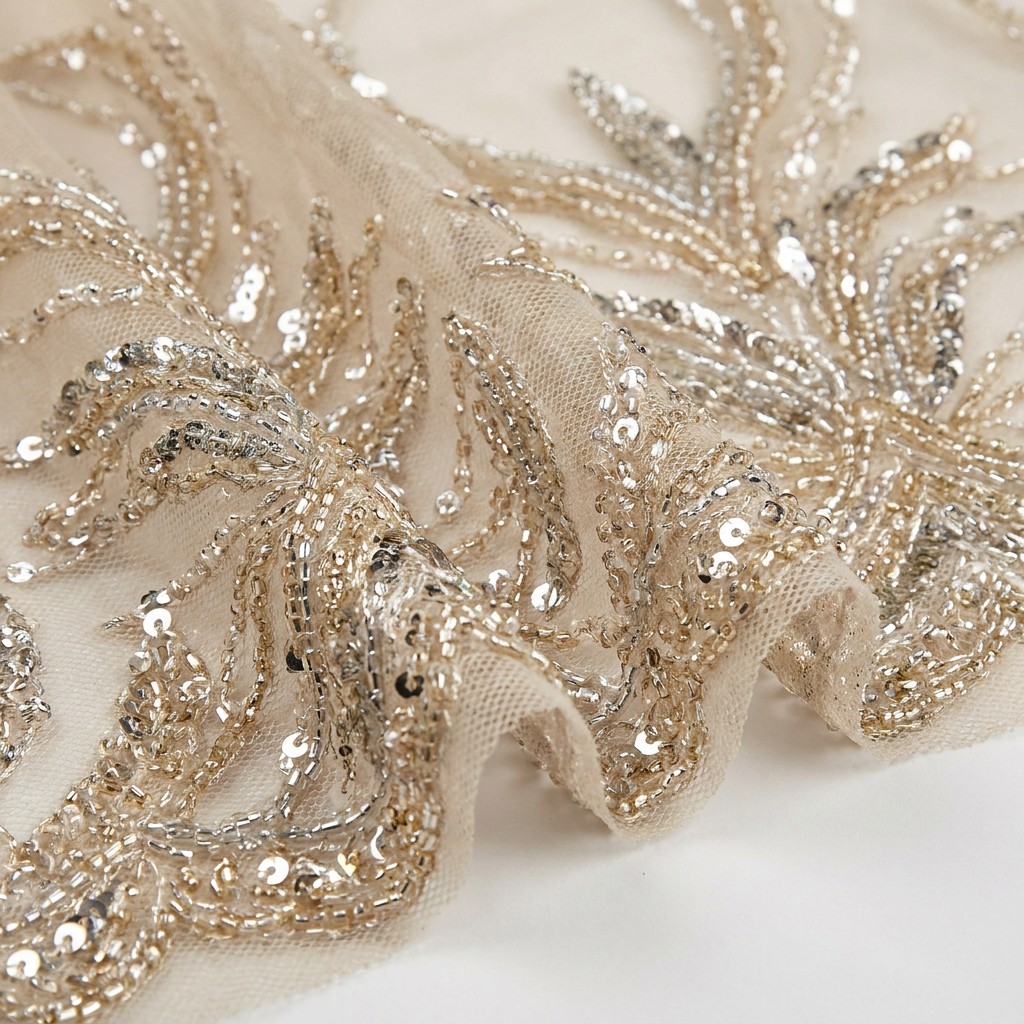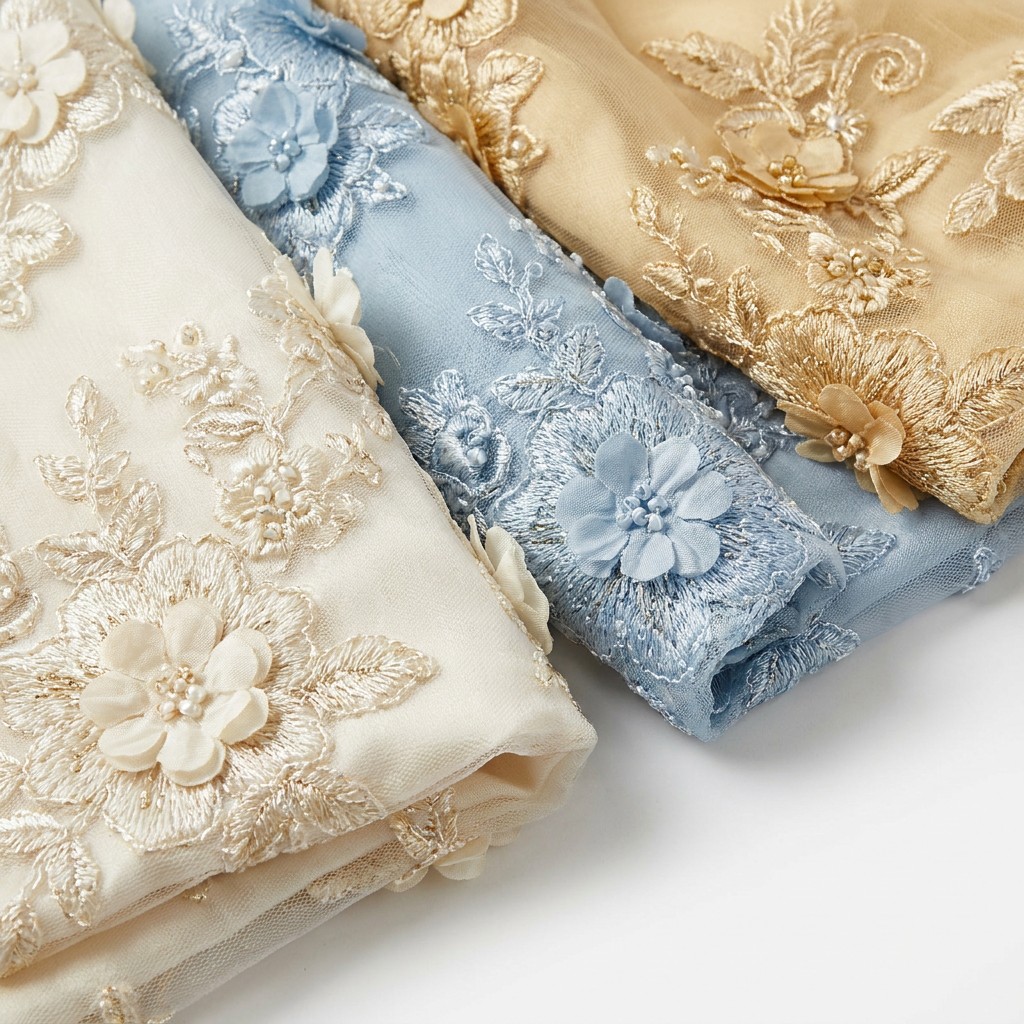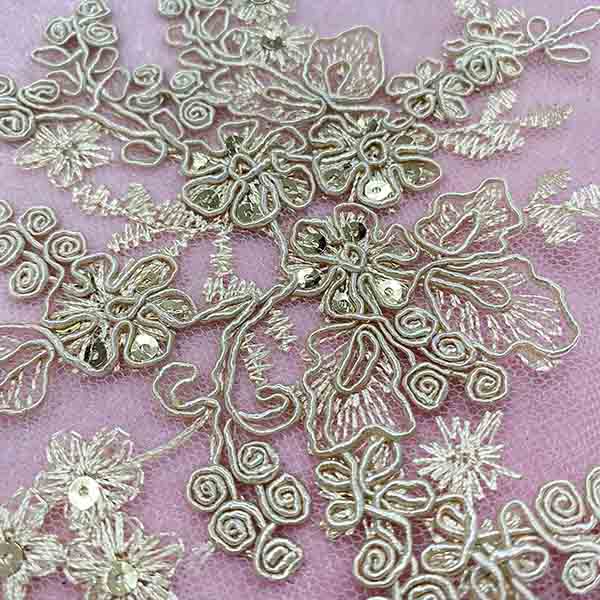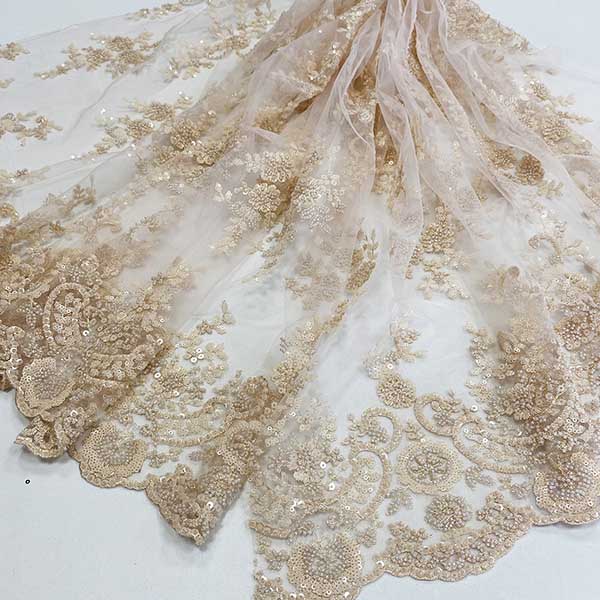
Sourcing premium chemical lace trim wholesale requires balancing freestanding guipure motif tensile strength, complete water-soluble substrate washout, bridge bar stability, and strict manufacturing tolerances. For luxury fashion labels, bridal ateliers, and evening wear manufacturers, purchasing chemical lace trims (guipure borders) at scale introduces critical production hurdles. For example, garment factories frequently encounter broken openwork connector bars during garment assembly, excessive residual starch stiffness causing skin irritation, and irregular scallop distortion after steam pressing. Working directly with an integrated B2B flexible manufacturing partner provides transparent quality control protocols, tailored water-soluble PVA washout processes, and a baseline MOQ of 200 yards per custom style.
Understanding Chemical Lace Trim Wholesale Specifications
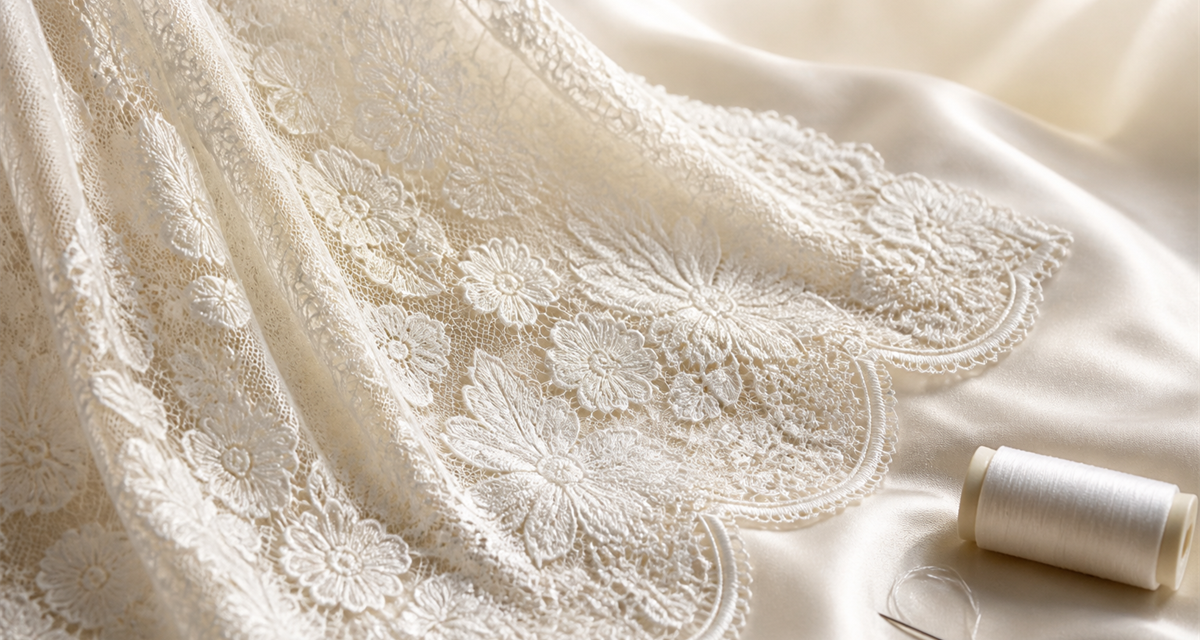
Chemical lace trim (also known as Schiffli or water-soluble guipure lace trim) is an architectural freestanding textile where computerized embroidery machines stitch dense motifs onto a specialized water-soluble polyvinyl alcohol (PVA) or chemically treated fabric. After embroidery, the fabric undergoes a continuous hot-water chemical washout bath that completely dissolves the base substrate, leaving only freestanding, interconnected embroidery threads. In commercial B2B garment engineering, structural lace integrity, soft drape, and seam longevity depend directly on three foundational pillars:
1. Embroidery Thread Chemistry and Fiber Formulations
Because chemical lace trims lack a permanent background mesh, the embroidery threads themselves must deliver all structural tensile support:
- 100% Spun Polyester and Filament Yarns (150D/2 or 300D/2): The luxury standard for bridal hemlines, evening bodices, and structured collars (90–160 GSM). Consequently, spun polyester yarns provide exceptional dimensional stability, zero shrinkage, and high tensile breaking tenacity.
- 100% Combed Mercerized Cotton Yarns (32s/2 or 40s/2): Formulated for high-end resort wear and sustainable bohemian bridal trims. Specifically, mercerized cotton delivers a natural matte finish, superior skin breathability, and rich dye uptake for custom seasonal shades.
- Metallic Lurex-Wrapped Rayon Yarns: Engineered for glamorous holiday collections and couture evening gown borders requiring radiant metallic accents.
2. Water-Soluble PVA Washout and Neutralization
Selecting premium water-soluble non-woven substrates and maintaining precise washout bath temperatures directly prevents residual stiffness and yellowing:
- Multi-Stage Hot Water Dissolution (85°C–95°C): Ensures complete extraction of PVA backing without damaging fiber luster. Moreover, thorough eco-friendly neutral rinses eliminate sticky starch residues.
- Fiber Softening and Calendering: In addition, post-wash continuous steam drying relaxes yarn twist, ensuring lace trims drape smoothly without curl or boardy stiffness.
3. Connector Bridge Bar Engineering
To eliminate openwork separation during garment wear, computerized digitizers program reinforced multi-pass interlocking bridge bars (typically 4 to 6 structural cross-stitches) between adjacent floral motifs and along scalloped borders.
Key Takeaways for B2B Chemical Lace Trim Procurement
- Specify Exact Trim Width and Bridge Bar Density: Clearly define border width (e.g., 2 cm, 5 cm, 8 cm, or 15 cm) and require multi-pass bridge bars to prevent motif detachment during sewing.
- Require Complete PVA Substrate Extraction: Always verify that trims undergo multi-stage neutral washing to eliminate residual PVA starch and ensure soft skin comfort.
- Verify Wash Shrinkage and Dimensional Stability: Ensure cotton and polyester guipure trims undergo pre-shrinking, maintaining dimensional variation below ±1.5% under steam pressing.
- Leverage Direct Factory MOQs: Partner with integrated mills offering a practical 200-yard minimum order quantity per custom design, accompanied by physical strike-off samples within 5–7 working days.
5-Step Chemical Lace Trim Wholesale Procurement Workflow
- Step 1: Technical CAD Artwork Submission
In the initial stage, buyers submit vector artwork or physical lace swatches indicating trim width, yarn composition (polyester, cotton, or lurex), and target Pantone color codes. - Step 2: Strike-Off Sampling & Washout Optimization
Next, our digitizing team programs connector bridge stitches and produces a 1-yard strike-off on actual machinery. Quality auditors inspect this swatch under standard D65 light booths to evaluate motif clarity, softness, and edge symmetry. - Step 3: Machine Setup & Yarn Tension Calibration
Before mass production begins, technicians calibrate frame tension and thread feed rates to ensure uniform stitch density across multi-head embroidery machines. - Step 4: Continuous Hot-Water Washout & Softening
After embroidery, continuous automated washing lines dissolve the PVA substrate at 90°C, followed by neutralizing rinses and gentle hot-air drying. - Step 5: 100% Inspection and Spool Packaging
Finally, quality auditors inspect every yard for broken bridges, skipped stitches, and loose threads, rolling finished chemical lace trims onto reinforced cardboard spools for maritime transit.
Technical Specifications & Material Tolerance Matrix
| Technical Parameter | 100% Polyester Guipure Trim | Combed Cotton Guipure Trim | Metallic Lurex Chemical Trim |
|---|---|---|---|
| Fiber Composition | 100% Spun Polyester | 100% Combed Cotton | Polyester & Metallic Lurex |
| Substrate Washout Type | 90°C Water-Soluble PVA | 85°C Water-Soluble PVA | Neutral Water-Soluble PVA |
| Trim Widths Available | 2 cm, 4 cm, 8 cm, 12 cm | 3 cm, 6 cm, 10 cm, 15 cm | 4 cm, 7 cm, 12 cm, 18 cm |
| Dimensional Stability (Steam) | Shrinkage < 1.0% | Shrinkage < 2.5% (Pre-Shrunk) | Shrinkage < 1.2% |
| Thermal Tolerance | Up to 150°C (302°F) | Up to 180°C (356°F) | Up to 140°C (284°F) |
| Recommended Applications | Bridal gowns, evening borders | Resort wear, bohemian dresses | Holiday fashion, couture capes |
| Factory MOQ | 200 Yards / Custom Design | 200 Yards / Custom Design | 200 Yards / Custom Design |
Quality Control in Chemical Lace Trim Wholesale Production
To guarantee that exported guipure trim spools meet exacting international retail and couture standards, our quality control team executes thorough physical evaluations:
| Inspection Dimension | Testing / Evaluation Method | Tolerance & Acceptance Criteria | Actionable Failure Trigger |
|---|---|---|---|
| Bridge Bar Tensile Strength | ASTM D5034 / Grab Tensile Tester | Connector breaking force > 12.0 N | Motif separation under manual pull test |
| Residual Starch / PVA Content | Iodine Chemical Spot Indicator Test | Zero blue/purple coloration (100% extraction) | Starch residue detected on trim fibers |
| Colorfastness to Washing | AATCC 61 (2A Test) / ISO 105-C06 | Grade 4.0 or higher (AATCC Gray Scale) | Visible color loss or water bath staining |
| Width & Scallop Consistency | Digital Caliper & Optical Gauge | Width variation < ±1.0 mm across roll | Uneven scallop height exceeding ±2.0 mm |
| Weight Consistency (GSM) | Digital Balance Sample Weight | ±5% variation across 5 sample swatches | Weight deviation exceeding ±8% of target GSM |
| Needle Fragment Detection | Conveyor Metal Detector | 100% Metal Detection Pass (0.8mm Fe probe) | Any ferrous needle fragment detected in spool |
For additional details regarding our embroidery processes, explore our B2B textile manufacturing standards, discover our embroidery fabric collections, or view our custom decorative fabrics tailored for global apparel brands.
Frequently Asked Questions (FAQ)
What is the minimum order quantity (MOQ) for custom chemical lace trim wholesale?
Our unified factory minimum order quantity is strictly 200 yards per custom guipure border pattern, fiber composition, or Pantone colorway. Furthermore, we support split colorway orders on identical embroidery setups (e.g., 100 yards Off-White + 100 yards Black) to assist brands with seasonal development.
Can you match chemical lace trims to specific dress fabric color swatches?
Yes. Our in-house dyeing laboratory in Ruzhou, Henan provides accurate spectrophotometer color matching against physical swatches. In addition, physical strike-offs and lab dip verification swatches are typically produced within 5–7 working days.
How does Yunfan Textile eliminate scratchiness in freestanding guipure trims?
We combine 100% multi-stage hot-water washout baths with specialized eco-friendly textile softeners during continuous finishing. Consequently, our trims achieve exceptional softness and skin comfort without residual chemical odors.
What testing standards govern exported chemical lace trim spools?
Every production trim spool is evaluated under international textile standards, including ASTM D5034 for grab tensile strength, AATCC 61/8 for colorfastness, and ASTM D5430 for visual defect grading.
Conclusion
In summary, securing a reliable supply of chemical lace trim wholesale products requires partnering with an experienced manufacturing mill that masters multi-pass bridge digitizing, complete water-soluble PVA extraction, and defect-free spool winding. By defining clear technical criteria for trim width, tensile connector strength, and needle protection, fashion brands reduce garment assembly defects and deliver stunning freestanding lace details. Yunfan Textile provides end-to-end B2B trim development, strict 4-point system quality inspections, and reliable global logistics support.
Direct B2B Sourcing on Alibaba
Explore our full catalogue of custom guipure and embroidered lace trims, order verified production samples, and trade with Trade Assurance on our official Alibaba store.
Request Fabric Samples & Custom Sourcing Consultation
Request chemical lace trim samples and share your target width, fiber type, bridge spacing, and colour reference.
Talk to Morris directly:
- 📧 Email: morris@yunfantextile.com
- 💬 WhatsApp 1: +86 156 3752 5803
- 💬 WhatsApp 2: +86 175 1619 6727