Quick answer: Prevent embroidery fabric thread breakage by matching needle, backing, thread, tension, speed. Therefore, Lubrication, and stitch density to the exact ground fabric.
Root causes in multi-head production
Embroidery fabric thread breakage is a costly problem in high-speed multi-head production. Therefore, A broken top thread stops a head, leaves a visible gap, wastes operator time.
And may damage delicate tulle or organza. Reliable output comes from matching the ground fabric, needle, thread, backing, hooping, tension, speed, machine condition, and digitized file.
However, This guide gives a practical B2B method for a 200 yards minimum order. The goal is not merely a faster machine; it is a repeatable approved process that protects appearance, efficiency, and delivery.
Begin with failure classification. Therefore, A break near the needle eye often points to a worn needle, a burr, excessive heat, or rough thread passage.
A break above the fabric can indicate upper tension, a damaged guide, or a thread path obstruction. Bobbin breaks may result from uneven winding, excessive bobbin tension, hook damage, or lint.
However, If every head breaks at the same design position, inspect density, underlay, needle penetration, backing, and digitizing. If one head fails, compare its hook timing, needle, bobbin, tension, and guides with a stable head.
Needle temperature rises with friction, repeated penetration, dense satin columns, and high stitch counts. Therefore, Heat can weaken rayon and metallic threads, soften finishes, and abrade synthetic fibres.
Do not rely only on the machine display. Run the intended design and measure the needle area during a pilot.
However, If heat increases, lower speed, improve ventilation, use a suitable needle system, and review density. A hot needle can create both thread breakage and enlarged holes, especially in sheer grounds.
Record the observation in the production sheet.
Needles, heat, and metallic thread
Choose the needle for the fabric rather than for habit. Therefore, A ball point often protects knit or open mesh by separating yarns.
While a sharp or universal point can work on firm woven organza after a hole test. Use the smallest size that permits clean thread passage.
However, Replace needles on a scheduled stitch count and after any strike or burr. Mark needle size, point, brand, machine head, and stitch count.
Tulle and organza are unforgiving: a large or damaged needle can leave a permanent hole that becomes visible after trimming. Furthermore, Washing, or pressing.
Gold and silver metallic threads need a smooth, low-friction path. Therefore, Their foil structure can twist, flatten, and fray at guides.
An approved thread lubricant or conditioner may reduce drag, but it must not stain the fabric or change the sheen. Keep guides, tension discs, take-up levers, and the hook race clean.
However, Never apply ordinary oil to the needle or fabric. Lubrication is a controlled support, not a replacement for correct tension, an appropriate needle eye, or a properly digitized design.
Calibrate upper and bobbin tension head by head. Therefore, Use the actual production thread, bobbin, backing, design, and fabric.
Inspect the reverse side for a balanced top-to-bobbin ratio, smooth turns, and no loops. Change only one variable at a time and record the dial or digital value.
However, Do not describe settings only as tight or loose. A repeatable record lets the operator restore the approved condition after a needle change, thread replacement, or machine cleaning.
Backing and hooping for sheer grounds
Backing supplies stability. Therefore, Too little support allows the sheer ground to flag, pucker, and pull into stitches.
Too much backing creates stiffness, tears the ground, and makes the reverse bulky. For tulle, test a light tear-away or wash-away stabiliser that protects transparency.
However, For organza, test a smooth lightweight nonwoven or paper-like support. The right backing must survive hooping, stitching, trimming, and the planned finishing process without creating distortion or an unacceptable hand.
Hooping must be consistent. Therefore, Stretching tulle too tightly can make it relax after release, while loose hooping allows movement under the needle.
Lay backing flat, remove wrinkles, and use the same method for the signed sample and bulk. For dense motifs surrounded by open ground, add planned support or revise stitch direction.
However, Mark grain and top edge so every head reproduces the same orientation. A repeatable hooping instruction is especially important when several operators share one order.
B2B production parameter table
| Construction | Starting control | Acceptance check | Action |
|---|---|---|---|
| Tulle | Fine needle and light backing | No yarn cuts or flagging | Reduce speed or density |
| Organza | Smooth support and low drag | No holes or puckering | Review point and hooping |
| Metallic thread | Clean guides and approved lubricant | No foil fray or split | Recalibrate path and tension |
| Dense satin | Balanced underlay and slow zones | Breaks per 1,000 stitches | Revise density or sequence |
Multi-head machines amplify small differences. Therefore, One head may have a partially blocked guide, a different bobbin, or a needle that has completed more stitches.
Run a pilot on every head and count breaks per 1,000 stitches. Set an internal target of zero unexplained breaks on the approved trial and agree a maximum for bulk.
However, Stop when one head is worse than the average. Continuing at full speed can create many defective panels before inspection catches the pattern.
Speed must follow the most sensitive design area. Therefore, Metallic thread, dense satin, small lettering, sharp turns, and sheer fabrics generally need a slower setting than open running stitches.
Program slow zones at starts, corners, and density transitions. Reduce acceleration when the ground is light or the hoop is large.
However, Record maximum speed, average speed, slow zones, needle changes, and break count. A high-speed claim has value only when the supplier states the exact construction and design used for the trial.
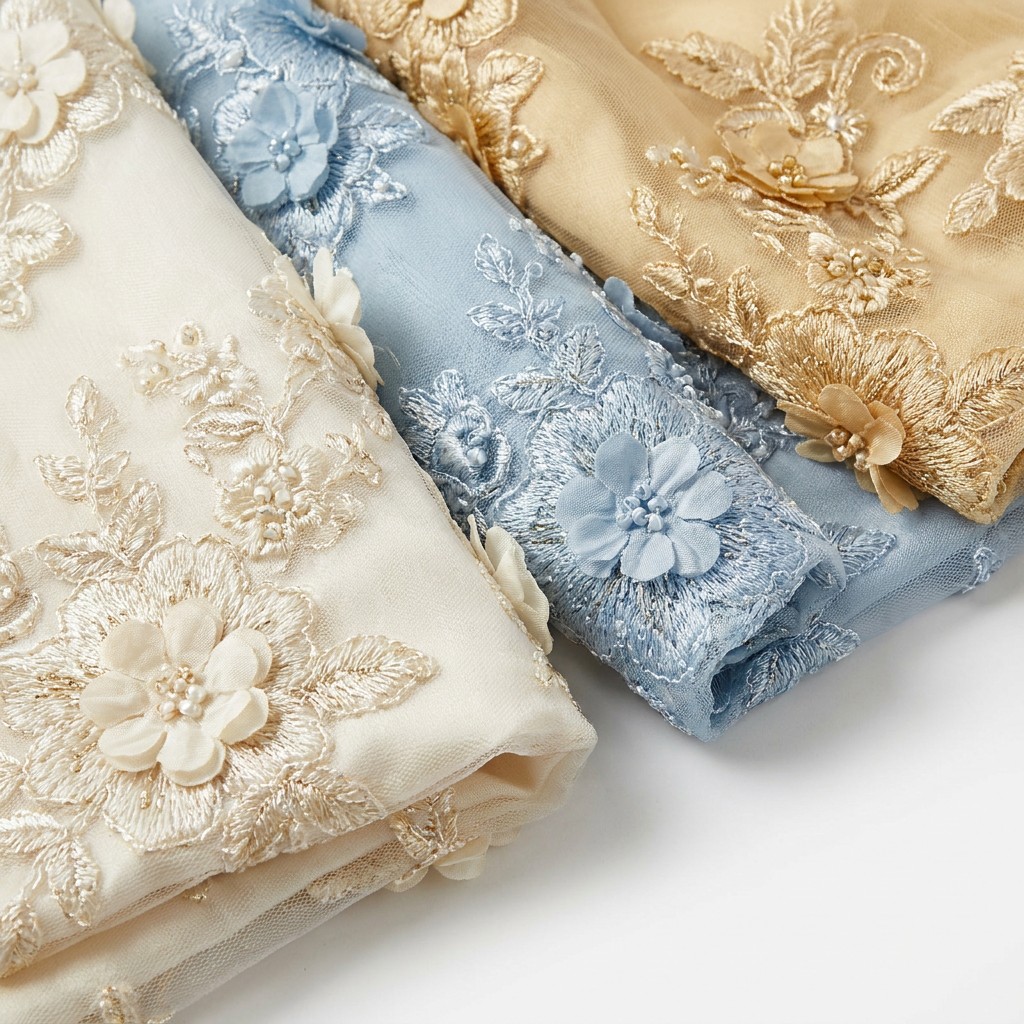
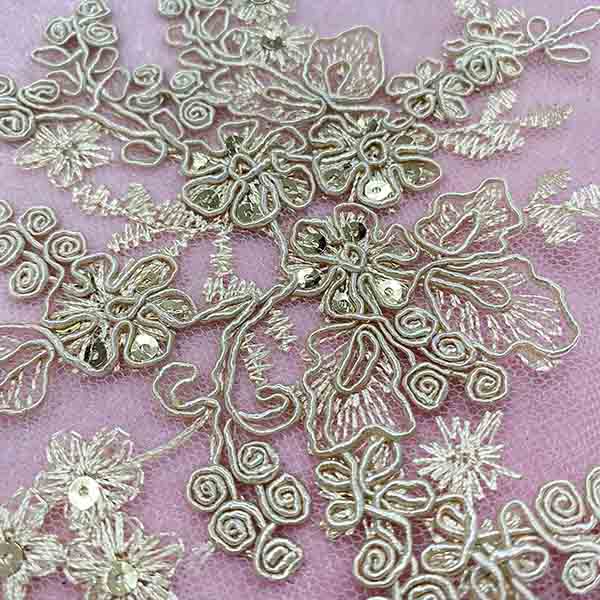
For tulle, begin with a fine ball-point needle, light stabiliser, controlled hooping, and moderate density. Therefore, For organza, confirm that the selected point does not cut yarns, then use smooth support to prevent flagging.
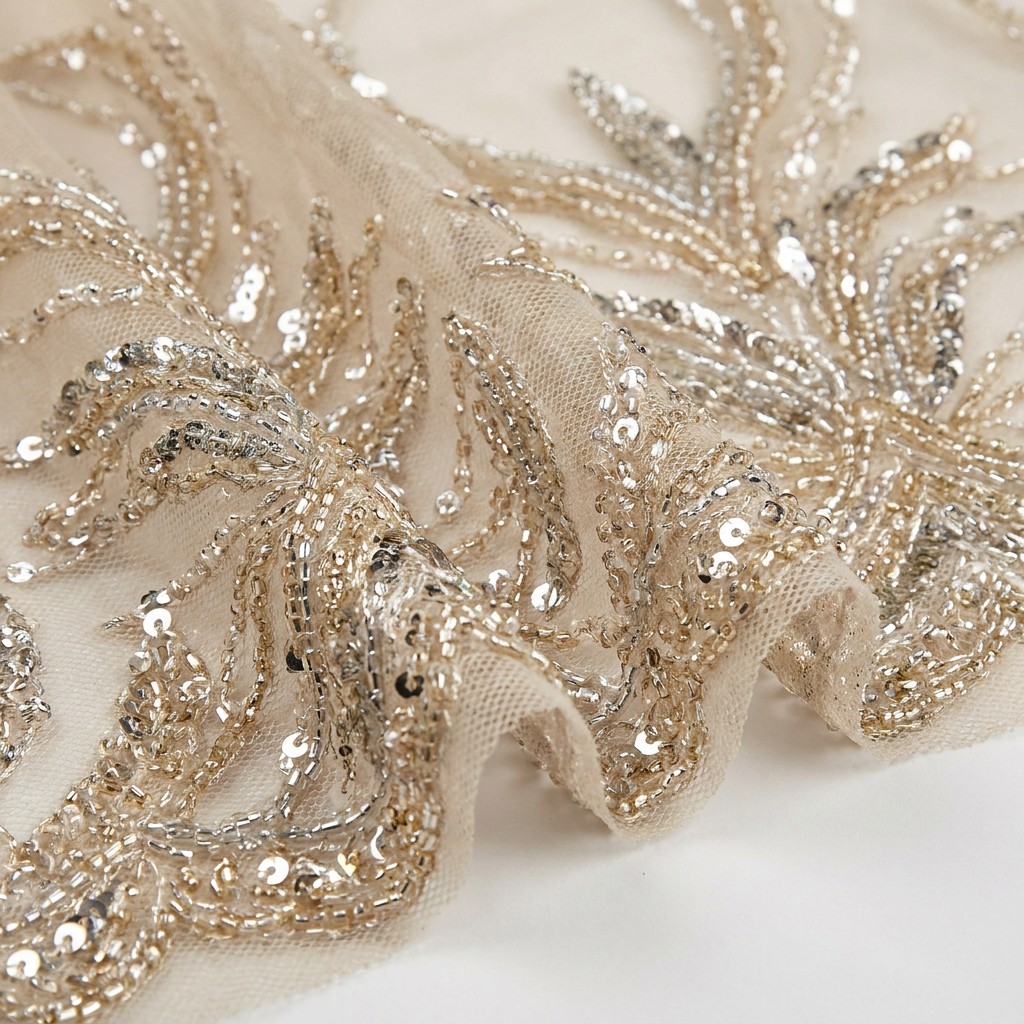
For metallic embroidery, use clean guides, compatible lubrication, an eye that reduces abrasion, and slower transitions. After trimming, inspect holes, pulled yarns, loose tails, bobbin show-through, and puckering.
However, The finished panel, not only the machine display, is the acceptance reference.
Practical production controls
Digitizing prevents many breaks. Therefore, Avoid excessive density in small areas, long jumps, and abrupt direction changes.
Use sensible underlay and sequence elements to minimise repeated penetration. A satin column should not be so wide that thread pulls across an unsupported span.
However, Identify metallic sections and delicate ground areas in the file notes. Record thread codes, needle changes, density, underlay, colour sequence, speed notes.
And revision number so a successful pilot can be reproduced.
Troubleshoot in a fixed order. Therefore, Stop the head and identify whether top thread, bobbin, or fabric failed.
Inspect the last stitches and needle. Check cone, guides, tension discs, take-up lever, hook race, hooping, backing, needle height, and presser-foot clearance.
However, Only then test lower speed or a fresh needle with a short lubricated thread path. Change one variable at a time.
A written result is more useful than several simultaneous adjustments that hide the real cause.
Troubleshooting and QC checklist
Incoming inspection should verify width, GSM, base composition, backing compatibility, colour, roll condition, and stitchability. Therefore, For a 200 yards order, agree the lot and select panels from beginning, middle, and end roll positions.
Link every panel to roll number, machine head, design file, thread lot, needle, backing, operator, speed, and break count. This evidence helps the buyer and manufacturer resolve a problem without confusing a fabric issue with a machine issue.
Use Use the parameter table as a starting point, then approve the actual machine trial. Therefore, Tulle uses a fine needle, light backing, moderate speed, and no yarn cuts.
Organza uses smooth backing, low drag, and no holes. Metallic thread uses clean guides, approved lubricant, and slower zones.
However, Dense satin uses balanced underlay and reduced acceleration. The signed standard must state the design and stitch count.
Never transfer settings from one construction to another without a pilot.
The production checklist asks whether needle point and size match the ground. Therefore, Needles are changed on schedule, metallic thread is protected, tensions are recorded by head, and backing is flat.
It also asks whether speed and slow zones are documented, all heads completed the same pilot. Breaks are counted per 1,000 stitches, and finished panels were checked after trimming and planned wash or pressing.
However, Any unresolved answer is a hold point before bulk release.
Practical production controls
For sourcing teams, share artwork, target fabric, machine type, expected speed, finishing process, and thread specification before sampling. Therefore, Request a trial using the intended thread and backing.
Approve settings together with the 200 yards MOQ and delivery plan. A sealed embroidered reference should show accepted density, sheen, reverse appearance, transparency, edge quality, and permissible variation.
However, Replacement thread or backing is not equivalent until it passes the same check.
Embroidery fabric thread breakage is a system issue, not a single operator fault. Therefore, Stable production combines compatible fabric, backing, needle, thread, machine condition, tension, speed, and digitizing.
Measuring breaks per 1,000 stitches, controlling needle heat, protecting metallic thread, matching stabiliser to sheer fabric. And recording each head creates a practical bridge from sample to bulk.
However, Yunfan Textile can review construction, density, thread, backing, sampling, and the 200 yards MOQ with Morris.
Source direct on Alibaba - request bulk pricing, specifications, and production details in one place.
Request Embroidery Fabric Samples and share your target GSM, width, design density, thread type, and colour reference.
Talk to Morris directly:
Email: morris@yunfantextile.com
WhatsApp: +86 156 3752 5803
WhatsApp: +86 175 1619 6727