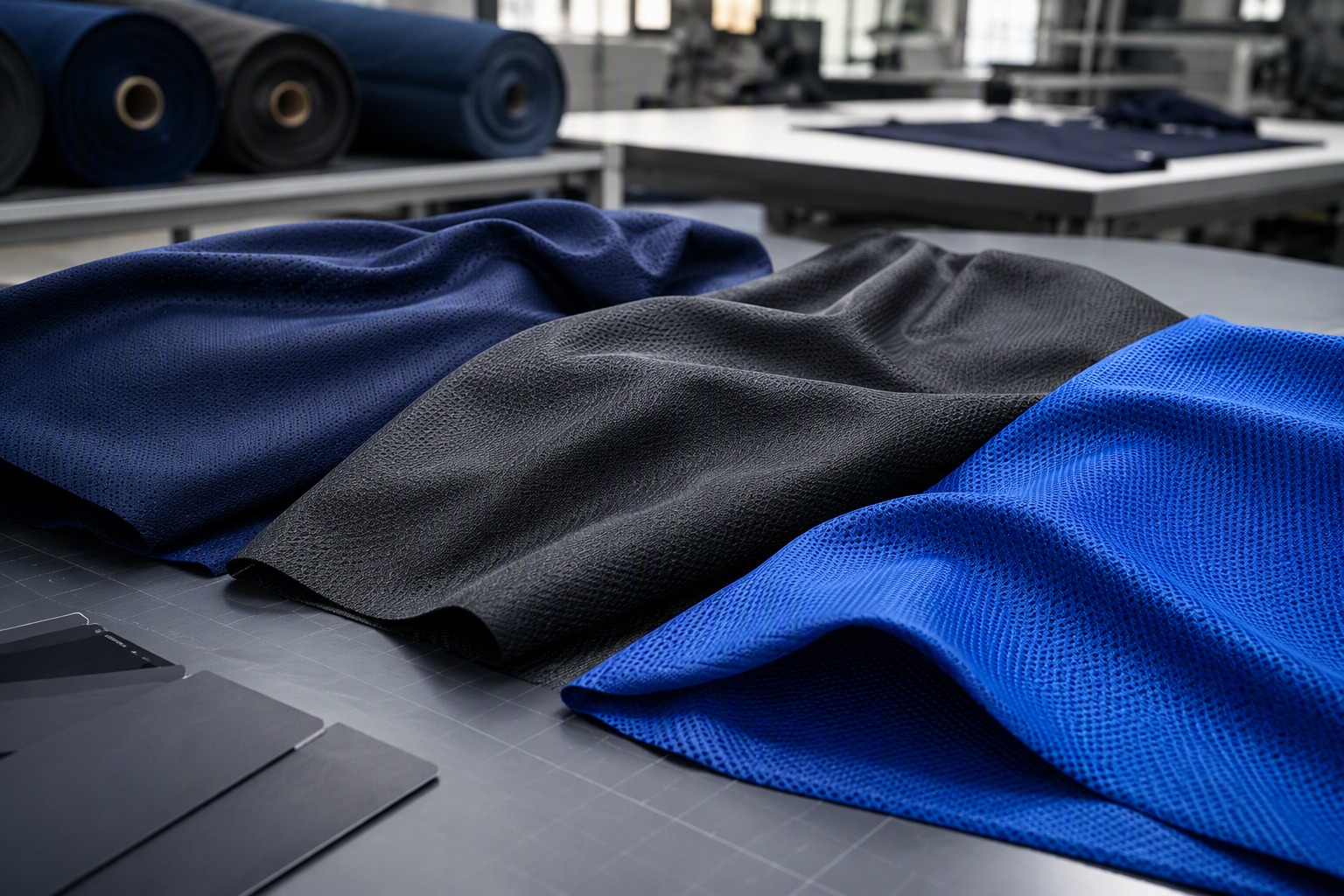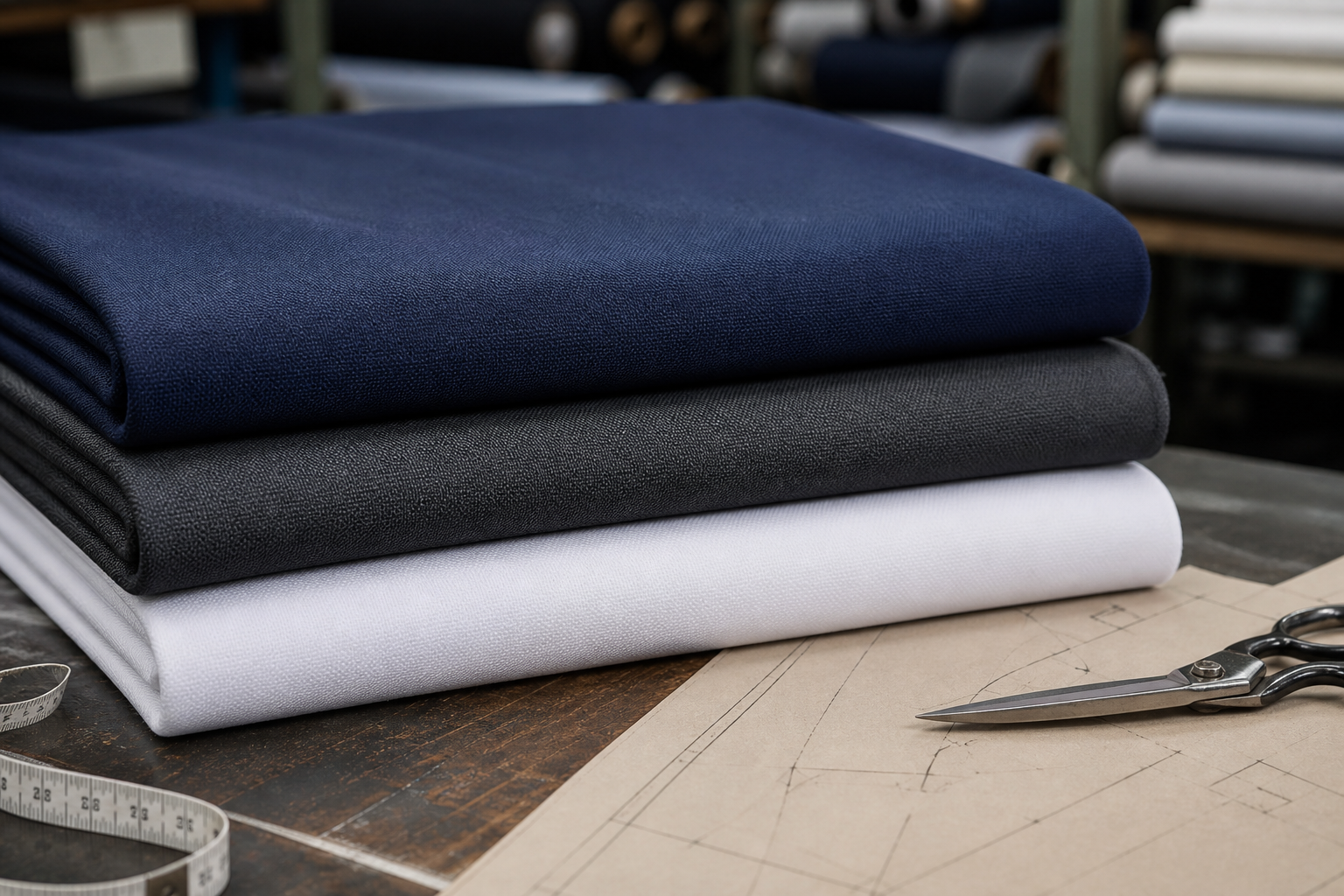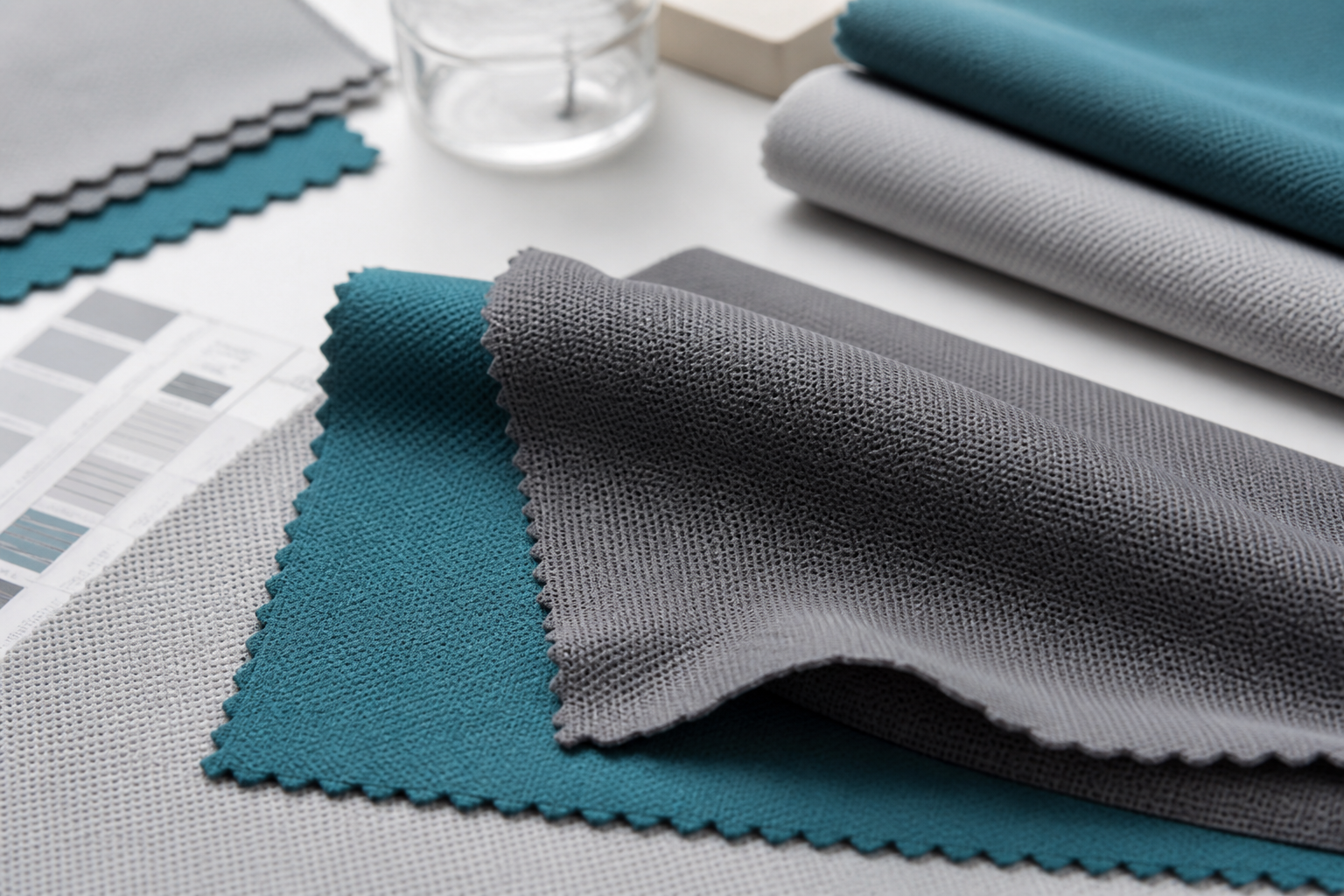
Therefore, Quick answer: Control fabric batch color consistency with a sealed physical standard. Therefore, Calibrated CIE DE2000 measurements, D65/TL84/CWF viewing, separate ground and foil tolerances, and signed lab-dip approval before bulk.
Define the colour standard first
However, Fabric batch color consistency is a commercial requirement, not only a laboratory preference. Therefore, A small shade shift can make panels look mismatched, change the perceived value of a collection.
Furthermore, Or create costly cutting-room segregation. Decorative constructions add complexity because the visible colour may come from a dyed ground.
In addition, Embroidery, sequin, metallic foil, coating, or several layers together. This guide explains how B2B buyers can define colour using instrumental CIE DE2000.
Consequently, Standard light booths, agreed tolerances, lab dips, and a traceable bulk approval process for a 200 yards minimum order.
As a result, The first step is to define the colour standard. Therefore, A physical master, approved lab dip, digital reference, or colour card may be used.
Moreover, But it must be identified by code, date, material, and finish. A screen image is not a sufficient production standard because monitors vary in calibration and brightness.
Specifically, For decorative fabric, retain a face sample and a reverse sample when the backing contributes to appearance. Record the weave, base dye, foil colour, sequin colour, embroidery thread, finish, and lighting conditions used at approval.
CIE DE2000 measurement standard
For example, A spectrophotometer measures reflected light and reports colour coordinates, usually in a defined colour space. Therefore, CIE DE2000, often written ΔE00 or CIE DE2000, weights hue, chroma.
Therefore, And lightness differences in a way that better reflects visual perception than a simple distance. The instrument is valuable only when aperture, illuminant, observer, backing, geometry, calibration tile, and measurement direction teams control.
However, Measure several points and report the mean and range, rather than using one convenient reading.
Furthermore, Use a calibrated instrument at the beginning of the shift and after any move, maintenance, or unusual result. Therefore, Place the fabric flat without wrinkles, use the agreed backing, and avoid measuring over a sequin hole.
In addition, Foil gap, heavy thread, or metallic reflection unless the specification expressly covers that feature. For textured goods, take readings from multiple areas and keep the measurement map.
Consequently, If the surface is highly reflective. Combine instrumental data with visual assessment because gloss and sparkle can change the perceived shade.
As a result, An internal starting tolerance for a solid dyed ground may be ΔE00 ≤1.0 for a premium matched standard and ≤1.5 for a commercial bulk lot. Therefore, Subject to the buyer’s signed approval.
Practical colour control step 1
Moreover, A broader limit such as ≤2.0 may be appropriate for textured, multi-colour, or highly reflective decorative fabrics. These are specification examples, not automatic industry rules.
Specifically, The master standard, construction, and end use must determine the final limit. Never silently widen tolerance after production.
D65, TL84, and CWF visual grading
For example, Light booths make visual grading repeatable. Therefore, D65 approximates daylight and is useful for general colour matching.
Therefore, TL84 represents a common retail or store-light environment, while CWF simulates cool white fluorescent light. Inspect the standard and bulk side by side in the agreed sequence.
However, A fabric that matches under D65 but shifts under TL84 may have metamerism. Record the booth model, lamp condition, illumination time, viewing angle, background, and grade.
Furthermore, Replace lamps according to the booth manufacturer’s schedule.
In addition, Visual rating should use a simple scale linked to action. Therefore, Grade 1 can mean an obvious mismatch and hold; grade 2 a clear commercial difference and review.
Consequently, Grade 3 an acceptable difference for the agreed product; and grade 4 a close match suitable for critical approval. The labels must be defined by the buyer and supplier because different teams use grades differently.
As a result, Use neutral grey surroundings, avoid bright clothing, and allow the observer’s eyes to adapt before judging.
Ground dye and metallic foil tolerances
Moreover, Decorative surfaces require layer-by-layer control. First measure the dyed base mesh or ground before foil or embellishment.
Specifically, Then measure the finished face under the specified geometry. If the foil is transparent or perforated, ground colour may influence the result.
For example, If sequins or metallic threads create highlights, define whether the buyer accepts average readings, a visual effect range, or both. Document the sampling area so a later inspector does not compare a dense motif with an open ground.
Therefore, Metallic foil often needs a separate tolerance from the base dye. Therefore, A narrow foil shade difference can be visually strong even when the ground passes.
However, Set a foil appearance rule for hue, reflectivity, coverage, pinholes, and transfer. A practical starting point may combine ΔE00 for the ground with a visual foil grade and a coverage limit.
Furthermore, Do not use an opaque instrument result to approve a foil that has obvious streaks, cloudiness, or gloss variation.
In addition, Batch-to-batch control begins at raw material release. Therefore, Use the same approved yarn, greige base, dye recipe, foil film, adhesive, sequin lot, and finishing route where possible.
Practical colour control step 2
Consequently, Record supplier lot, dye-house batch, machine, recipe revision, temperature, time, and finishing speed. When a substitution is necessary, make a new lab dip or pilot and obtain written approval.
As a result, Traceability allows the buyer to identify whether a shade shift came from fibre, dyeing, coating, lamination, or finishing.
Lab Dip and bulk approval workflow
Moreover, Before bulk dyeing or finishing, the supplier should prepare a lab dip against the master. Therefore, The lab dip form should state fabric construction, width, GSM, fibre content, colour code.
Specifically, Recipe, finish, date, sample number, and proposed ΔE00 result. Evaluate it in D65, TL84, and CWF.
For example, Send the physical lab dip for buyer approval and retain a signed copy. The approved dip becomes the production comparison standard.
Therefore, Do not treat an email description such as “looks good” as a controlled approval.
However, The production plan should reserve enough time for a first-batch review. Therefore, Inspect the first roll or first dye lot before continuing the full run.
Furthermore, Compare beginning, middle, and end positions, and inspect adjacent rolls side by side. Measure the ground and finished face separately when possible.
In addition, If the first batch fails, hold the remaining goods, identify the cause. And correct the recipe or process before more material is converted.
Consequently, For bulk inspection, sample by lot rather than choosing only the best roll. Therefore, Use a defined number of rolls, locations, and readings.
Practical colour control step 3
As a result, Keep a colour map and photographs under the approved booth. Note lot-to-lot variation, within-roll variation, streaks, side-to-side differences, centre-to-selvedge difference, foil coverage, and finish gloss.
Moreover, Pair instrumental data with cutting-room risk: a slight difference may be unacceptable when two panels are sewn together. Even if separate readings appear close.
B2B tolerance and inspection table
| Control point | Recommended starting rule | Record | Release decision |
|---|---|---|---|
| Solid dyed ground | ΔE00 ≤1.0 premium or ≤1.5 commercial | Mean, range, instrument settings | Pass, review, or hold |
| Textured decorative face | Numerical limit plus visual grade | Reading map and photos | Compare signed standard |
| Metallic foil | Separate visual coverage and shade rule | Foil lot, gloss, pinholes | Hold visible streaks |
| Bulk dye lot | First-lot approval before continuation | Roll and batch traceability | Release by lot |
Specifically, This B2B process table is a practical starting point: master standard and construction teams record first. Therefore, Lab dip technicians measure and viewed in three illuminants; first bulk lot teams hold for approval.
For example, Every lot is traced by roll and reading map; and final release requires both numerical and visual acceptance. The signed limit should also specify whether the rule applies to the ground, foil, embroidery, sequins, or finished composite.
Therefore, Colour tolerance must be communicated to production, inspection, and the buyer’s cutting team. Therefore, A passed lab dip does not excuse a different base fabric, finish, or foil film.
However, A passed spectrophotometer result does not excuse visible streaks, pinholes, or gloss change. Likewise, visual approval under one light does not establish performance under every retail light.
Furthermore, Use both methods, document exceptions, and maintain a sealed master so every party judges the same object.
In addition, A practical quality-control checklist asks: Is the master identified and sealed? Therefore, Was the instrument calibrated?
Consequently, Were aperture, backing, geometry, illuminant, and observer defined? Were multiple readings taken?
Practical colour control step 4
As a result, Were D65, TL84, and CWF used? Was metamerism noted?
Moreover, Were base dye and metallic foil evaluated separately? Furthermore, Were lab dip, recipe, raw-material lots, and finishing conditions recorded?
Specifically, Was first bulk held for approval? Were roll maps, ΔE00 results, visual grades, and disposition signed?
For example, For a 200 yards purchase, agree the colour workflow before the purchase order. Therefore, Share the colour code, physical standard, construction, width, GSM, embellishment, end use, target light sources, and tolerance.
Therefore, Approve the lab dip before bulk production. Request a pre-shipment report with lot numbers and photos.
However, If a colour issue appears, compare the retained master, lab dip, and production sample under the same booth. This avoids disputes created by different lighting or uncalibrated screens.
Practical production controls
Furthermore, Fabric batch color consistency is strongest when the specification connects material, instrument, light booth, visual grade, and approval record. Therefore, CIE DE2000 provides a useful numerical language, while D65, TL84, and CWF reveal differences that a single light can hide.
In addition, Separate ground dye from metallic foil, control lab dips, hold the first bulk lot, and map every roll. Yunfan Textile can review colour references, decorative construction, tolerances, sampling, and the 200 yards MOQ with Morris.
Source direct on Alibaba - request bulk pricing, specifications, and production details in one place.
Request Decorative Fabric Samples and share your target GSM, width, construction, colour reference, and finish.
Talk to Morris directly:Email: morris@yunfantextile.comWhatsApp: +86 156 3752 5803WhatsApp: +86 175 1619 6727