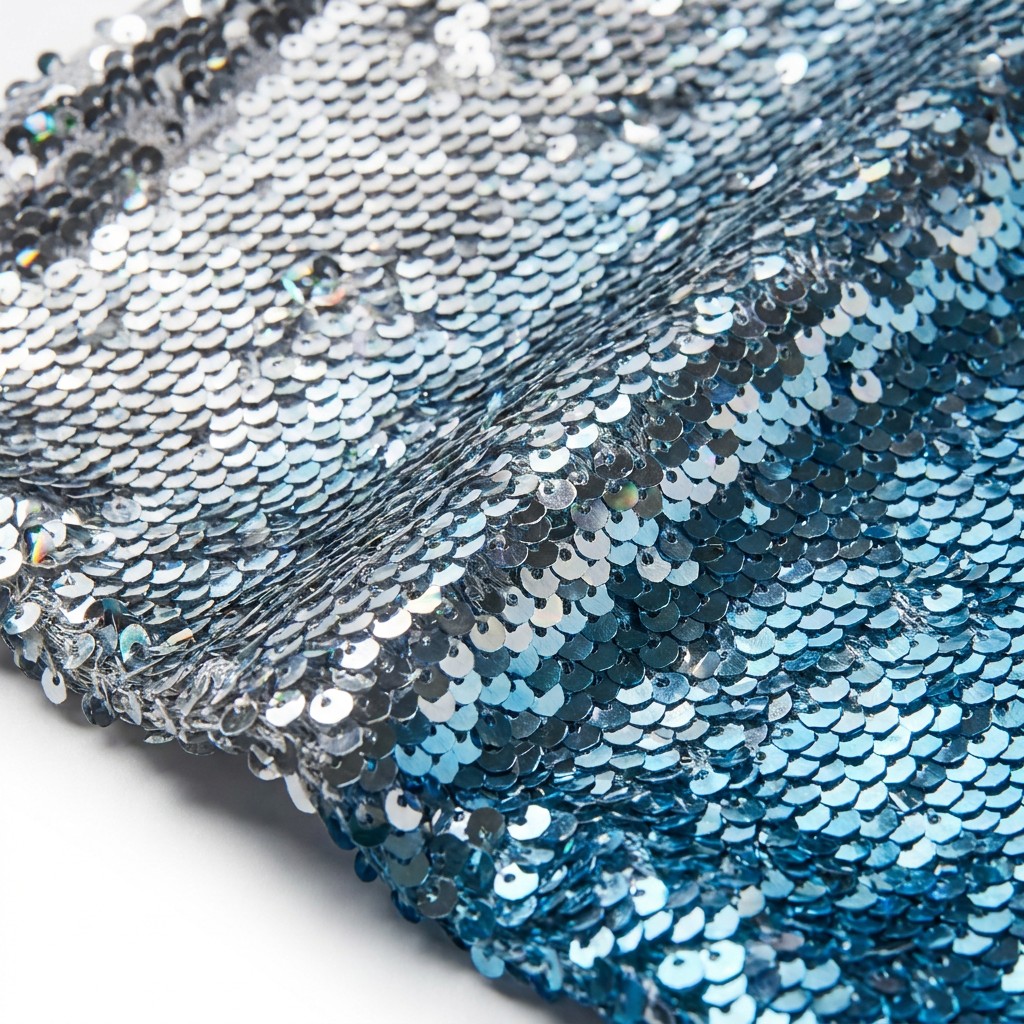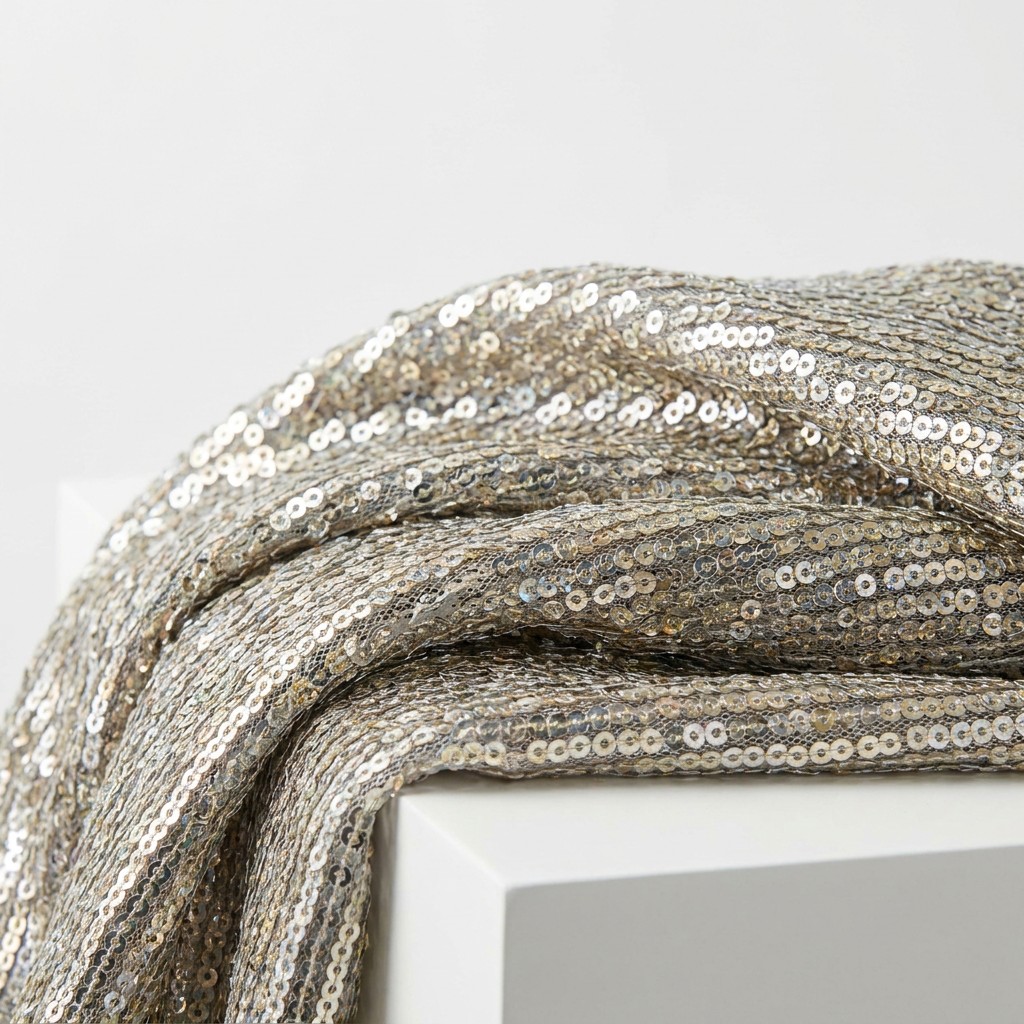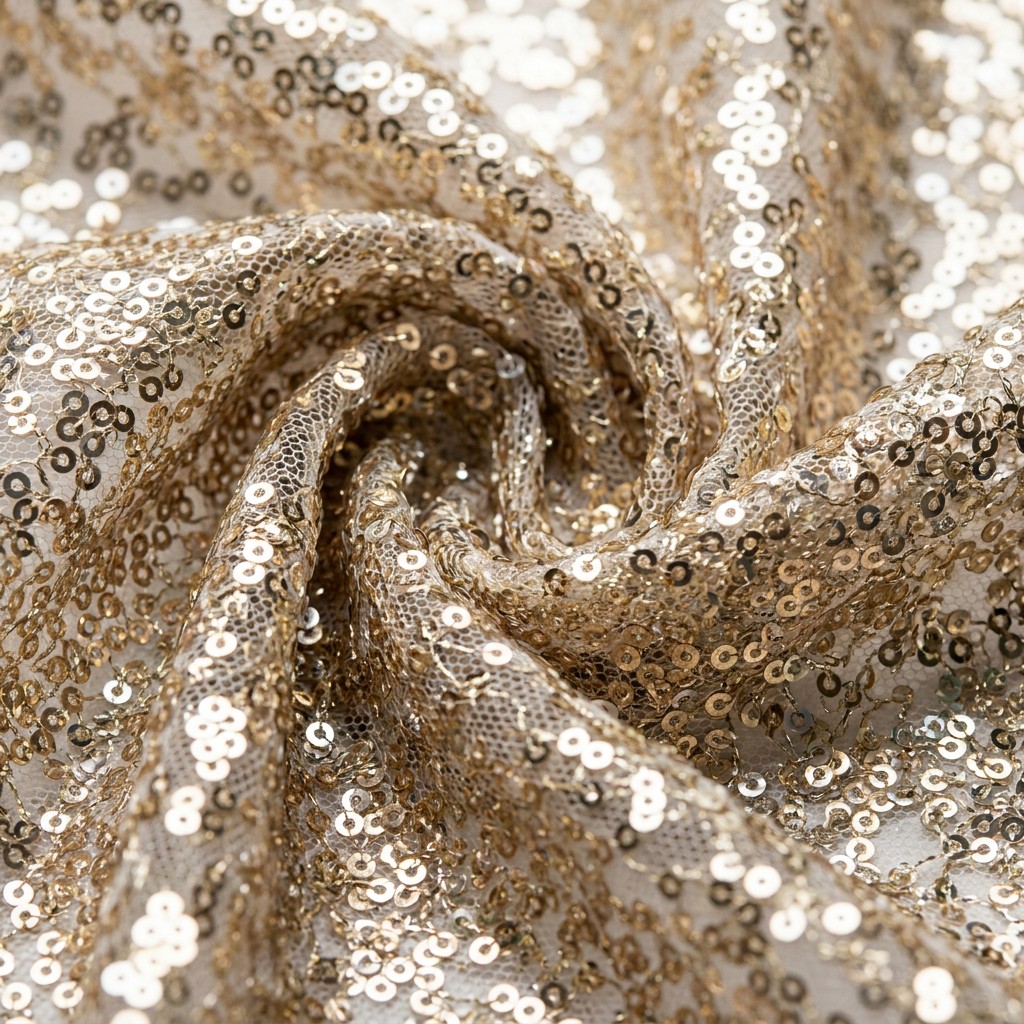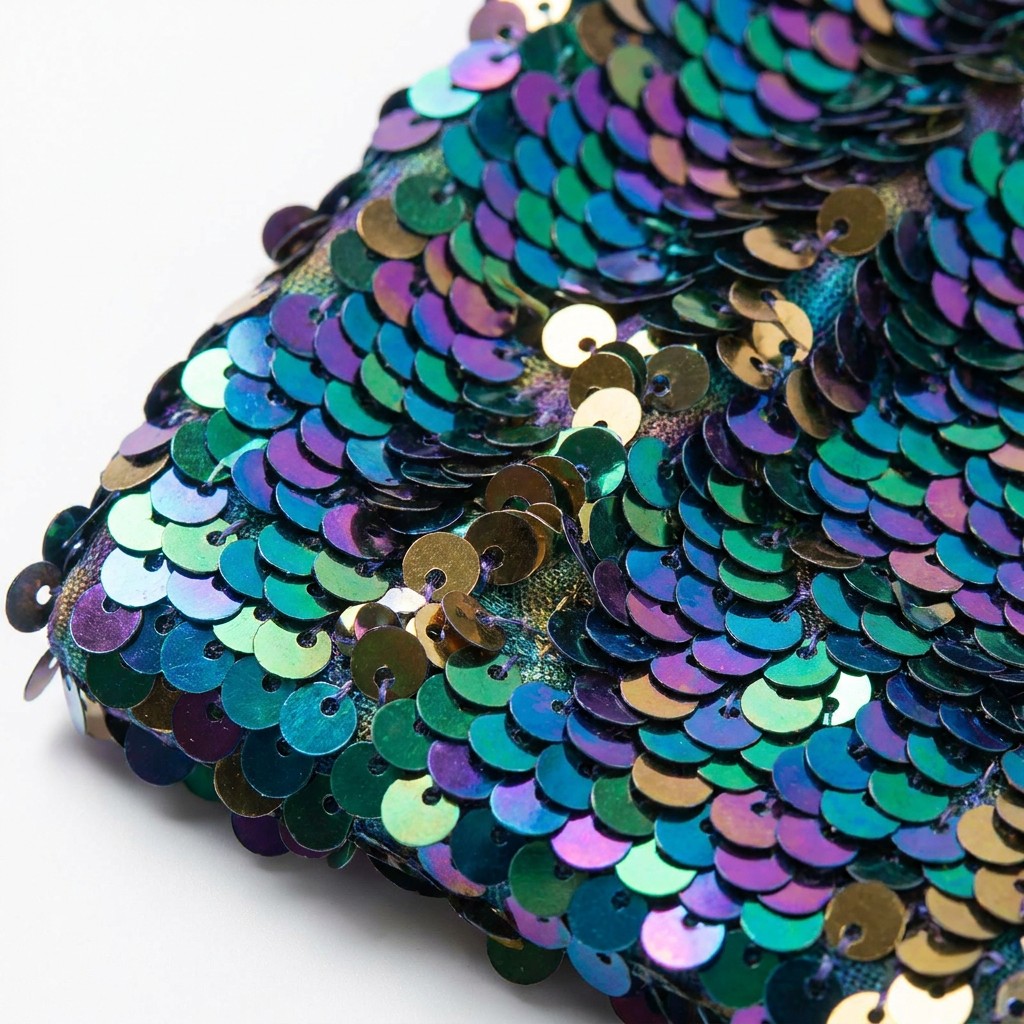
Sourcing bespoke printed sequin fabric wholesale requires balancing high-resolution digital graphic alignment, UV-curable ink adhesion on PET polymer discs, lock-stitch anchor durability, and strict production tolerances. For contemporary streetwear labels, festival costume designers, and resort fashion brands, purchasing custom-printed sequin textiles at scale introduces critical production hurdles. For example, garment factories frequently encounter ink flaking under friction, pattern misalignment across panel cuts, and harsh solvent odors from uncertified inks. Working directly with an integrated B2B flexible manufacturing partner provides transparent quality control protocols, tailored UV digital printing options, and a baseline MOQ of 200 yards per custom artwork.
Understanding Printed Sequin Fabric Wholesale Specifications
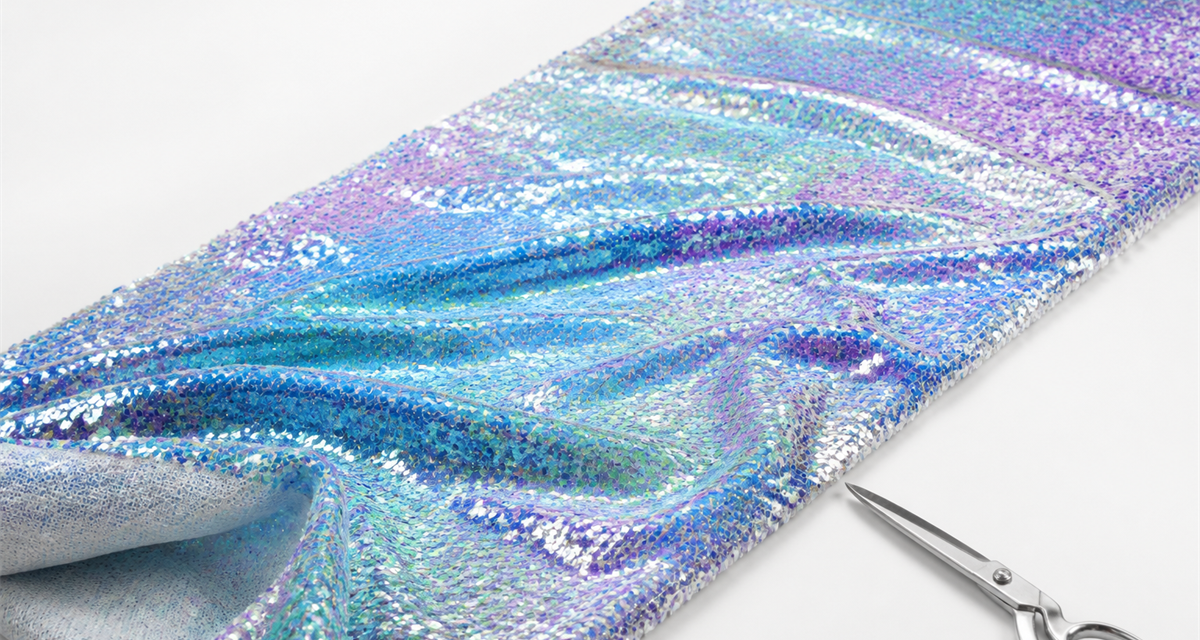
Printed sequin fabric is an innovative decorative textile created by applying high-definition digital UV inkjet printing directly onto pre-stitched white or metallic sequin fabric rolls. By synchronizing printhead micro-nozzles with surface disc textures, manufacturers reproduce photorealistic florals, abstract animal prints, camouflage graphics, and brand logos across large fabric bolts. In commercial B2B garment engineering, print vibrancy, disc flexibility, and seam longevity depend directly on three foundational pillars:
1. Base Mesh and Fabric Foundations
The underlying backing must provide dimensional stability during continuous high-speed digital UV printer passes:
- 100% High-Density Polyester Mesh: The industry standard for structured evening jackets, statement bomber jackets, and stage dresses (45–70 GSM). Consequently, this stable mesh foundation delivers crisp alignment without skewing under printer tension rollers.
- 4-Way Stretch Spandex Foundations: Essential for active festival wear, dance leotards, and bodycon dresses (180–240 GSM). Specifically, this backing provides 120% multidirectional stretch recovery while maintaining sharp graphic definition.
- Woven Satin and Taffeta Foundations: Heavyweight backings (150–220 GSM) engineered for tailored outerwear and decorative staging panels requiring opaque backgrounds.
2. Sequin Polymer and UV Ink Formulation
Selecting certified virgin PET polymer and eco-solvent UV-curable inks directly prevents ink delamination and color fading:
- 100% Virgin Matte / Gloss White PET Polymers: Mandatory for color-accurate digital printing. Moreover, virgin PET discs withstand instant UV lamp curing temperatures up to 140°C (284°F) without warping or curling.
- Industrial Eco-Friendly UV Inks: Formulated for high elastic adhesion. In addition, the cured ink layer flexes naturally with disc movement, resisting flaking, water immersion, and dry-cleaning solvents (perchloroethylene).
3. Multi-Head Lock-Stitch Thread Engineering
To prevent continuous sequin shedding during pattern cutting, our facility utilizes multi-strand high-tenacity core-spun polyester thread (40s/2 or 60s/3). Furthermore, automated back-tack locking stitches anchor each sequin row, ensuring adjacent discs remain securely attached if a seam is cut.
Key Takeaways for B2B Printed Sequin Procurement
- Provide High-Resolution Vector Artwork: Submit 300 DPI vector files or high-definition raster art (TIFF/PSD) with exact CMYK/Pantone color callouts to ensure print sharpness.
- Require Virgin PET Discs with UV Curing: Always insist on 100% virgin PET film and flexible UV-curable inks to prevent print cracking during garment wear.
- Verify Usable Width and Repeat Boundaries: Clearly define graphic repeat dimensions (e.g., 30 cm, 60 cm, or non-repeating panel prints) and usable cutting width.
- Leverage Direct Factory MOQs: Partner with integrated mills offering a practical 200-yard minimum order quantity per custom print design, complete with physical strike-offs delivered within 5–7 working days.
5-Step Printed Sequin Fabric Wholesale Procurement Workflow
- Step 1: Technical Artwork Submission
In the initial stage, buyers submit digital print files indicating graphic repeat, base mesh composition, target GSM, and usable width (e.g., 130 cm usable width on 150 cm overall width). - Step 2: Strike-Off Sampling & Color Profiling
Next, our color engineers calibrate digital printhead curves and produce a 1-yard strike-off on actual machinery. Quality auditors inspect this swatch under standard D65 light booths to verify color accuracy and ink adhesion. - Step 3: Base Fabric Pre-Tensioning & Alignment
Before mass printing begins, technicians calibrate roller feed tension to eliminate pattern skewing across continuous 50-yard bolts. - Step 4: Inline 4-Point System Defect Inspection
During the print and embroidery run, automated optical sensors and experienced inspectors monitor for ink bleeding, missing discs, skipped stitches, and tension puckering across the entire bolt length. - Step 5: Bolt Finishing and Protective Packaging
Finally, workers roll finished printed sequin bolts onto rigid cardboard tubes with protective interleaving film, ensuring cured ink surfaces do not stick or transfer during maritime transit.
Technical Specifications & Material Tolerance Matrix
| Technical Parameter | Standard Mesh Printed Sequin | 4-Way Stretch Printed Sequin | Opaque Satin Printed Sequin |
|---|---|---|---|
| Base Mesh Composition | 100% Polyester Netting | 85% Nylon, 15% Spandex | 100% Polyester Satin / Twill |
| Printing Technology | Digital UV Inkjet (1440 DPI) | Elastic UV Inkjet (1440 DPI) | Direct Digital UV Printing |
| Sequin Diameters Available | 3mm, 5mm, 7mm Flat Discs | 3mm, 5mm Micro-Discs | 5mm, 7mm, Paillettes |
| Total Fabric Weight (GSM) | 210 – 300 GSM (±5%) | 270 – 390 GSM (±5%) | 320 – 460 GSM (±5%) |
| Usable / Total Width | 130 cm / 150 cm | 135 cm / 150 cm | 125 cm / 145 cm |
| Thermal Tolerance | Up to 140°C (284°F) | Up to 135°C (275°F) | Up to 140°C (284°F) |
| Recommended Applications | Graphic bomber jackets, dresses | Festival bodysuits, activewear | Outerwear, statement blazers |
| Factory MOQ | 200 Yards / Custom Artwork | 200 Yards / Custom Artwork | 200 Yards / Custom Artwork |
Quality Control in Printed Sequin Fabric Wholesale Production
To guarantee that exported printed sequin bolts meet exacting retail and fashion standards, our quality control team executes thorough physical evaluations:
| Inspection Dimension | Testing / Evaluation Method | Tolerance & Acceptance Criteria | Actionable Failure Trigger |
|---|---|---|---|
| UV Ink Adhesion Strength | ASTM D3359 / Cross-Hatch Tape Test | Class 4B or higher (zero ink grid flaking) | > 5% ink detachment on tape peel |
| Colorfastness to Washing | AATCC 61 (2A Test) / ISO 105-C06 | Grade 4.0 or higher (AATCC Gray Scale) | Visible graphic fading or ink bleeding |
| Colorfastness to Crocking | AATCC 8 / ISO 105-X12 (Crockmeter) | Dry Rubbing: Grade 4.5 / Wet Rubbing: Grade 4.0 | Printed ink transfer onto white test cloth |
| Usable Width Verification | Calibrated Steel Ruler Measurement | Minimum 130 cm clear printed area | Unprinted border exceeding 10 cm per selvedge |
| Weight Consistency (GSM) | Circular GSM Cutter & Digital Balance | ±5% variation across 5 sample points per roll | Weight deviation exceeding ±8% of target GSM |
| Needle Fragment Detection | Conveyor Metal Detector | 100% Metal Detection Pass (0.8mm Fe probe) | Any ferrous needle tip detected in roll |
For additional details regarding our printing and embroidery standards, explore our B2B textile manufacturing standards, discover our sequin fabric collections, or view our custom decorative fabrics tailored for global fashion brands.
Frequently Asked Questions (FAQ)
What is the minimum order quantity (MOQ) for custom printed sequin fabric wholesale?
Our unified factory minimum order quantity is strictly 200 yards per custom graphic artwork, base substrate, or colorway. Furthermore, we support split artwork orders on identical base meshes (e.g., 100 yards Graphic A + 100 yards Graphic B) to provide brands with flexible design options.
Can you match printed sequin colors to specific Pantone codes?
Yes. Our digital color technicians utilize specialized ICC color profiles calibrated for PET polymer reflectivity. In addition, physical strike-offs and lab dip verification swatches are typically produced within 5–7 working days.
How does Yunfan Textile prevent printed inks from cracking when the fabric stretches?
We formulate our UV inks with high-elastic polymer cross-linkers that bond directly to the PET surface. Consequently, the ink flexes seamlessly with disc rotation and base mesh elongation without peeling or cracking.
What testing standards govern exported printed sequin rolls?
Every production roll is evaluated under international textile standards, including ASTM D5430 for 4-point visual defect inspection, ASTM D3359 for ink cross-hatch adhesion, and AATCC 61/8 for colorfastness.
Conclusion
In summary, securing a reliable supply of printed sequin fabric wholesale textiles requires partnering with an experienced manufacturing mill that masters high-resolution UV inkjet printing, elastic ink formulation, and lock-stitch stability. By defining clear technical criteria for artwork resolution, ink adhesion, and needle protection, fashion brands reduce cutting-room defects and deliver vibrant graphic apparel. Yunfan Textile provides end-to-end B2B fabric development, strict 4-point system quality inspections, and reliable global logistics support.
Direct B2B Sourcing on Alibaba
Explore our full catalogue of custom sequin fabrics, order verified production samples, and trade with Trade Assurance on our official Alibaba store.
Request Fabric Samples & Custom Sourcing Consultation
Request printed sequin fabric samples and share your target artwork, GSM, width, sequin size, and colour reference.
Talk to Morris directly:
- 📧 Email: morris@yunfantextile.com
- 💬 WhatsApp 1: +86 156 3752 5803
- 💬 WhatsApp 2: +86 175 1619 6727