micro sequin static charge is the measurable control point for this decorative fabric programme. Buyers need stable behaviour from sample approval through cutting, sewing, finishing, and final inspection. This guide explains the mechanism, the test plan, the production tolerance, and the evidence a responsible mill should provide before a 200-yard order ships.
micro sequin static charge: mechanism and buyer risk
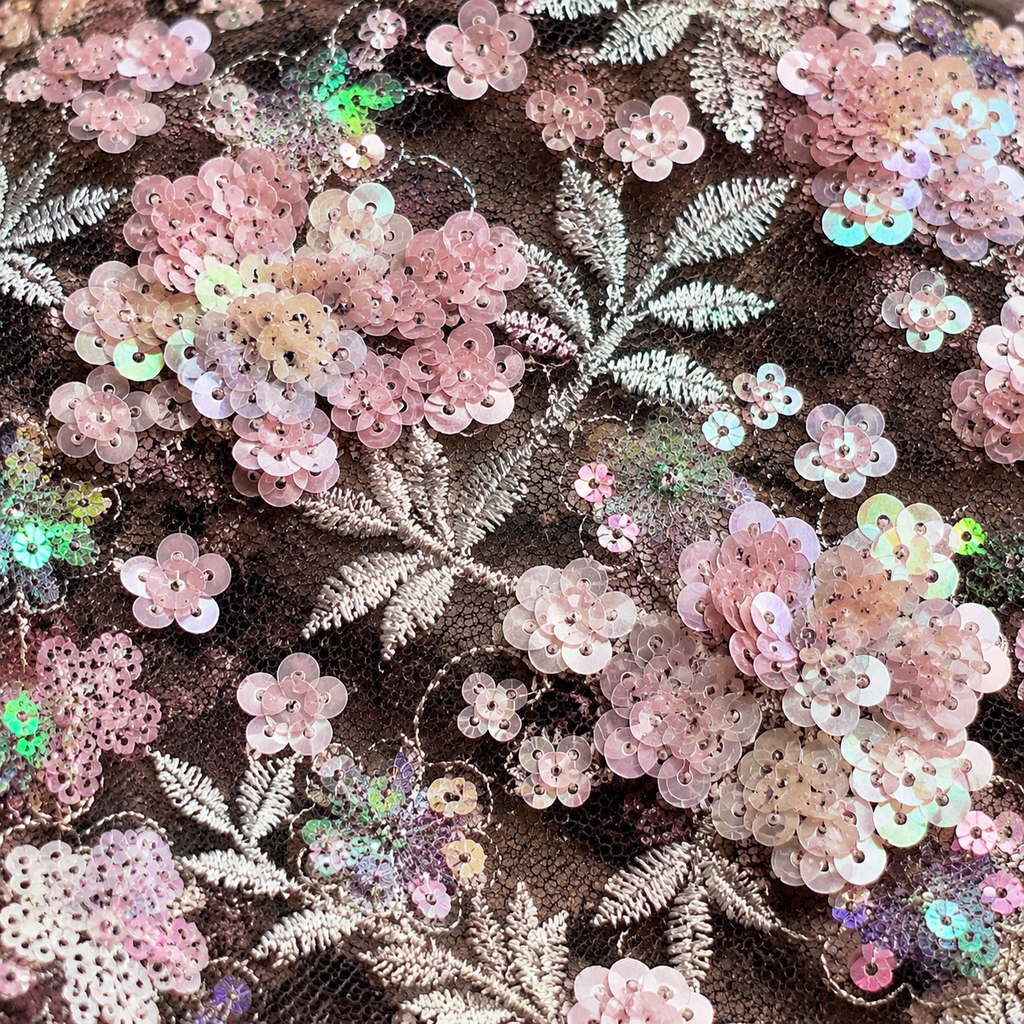
The construction combines 2 mm and 3 mm micro sequins on tulle with a supporting base. During friction charge during high-speed cutting, heat, force, moisture, or friction transfers energy into the surface. The response depends on polymer orientation, yarn tension, stitch geometry, coating adhesion, and the local load path. A buyer should assess all of these variables together.
In production, AATCC 76 and ISO 18080 decay-time tests creates the first objective checkpoint. The laboratory records the initial dimension, conditioning atmosphere, test load, cycle count, and final dimension. Consequently, the report distinguishes a true material change from an operator error or a measuring error.
The key commercial risk is not one isolated defect. It is a pattern that appears after cutting or garment assembly. Therefore, the approval sample must include the actual base cloth, embellishment density, thread, finish, and process route planned for the order.
How to test micro sequin static charge before bulk approval
A useful test plan combines a conditioned laboratory specimen with a process simulation. Cut specimens in both machine and cross directions, mark reference points, and keep an untested control. Then run AATCC 76 and ISO 18080 decay-time tests and compare the result with the approved limit.
Record the process curve rather than a single set point. The technician should capture cationic antistatic padding finish, along with line speed, contact pressure, dwell time, cooling time, and ambient humidity. This record lets the factory reproduce the result and lets the buyer diagnose a deviation quickly.
For visual review, use a calibrated light booth and a fixed viewing distance. Inspect the face, reverse, edge, seam zone, and repeat boundary. In addition, measure the usable width and roll length after conditioning. These controls protect pattern placement and reduce cutting-room waste.
| Control item | Recommended release record | Buyer decision |
|---|---|---|
| Construction | 2 mm and 3 mm micro sequins on tulle | Matches approved sample |
| Process | friction charge during high-speed cutting | Curve and setting recorded |
| Laboratory | AATCC 76 and ISO 18080 decay-time tests | Passes agreed limit |
| Appearance | needle, thread, and sequin adhesion control | No critical defect |
Production calibration and tolerance control
Calibration starts with a first-piece trial. The operator adjusts cationic antistatic padding finish in small steps, then checks the result on a fresh specimen. Never approve a setting from one short strip. A longer trial exposes drift caused by needle heat, roll tension, solvent evaporation, or progressive tool wear.
The purchase specification should define needle, thread, and sequin adhesion control. Set a target, an alert range, and a rejection limit. The alert range prompts correction before the lot fails. The rejection limit protects the buyer from receiving a fabric that cannot meet the garment maker’s process capability.
At least three rolls should represent the start, middle, and end of the run. Inspect the face at a practical production speed, then inspect critical zones at slow speed. This two-stage method balances efficient release with the close attention required for bridal, performance, and high-value decorative products.
Inspection checklist for micro sequin static charge
The inspector checks alignment, surface continuity, hand feel, width, weight, shade, and package condition. For this programme, the special checkpoint is dust-free export packaging release. Mark every defect with its position, severity, and disposition. Photographs should include a ruler and the roll label.
Use a four-point or agreed visual grading system for continuous fabric. Separate critical, major, and minor defects. A major defect may affect cutting or appearance, while a minor defect may remain acceptable within a defined frequency. The same rules must apply to every roll in the shipment.
When a result fails, quarantine the roll and open a corrective-action record. Identify the root cause, contain other rolls, correct the setting, and re-test. Finally, obtain buyer approval before any downgrade or substitution. This sequence avoids silent compromises that later become garment claims.
Documentation, packing, and 200-yard MOQ planning
A 200-yard MOQ gives a product team enough material for a pilot, wash or care trial, and a controlled cutting test. The supplier should reserve the same construction for the approved lot. Any change in base mesh, sequin batch, cord, thread, finish, or machine programme requires written review.
Pack the fabric according to its risk profile. Protect the face from abrasion, avoid crushing high-relief areas, keep rolls dry, and use a readable label. The packing list should show roll numbers, net length, gross length, usable width, GSM, colour, and inspection status.
Before release, send the buyer the inspection summary, laboratory readings, photos, care recommendation, and production notes. Link the evidence to the order number. In this way, the merchandising team can approve shipment while the technical team preserves a traceable quality history.
Supplier questions and sourcing decision
Ask whether the factory controls the critical operation in-house, whether technicians retain specimens, and whether the test method matches the end use. Also ask how the supplier handles a borderline result. Clear answers reveal process maturity better than a low headline price.
Yunfan Textile can review target construction, colour, width, weight, and application before sampling. The team can also align the inspection plan with your garment factory. For related sourcing guidance, see Quality Control and decorative fabric categories.
Final release standard for micro sequin static charge
Release the lot only when the construction matches the approved sample, measured values remain within tolerance, appearance passes the agreed inspection, and every roll carries traceable documentation. This disciplined approach makes micro sequin static charge a practical buying specification rather than a vague promise.
Technical summary: control 2 mm and 3 mm micro sequins on tulle; simulate friction charge during high-speed cutting; verify AATCC 76 and ISO 18080 decay-time tests; record cationic antistatic padding finish; and inspect dust-free export packaging release. The result is a repeatable fabric platform for B2B production, not merely a visually attractive sample.
For B2B decorative fabric buyers, repeatable data matters more than a showroom sample. A mill should connect raw materials, machine settings, laboratory readings, and final inspection records. That chain helps a product team approve a fabric with confidence, then repeat the same result across production lots.
The control plan starts before embroidery or coating begins. The technical team confirms fibre content, backing construction, usable width, finished weight, colour reference, and the intended garment process. This early review prevents a beautiful sample from becoming a risky bulk order.
A practical specification uses a measurable limit, a test method, and a clear sampling frequency. It also defines what happens when a reading falls outside the limit. Therefore, buyers can compare suppliers without relying on subjective words such as premium, strong, or excellent.
Laboratory testing does not replace line inspection. Operators still check the fabric face under consistent light, examine the reverse side, measure the open width, and record defects by roll. In addition, a first-roll approval gives production and purchasing teams one shared reference.
The supplier should keep retained samples from every approved lot. Each sample carries the production date, machine number, finish recipe, operator, and roll range. As a result, a later claim can connect directly to evidence instead of assumptions.
For a 200-yard MOQ, a disciplined process is especially valuable. The order is large enough to expose variation, yet small enough for a buyer to test a new construction. A pre-production approval therefore protects both the launch schedule and the working capital.
The commercial specification should state the tolerance in the purchase order. For example, the document can define a width tolerance, a weight tolerance, a shade tolerance, and a defect acceptance limit. This simple step turns quality expectations into an auditable supplier responsibility.
When a defect appears, the response should follow a documented sequence. First isolate the affected roll. Next photograph the defect with a scale. Then compare it with the approved standard and decide whether repair, downgrade, replacement, or credit is appropriate.
Sensible packaging also supports quality. The mill should use a clean core, stable roll tension, moisture protection, and a label that remains readable after transport. Furthermore, outer cartons should protect embellishment from crushing, rubbing, and direct sunlight.
A buyer can request a digital inspection report before shipment. The report should show the tested roll numbers, measured values, test conditions, inspector name, and release decision. This evidence improves communication between a brand office, a garment factory, and a logistics provider.

A stable programme also improves forecasting because the buyer can plan consumption from measured usable width. It reduces emergency replacement, protects delivery dates, and gives the sewing team a predictable material response.
The best technical conversation uses shared samples and shared language. Define the reference side, the conditioning time, the measuring points, and the acceptance decision before the purchase order is confirmed.
Process capability grows when the mill trends readings over time. A simple chart can reveal drift before the next lot reaches packing, so the team can correct tension, temperature, chemistry, or speed early.
Source direct on Alibaba - request bulk pricing, specifications, and production details in one place.
View Yunfan Textile on AlibabaRequest Sequin Fabric Samples and share your target GSM, width, sequin size, and colour reference.
Talk to Morris directly:
Email: morris@yunfantextile.com
WhatsApp: +86 156 3752 5803
WhatsApp: +86 175 1619 6727