holographic sequin color shift for dependable B2B sourcing
holographic sequin color shift matters when a decorative fabric must look consistent, sew cleanly, and arrive ready for production. This guide explains the physical cause, factory controls, and inspection evidence that buyers can request from a specialist mill.
First, define the risk in measurable terms. Then connect the risk to a process setting and a release test. This gives designers, merchandisers, and quality teams one practical language for approval.
Why holographic surfaces change angle
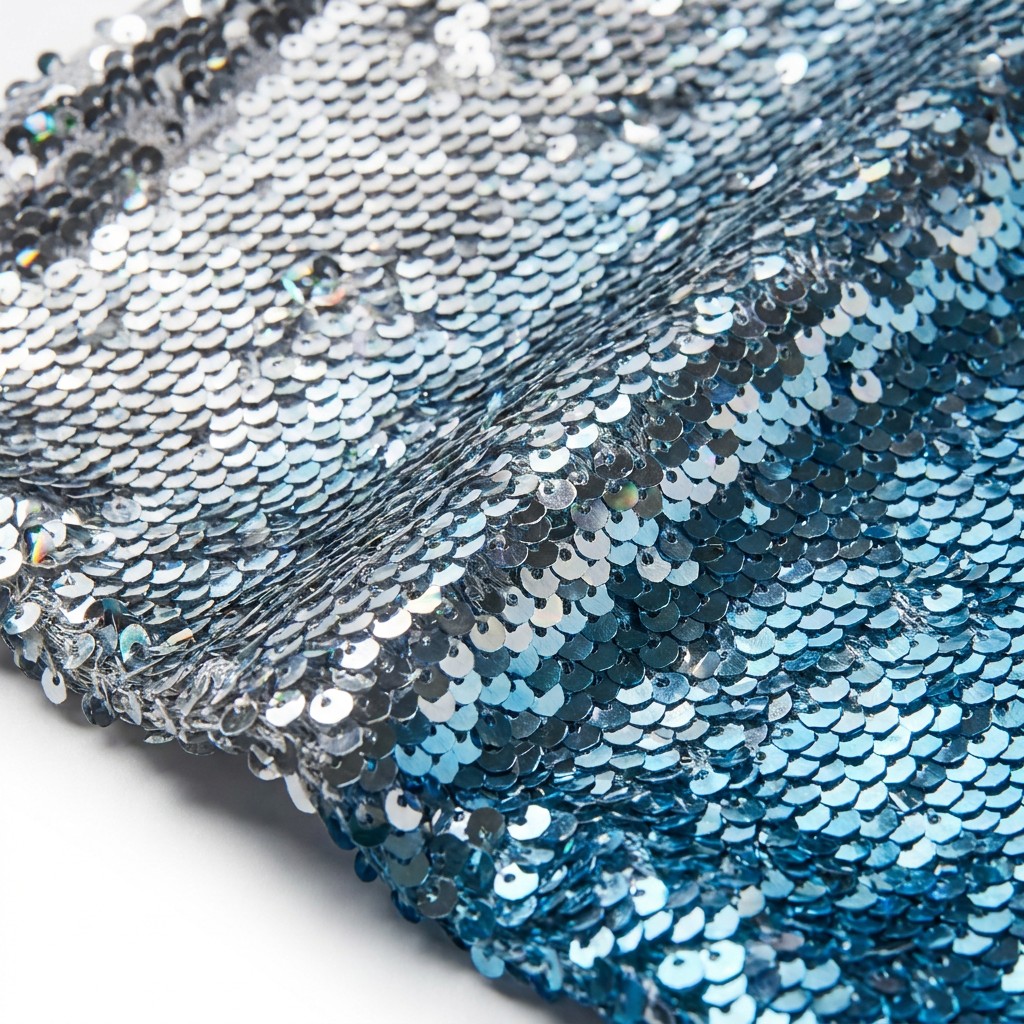
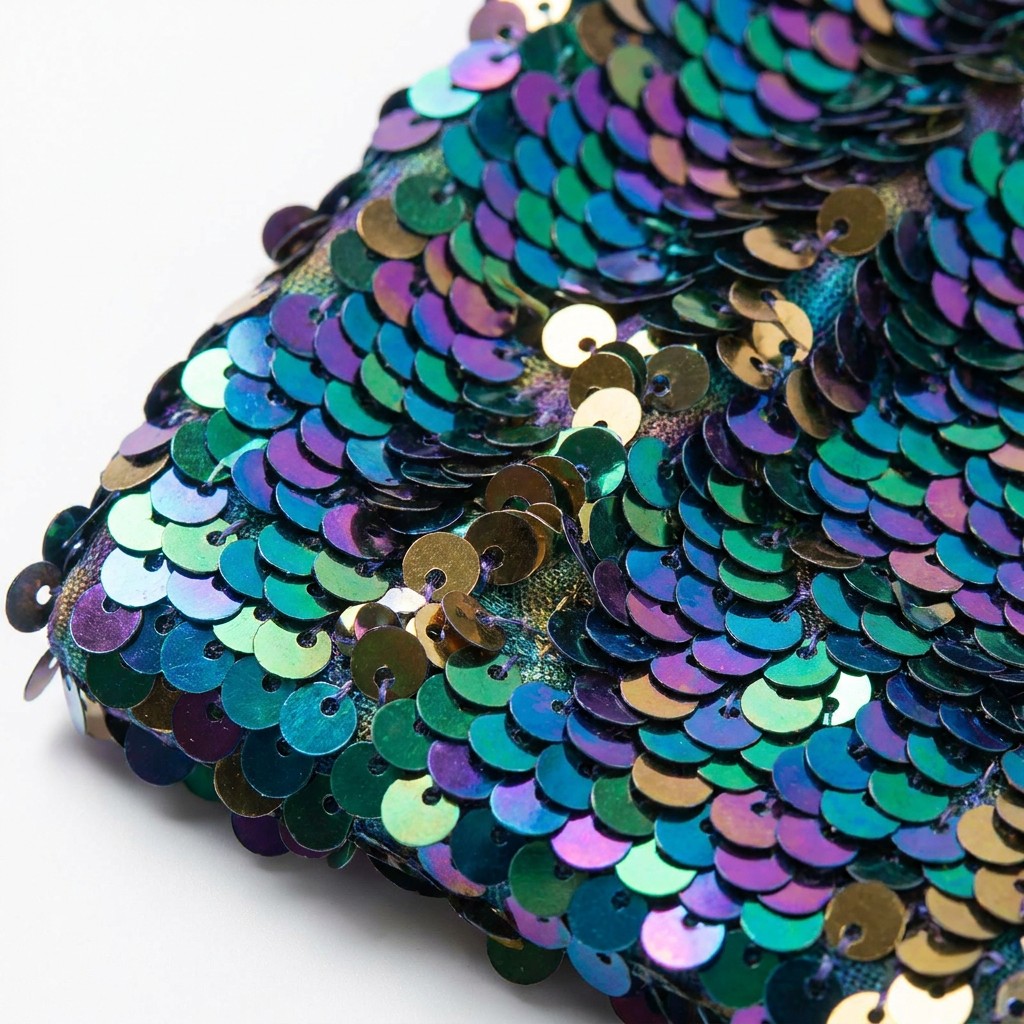
Holographic film contains micro-structured layers that redirect light. As the observer or lamp moves, the apparent hue changes through a rainbow effect. Matte coatings diffuse highlights, while gloss preserves sharper flashes.
This optical change is not automatically a defect. Risk appears when rolls use different film lots, coating levels, or sequin orientation. Buyers need an angular reference instead of one photograph.
Laboratory measurement
Use a calibrated spectrophotometer or multi-angle instrument to record reflectance at defined geometries. ASTM E2194 and ASTM E2539 can inform a method for appearance and goniochromatic behaviour.
Measure approval and production samples using identical aperture, illuminant, observer, background, and angle sequence. Report hue movement, lightness, chroma, and visible transitions.
Matte coating versus gloss film
A matte coating softens glare and can merchandise well under strong retail lighting. It may reduce brilliance or create a cloudy look if uneven. Gloss film gives a brighter flash but shows scratches more clearly.
Compare coating weight, surface feel, and optical result after flexing. Inspectors should use a controlled light booth and standard viewing movement.
Abrasion and scratch protection
Run a defined rub or abrasion screen on face, edge, and folded specimens. Observe gloss loss, rainbow break-up, coating transfer, and exposed film.
Protect the face with tissue or a compatible separator. The packing method should be approved after a simulated roll-unroll and garment handling trial.
UV light fastness
Reference AATCC 16.3 and request Grade 4 or better when the application needs reliable shade under light. Test the actual holographic construction, not plain mesh.
Record exposure cycle, instrument, scale, and comparison standard. Inspect colour and reflectance after exposure because film may retain hue while losing brilliance.
Bulk lot and rainbow-family control
Rainbow colours contain several perceived hues, so a small film or coating shift can change the dominant look. Approve a master swatch and define acceptable angle views.
Sample first rolls from each film or coating lot. Compare them in the same booth. Isolate a lot outside the shade band before cutting.
Sequin direction and cutting
Directional sequins create a visual difference when one panel is cut face-up and another face-down. Mark direction on the roll and marker.
Train cutters to protect the surface and check repeat alignment. Add first-piece approval and periodic panel checks to reduce orientation complaints.
Angular approval table
An approval table can list viewing angle, illuminant, expected hue family, matte or gloss appearance, and allowed visual difference. Add instrument readings without removing visual reference.
Include face, reverse, folded, and flexed views. Note acceptable sparkle variation from pitch so incoming inspection can recreate the decision.
How B2B buyers set a repeatable specification
Start with a signed reference swatch, a technical data sheet, and a tolerance table. Record composition, usable width, GSM, construction, finish, colour code, roll length, and packing method. A clear specification lets production, inspection, and receiving teams measure the same result.
Next, approve a lab dip, strike-off, or development panel before bulk cutting. Keep one sealed approval sample with the purchase order. Then request an inline report, a final inspection report, and photographs of packed rolls. This sequence reduces disputes because every checkpoint has an owner and an acceptance rule.
MOQ, sampling, and production planning
Yunfan Textile supports a practical MOQ of 200 yards for these decorative fabric programs. Buyers can combine a confirmed colour, width, and construction with a realistic production window. Morris can advise on sample yardage, repeat placement, and the safest packing format for international delivery.
For a new design, reserve time for a first sample, a corrected sample when needed, and a pre-production approval. Allow extra time when the order includes special yarns, metallic effects, complex embroidery, or a custom finish. Clear approvals protect the buyer launch calendar and the factory production stability.
Inspection records that support confident sourcing
A useful B2B inspection sheet shows lot number, roll number, measured result, instrument, test method, inspector, and disposition. It also shows how defects are classified. Critical defects require rejection, major defects require a corrective action, and minor defects require a documented acceptance decision.
Ask the supplier to retain counter-samples from every approved lot. In addition, request images under consistent lighting and a short video of the material in motion. These records make remote approval more reliable and help your team compare future shipments with the original benchmark.
Sampling and communication checklist
- Confirm fibre content, width, GSM, usable area, and construction.
- State the colour reference, surface effect, backing, and intended end use.
- Define inspection method, tolerance, packing label, and roll identification.
- Approve a physical sample before the factory starts bulk production.
- Share delivery terms and contact Morris for a coordinated production plan.
For broader sourcing guidance, review the Quality Control category and the Sequin Fabric category. These internal resources help teams compare specifications, testing, and production controls before placing a purchase order.
Frequently asked questions for importers
Can I request a development sample? Yes. Share the target construction and end use with Morris so the team can confirm the most efficient sample route before the 200-yard production MOQ.
How should I approve colour? Approve a physical swatch under agreed lighting, record the reference number, and keep a signed control sample. A screen image alone cannot define a decorative surface accurately.
What should arrive with a bulk shipment? Request the packing list, roll map, final inspection report, relevant test results, and photographs showing labels and outer packaging.
Request a controlled development plan for holographic sequin color shift
Share your target application, construction, colour reference, width, and delivery window. Morris will help match the sample to the production route, explain the measurable tolerance, and confirm the 200-yard MOQ. A written approval protects your team from avoidable variation.
Source direct on Alibaba - request bulk pricing, specifications, and production details in one place.
View Yunfan Textile on AlibabaRequest Sequin Fabric Samples and share your target GSM, width, sequin size, and colour reference.
Talk to Morris directly:
Email: morris@yunfantextile.com
WhatsApp: +86 156 3752 5803
WhatsApp: +86 175 1619 6727

Implementation notes for a reliable decorative fabric program
Production teams benefit from a short control plan that connects the design brief to measurable factory actions. Begin with a physical reference, then list every variable that can change the result. These variables may include fibre, yarn, backing, coating, stitch density, machine speed, humidity, heat, storage time, and packing pressure. Assign each variable to a process owner and define the evidence required at approval.
Before bulk work starts, the factory should make a representative pilot panel. The pilot should include the most demanding motif, the most delicate edge, and the heaviest or densest area. Inspect the panel after conditioning and after the intended finishing operation. If the panel passes, keep it as a control sample. If it fails, record the failure mode and change only one process variable at a time.
Remote B2B approval works best when the photos, videos, and test reports use repeatable conditions. Use the same light source, camera distance, background, specimen direction, and scale. Show both the face and reverse. For dimensional checks, measure relaxed material rather than a piece held under tension. This discipline makes a supplier report useful to a product developer who is working in another time zone.
Buyers should also separate appearance acceptance from performance acceptance. A fabric can look correct but fail recovery, abrasion, seam stability, or packing simulation. Conversely, a technically strong fabric may need a small appearance adjustment before it suits a collection. Use a signed approval table with a clear disposition: accepted, accepted with note, rework required, or rejected.
After shipment, open a representative roll before releasing the whole order to cutting. Check label data, width, surface, hand, construction, and the most relevant test result. Record any difference from the control sample immediately. Early feedback allows the supplier to investigate the same lot and prevents a small issue from spreading across finished garments.
Finally, keep the control sample, inspection report, packing photographs, and corrective-action notes together with the purchase order. This file becomes a useful benchmark for repeat orders. It also helps both sides discuss facts instead of impressions. A consistent record supports faster quotations, more accurate production planning, and a more dependable customer delivery promise.