Custom jacquard is one of the most powerful differentiators a brand can own — and one of the least understood. This is the complete workflow, from first sketch to shipped roll.
What 'Custom Jacquard' Actually Means
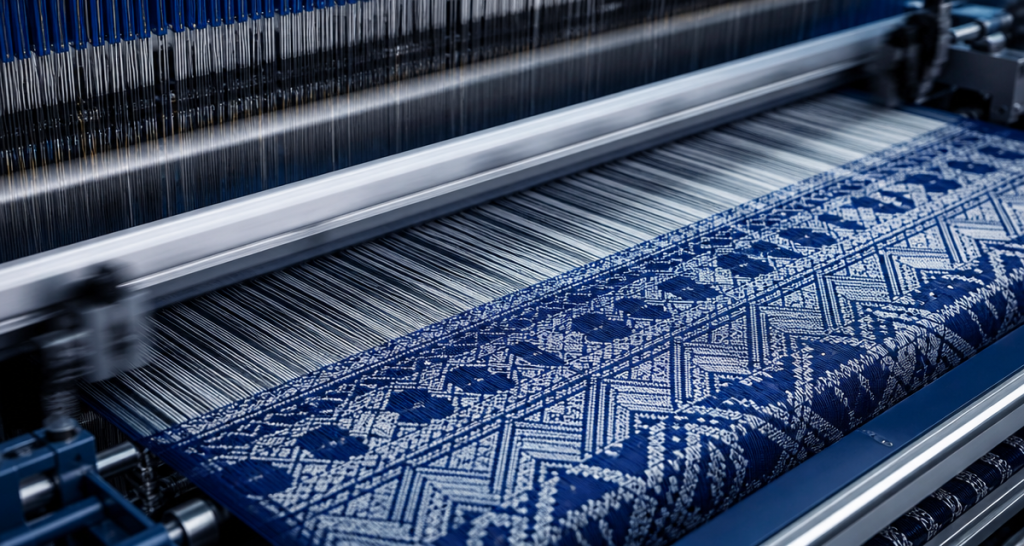
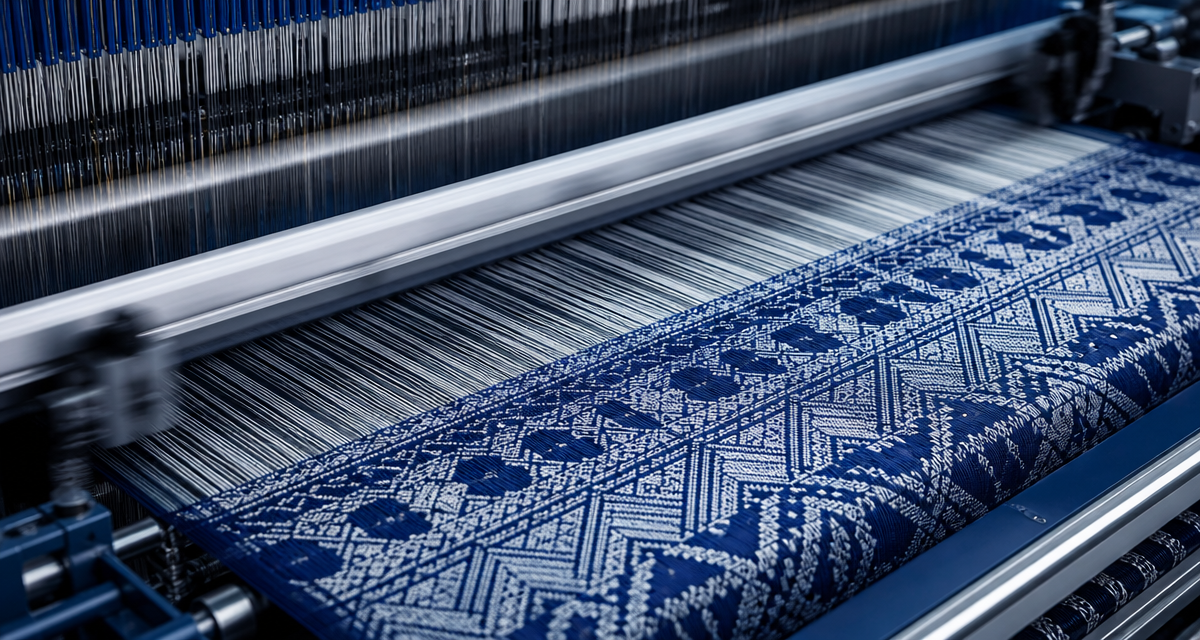
Unlike printed fabric, where an image is applied to a finished base, jacquard builds the design into the weave itself. Each warp and weft thread is individually controlled by the loom, so the pattern is structural: it has thickness, contrast, and a hand-feel that print cannot imitate. Custom jacquard means the pattern, yarns, density, and finish are developed for your brand rather than chosen from a stock book. The result is exclusive — no other brand can cut the same cloth.
Step 1: Design Development and Feasibility
Everything begins with a pattern — a repeatable motif sized to your garment's pattern pieces. At this stage the mill evaluates: will this design weave cleanly at the target density? How many colours can the yarn system support? What base weight and drape do you need? This is also where the buyer makes the decisions that control cost: repeat size, number of yarn colours, and fibre blend. A clear brief at this step prevents the most expensive problem in custom weaving — a beautiful design that cannot be produced at the price you need.
Step 2: Sampling and Strike-Offs
The loom produces a strike-off: a short woven sample of your pattern in the real yarns. This is the moment of truth for colour, scale, and hand-feel. Most projects need one to three rounds — first strike-off, then adjustments to colour depth, pattern scale, or density. Budget 2-4 weeks for this phase, and lock the approved strike-off as your bulk reference. Never approve a sample from memory; keep the physical reference and sign off in writing. Treat the strike-off as a working document, not a decoration. Evaluate it under the lighting your customers will see — retail spotlights, event lighting, and daylight are three different fabrics. If colour depth or contrast shifts in any of them, say so in the revision notes; the loom responds faster to specific, written feedback than to general impressions.
Step 3: Bulk Production and QC
Once the sample is approved, production is scheduled — but quality control is not automatic. Key checks at bulk stage: colour consistency across dye lots, pattern registration (the repeat must align from roll to roll), and finishing (weight, hand, and shrinkage after finishing processes). Request a pre-production sample from the actual production lot, and consider third-party inspection for large volumes. This protects the weeks of development you have already invested.
What to Prepare Before You Contact a Jacquard Manufacturer
- Your motif in a high-resolution repeatable format, or a clear reference.
- Target fibre content, weight, and drape.
- Intended end use (gown, jacket, accessory) and expected quantities.
- Colour references (Pantone or physical swatches).
- Your launch deadline, working backwards from shipping.
The more specific the brief, the faster and cheaper the development.
Choosing a China-Based Jacquard Manufacturer: What to Verify
China remains a major production hub for custom jacquard, and the range of capability is wide. Verify: in-house looms and finishing, a demonstrated portfolio of custom (not stock-only) work, clear technical communication, sampling fees and whether they credit toward bulk, and MOQ flexibility. Ask for references from brands doing similar constructions — a reliable jacquard manufacturer in China will share them without hesitation. Then start with a small development order — a strike-off programme — before committing to bulk. Lead time is confirmed after sampling, so build buffer into your calendar.
Conclusion
Custom jacquard rewards patience and precision. Invest in the brief, respect the sampling loop, and verify at every gate. The fabric you get back will carry your brand for years.
FAQ
Q: What file formats do you need for a custom motif?
A: A high-resolution repeatable image or vector pattern is ideal. If you only have a sketch or physical swatch, most mills can digitise it — confirm this during the brief.
Q: How much does custom jacquard development cost?
A: Development and strike-off fees vary by complexity; many mills credit them against your bulk order. Always get the fee structure in writing before starting.
Q: What is the minimum order for a custom pattern?
A: MOQ varies by construction and colourway count — commonly hundreds of metres per colourway. Confirm after your spec review.
Q: How long from brief to bulk delivery?
A: Plan 4-8 weeks for a typical programme including sampling, and confirm the exact lead time after your sample is approved. Complex multi-colour weaves take longer.
Q: Can you replicate an existing designer jacquard?
A: We can develop a similar construction or motif direction, but copying another brand's registered design carries legal risk. We recommend developing an original variation for your own line.
Start Your Custom Weave
Ready to build an exclusive weave? Send your motif and target construction — our weaving team will confirm feasibility, sampling cost, MOQ, and lead time within your development window.
Related Sourcing Resources
- 7mm Prismatic Sequin Jacquard Fabric Wholesale – Couture & Millinery
- Chiffon Jacquard Butterfly Embroidery Dress Fabric Wholesale
Sourcing note: MOQ varies by product and customization. Confirm the exact minimum, lead time, and sample details with our team after your specification is reviewed.