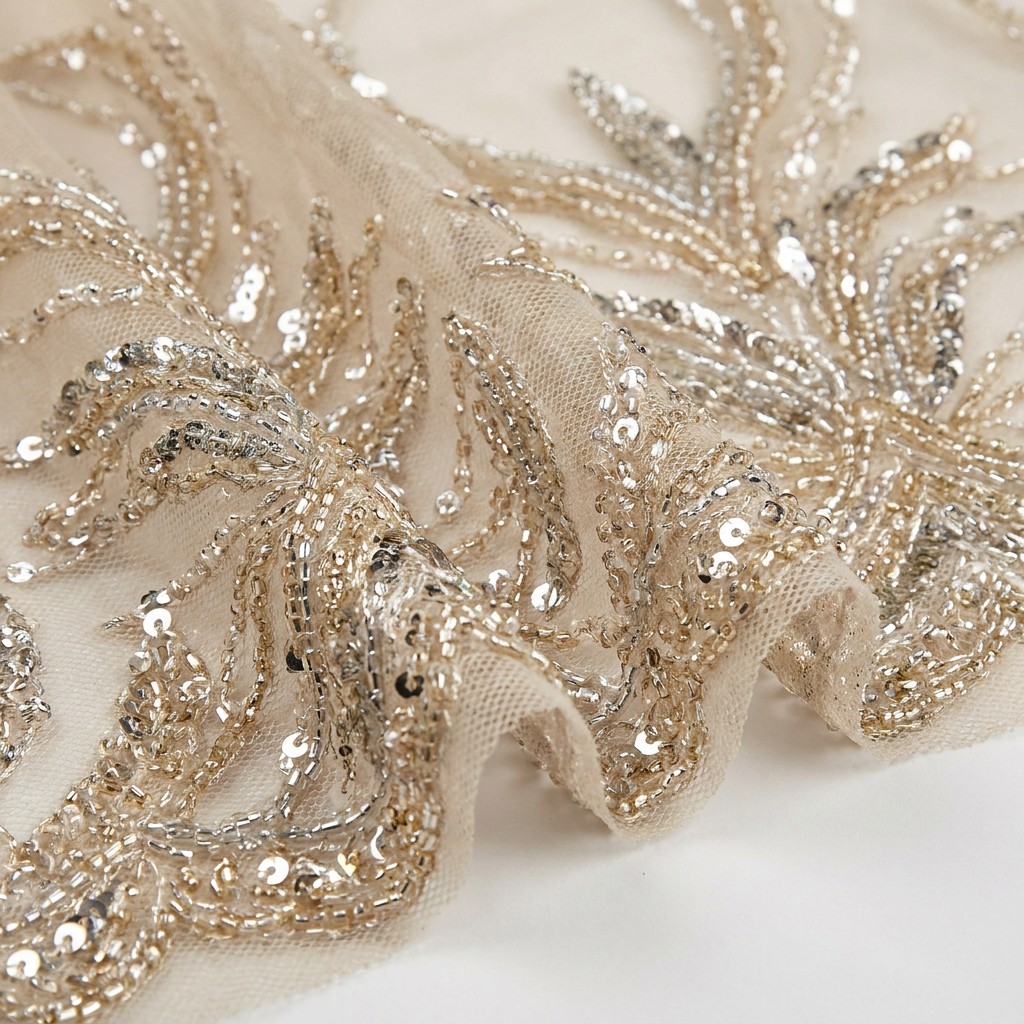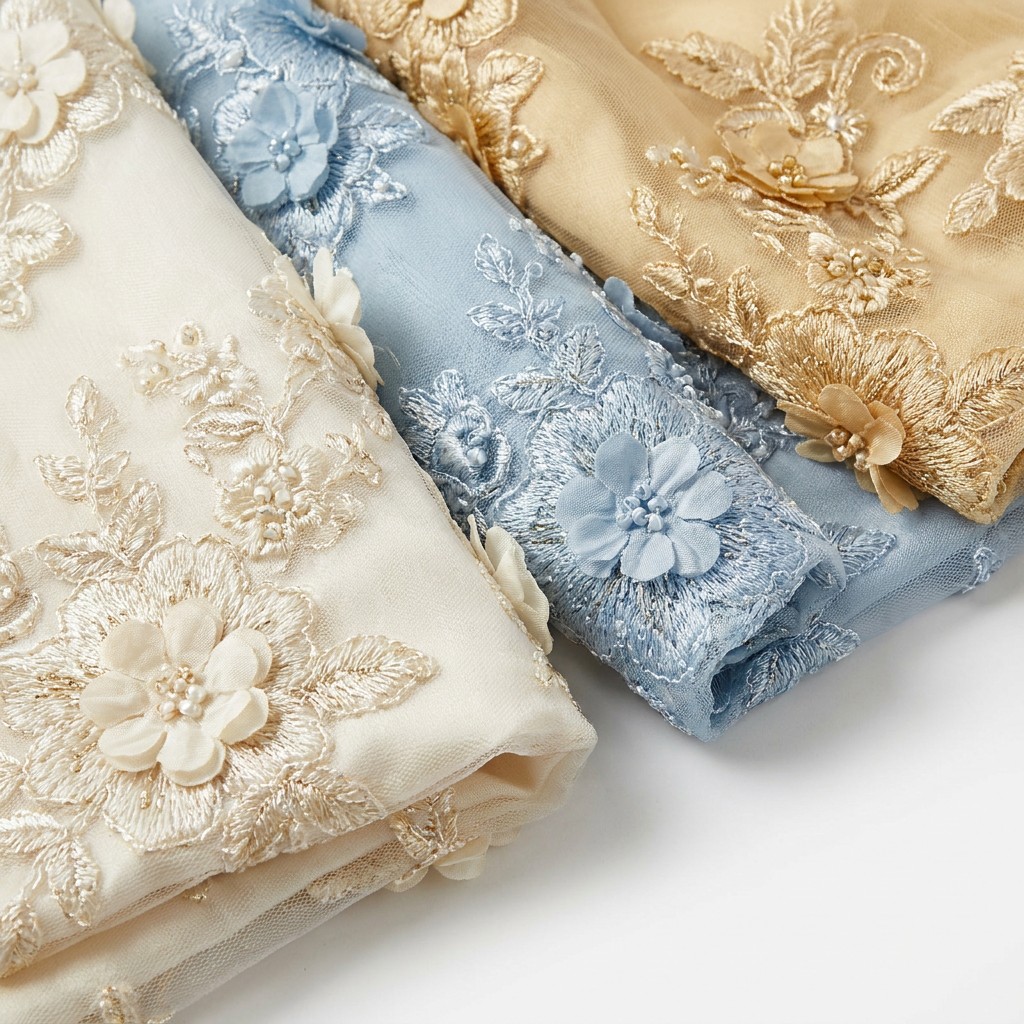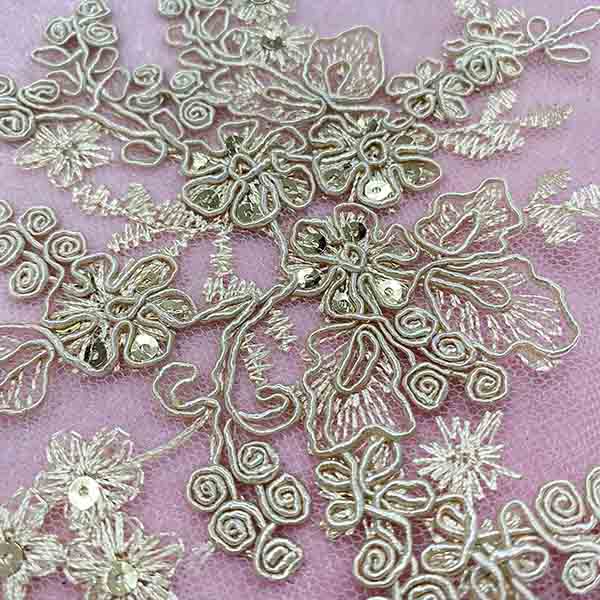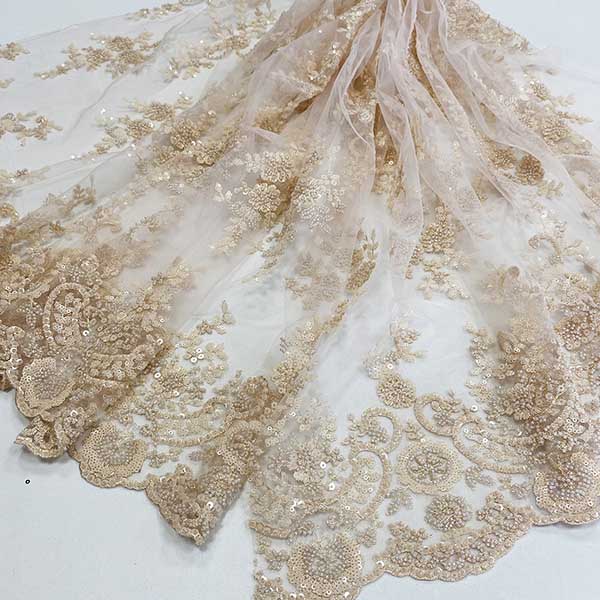
water soluble lace tensile strength starts with a clear factory test plan for buyers who need consistent decorative fabric at scale. This guide explains how open embroidery lace keeps useful strength after the PVA support dissolves in a finishing bath.
Yunfan Textile supports a minimum order quantity of 200 yards. We protect the physical hand, edge integrity, and tensile retention that bridal gowns need during cutting, sewing, fitting, and care. We combine measurable controls with practical production advice, so a sourcing team can approve material with confidence.
Use our quality control resources and embroidery fabric quality guides when you compare suppliers. The goal is simple: stable appearance, stable performance, and clear evidence at shipment.
water soluble lace tensile strength: What changes after PVA dissolution
PVA supports the open pattern during embroidery, then dissolves and leaves the lace structure carrying its own load. ASTM D5034 and ISO 13934 tensile testing in both warp and weft directions gives buyers a repeatable control point before cutting, sewing, and packing. Our lace quality team documents each roll, lot, and approval sample for traceability.
Weak joins may open when support disappears, especially near large cutouts and narrow bridges. The team then compares production results with the signed standard. A bridalwear and B2B lace buyer can use this record to reduce claims, protect delivery dates, and plan reliable repeat orders.
water soluble lace tensile strength: Warp and weft tensile direction
ASTM D5034 and ISO 13934 show whether the lace behaves differently along warp and weft. ASTM D5034 and ISO 13934 tensile testing in both warp and weft directions gives buyers a repeatable control point before cutting, sewing, and packing. Our lace quality team documents each roll, lot, and approval sample for traceability.
Directional results guide pattern placement and reduce stress across the bridal bodice. The team then compares production results with the signed standard. A bridalwear and B2B lace buyer can use this record to reduce claims, protect delivery dates, and plan reliable repeat orders.
Bath control for clean dissolution
Bath temperature, time, water movement, and rinsing determine how completely PVA leaves the structure. ASTM D5034 and ISO 13934 tensile testing in both warp and weft directions gives buyers a repeatable control point before cutting, sewing, and packing. Our lace quality team documents each roll, lot, and approval sample for traceability.
A controlled bath avoids residue that can stiffen the hand or hide a weak embroidered join. The team then compares production results with the signed standard. A bridalwear and B2B lace buyer can use this record to reduce claims, protect delivery dates, and plan reliable repeat orders.
Lock stitch and join security
Lock stitches secure thread joins before the water-soluble support leaves the pattern. ASTM D5034 and ISO 13934 tensile testing in both warp and weft directions gives buyers a repeatable control point before cutting, sewing, and packing. Our lace quality team documents each roll, lot, and approval sample for traceability.
Correct overlap and back-tacking stop local yarn ends from opening during handling. The team then compares production results with the signed standard. A bridalwear and B2B lace buyer can use this record to reduce claims, protect delivery dates, and plan reliable repeat orders.
Preventing yarn breaks in embroidery
Balanced tension, a clean needle, and suitable speed reduce yarn breaks in fine open areas. ASTM D5034 and ISO 13934 tensile testing in both warp and weft directions gives buyers a repeatable control point before cutting, sewing, and packing. Our lace quality team documents each roll, lot, and approval sample for traceability.
Operators inspect thread paths and restart points because a tiny break can become a visible hole. The team then compares production results with the signed standard. A bridalwear and B2B lace buyer can use this record to reduce claims, protect delivery dates, and plan reliable repeat orders.
Softening without hardening
A flexible finishing route restores a soft hand after washing and drying. ASTM D5034 and ISO 13934 tensile testing in both warp and weft directions gives buyers a repeatable control point before cutting, sewing, and packing. Our lace quality team documents each roll, lot, and approval sample for traceability.
The team avoids excess resin, uncontrolled heat, and residue that make bridal lace feel papery. The team then compares production results with the signed standard. A bridalwear and B2B lace buyer can use this record to reduce claims, protect delivery dates, and plan reliable repeat orders.
Edge fray and appliqué cutting
Edge stability matters when cutters separate motifs or sew lace beside a seam. ASTM D5034 and ISO 13934 tensile testing in both warp and weft directions gives buyers a repeatable control point before cutting, sewing, and packing. Our lace quality team documents each roll, lot, and approval sample for traceability.
A clean edge lets the garment team place appliqués without losing the intended outline. The team then compares production results with the signed standard. A bridalwear and B2B lace buyer can use this record to reduce claims, protect delivery dates, and plan reliable repeat orders.
Bridal physical acceptance standard
The acceptance standard combines tensile retention, elongation, appearance, handle, and yarn break limits. ASTM D5034 and ISO 13934 tensile testing in both warp and weft directions gives buyers a repeatable control point before cutting, sewing, and packing. Our lace quality team documents each roll, lot, and approval sample for traceability.
Each lot receives a signed sample so buyers can compare bulk rolls with the approved bridal reference. The team then compares production results with the signed standard. A bridalwear and B2B lace buyer can use this record to reduce claims, protect delivery dates, and plan reliable repeat orders.
Buyer acceptance checklist
Ask for the approved lab method, sample conditioning details, equipment settings, and final rating. Confirm the same fabric construction, finish, colour lot, and sewing process used for the bulk order. Record the responsible inspector and the date of every decision.
Test warp and weft specimens after the defined PVA dissolution and drying route. Review peak force, elongation, yarn breaks, edge fray, handle, and visual hardening. A useful file includes roll numbers, measured values, photographs, corrective action, and the final release signature. This approach helps purchasing, design, and production teams work from one source of truth.
Why this control supports repeat orders
A retained-strength file helps buyers match lace designs to seam placement, appliqué use, and bridal fitting demands. Clear limits also help Morris quote the right construction and explain any trade-off before sampling. Buyers can then protect their brand promise while keeping the 200-yard MOQ practical for development and replenishment.
water soluble lace tensile strength is most valuable when the factory shares evidence early, not after a shipment leaves. Request a sample set, approve the reference, and keep the signed specification beside the purchase order.

Source direct on Alibaba - request bulk pricing, specifications, and production details in one place.
View Yunfan Textile on AlibabaRequest Sequin Fabric Samples and share your target GSM, width, sequin size, and colour reference.
Talk to Morris directly:
Email: morris@yunfantextile.com
WhatsApp: +86 156 3752 5803
WhatsApp: +86 175 1619 6727
Lace release workflow
First, the laboratory records the untreated lace and the finished lace. Next, technicians dissolve PVA under the approved bath conditions. They rinse, dry, condition, and cut specimens in warp and weft directions. Therefore, the final report shows retained strength after the real finishing route.
ASTM D5034 and ISO 13934 results should include peak force and elongation. The buyer also needs notes about yarn breaks, edge fray, handle, and visual hardening. In addition, the team photographs open bridges and lock-stitch joins. This connects numerical strength with the details that affect bridal sewing.
Lock stitches secure thread joins before support disappears. The operator checks back-tacks, overlap, needle condition, and thread tension. Meanwhile, the team reviews restart points across the full repeat. These actions reduce loose ends and keep appliqué edges clean after washing.
A softening finish must not hide structural weakness. The mill controls resin, heat, rinse quality, and drying tension. As a result, the lace keeps a flexible hand and a stable edge. The report states the exact route so a buyer can compare every lot.
For a 200-yard order, Morris can arrange a physical approval set and technical review. The buyer signs the acceptable strength range, hand, edge, and appearance. Finally, the factory retains a bulk reference with roll numbers. This protects bridal production from unexpected breakage during cutting and fitting.