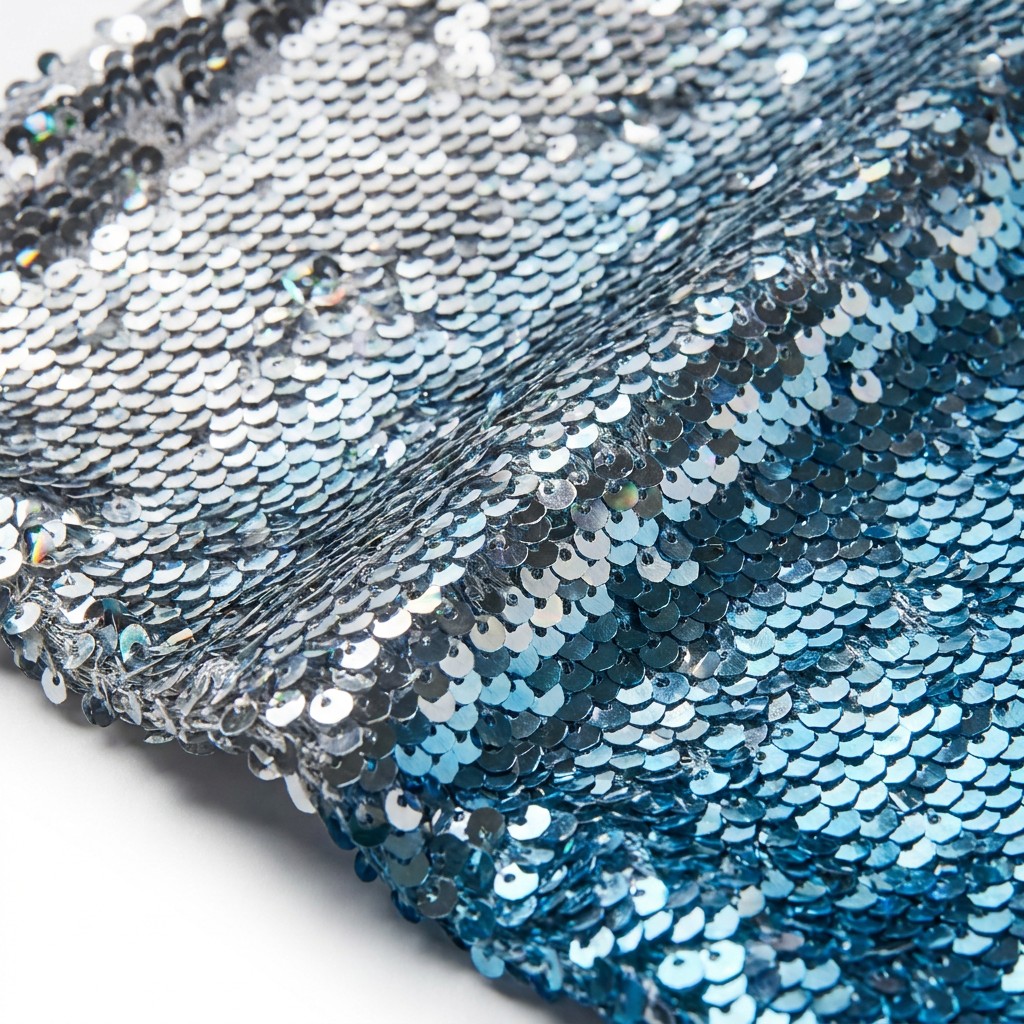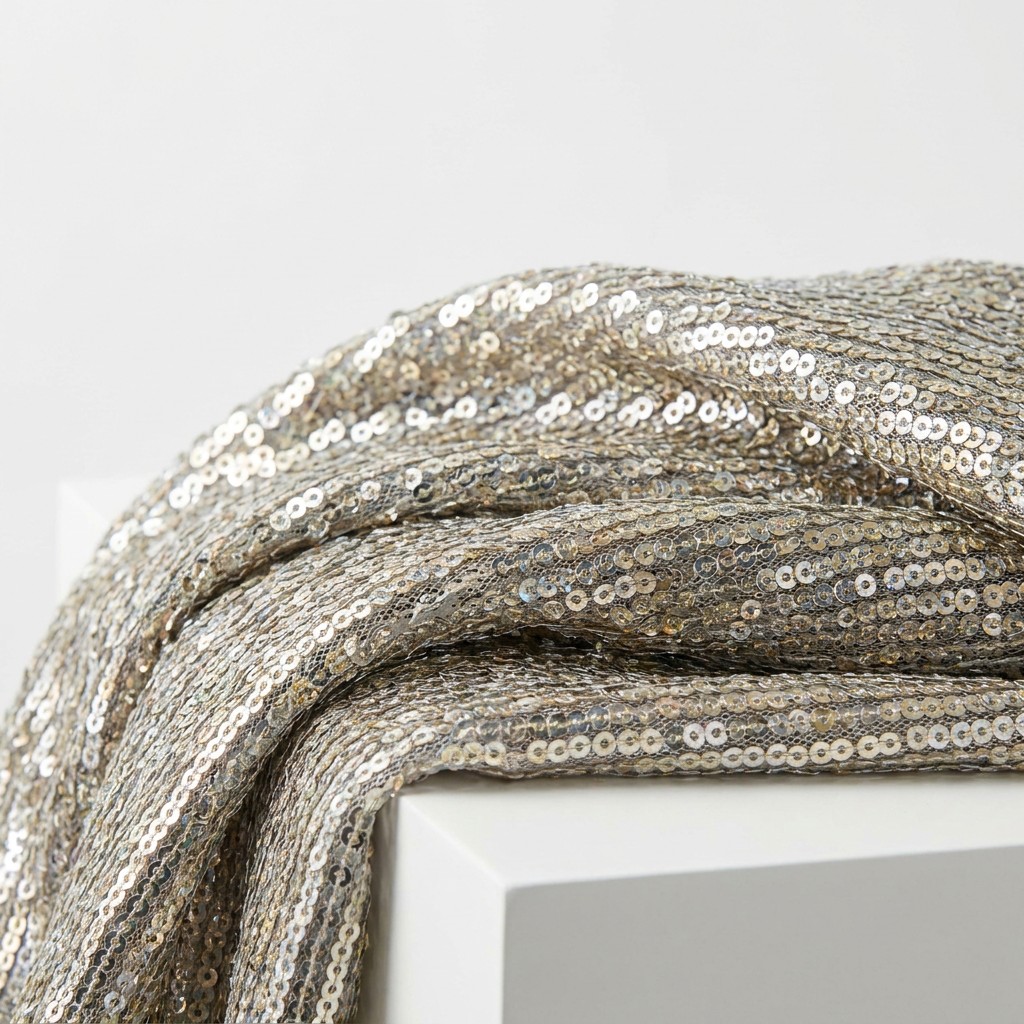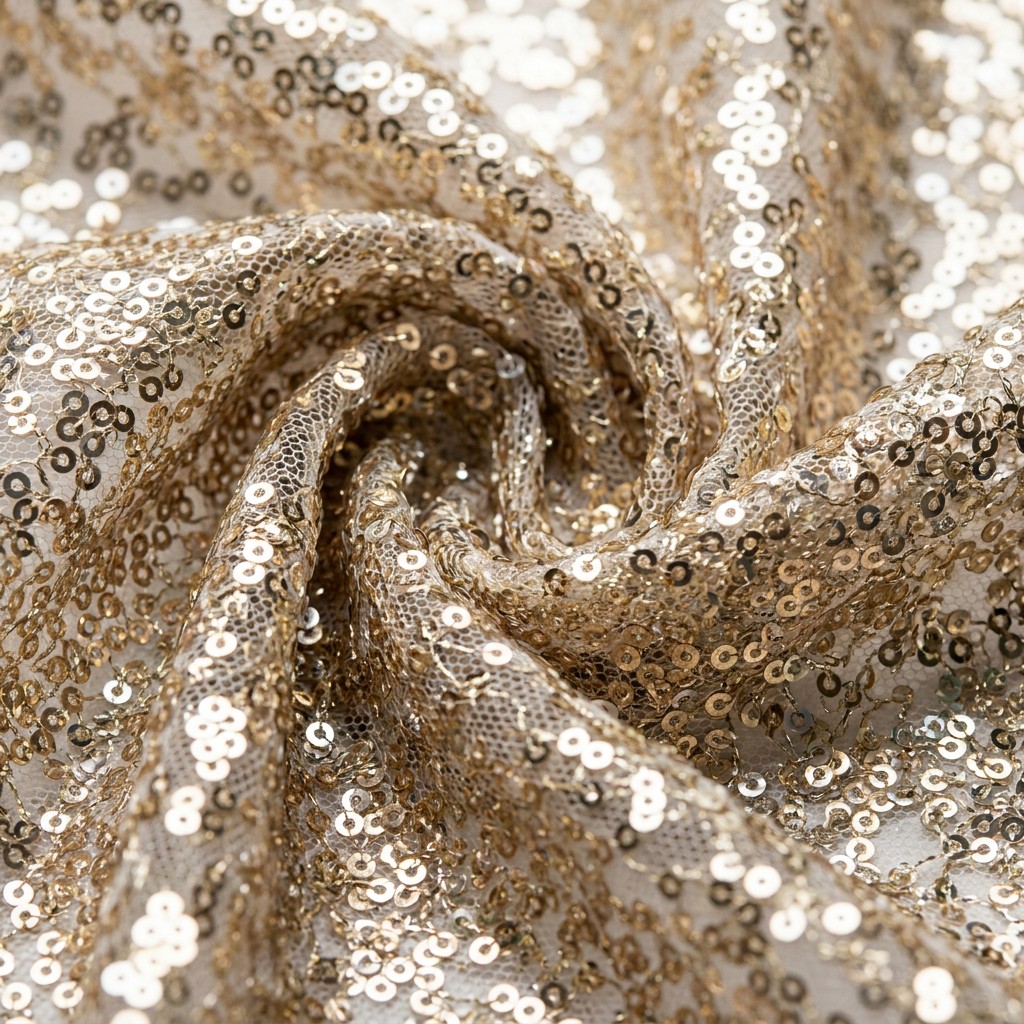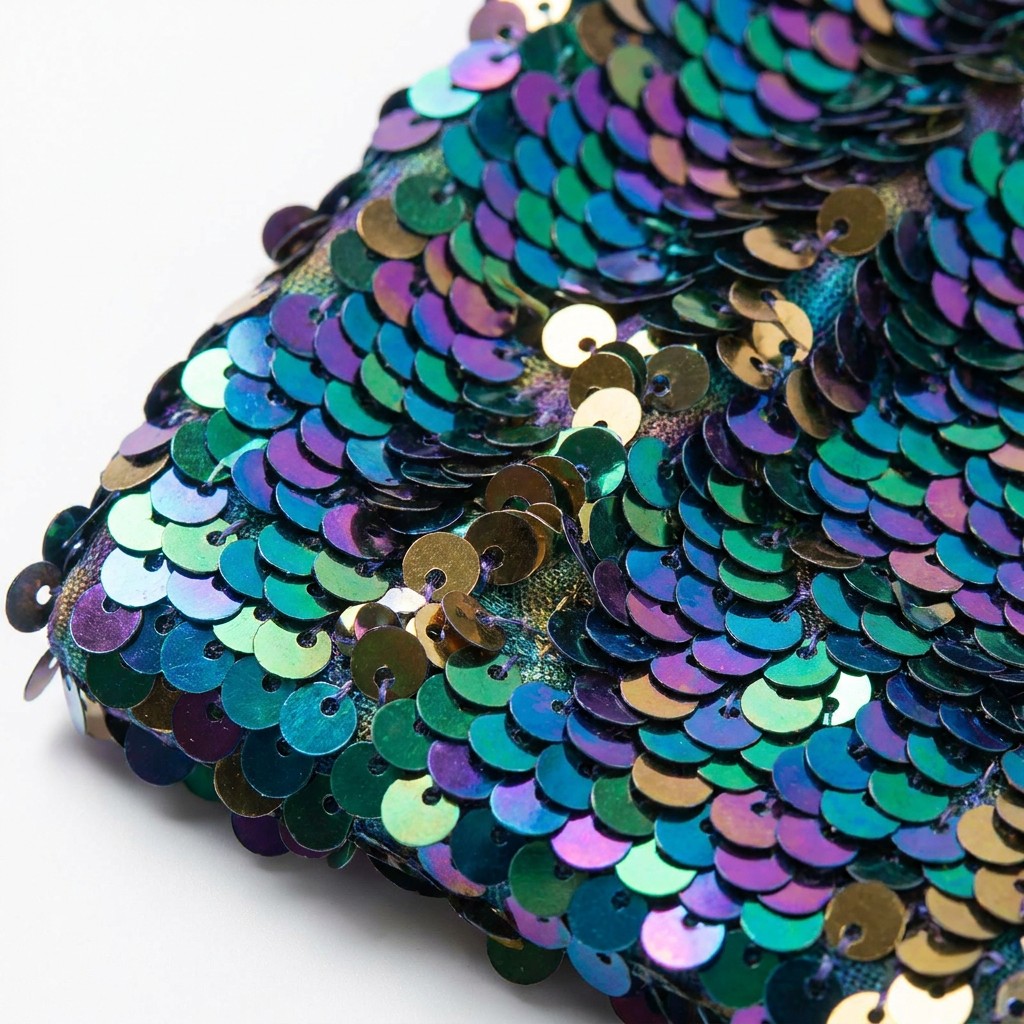
reversible sequin flipping resistance starts with a clear factory test plan for buyers who need consistent decorative fabric at scale. This guide helps buyers approve a double-sided sequin surface that flips smoothly, covers evenly, and resists snagging in bulk use.
Yunfan Textile supports a minimum order quantity of 200 yards. We balance flipping resistance, visual coverage, row pitch, overlap, backing density, and production speed before shipment. We combine measurable controls with practical production advice, so a sourcing team can approve material with confidence.
Use our quality control resources and sequin fabric sourcing guides when you compare suppliers. The goal is simple: stable appearance, stable performance, and clear evidence at shipment.
reversible sequin flipping resistance: How reversible sequins create movement
Each reversible sequin has a face, a reverse face, a pivot, and a locking stitch path. ASTM D3884 circular abrasion cycles plus calibrated pitch, overlap, and hand-feel checks gives buyers a repeatable control point before cutting, sewing, and packing. Our sequin engineering team documents each roll, lot, and approval sample for traceability.
The surface feels smooth only when each element clears its neighbour during a hand or friction pass. The team then compares production results with the signed standard. A B2B fashion and costume buyer can use this record to reduce claims, protect delivery dates, and plan reliable repeat orders.
reversible sequin flipping resistance: ASTM D3884 friction cycle design
ASTM D3884 cycles provide a controlled abrasion challenge for the decorated surface. ASTM D3884 circular abrasion cycles plus calibrated pitch, overlap, and hand-feel checks gives buyers a repeatable control point before cutting, sewing, and packing. Our sequin engineering team documents each roll, lot, and approval sample for traceability.
The lab compares flipping action, exposed backing, scratches, loose sequins, and shade loss before and after cycling. The team then compares production results with the signed standard. A B2B fashion and costume buyer can use this record to reduce claims, protect delivery dates, and plan reliable repeat orders.
Pitch calibration at 0.6 to 0.8 mm
A row pitch tolerance of 0.6 mm to 0.8 mm controls spacing without making the face crowded. ASTM D3884 circular abrasion cycles plus calibrated pitch, overlap, and hand-feel checks gives buyers a repeatable control point before cutting, sewing, and packing. Our sequin engineering team documents each roll, lot, and approval sample for traceability.
The correct pitch supports a smooth turn while preserving the intended colour coverage. The team then compares production results with the signed standard. A B2B fashion and costume buyer can use this record to reduce claims, protect delivery dates, and plan reliable repeat orders.
Overlap and hand feel
Too much overlap creates drag and a stiff hand, while too little overlap reveals the mesh. ASTM D3884 circular abrasion cycles plus calibrated pitch, overlap, and hand-feel checks gives buyers a repeatable control point before cutting, sewing, and packing. Our sequin engineering team documents each roll, lot, and approval sample for traceability.
A calibrated overlap gives the user a clean visual change with controlled movement. The team then compares production results with the signed standard. A B2B fashion and costume buyer can use this record to reduce claims, protect delivery dates, and plan reliable repeat orders.
Dense backing mesh and lock stitch
A high-density backing mesh holds pivot points and reduces snag paths behind the decorative face. ASTM D3884 circular abrasion cycles plus calibrated pitch, overlap, and hand-feel checks gives buyers a repeatable control point before cutting, sewing, and packing. Our sequin engineering team documents each roll, lot, and approval sample for traceability.
Lock stitches must secure the element without trapping the next sequin in its travel path. The team then compares production results with the signed standard. A B2B fashion and costume buyer can use this record to reduce claims, protect delivery dates, and plan reliable repeat orders.
Friction, snagging, and carding
Rough tools, sharp edges, and uncontrolled garment panels can catch the sequin edge and stop flipping. ASTM D3884 circular abrasion cycles plus calibrated pitch, overlap, and hand-feel checks gives buyers a repeatable control point before cutting, sewing, and packing. Our sequin engineering team documents each roll, lot, and approval sample for traceability.
Operators use approved gloves, guides, and packing layers during inspection and rolling. The team then compares production results with the signed standard. A B2B fashion and costume buyer can use this record to reduce claims, protect delivery dates, and plan reliable repeat orders.
Bulk acceptance table
The acceptance table lists flipping force, coverage percentage, pitch, overlap, loose units, and abrasion change. ASTM D3884 circular abrasion cycles plus calibrated pitch, overlap, and hand-feel checks gives buyers a repeatable control point before cutting, sewing, and packing. Our sequin engineering team documents each roll, lot, and approval sample for traceability.
Sampling across the roll confirms that the centre and edges share the same behaviour. The team then compares production results with the signed standard. A B2B fashion and costume buyer can use this record to reduce claims, protect delivery dates, and plan reliable repeat orders.
Colour effect and customer use
The final visual effect depends on light angle, hand direction, garment shape, and sequin contrast. ASTM D3884 circular abrasion cycles plus calibrated pitch, overlap, and hand-feel checks gives buyers a repeatable control point before cutting, sewing, and packing. Our sequin engineering team documents each roll, lot, and approval sample for traceability.
A buyer sample should show front, reverse, swept, and post-friction views under standard lighting. The team then compares production results with the signed standard. A B2B fashion and costume buyer can use this record to reduce claims, protect delivery dates, and plan reliable repeat orders.
Buyer acceptance checklist
Ask for the approved lab method, sample conditioning details, equipment settings, and final rating. Confirm the same fabric construction, finish, colour lot, and sewing process used for the bulk order. Record the responsible inspector and the date of every decision.
Measure the force or torque needed to reverse the sequin face, then inspect after ASTM D3884 friction cycles. Record pitch, overlap, snag count, coverage, and visible backing. A useful file includes roll numbers, measured values, photographs, corrective action, and the final release signature. This approach helps purchasing, design, and production teams work from one source of truth.
Why this control supports repeat orders
A pitch calibration file lets buyers reproduce the same hand feel and visual change across new colours and repeat lots. Clear limits also help Morris quote the right construction and explain any trade-off before sampling. Buyers can then protect their brand promise while keeping the 200-yard MOQ practical for development and replenishment.
reversible sequin flipping resistance is most valuable when the factory shares evidence early, not after a shipment leaves. Request a sample set, approve the reference, and keep the signed specification beside the purchase order.

Source direct on Alibaba - request bulk pricing, specifications, and production details in one place.
View Yunfan Textile on AlibabaRequest Sequin Fabric Samples and share your target GSM, width, sequin size, and colour reference.
Talk to Morris directly:
Email: morris@yunfantextile.com
WhatsApp: +86 156 3752 5803
WhatsApp: +86 175 1619 6727
Surface release workflow
First, the lab measures the force or torque needed to reverse the sequin face. Next, the operator runs the approved ASTM D3884 friction cycles. The team then checks pitch, overlap, loose units, exposed mesh, and visual coverage. Therefore, the final record connects hand feel with measured surface change.
Pitch between 0.6 mm and 0.8 mm needs a clear production tolerance. Too much overlap adds drag. Too little overlap exposes the backing. In addition, the pivot stitch must hold each element without trapping its neighbour. These controls make the sweep smooth and protect the intended colour effect.
A dense backing mesh supports the lock stitch and reduces snag paths. The operator checks guides, gloves, table edges, and packing layers. Meanwhile, inspectors sweep the surface in both directions. This exposes cards, catches, and stiff rows before the fabric enters garment production.
The acceptance table should list flipping resistance, coverage, pitch, overlap, abrasion change, and loose units. Buyers can set different limits for stagewear, fashion panels, and accessories. As a result, the sample reflects the actual end use rather than a generic visual promise.
For a 200-yard order, Morris can coordinate the signed front, reverse, swept, and post-cycle references. The factory labels roll positions and keeps the calibration record. Finally, the buyer receives packing guidance that protects the pivot points. This supports consistent movement through cutting, sewing, and delivery.