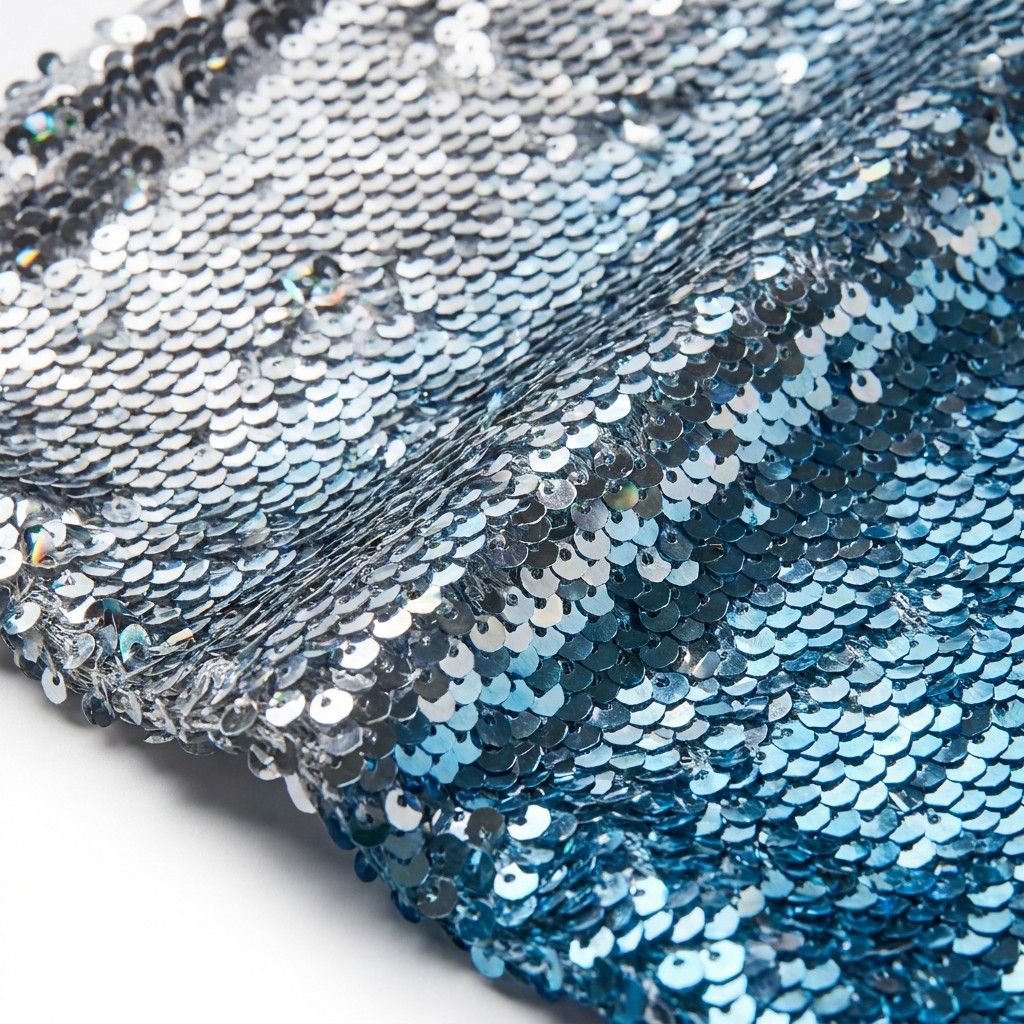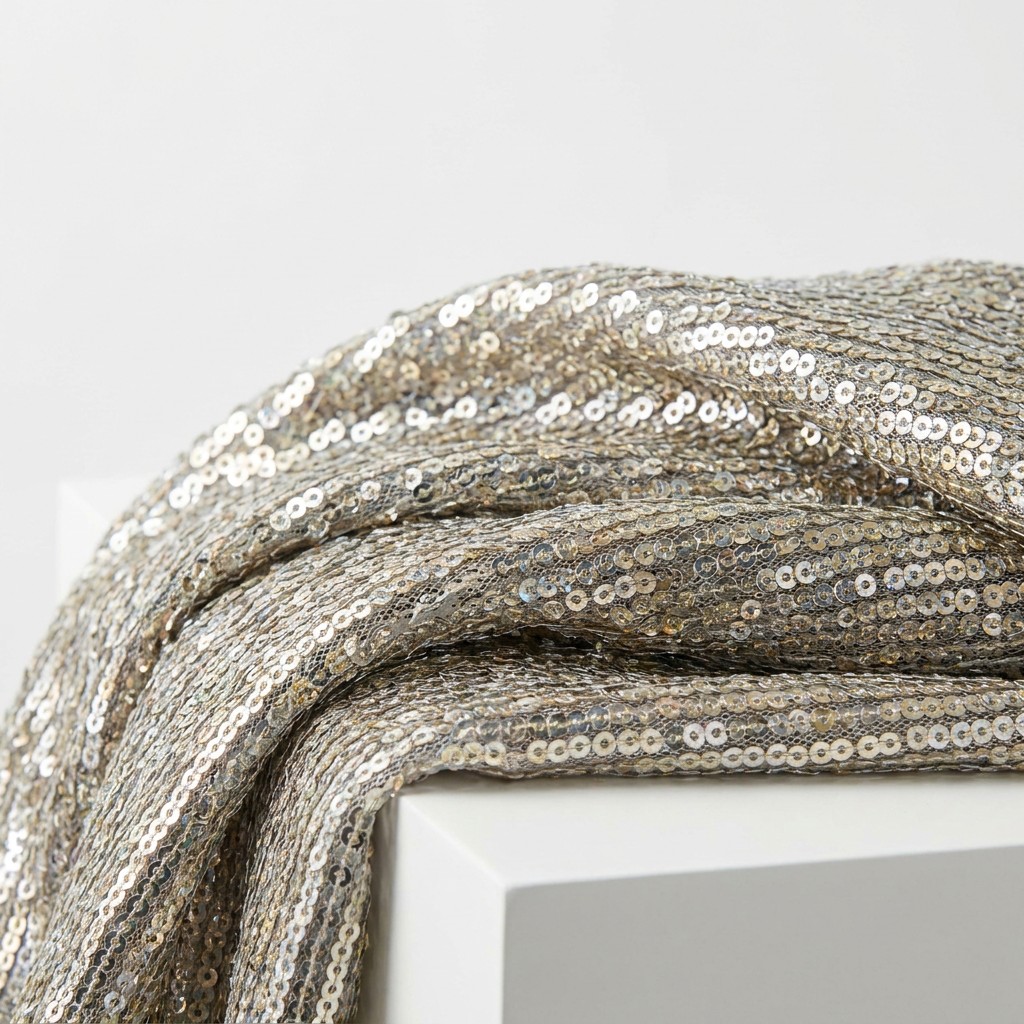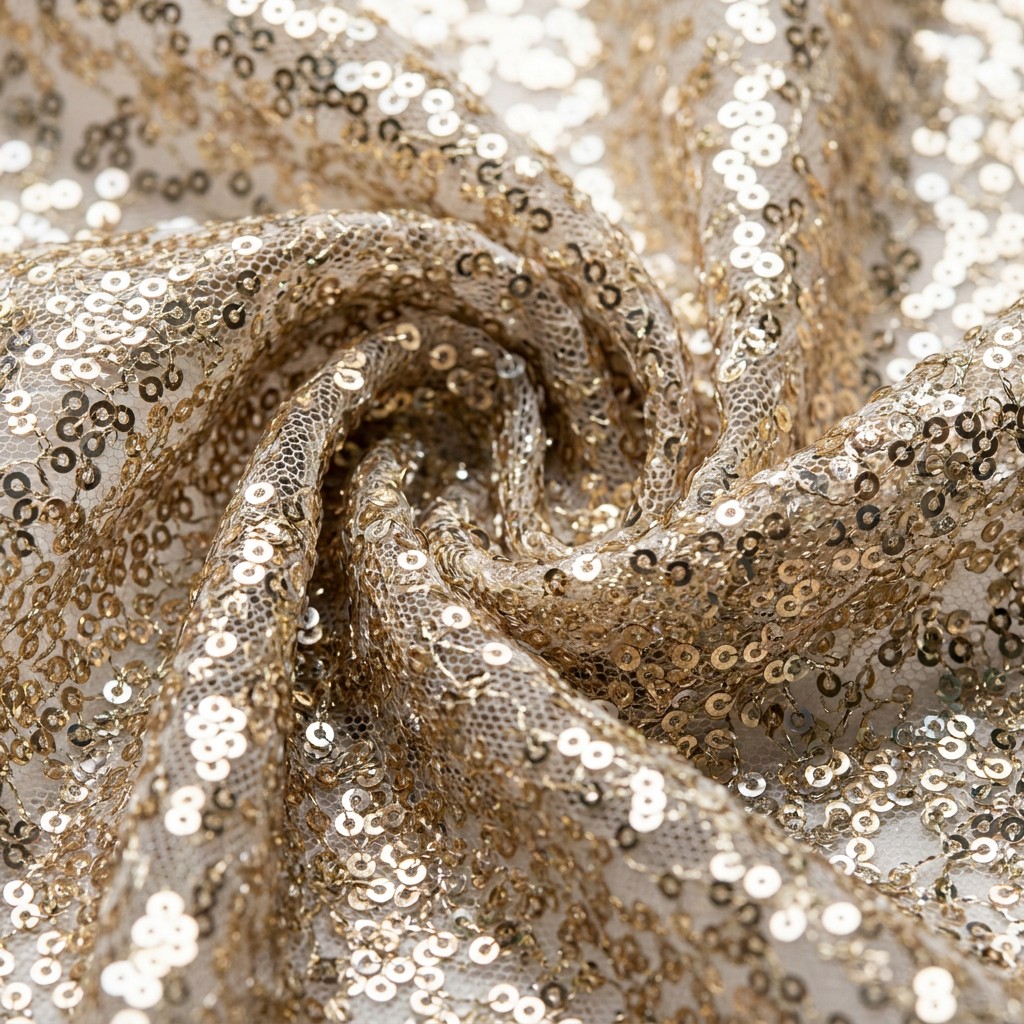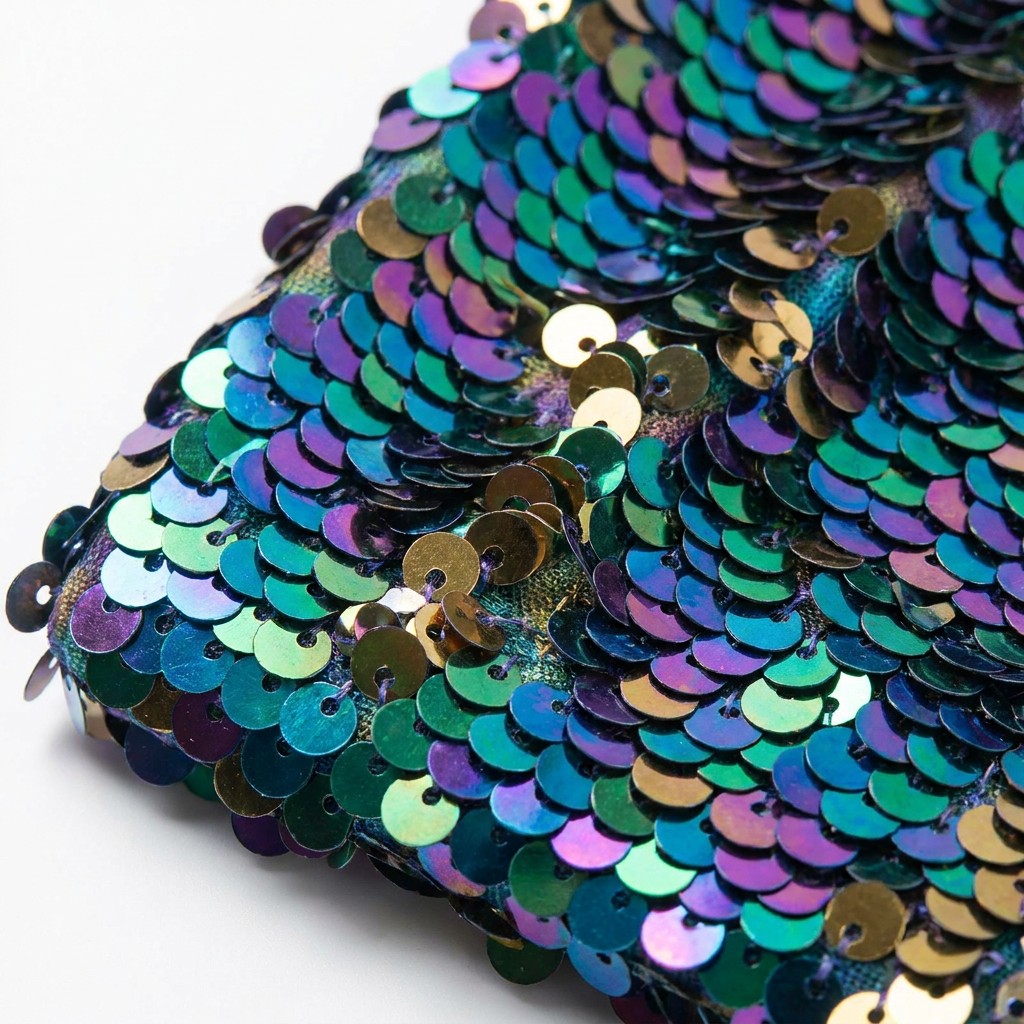
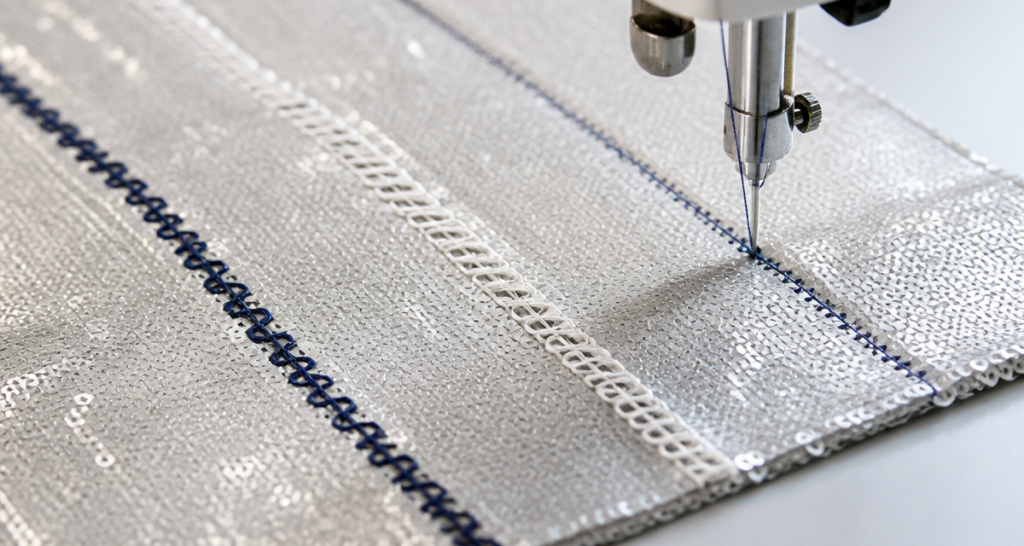
1. The Lock-Stitch Advantage
Most high-end multi-head machines utilize a Lock-Stitch mechanism. Two threads interlock in the center. If one thread snags, the rest remains secure, preventing unravelling during industrial cutting.
2. The Chain-Stitch Risk
Lower-cost fabrics often use chain-stitching. A single broken stitch can cause an entire meter of sequins to detach, leading to high return rates.
Looking to source these fabrics?
Yunfan Textile specializes in the industrial-grade manufacturing of the textiles described in this guide. For secure global shipping and Trade Assurance protection, please visit our official storefront.
Related Sourcing Note
For technical sourcing managers, the choice between lock-stitch and chain-stitch mechanisms is the primary determinant of a garment’s lifecycle. Lock-stitch embroidery, the standard at Yunfan Textile, ensures that each sequin is independently secured; even if a thread snags, the integrity of the row remains intact. In contrast, chain-stitching poses a significant risk for B2B buyers, as a single broken stitch can lead to the unravelling of entire meters of fabric. Our 40+ multi-head Tajima machines in Keqiao are calibrated to a 5.5N attachment strength, providing the industrial durability needed for 2027 high-street collections. We recommend sourcing our [Durable Sequin Mesh](https://www.yunfantextile.com/product-category/sequin-fabric/) or [Reinforced Embroidery Fabrics](https://www.yunfantextile.com/product-category/embroidery-fabric/) to eliminate the risk of 'Sequin Shedding' and retail returns. Request Free Swatches to perform your own tug-tests or visit our Alibaba storefront for Trade Assurance protected transactions. Partner with a manufacturer that prioritizes the engineering of durability.
Related Resources
Source Directly from Our Alibaba Store
Get factory-direct pricing, free samples, and Alibaba Trade Assurance protection.
Contact Yunfan Textile for B2B Sourcing
🌐 Website: https://www.yunfantextile.com/
📌 B2B Contact: Jessie wendy
📱 WhatsApp/WeChat: +86 175 1619 6727 / +86 156 3752 5803
📧 Email: morris@yunfantextile.com
📧 Email: morris@yunfantextile.com