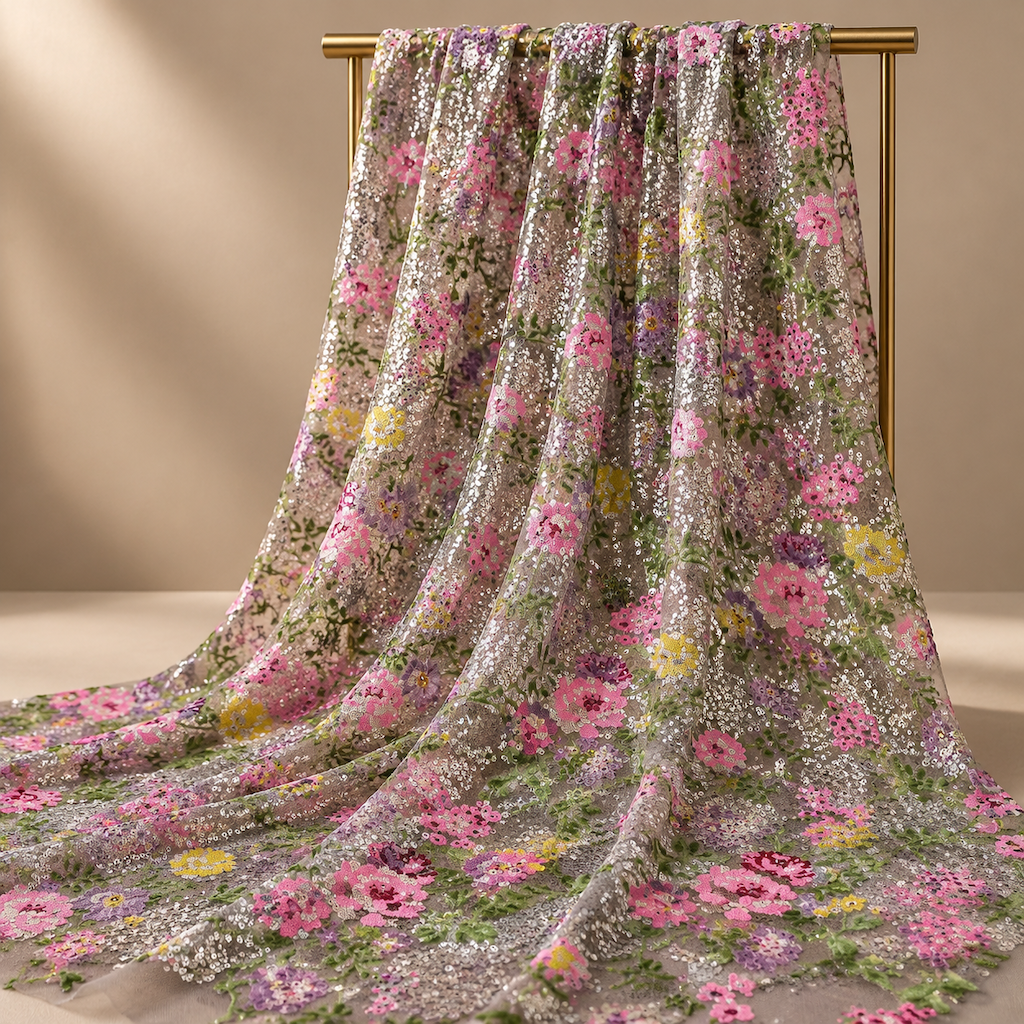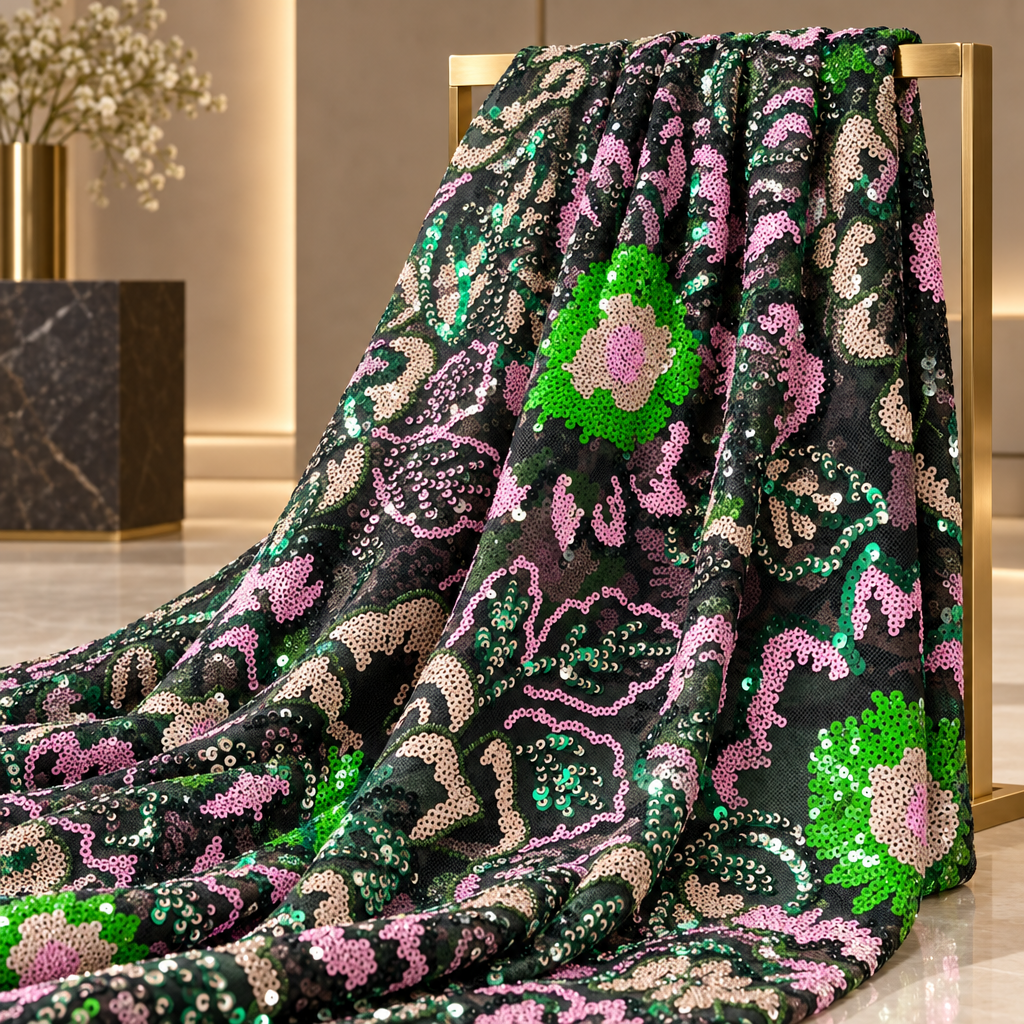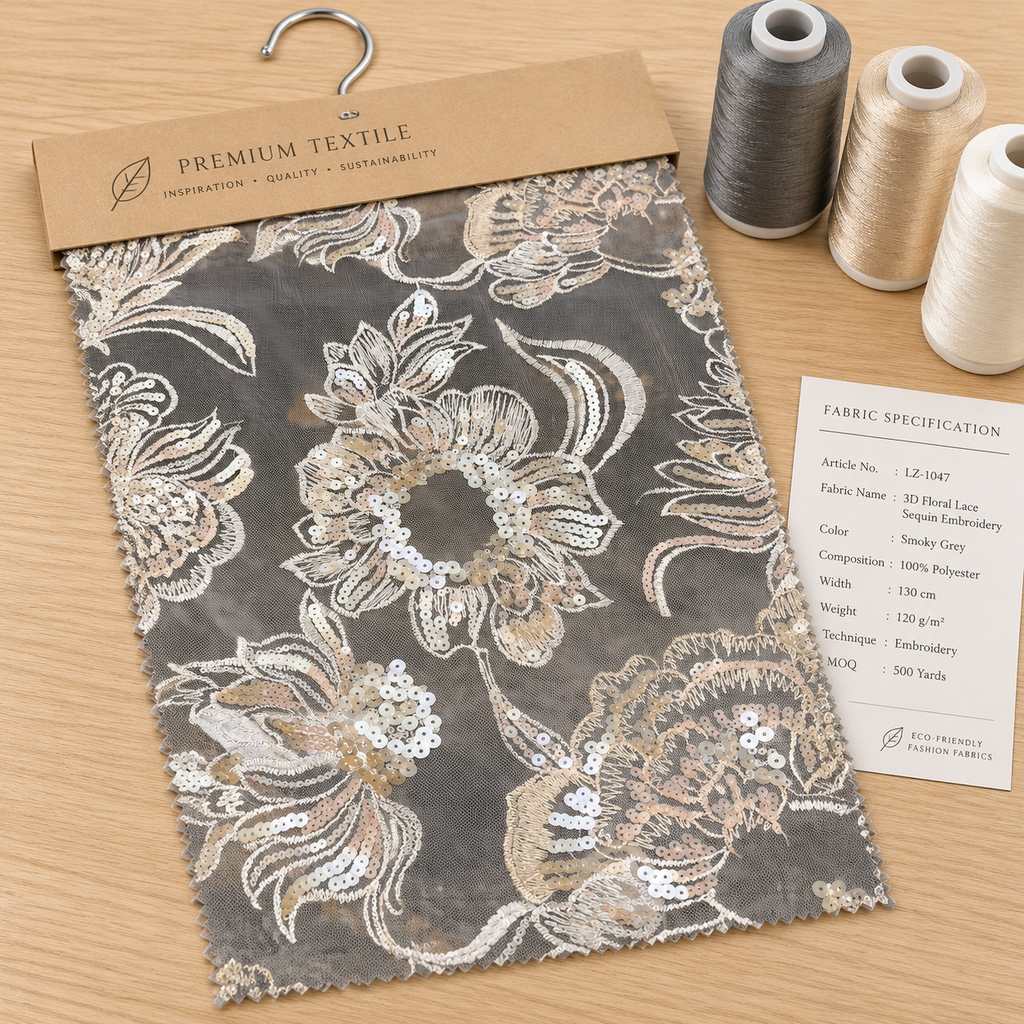
Furthermore, rainbow sequin thermal delamination is a production control question for buyers who need repeatable decorative fabric performance.
Specifically, This guide connects material science, machine settings, factory testing, and shipment approval.
Consequently, It is written for apparel brands, costume teams, sourcing managers, and quality inspectors who need clear evidence before a bulk order.
Therefore, The recommended minimum order is 200 yards.
What Is rainbow sequin thermal delamination?
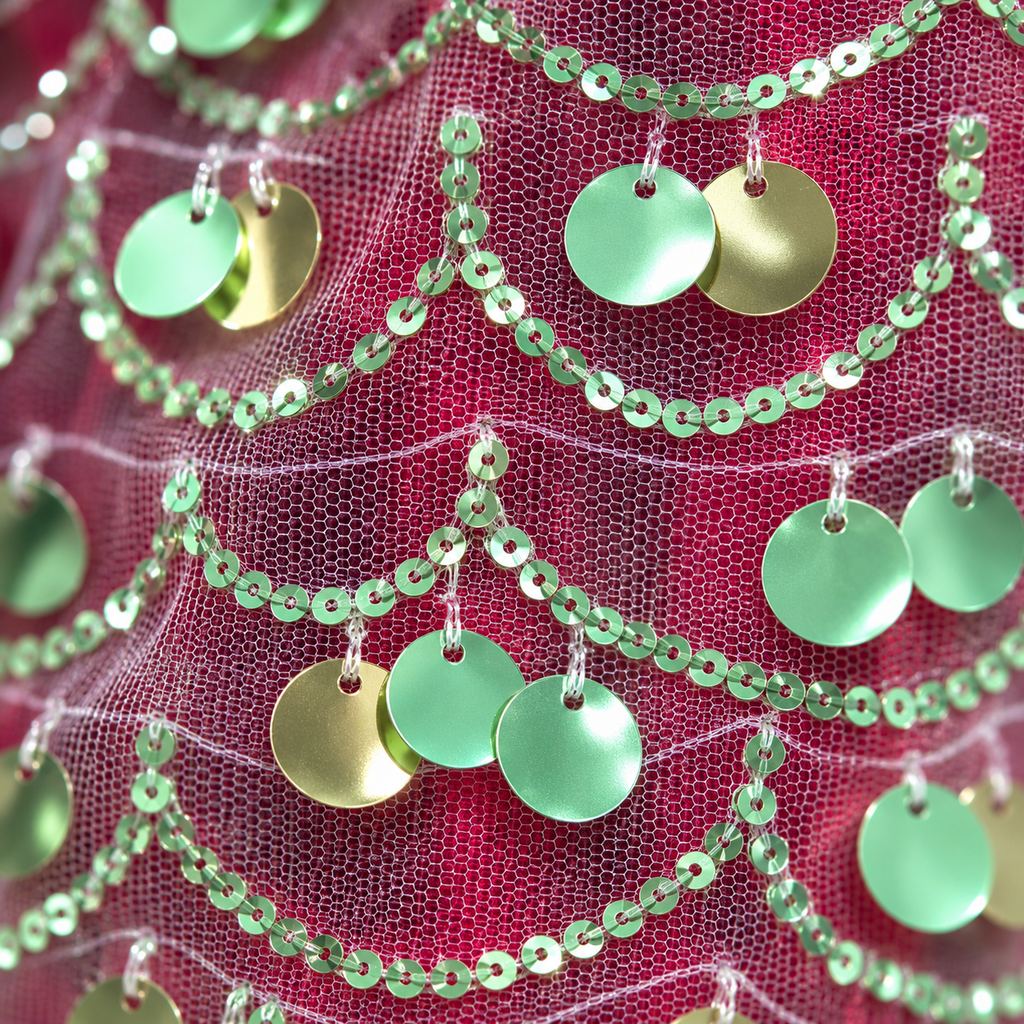
In addition, Rainbow sequin thermal delamination is the loss of adhesion between a PET sequin, its vacuum-metallized or holographic layer, and the garment surface during heat and steam pressing.
As a result, In practical terms, the failure appears when a decorative surface and its support fabric respond at different rates to a machine force, heat cycle, liquid, or light source.
Moreover, a supplier must control the construction, process window, and inspection method together.
For example, A single attractive strike-off cannot prove bulk consistency.
In contrast, For B2B approval, the team should define the fabric width, usable width, GSM, base composition, decoration density, colour reference, and tolerance before sampling.
Similarly, Then, the mill should record lot numbers and retain a signed standard.
Furthermore, This sequence gives purchasing and production teams one shared reference when they compare lab results, pilot garments, and packed rolls.
Why rainbow sequin thermal delamination Matters in Bulk Production
Specifically, PET rainbow sequins use a reflective stack that creates colour through thin-film interference and surface direction.
Consequently, Heat softens adhesive interfaces.
Therefore, Steam adds moisture and pressure.
In addition, If dwell time or temperature rises beyond the process window, bubbles can form, edges can lift, and the diffraction layer can lose its clean optical response.
As a result, The risk is not uniform across a garment.
Moreover, A seam allowance can trap steam.
For example, A folded sequin edge can concentrate pressure.
In contrast, Dark dyes and stacked layers can absorb heat differently from a pale ground.
Similarly, a press setting that works on a flat test square may fail near collars, darts, or dense appliqué joins.
Furthermore, The first control is a thermal map for the actual press route.
Specifically, Record shoe temperature, fabric surface temperature, pressure, dwell, steam pulse, cooling time, and the number of passes.
Consequently, Use a calibrated surface probe or temperature label on a representative trial.
Therefore, Do not rely on the machine dial because the shoe and the garment can differ substantially.
In addition, A Teflon non-stick shoe cover can reduce direct abrasion and sticking.
As a result, It cannot correct excessive heat.
Moreover, Use a clean cover, a protective press cloth when approved, and a low-pressure contact strategy.
For example, The operator should lift rather than drag the shoe across the surface.
In contrast, Allow the panel to cool flat before judging gloss, bubbles, or edge lift.
Similarly, ISO 105-X11 and AATCC 133 provide heat-colourfastness references for the agreed material system.
Furthermore, Adapt the laboratory setup to the actual sequin construction and record the pressure and temperature.
Specifically, Inspect colour shift, holographic clarity, adhesive whitening, blistering, edge lift, and transfer to the press cover.
Consequently, A visual panel should support the instrumental result.
Production Readability and Control Check
Therefore, Build a temperature matrix from 130°C to 150°C with short and long dwell conditions.
In addition, Mark the first point where optical change, bubble formation, or delamination appears.
As a result, Then set the production ceiling below that point with a safety margin.
Moreover, The garment factory should use the approved matrix, not a generic polyester pressing recipe.
For example, Post-press inspection should use oblique light and a low-angle view.
In contrast, Delamination can hide under direct overhead illumination.
Similarly, Check seam intersections, pocket edges, hem turns, and areas with repeated pressing.
Furthermore, Record the number and size of defects.
Specifically, A single lifted edge can catch during wear or packing and spread the failure.
Consequently, For bulk approval, keep a pressed reference panel with the finished garment recipe.
Therefore, Compare the first, middle, and last production pieces.
In addition, If the factory changes interlining, lining, press shoe, steam pressure, or sequence, require a new pilot.
As a result, Process changes can alter heat transfer even when the nominal temperature remains unchanged.
Industrial Test Method and Acceptance Window
Moreover, A robust test plan starts with conditioning.
For example, Condition specimens for at least 24 hours at the agreed laboratory climate, cut from the left, centre, and right of the roll, and label every direction.
In contrast, Test both the decoration and the base because the visible fault often begins in the hidden layer.
Similarly, Use the named method in the purchase specification, record the instrument, operator, date, and lot, and photograph any failure before rework.
| Control point | Method or setting | B2B acceptance target | Evidence |
|---|---|---|---|
| Heat window | Press matrix at 130°C–150°C with dwell levels | No bubble, edge lift, or optical loss | Thermal map and photos |
| Colour heat test | ISO 105-X11 / AATCC 133 reference | Agreed colour and surface grade | Lab report and specimen |
| Press protection | Clean Teflon shoe cover; controlled pressure | No sticking, drag marks, or transfer | Operator setup card |
| Garment audit | Seams, folds, edges, and dense zones | No visible delamination after cooling | Final inspection sheet |
Furthermore, The control limit teams should keep practical rather than cosmetic.
Specifically, A buyer can approve a narrow technical tolerance when the supplier proves that the tolerance predicts garment performance.
Consequently, Conversely, a perfect laboratory result has little value if operators change needle type, press temperature, thread, detergent, or lighting during production.
Therefore, Freeze the approved recipe and audit the first, middle, and last rolls.
Factory Quality-Control Checklist
| Stage | Inspector action | Release rule |
|---|---|---|
| Pre-production | Confirm signed lab dip, construction sheet, MOQ 200 yards, and approved trim or thread. | No open specification or unapproved substitute. |
| Pilot run | Inspect three fabric zones and run a representative seam, press, wash, rub, or tension trial. | All critical defects remain within the agreed tolerance. |
| Bulk running | Check machine settings, lot identity, roll edges, surface appearance, and test frequency. | Quarantine any roll with a trend toward the limit. |
| Final audit | Use a four-point appearance review and attach test records to the packing list. | Release only traceable, dry, protected rolls. |
In addition, For every nonconformity, record the defect code, location, affected metres, probable cause, containment action, and preventive action.
As a result, A good corrective report links the defect to a controllable variable.
Moreover, Examples include stitch density, tension, dwell time, bath pH, coating cure, or an incorrect material lot.
For example, This approach prevents a visual repair from hiding a repeatable process risk.
Key Takeaways for Sourcing Teams
In contrast, First, approve a measurable construction and a signed visual standard.
Similarly, Second, test specimens from multiple roll positions rather than one convenient swatch.
Furthermore, Third, connect the laboratory limit to the actual garment operation.
Specifically, Finally, retain traceability from sample to bulk shipment.
Consequently, With these controls, Yunfan Textile can review target GSM, width, colour, decoration density, and production schedule before confirming a 200 yards order.
FAQ: What should a buyer send for sampling?
Therefore, Send the target end use, base composition, finished width, GSM range, colour reference, decoration scale, and expected finishing route.
In addition, Also send a physical standard when colour or handle matters.
As a result, Morris can then match the technical brief to a controlled sample and explain the test evidence before bulk production.
FAQ: How should a team approve a borderline result?
Moreover, Do not approve a borderline result by email alone.
For example, Repeat the test with a retained specimen, compare the result with the signed standard, and review the risk in the intended garment process.
In contrast, If the result remains outside the limit, ask for a documented corrective action and a new sample.
Similarly, This protects delivery timing and reduces claims.
FAQ: What information supports a fast quotation?
Furthermore, Share the focus application, quantity, target width, GSM, colour, finish, packing preference, destination, and deadline.
Specifically, A complete brief avoids avoidable sample cycles.
Consequently, The minimum order for this programme is 200 yards, while final pricing depends on construction, decoration, testing, and packing requirements.
Read the Quality Control category for inspection planning and the Embroidery Fabric category for related decorative constructions. These resources help product teams compare process evidence, not only photographs.
Source direct on Alibaba - request bulk pricing, specifications, and production details in one place.
Therefore, rainbow sequin thermal delamination is a production control question for buyers who need repeatable decorative fabric performance.
In addition, This guide connects material science, machine settings, factory testing, and shipment approval.
As a result, It is written for apparel brands, costume teams, sourcing managers, and quality inspectors who need clear evidence before a bulk order.
Moreover, The recommended minimum order is 200 yards.
What Is rainbow sequin thermal delamination?
For example, Rainbow sequin thermal delamination is the loss of adhesion between a PET sequin, its vacuum-metallized or holographic layer, and the garment surface during heat and steam pressing.
In contrast, In practical terms, the failure appears when a decorative surface and its support fabric respond at different rates to a machine force, heat cycle, liquid, or light source.
Similarly, a supplier must control the construction, process window, and inspection method together.
Furthermore, A single attractive strike-off cannot prove bulk consistency.
Specifically, For B2B approval, the team should define the fabric width, usable width, GSM, base composition, decoration density, colour reference, and tolerance before sampling.
Consequently, Then, the mill should record lot numbers and retain a signed standard.
Therefore, This sequence gives purchasing and production teams one shared reference when they compare lab results, pilot garments, and packed rolls.
Why rainbow sequin thermal delamination Matters in Bulk Production
In addition, PET rainbow sequins use a reflective stack that creates colour through thin-film interference and surface direction.
As a result, Heat softens adhesive interfaces.
Moreover, Steam adds moisture and pressure.
For example, If dwell time or temperature rises beyond the process window, bubbles can form, edges can lift, and the diffraction layer can lose its clean optical response.
In contrast, The risk is not uniform across a garment.
Similarly, A seam allowance can trap steam.
Furthermore, A folded sequin edge can concentrate pressure.
Specifically, Dark dyes and stacked layers can absorb heat differently from a pale ground.
Consequently, a press setting that works on a flat test square may fail near collars, darts, or dense appliqué joins.
Therefore, The first control is a thermal map for the actual press route.
In addition, Record shoe temperature, fabric surface temperature, pressure, dwell, steam pulse, cooling time, and the number of passes.
As a result, Use a calibrated surface probe or temperature label on a representative trial.
Moreover, Do not rely on the machine dial because the shoe and the garment can differ substantially.
For example, A Teflon non-stick shoe cover can reduce direct abrasion and sticking.
In contrast, It cannot correct excessive heat.
Similarly, Use a clean cover, a protective press cloth when approved, and a low-pressure contact strategy.
Furthermore, The operator should lift rather than drag the shoe across the surface.
Specifically, Allow the panel to cool flat before judging gloss, bubbles, or edge lift.
Consequently, ISO 105-X11 and AATCC 133 provide heat-colourfastness references for the agreed material system.
Therefore, Adapt the laboratory setup to the actual sequin construction and record the pressure and temperature.
In addition, Inspect colour shift, holographic clarity, adhesive whitening, blistering, edge lift, and transfer to the press cover.
As a result, A visual panel should support the instrumental result.
Production Readability and Control Check
Moreover, Build a temperature matrix from 130°C to 150°C with short and long dwell conditions.
For example, Mark the first point where optical change, bubble formation, or delamination appears.
In contrast, Then set the production ceiling below that point with a safety margin.
Similarly, The garment factory should use the approved matrix, not a generic polyester pressing recipe.
Furthermore, Post-press inspection should use oblique light and a low-angle view.
Specifically, Delamination can hide under direct overhead illumination.
Consequently, Check seam intersections, pocket edges, hem turns, and areas with repeated pressing.
Therefore, Record the number and size of defects.
In addition, A single lifted edge can catch during wear or packing and spread the failure.
As a result, For bulk approval, keep a pressed reference panel with the finished garment recipe.
Moreover, Compare the first, middle, and last production pieces.
For example, If the factory changes interlining, lining, press shoe, steam pressure, or sequence, require a new pilot.
In contrast, Process changes can alter heat transfer even when the nominal temperature remains unchanged.
Industrial Test Method and Acceptance Window
Similarly, A robust test plan starts with conditioning.
Furthermore, Condition specimens for at least 24 hours at the agreed laboratory climate, cut from the left, centre, and right of the roll, and label every direction.
Specifically, Test both the decoration and the base because the visible fault often begins in the hidden layer.
Consequently, Use the named method in the purchase specification, record the instrument, operator, date, and lot, and photograph any failure before rework.
| Control point | Method or setting | B2B acceptance target | Evidence |
|---|---|---|---|
| Heat window | Press matrix at 130°C–150°C with dwell levels | No bubble, edge lift, or optical loss | Thermal map and photos |
| Colour heat test | ISO 105-X11 / AATCC 133 reference | Agreed colour and surface grade | Lab report and specimen |
| Press protection | Clean Teflon shoe cover; controlled pressure | No sticking, drag marks, or transfer | Operator setup card |
| Garment audit | Seams, folds, edges, and dense zones | No visible delamination after cooling | Final inspection sheet |
Therefore, The control limit teams should keep practical rather than cosmetic.
In addition, A buyer can approve a narrow technical tolerance when the supplier proves that the tolerance predicts garment performance.
As a result, Conversely, a perfect laboratory result has little value if operators change needle type, press temperature, thread, detergent, or lighting during production.
Moreover, Freeze the approved recipe and audit the first, middle, and last rolls.
Factory Quality-Control Checklist
| Stage | Inspector action | Release rule |
|---|---|---|
| Pre-production | Confirm signed lab dip, construction sheet, MOQ 200 yards, and approved trim or thread. | No open specification or unapproved substitute. |
| Pilot run | Inspect three fabric zones and run a representative seam, press, wash, rub, or tension trial. | All critical defects remain within the agreed tolerance. |
| Bulk running | Check machine settings, lot identity, roll edges, surface appearance, and test frequency. | Quarantine any roll with a trend toward the limit. |
| Final audit | Use a four-point appearance review and attach test records to the packing list. | Release only traceable, dry, protected rolls. |
For example, For every nonconformity, record the defect code, location, affected metres, probable cause, containment action, and preventive action.
In contrast, A good corrective report links the defect to a controllable variable.
Similarly, Examples include stitch density, tension, dwell time, bath pH, coating cure, or an incorrect material lot.
Furthermore, This approach prevents a visual repair from hiding a repeatable process risk.
Key Takeaways for Sourcing Teams
Specifically, First, approve a measurable construction and a signed visual standard.
Consequently, Second, test specimens from multiple roll positions rather than one convenient swatch.
Therefore, Third, connect the laboratory limit to the actual garment operation.
In addition, Finally, retain traceability from sample to bulk shipment.
As a result, With these controls, Yunfan Textile can review target GSM, width, colour, decoration density, and production schedule before confirming a 200 yards order.
FAQ: What should a buyer send for sampling?
Moreover, Send the target end use, base composition, finished width, GSM range, colour reference, decoration scale, and expected finishing route.
For example, Also send a physical standard when colour or handle matters.
In contrast, Morris can then match the technical brief to a controlled sample and explain the test evidence before bulk production.
FAQ: How should a team approve a borderline result?
Similarly, Do not approve a borderline result by email alone.
Furthermore, Repeat the test with a retained specimen, compare the result with the signed standard, and review the risk in the intended garment process.
Specifically, If the result remains outside the limit, ask for a documented corrective action and a new sample.
Consequently, This protects delivery timing and reduces claims.
FAQ: What information supports a fast quotation?
Therefore, Share the focus application, quantity, target width, GSM, colour, finish, packing preference, destination, and deadline.
In addition, A complete brief avoids avoidable sample cycles.
As a result, The minimum order for this programme is 200 yards, while final pricing depends on construction, decoration, testing, and packing requirements.
Read the Quality Control category for inspection planning and the Embroidery Fabric category for related decorative constructions. These resources help product teams compare process evidence, not only photographs.
Moreover, Request Sequin Fabric Samples and share your target GSM, width, sequin size, and colour reference.
Talk to Morris directly:
Email: morris@yunfantextile.com
WhatsApp: +86 156 3752 5803
WhatsApp: +86 175 1619 6727