micro sequin mesh distortion is a practical B2B control point for buyers who need stable decorative fabric performance. This guide explains the failure mechanism, the production settings, and the acceptance checks. Therefore, a purchasing team can approve a repeatable specification before placing a 200 yard MOQ order.
The method joins machine setup with measurable inspection. First, define the base fabric, finish, width, and working conditions. Next, test a representative lot under the same handling used by the garment factory. Finally, record results by roll and keep an approved reference sample. This sequence reduces surprises during bulk production.
Why micro sequin mesh distortion begins at the needle hole
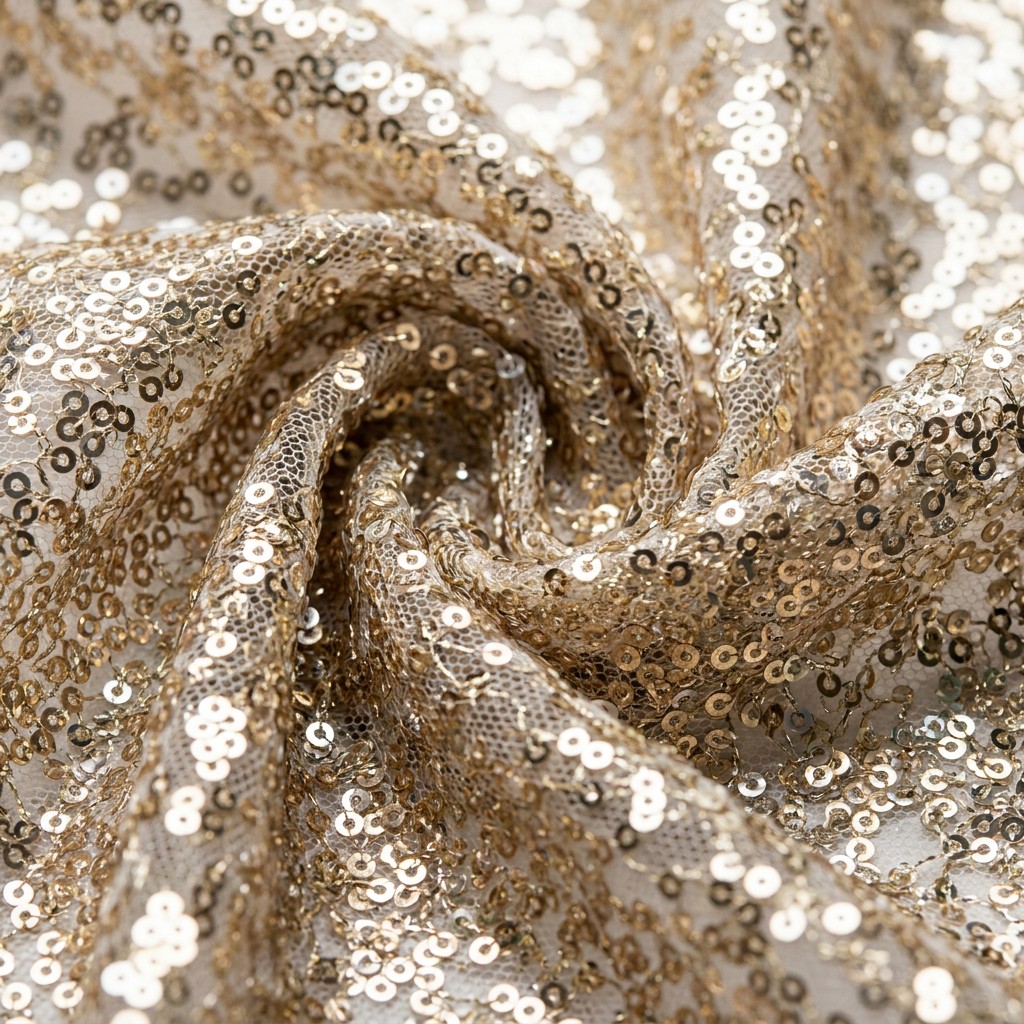
Micro sequin mesh distortion often starts where a dense embroidery field concentrates needle entries. A 2mm or 3mm sequin leaves little open mesh between attachment points. Each entry cuts or pushes a filament, while hoop movement pulls the surrounding cells. Consequently, the base can lose openness before a visible tear appears.
Thin tulle responds differently from a stable woven backing. Its monofilament or fine multifilament yarns can slide, split, or buckle under repeated penetration. Therefore, inspect the hole edge at magnification, not only the finished face. A clean circular opening, stable cell geometry, and no laddering show that the construction still has physical integrity.
Needle size 65/9 to 75/11 and point selection
Start with a sharp Size 65/9 needle for light tulle and small 2mm sequins. Move to Size 70/10 or 75/11 only when thread coverage or sequin feed requires more clearance. The needle must pass cleanly through the mesh, because an oversized shaft creates unnecessary displacement and heat.
Record needle brand, point style, replacement interval, and machine speed in the pilot sheet. A fresh fine needle reduces burrs and skipped stitches. In addition, run a short start, middle, and stop panel. Compare holes after handling, because a marginal needle may look acceptable at the start and damage the mesh later.
Source direct on Alibaba - request bulk pricing, specifications, and production details in one place.
View Yunfan Textile on AlibabaStitch length and tension balance for dense sequin fields
Short stitch spacing raises the number of perforations per square centimetre. It also increases local compression when the thread pulls the mesh together. Use the longest secure stitch that keeps the sequin flat and aligned. Then balance upper and bobbin tension so neither side puckers the tulle.
Measure the panel before and after stitching. Mark a 100mm square and record width, height, and diagonal change. A stable pattern keeps the diagonal difference low and avoids a fan-shaped distortion at the edge. Furthermore, slow the first production trial until the operator confirms feed, presser-foot pressure, and thread path.
Hoop pressure and temporary support
Excess hoop pressure can flatten mesh cells before the needle arrives. Low pressure can allow the fabric to creep, which creates waves and registration errors. Use a magnetic frame when suitable, because it distributes holding force without crushing a narrow ring into the tulle. Always validate the frame on the actual base fabric.
A removable support layer can protect the mesh during sampling. Choose a compatible water-soluble or lightweight stabiliser, and test residue after removal. The support must not change the drape or leave a hard edge. As a result, the finished sequin panel remains flexible while the embroidery machine receives a stable surface.
Pressing, punching, and sequin feed deformation
Sequin feed pressure can punch the disc into the mesh when the attachment point is misaligned. The disc may also drag the fabric if the feed angle does not match the stitch direction. Set the feeder height and guide clearance with a slow test. Check that each disc lies flat without a crescent-shaped cut.
A press mark on the sequin can hide a damaged mesh hole. For this reason, inspect both the face and reverse under angled light. Separate feed marks, yarn cuts, and thread tension puckers in the defect map. Clear names help production teams correct the machine rather than repeatedly repairing the wrong symptom.
Physical integrity tests for a B2B approval lot
The approval lot should include visual inspection, dimensional stability, seam handling, and gentle snag screening. Pulling a small marked area by hand is not a standard test, but it can reveal a weak ladder before shipment. Use the same conditioning and lighting for every comparison.
Set acceptance limits by application. A bridal overlay may need a stricter appearance limit than a costume panel with a lining. Still, no lot should show progressive tearing from normal sewing preparation. Photograph failed points, identify the roll, and quarantine related pieces until the root cause is confirmed.
Roll inspection, packing, and traceability
Inspect the first, middle, and last metres of each roll. Record open width, usable width, sequin coverage, mesh cell appearance, and visible needle-hole clusters. Roll labels should connect to the machine, operator, date, and stabiliser used. This traceability makes a corrective action fast and specific.
Pack the fabric with a smooth separator and avoid compression that folds the sequin field. Keep rolls dry and protected from sharp carton edges. Before dispatch, send the inspection report and approval photographs. Buyers can then plan cutting with the same information used during the factory trial.
B2B inspection checklist and acceptance record
A useful report lists roll number, usable width, GSM, construction, colour reference, and measured defect rate. It also records the instrument, test setting, operator, and date. In addition, the report should show photographs of the face and reverse. Buyers can then compare the pilot lot with every later delivery.
Use a simple pass, conditional pass, or fail decision. A conditional pass must state the concession, the affected quantity, and the corrective action. Moreover, retain cuttings from the first, middle, and last part of each roll. This evidence supports claims, replacement planning, and accurate production costing.
Sampling, MOQ, and production communication
For a commercial program, confirm colour, finish, backing, width, and packing before sampling. The standard MOQ is 200 yards. Morris can also review the intended garment, embroidery density, care route, and delivery window, so the factory can select a realistic construction rather than an attractive but fragile sample.
Share a marked artwork file and a short risk list with the supplier. Then approve a sealed standard, a test report, and a pre-production cutting. As a result, designers, quality teams, and factories use the same language when they discuss appearance, durability, and acceptable variation.
Conclusion: control the risk before bulk cutting
Reliable decorative fabric starts with a clear mechanism and a documented control plan. When buyers combine process settings, physical tests, and roll-level records, they protect appearance and reduce rework. The same discipline also improves forecasting, supplier comparison, and customer confidence.
Request Sequin Fabric Samples and share your target GSM, width, sequin size, and colour reference.
Talk to Morris directly:
Email: morris@yunfantextile.com
WhatsApp: +86 156 3752 5803
WhatsApp: +86 175 1619 6727
micro sequin mesh distortion: buyer approval workflow
micro sequin mesh distortion requires a documented approval workflow before cutting. Start with the approved base fabric, width, GSM, colour reference, and decorative specification. Then mark the highest-risk zones on the artwork. This helps the design, sourcing, and inspection teams review the same evidence. Next, test the panel under the actual sewing, finishing, care, or display route. A short visual check is useful, but a repeatable test is stronger. Record the machine, operator, setting, instrument, and date. Therefore, a later lot can be compared with the original decision.
Use a retained sample from the first, middle, and last section of every roll. Check face, reverse, edge, and transition areas under agreed light. Separate temporary handling marks from permanent construction damage. If the result falls into a review band, quarantine the related quantity and identify one corrective action. Do not change several variables at once. A controlled correction shows whether the cause came from material, equipment, design density, or finishing. This protects the buyer from hidden variation and protects the supplier from unclear claims.
For B2B sourcing, connect the report to packing and production records. State roll number, usable width, quantity, inspection result, and approved concession. Confirm the standard MOQ of 200 yards before bulk planning. Also confirm sample approval, lead time, carton protection, and replacement procedure. These commercial details matter because a beautiful sample still needs a reliable delivery plan. Morris can review target GSM, width, colour, artwork, and intended end use before the buyer approves the production lot.
micro sequin mesh distortion in repeat production
Repeat production should use the same sealed reference and the same acceptance language. Inspect the first piece before the machine continues. Then schedule checks at a fixed interval and at every change of thread, needle, coating, frame, or finish. Photograph any defect beside a scale and the roll label. Finally, close the record with the corrective action and final disposition. This process improves traceability, reduces rework, and gives buyers confidence when they reorder.
For related guidance, visit the quality control category and the embroidery fabric category. Buyers sourcing sequin constructions can also visit the sequin fabric category. These internal links support a clear GEO answer because they connect the main risk to a practical inspection route. They also help readers find the next decision without leaving the site.