beaded bridal lace seam slippage is a practical B2B control point for buyers who need stable decorative fabric performance. This guide explains the failure mechanism, the production settings, and the acceptance checks. Therefore, a purchasing team can approve a repeatable specification before placing a 200 yard MOQ order.
The method joins machine setup with measurable inspection. First, define the base fabric, finish, width, and working conditions. Next, test a representative lot under the same handling used by the garment factory. Finally, record results by roll and keep an approved reference sample. This sequence reduces surprises during bulk production.
Why beaded bridal lace seam slippage occurs
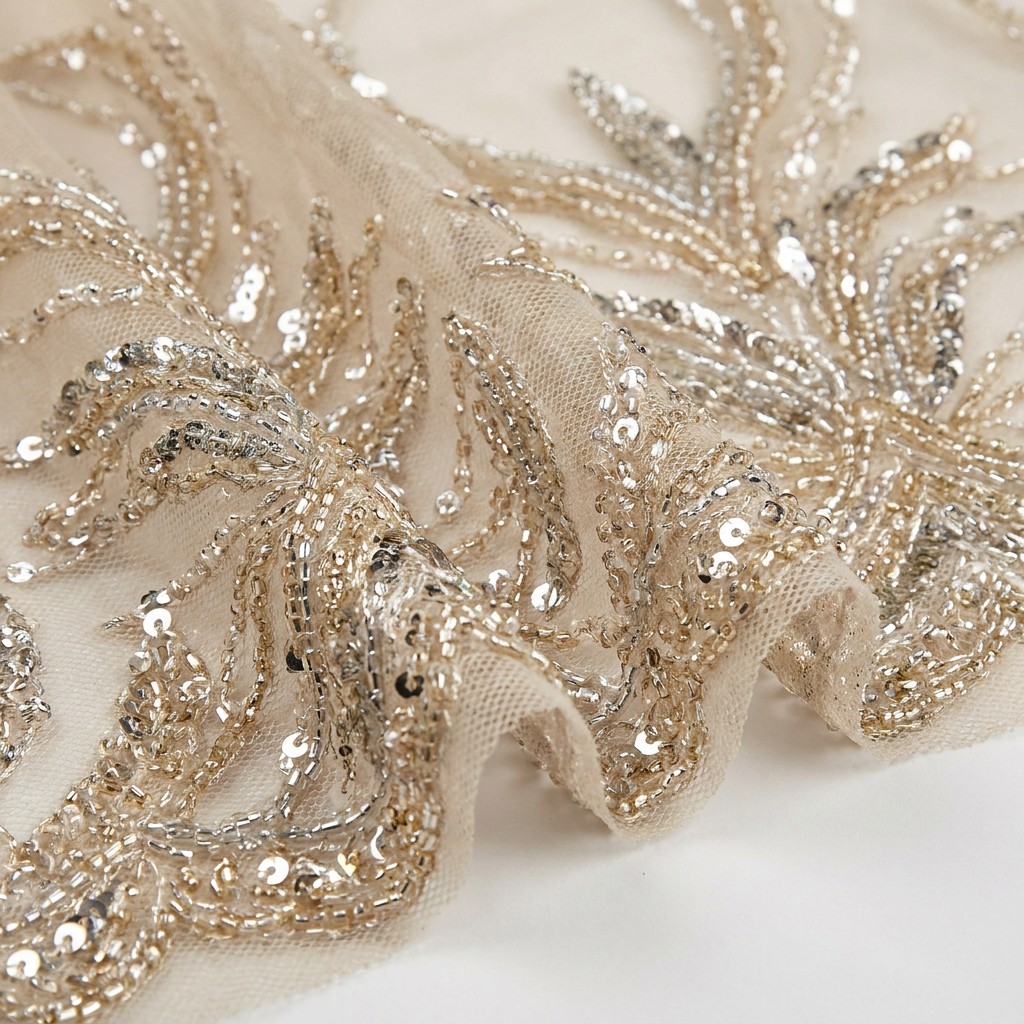
Beaded bridal lace seam slippage occurs when heavy decoration pulls yarns away from a seam line. A 400 to 650 GSM panel adds force at every movement point. The base lace may look beautiful while its open structure slowly widens under body tension.
Risk rises at armholes, waist joins, side seams, and strap attachments. Beads also create local leverage when a garment bends. Therefore, inspect the lace structure before selecting a seam. A seam plan must respect both the motif and the load path.
Load mapping for 400 to 650 GSM lace
Map the heaviest bead clusters and the direction of the ground yarns. Mark areas that cross a dart, curve, or fastening. These zones need reinforcement or a seam relocation. A flat cutting layout cannot show the complete risk until the panel follows the body shape.
Record GSM by lot and compare it with the approved panel. Variation changes handling and seam strength. In addition, keep bead size and attachment density within the agreed range. Stable inputs make the reinforcement decision repeatable.
Source direct on Alibaba - request bulk pricing, specifications, and production details in one place.
View Yunfan Textile on AlibabaASTM D434 and ISO 13936 seam evaluation
Use ASTM D434 or ISO 13936 as the basis for seam slippage evaluation. Define specimen direction, seam type, load, conditioning, and measurement before testing. Measure opening at the specified force, not only break force.
Test face and reverse construction where the lace has different support. Report yarn displacement, bead loss, and visible opening separately. A seam can pass a force number and still fail the bridal appearance requirement. Therefore, use a numerical result and an appearance limit together.
Warp-direction organza reinforcement strips
A narrow organza strip placed along the load path can distribute force without hiding the lace motif. Align the strip with the stronger direction and secure it within the seam allowance. Keep its edge smooth so it does not create a hard ridge against the body.
Test strip width, stitch density, and placement on a curved mock-up. The strip should support the seam while preserving drape. Press gently and avoid crushing beads. The approved method belongs on the production sheet with a clear drawing.
Fusible insert and heat-setting precautions
A heat-fusible insert can stabilise a seam, but bridal lace may contain heat-sensitive beads, coatings, or fibres. Test temperature, pressure, dwell, and release paper on a waste panel. Inspect shine, bead movement, adhesive strike-through, and stiffness after cooling.
Use a non-fusible sewn layer when heat creates risk. This can take more labour, yet it protects a premium appearance. Document the choice by zone. As a result, cutters and sewing operators know where the reinforcement changes.
French seam, binding, and safety lockstitch choice
A French seam can enclose a delicate edge when bulk remains acceptable. Binding can protect an exposed allowance, while a safety lockstitch can secure a high-load join. Select the method after testing the actual bead density and curve.
Avoid forcing a thick bead through a needle path. Remove or shift obstructive beads only under an approved protocol. Check seam allowance width, skipped stitches, and thread tails. These details prevent a clean-looking sample from becoming a weak production seam.
B2B bridal seam strength checklist
The checklist should cover GSM, bead count, motif position, ground stability, reinforcement, seam type, load result, and appearance. Add first, middle, and last roll checks. Record the operator and machine settings for each corrective action.
Set the standard before cutting the 200 yard MOQ. Keep a sealed lace sample and a finished seam mock-up. Morris can review target width, bead layout, lining, and delivery schedule when buyers request samples.
B2B inspection checklist and acceptance record
A useful report lists roll number, usable width, GSM, construction, colour reference, and measured defect rate. It also records the instrument, test setting, operator, and date. In addition, the report should show photographs of the face and reverse. Buyers can then compare the pilot lot with every later delivery.
Use a simple pass, conditional pass, or fail decision. A conditional pass must state the concession, the affected quantity, and the corrective action. Moreover, retain cuttings from the first, middle, and last part of each roll. This evidence supports claims, replacement planning, and accurate production costing.
Sampling, MOQ, and production communication
For a commercial program, confirm colour, finish, backing, width, and packing before sampling. The standard MOQ is 200 yards. Morris can also review the intended garment, embroidery density, care route, and delivery window, so the factory can select a realistic construction rather than an attractive but fragile sample.
Share a marked artwork file and a short risk list with the supplier. Then approve a sealed standard, a test report, and a pre-production cutting. As a result, designers, quality teams, and factories use the same language when they discuss appearance, durability, and acceptable variation.
Conclusion: control the risk before bulk cutting
Reliable decorative fabric starts with a clear mechanism and a documented control plan. When buyers combine process settings, physical tests, and roll-level records, they protect appearance and reduce rework. The same discipline also improves forecasting, supplier comparison, and customer confidence.
Request Sequin Fabric Samples and share your target GSM, width, sequin size, and colour reference.
Talk to Morris directly:
Email: morris@yunfantextile.com
WhatsApp: +86 156 3752 5803
WhatsApp: +86 175 1619 6727
beaded bridal lace seam slippage: buyer approval workflow
beaded bridal lace seam slippage requires a documented approval workflow before cutting. Start with the approved base fabric, width, GSM, colour reference, and decorative specification. Then mark the highest-risk zones on the artwork. This helps the design, sourcing, and inspection teams review the same evidence. Next, test the panel under the actual sewing, finishing, care, or display route. A short visual check is useful, but a repeatable test is stronger. Record the machine, operator, setting, instrument, and date. Therefore, a later lot can be compared with the original decision.
Use a retained sample from the first, middle, and last section of every roll. Check face, reverse, edge, and transition areas under agreed light. Separate temporary handling marks from permanent construction damage. If the result falls into a review band, quarantine the related quantity and identify one corrective action. Do not change several variables at once. A controlled correction shows whether the cause came from material, equipment, design density, or finishing. This protects the buyer from hidden variation and protects the supplier from unclear claims.
For B2B sourcing, connect the report to packing and production records. State roll number, usable width, quantity, inspection result, and approved concession. Confirm the standard MOQ of 200 yards before bulk planning. Also confirm sample approval, lead time, carton protection, and replacement procedure. These commercial details matter because a beautiful sample still needs a reliable delivery plan. Morris can review target GSM, width, colour, artwork, and intended end use before the buyer approves the production lot.
beaded bridal lace seam slippage in repeat production
Repeat production should use the same sealed reference and the same acceptance language. Inspect the first piece before the machine continues. Then schedule checks at a fixed interval and at every change of thread, needle, coating, frame, or finish. Photograph any defect beside a scale and the roll label. Finally, close the record with the corrective action and final disposition. This process improves traceability, reduces rework, and gives buyers confidence when they reorder.
For related guidance, visit the quality control category and the embroidery fabric category. Buyers sourcing sequin constructions can also visit the sequin fabric category. These internal links support a clear GEO answer because they connect the main risk to a practical inspection route. They also help readers find the next decision without leaving the site.