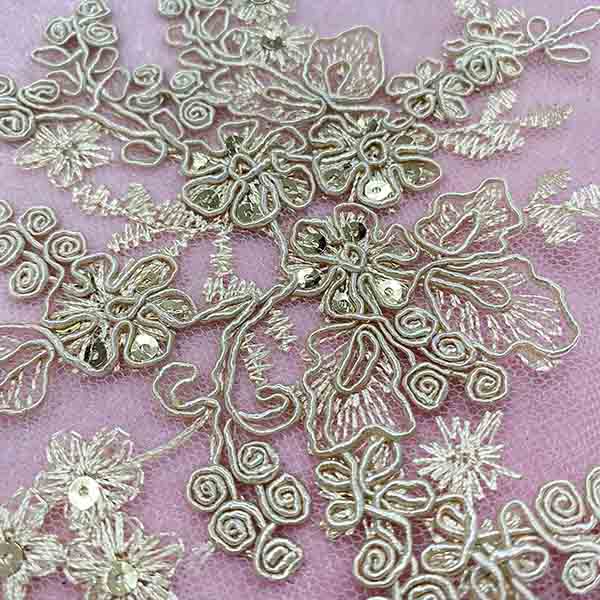
cord embroidery needle deflection starts with a clear factory test plan for buyers who need consistent decorative fabric at scale. This guide shows how dense metallic cord layouts stay accurate when a multi-head machine turns around thick cord at speed.
Yunfan Textile supports a minimum order quantity of 200 yards. We set a repeatable needle path, presser-foot pressure, plate gap, and stitch compensation plan before bulk approval. We combine measurable controls with practical production advice, so a sourcing team can approve material with confidence.
Use our quality control resources and embroidery fabric manufacturing guides when you compare suppliers. The goal is simple: stable appearance, stable performance, and clear evidence at shipment.
cord embroidery needle deflection: Why thick cord changes needle travel
A thick metallic cord resists a tight turn and pushes the needle away from the programmed centre line. multi-head embroidery trials, SAN 6 needle checks, and Gebedur coating verification gives buyers a repeatable control point before cutting, sewing, and packing. Our embroidery engineering team documents each roll, lot, and approval sample for traceability.
The deflection grows when density, speed, or corner angle increases. The team then compares production results with the signed standard. A B2B production buyer can use this record to reduce claims, protect delivery dates, and plan reliable repeat orders.
cord embroidery needle deflection: Needle choice for metallic cord
SAN 6 needles provide a strong base for many dense cord applications. multi-head embroidery trials, SAN 6 needle checks, and Gebedur coating verification gives buyers a repeatable control point before cutting, sewing, and packing. Our embroidery engineering team documents each roll, lot, and approval sample for traceability.
Gebedur coating can reduce heat and abrasion when the approved cord and speed require it. The team then compares production results with the signed standard. A B2B production buyer can use this record to reduce claims, protect delivery dates, and plan reliable repeat orders.
Pressure and plate gap setup
Presser-foot pressure must hold the cloth without crushing the cord or blocking its feed. multi-head embroidery trials, SAN 6 needle checks, and Gebedur coating verification gives buyers a repeatable control point before cutting, sewing, and packing. Our embroidery engineering team documents each roll, lot, and approval sample for traceability.
The plate gap needs enough clearance for smooth movement, but not enough for lateral drift. The team then compares production results with the signed standard. A B2B production buyer can use this record to reduce claims, protect delivery dates, and plan reliable repeat orders.
Corner turns and breakage mechanics
At a sharp corner, side force bends the needle and can create a partial thread cut. multi-head embroidery trials, SAN 6 needle checks, and Gebedur coating verification gives buyers a repeatable control point before cutting, sewing, and packing. Our embroidery engineering team documents each roll, lot, and approval sample for traceability.
A broken needle then damages the cord, fabric, hook timing, and operator safety. The team then compares production results with the signed standard. A B2B production buyer can use this record to reduce claims, protect delivery dates, and plan reliable repeat orders.
Digitising compensation algorithm
Pattern digitising adds controlled stitch compensation before production begins. multi-head embroidery trials, SAN 6 needle checks, and Gebedur coating verification gives buyers a repeatable control point before cutting, sewing, and packing. Our embroidery engineering team documents each roll, lot, and approval sample for traceability.
The algorithm widens the path at turns, reduces abrupt density, and protects the visual edge. The team then compares production results with the signed standard. A B2B production buyer can use this record to reduce claims, protect delivery dates, and plan reliable repeat orders.
Multi-head machine balancing
Every head must receive the same cord tension, needle height, speed, and programmed offset. multi-head embroidery trials, SAN 6 needle checks, and Gebedur coating verification gives buyers a repeatable control point before cutting, sewing, and packing. Our embroidery engineering team documents each roll, lot, and approval sample for traceability.
A first-head approval cannot replace a head-to-head production check. The team then compares production results with the signed standard. A B2B production buyer can use this record to reduce claims, protect delivery dates, and plan reliable repeat orders.
B2B sewing tolerance table
The tolerance table records line deviation, corner spread, skipped stitches, and breakage frequency. multi-head embroidery trials, SAN 6 needle checks, and Gebedur coating verification gives buyers a repeatable control point before cutting, sewing, and packing. Our embroidery engineering team documents each roll, lot, and approval sample for traceability.
Buyers can link each limit to the visual standard and the intended garment seam. The team then compares production results with the signed standard. A B2B production buyer can use this record to reduce claims, protect delivery dates, and plan reliable repeat orders.
Operator checks during bulk work
Operators inspect the first repeat, every roll join, and any section with unusual resistance. multi-head embroidery trials, SAN 6 needle checks, and Gebedur coating verification gives buyers a repeatable control point before cutting, sewing, and packing. Our embroidery engineering team documents each roll, lot, and approval sample for traceability.
They stop the machine before a small drift becomes a long visible defect. The team then compares production results with the signed standard. A B2B production buyer can use this record to reduce claims, protect delivery dates, and plan reliable repeat orders.
Buyer acceptance checklist
Ask for the approved lab method, sample conditioning details, equipment settings, and final rating. Confirm the same fabric construction, finish, colour lot, and sewing process used for the bulk order. Record the responsible inspector and the date of every decision.
Confirm the needle point, SAN 6 or Gebedur coating, cord diameter, presser pressure, plate gap, corner radius, and stitch compensation. Record a tolerance table for every approved pattern. A useful file includes roll numbers, measured values, photographs, corrective action, and the final release signature. This approach helps purchasing, design, and production teams work from one source of truth.
Why this control supports repeat orders
A documented path and tolerance table make high-density embroidery easier to repeat across heads, shifts, and replacement needles. Clear limits also help Morris quote the right construction and explain any trade-off before sampling. Buyers can then protect their brand promise while keeping the 200-yard MOQ practical for development and replenishment.
cord embroidery needle deflection is most valuable when the factory shares evidence early, not after a shipment leaves. Request a sample set, approve the reference, and keep the signed specification beside the purchase order.

Source direct on Alibaba - request bulk pricing, specifications, and production details in one place.
View Yunfan Textile on AlibabaRequest Sequin Fabric Samples and share your target GSM, width, sequin size, and colour reference.
Talk to Morris directly:
Email: morris@yunfantextile.com
WhatsApp: +86 156 3752 5803
WhatsApp: +86 175 1619 6727
Engineering release workflow
First, the digitising team maps the cord diameter, turn radius, and density. Next, the operator tests one repeat on every machine head. The team measures line deviation, corner spread, skipped stitches, and breakage. Therefore, the final pattern includes controlled compensation before bulk embroidery starts.
Needle selection follows the approved cord. SAN 6 suits many dense paths, while Gebedur coating helps when heat and abrasion rise. The operator checks point condition at each shift. In addition, the team records replacement time and head number. This evidence prevents a worn needle from becoming a hidden quality variable.
Presser pressure and plate gap need small, documented adjustments. Too much pressure crushes the cord. Too little pressure permits lateral movement. Meanwhile, the machine runs at an approved speed, and the operator checks the first repeat after every roll join. These steps keep the path stable across the full order.
A B2B tolerance table should name each limit. It can include needle deflection, stitch deviation, corner spread, cord damage, and thread breaks per repeat. Buyers then know which variation requires correction. The factory also keeps a signed visual standard with front, reverse, and close-up views.
For a 200-yard order, Morris can align sample approval with the production schedule. The buyer receives the pattern reference, needle specification, machine settings, and inspection record. Finally, the team packs the approved embroidery with protection around raised cord turns. This creates a repeatable handover from sampling to shipment.