Introduction
As the fashion industry pivots toward the latter half of the decade, a definitive shift is occurring in the landscape of high-end aesthetics. The era of "quiet luxury" and understated minimalism that dominated the early 2020s is gracefully making way for a more expressive, tactile, and ornamental approach to design. For the upcoming 2026 fashion trends, the spotlight has shifted decisively toward the hemline—a critical architectural element of any couture garment.
In this new era, designers are no longer content with simple silhouettes. Instead, they are demanding depth, dimension, and a sensory experience that only intricate textile manipulation can provide. The fusion of custom embroidery fabric with shimmering sequins is emerging as the gold standard for couture hemlines. At Yunfan Textile, we recognize that this trend represents more than just a seasonal whim; it is a return to craftsmanship and a celebration of the complex interplay between light and structure.
1. Trend Origin: The Resurgence of Tactile Luxury in 2026 Fashion Trends
The "Return of Texture" is a direct response to the digital saturation of our daily lives. As consumers spend more time in virtual environments, the value of physical, three-dimensional surfaces in fashion has increased exponentially. In the context of 2026 fashion trends, we are seeing a move toward "Maximalist Sophistication." This isn't about clutter; it's about the deliberate layering of materials to create a narrative within the fabric itself.
Couture houses are drawing inspiration from organic forms—macro-photography of mineral structures, the rhythmic patterns of deep-sea flora, and the intricate topography of geological formations. To replicate these complex textures, a single material is often insufficient. By combining the flat, light-reflecting properties of sequins with the raised, tactile nature of embroidery, manufacturers can create a surface that changes character depending on the angle of light and the movement of the wearer.
The hemline, specifically, has become the playground for this experimentation. Embroidered hemlines weighted with dense sequin clusters provide a "bottom-heavy" drape that adds majesty to evening gowns and bridal wear. This trend is particularly prevalent in the resurgence of the "mermaid" and "ballgown" silhouettes, where the hemline serves as the visual anchor of the entire ensemble.
2. Technical Integration: The Art of Layering Custom Embroidery Fabric and Sequins
The technical execution of combining sequins and embroidery requires a high degree of precision and advanced machinery. In the realm of textile manufacturing in China, we have seen a significant leap in the capabilities of multi-head embroidery machines that can simultaneously apply sequins, cords, and various thread types.
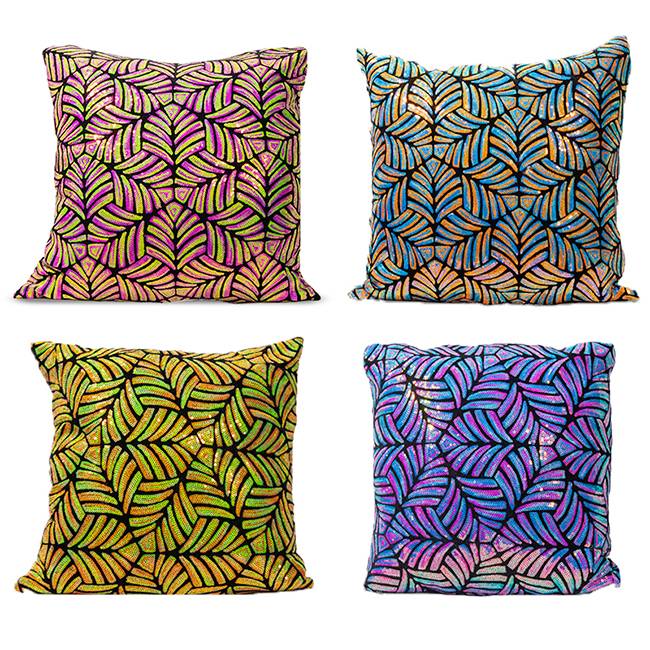
When creating custom embroidery fabric for couture hemlines, the process typically begins with a base mesh or organza. The embroidery creates the skeletal structure of the design—often using metallic or silk threads to define floral or geometric motifs. Sequins are then layered into this structure. The innovation for 2026 lies in the variety of the sequins used. We are moving away from uniform circles toward "irregular" or "faceted" sequins that mimic raw crystals.
One of the most sought-after techniques is "gradient layering," where the density of the sequins increases toward the bottom of the hemline, blended seamlessly with 3D embroidery. This creates a weight and "swing" to the garment that is impossible to achieve with standard fabrics. For designers looking to stand out, sourcing from a specialized wholesale sequin fabric supplier who understands these technical nuances is essential. The integration must be durable; sequins must be locked into the embroidery to ensure they don't snag or shed during the rigorous movement of a runway show or a gala event.
3. Market Demand: Why Designers are Sourcing Sequin Fabric Wholesale for Detailed Hemlines
From a commercial perspective, the demand for high-texture fabrics is skyrocketing. Luxury labels and high-end "ready-to-wear" brands are increasingly looking for ways to justify premium price points. Intricate, multi-media fabrics provide that justification. Consequently, the market for sequin fabric wholesale has evolved. Buyers are no longer looking for basic "all-over" sequins; they are looking for "engineered panels" where the embroidery and sequins are pre-designed to fit specific garment sections like hemlines, cuffs, or bodices.
This shift toward engineered textiles allows for more efficient production at the atelier level. When a designer buys custom embroidery fabric that already incorporates the necessary sequin detailing for a hemline, they reduce the need for expensive, time-consuming hand-work in their own studios.
Furthermore, the globalization of the fashion supply chain means that a wholesale sequin fabric supplier must be able to offer versatility. We are seeing a trend toward "customizable stock"—where base designs are available for wholesale but can be slightly modified in color or sequin density to meet a brand's specific creative vision. This hybrid model of mass-production and customization is currently the driving force behind the success of leading manufacturers.
4. Sustainability and Innovation: Future-Proofing Textile Manufacturing in China
As we look toward 2026, the conversation around sustainability in the sequin and embroidery sector has become impossible to ignore. Historically, sequins have been criticized for their environmental impact, often being made from non-biodegradable plastics. However, textile manufacturing in China is currently undergoing a green revolution.
At Yunfan Textile, innovation is focused on two main fronts: biodegradable sequins and recycled base materials. The new generation of sequins for 2026 is being developed from cellulose-based films and recycled PET. These materials offer the same high-gloss finish as traditional plastics but with a significantly lower carbon footprint.
Moreover, the embroidery process itself is becoming more sustainable through the use of eco-friendly dyes and organic cotton or recycled polyester threads. By combining these sustainable components, we can produce embroidered hemlines that meet the ethical standards of modern consumers without sacrificing the opulence required for couture. Sustainability is no longer a constraint on creativity; it is a catalyst for it. Innovation in "lock-stitch" technology also ensures that even the most delicate sequin-embroidered fabrics are built to last, promoting a "buy less, buy better" philosophy even within the high-fashion sector.
Conclusion
The 2026 fashion landscape is one of depth, detail, and deliberate luxury. The combination of sequins and embroidery for couture hemlines represents a pinnacle of modern textile artistry. It bridges the gap between traditional craftsmanship and industrial efficiency.
For designers and brands aiming to lead the market, the strategy is clear: focus on texture. By partnering with a reliable wholesale sequin fabric supplier and leveraging the advanced capabilities of textile manufacturing in China, brands can access the high-quality custom embroidery fabric needed to bring these intricate 2026 visions to life.
Whether it is the shimmer of a faceted sequin or the tactile pull of a raised embroidery stitch, the message for 2026 is loud and clear: texture is back, and it is more sophisticated than ever. As we continue to push the boundaries of what is possible at Yunfan Textile, we invite you to explore the infinite possibilities of combined textures for your next collection.
For more information on our latest collections and custom manufacturing services, contact Yunfan Textile, your premier partner for high-end fashion fabrics.