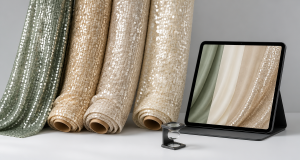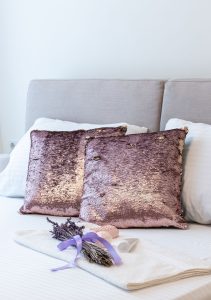
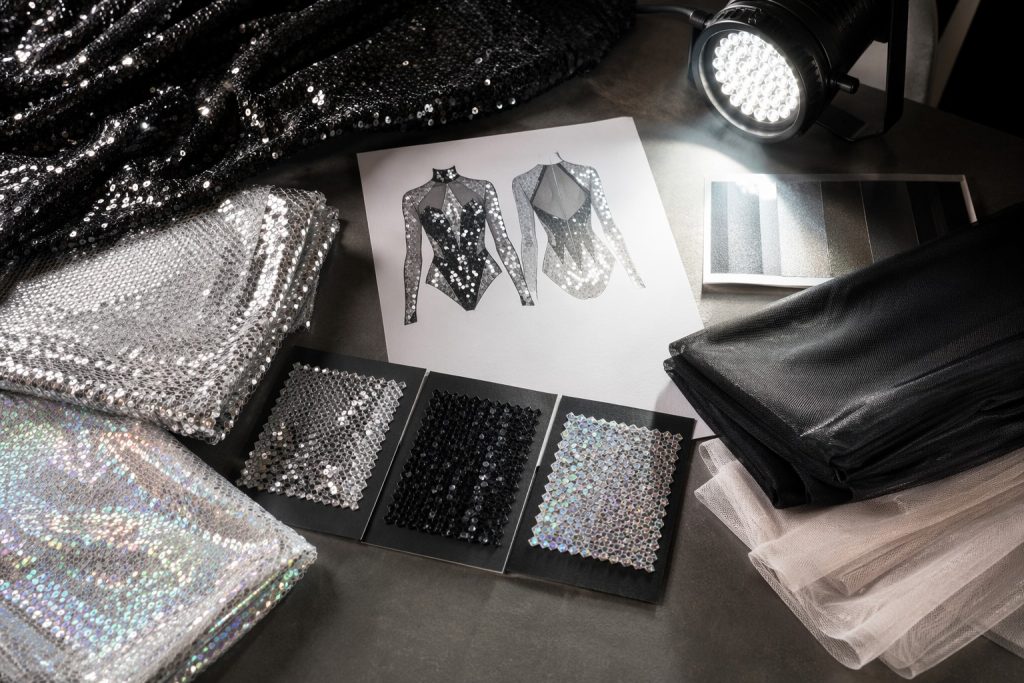
For fashion brands, costume suppliers, event decorators and textile wholesalers, choosing sequin fabric is no longer only a question of color and sparkle. The right base, attachment method and production standard can determine whether a bulk order cuts efficiently, performs in the finished product and remains consistent across multiple rolls.
In the current wholesale market, buyers are showing stronger interest in three directions: lightweight sequin mesh, stretch sequin fabric and recycled-material options. Each structure solves a different production problem. Comparing them before placing a bulk order helps buyers avoid the most common sourcing risks: unstable hand feel, sequin shedding, shade variation, unsuitable stretch recovery and unexpected cutting loss.
At Yunfan Textile, a Keqiao-based textile manufacturer, we support custom development for international buyers who need sequin fabrics for eveningwear, performance costumes, bridal collections, hospitality decoration and wholesale distribution. This guide explains how to compare the main options from a practical B2B perspective.
1. Sequin Mesh: Lightweight Impact for Layered Designs
Sequin mesh is often selected when buyers need a dramatic surface without adding excessive weight. It works well for evening dresses, overlays, sleeves, stage costumes and decorative panels. The key purchasing question is not simply how densely the sequins are attached, but whether the mesh backing provides the right balance of softness, stability and drape.
Before ordering, buyers should confirm:
- Mesh composition and GSM
- Sequin diameter, shape and spacing
- Edge stability during cutting
- Attachment security during handling
- Color appearance under daylight and stage lighting
A lighter mesh can reduce material weight, but it may require more careful cutting and sewing. For structured garments or large decorative panels, a stronger base may provide better production control.
2. Stretch Sequin Fabric: Test Recovery, Not Only Elasticity
Stretch sequin fabric is useful for dancewear, fitted garments and performance apparel because it allows greater freedom of movement. However, a fabric that stretches easily is not automatically suitable for production. Buyers should evaluate recovery after stretching, the direction of elasticity and whether the sequin embroidery affects the base fabric's movement.
A practical sample test includes stretching the fabric across the intended direction, releasing it and checking for distortion, puckering or permanent deformation. Buyers should also inspect whether sequins remain secure after repeated bending. If the fabric will be used for close-fitting garments, hand feel and backing softness are as important as visual brilliance.
For a standard starting point, buyers can compare a basic 3mm sequin fabric with a more dimensional or pattern-led option before selecting a bulk structure.
For maximum stage impact, an 18mm sequin fabric wholesale option with large sequins is a strong baseline to include in the comparison.
3. Recycled Sequin Options: Verify the Material Story
Sustainable sourcing is becoming more important, but buyers should request specific material information rather than relying on general "eco" language. Confirm which component is recycled: the sequin film, the backing fabric, the embroidery thread or a combination of materials.
The buyer should also ask how recycled content affects color, surface finish, minimum order quantity and lead time. A recycled option may have a slightly different reflection or hand feel from a conventional sequin. Sampling is therefore essential before approving a large order.
Sustainability should be evaluated together with durability. If a fabric sheds excessively or loses its appearance during normal handling, the environmental benefit may be undermined by higher replacement and production waste.
4. Quality Comparison: Five Checks Before Bulk Approval
Regardless of structure, professional buyers should compare samples using the same checklist:
- Color consistency: Compare the sample under daylight, warm light and cool LED light.
- Usable width: Measure the real cutting width after selvedges and edge treatment.
- Sequin security: Rub and bend a sample gently to identify loose sequins or open stitches.
- Pattern alignment: Check repeat accuracy across the full sample width.
- Roll consistency: Request shade-band or roll-reference information for larger orders.
These checks help separate a visually attractive sample from a fabric that can perform reliably in production.
5. Choosing a Factory-Direct Partner
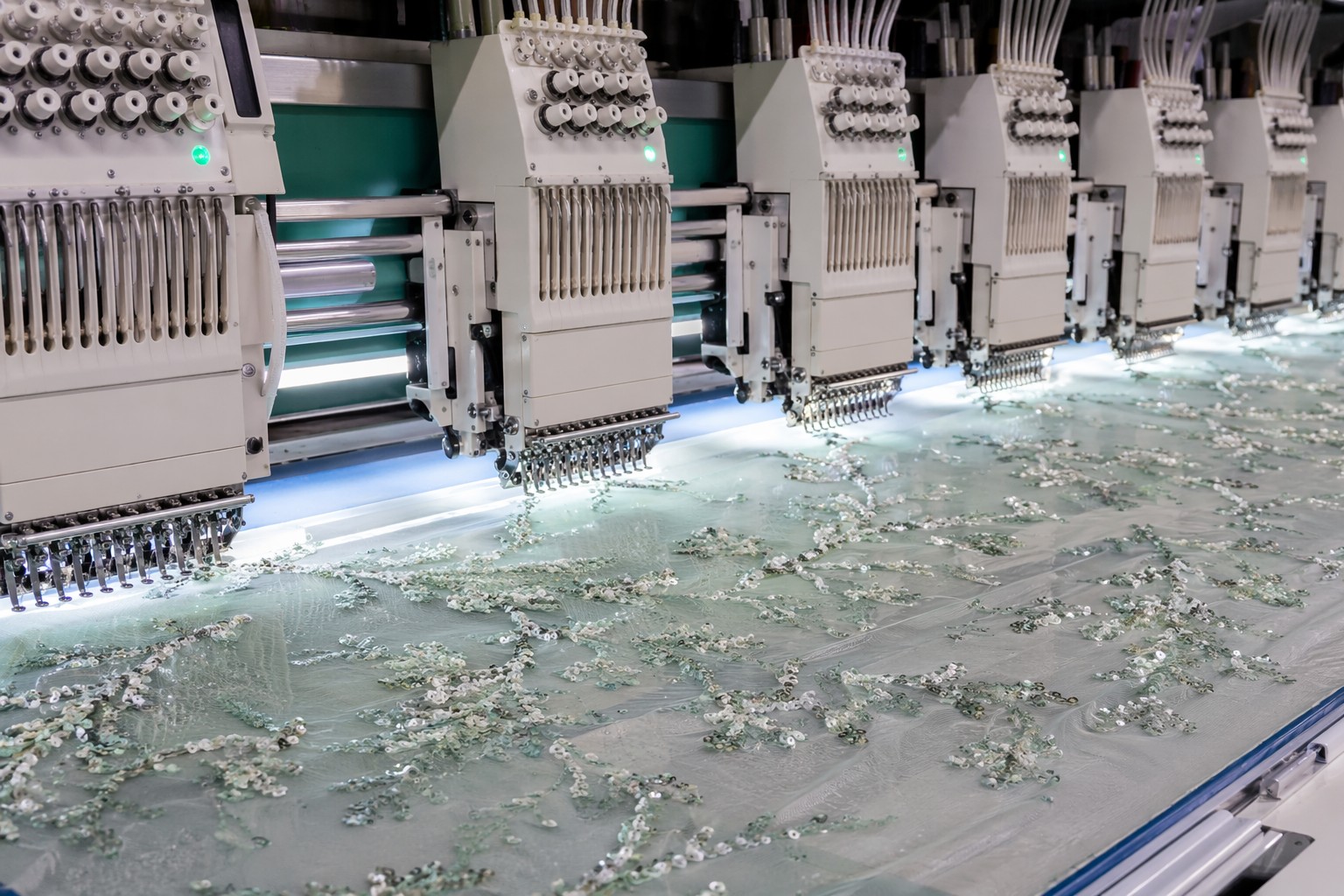
A manufacturer should be able to explain how the base fabric, sequin size, stitch density and finishing process work together. Buyers developing a collection can compare the broader sequin fabric category, a floral patterned flora embroidery sequin fabric and a dimensional 3D embroidery fabric before finalizing the construction.
Factory-direct communication also makes it easier to adjust color, density, backing and packaging before bulk production. This is particularly valuable when a buyer needs a repeatable specification for multiple seasonal orders.
Conclusion: Sample First, Then Scale with Confidence
The best sequin fabric for a wholesale order depends on the end use. Mesh prioritizes lightness and drape, stretch structures prioritize movement and recovery, while recycled options require clear material verification and performance testing. Comparing these factors before bulk ordering reduces quality surprises and improves production planning.
To request fabric samples or discuss a custom sequin program, visit the Yunfan Textile Contact Us page. For a secure Alibaba purchasing route, visit our Alibaba Gold Supplier store with Trade Assurance.
Contact Yunfan Textile for B2B Sourcing
🌐 Website: https://www.yunfantextile.com/
📌 B2B Contact: Jessie wendy
📱 WhatsApp/WeChat: +86 175 1619 6727 / +86 156 3752 5803
📧 Email: morris@yunfantextile.com
📧 Email: morris@yunfantextile.com