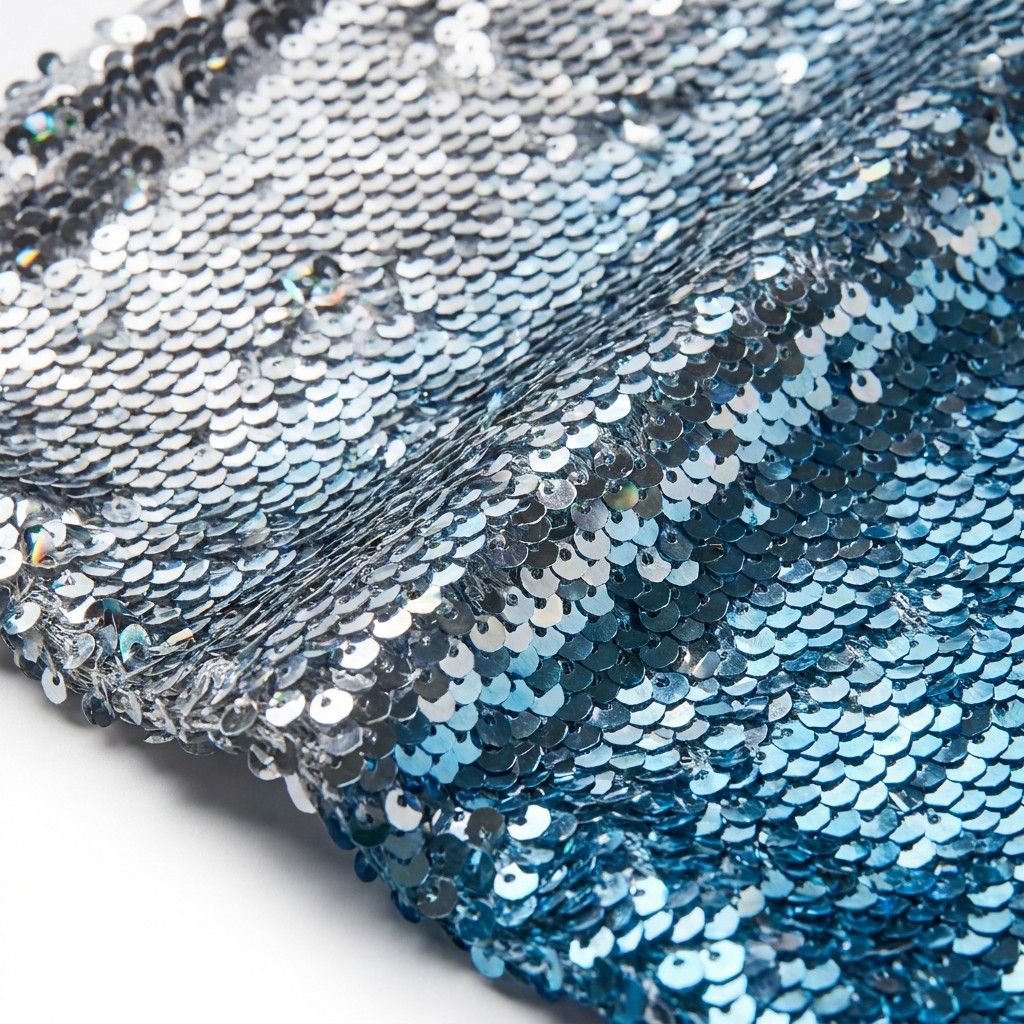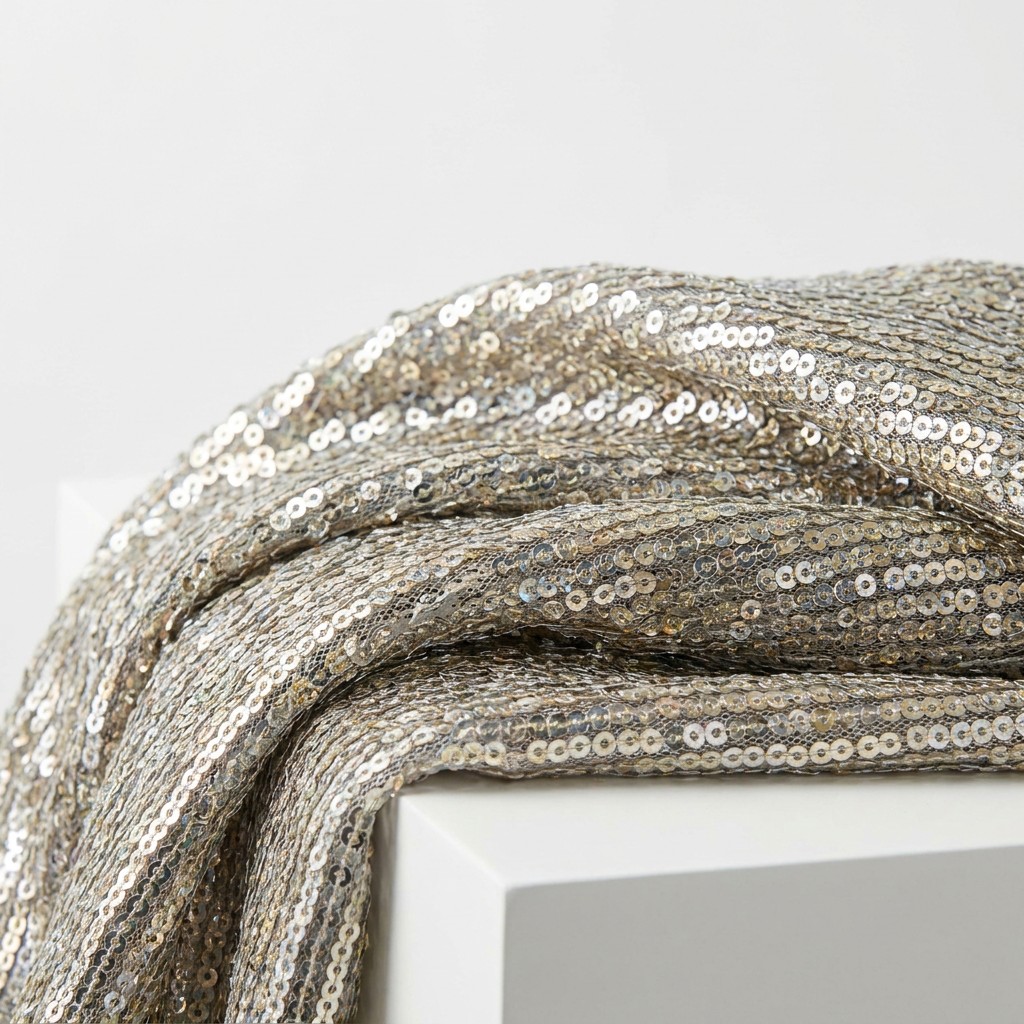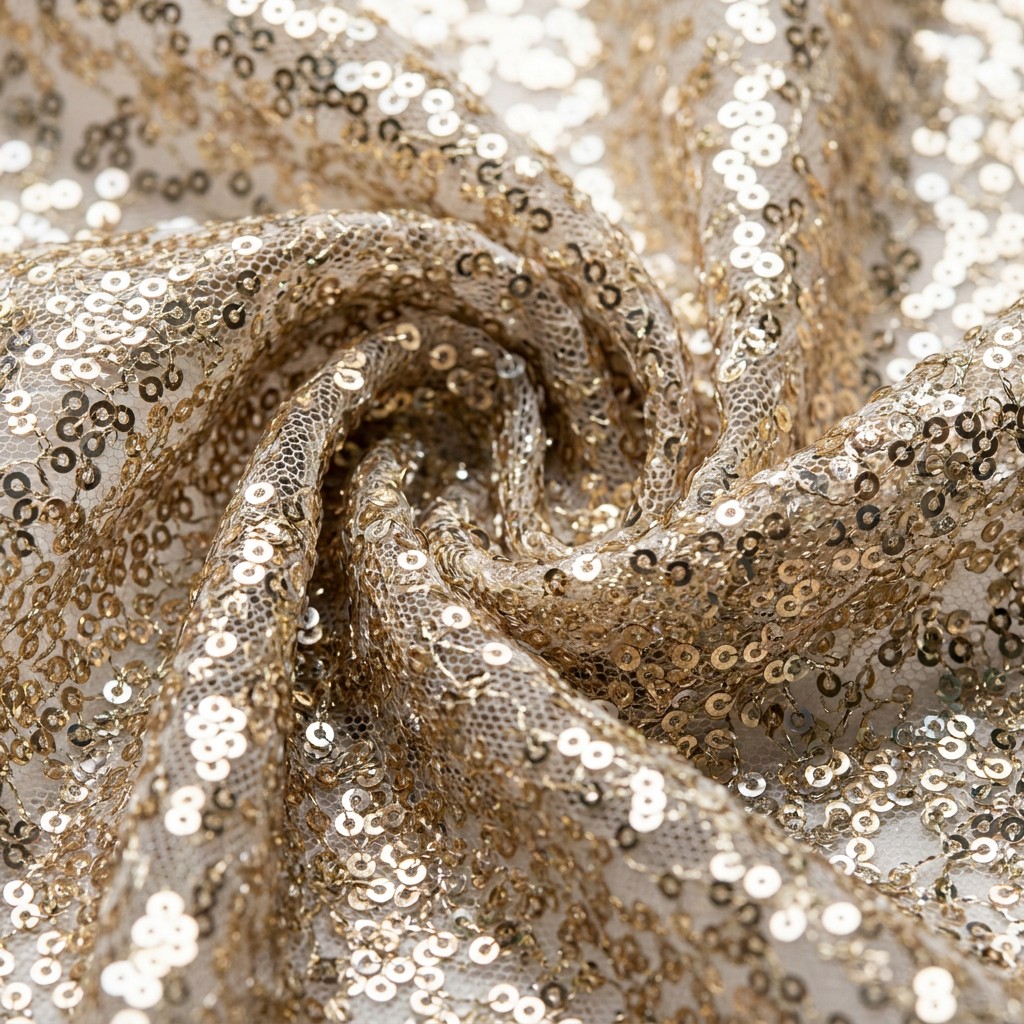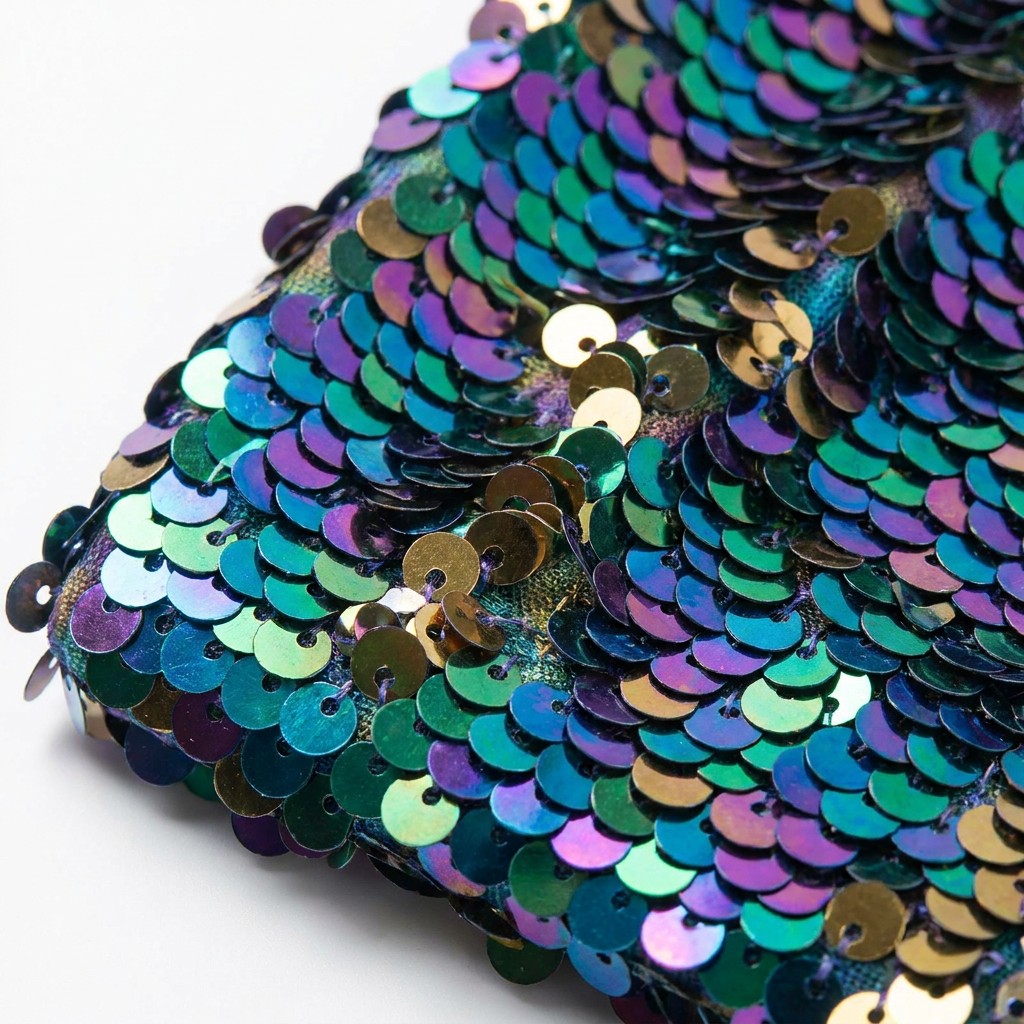
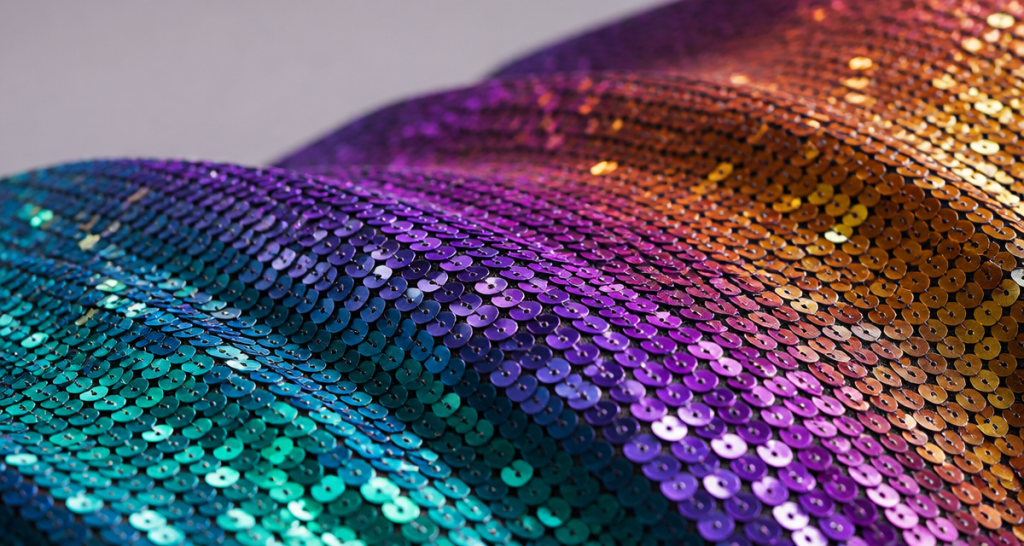
Textile innovation is moving beyond traditional decoration. For 2027 performance collections, event products, and experimental fashion programs, responsive sequin fabric can add a changing visual layer to a familiar surface. Depending on the construction, the effect may be designed around light, temperature, movement, or viewing angle. For brands and wholesale buyers, the commercial opportunity is to turn an interactive surface into a repeatable product specification rather than treating it as a one-off visual sample.
What Is Responsive Sequin Fabric?
Responsive sequin fabric combines a sequin surface with a colour or reflective effect that changes under defined conditions. A solar-responsive concept may be developed for outdoor fashion or event displays, while a thermal-responsive surface may support performance costumes, technical fashion, or visual merchandising. The final result depends on the sequin material, base fabric, colour system, density, lighting, temperature, and finishing process.
For B2B sourcing, it is important to describe the effect accurately. Buyers should ask whether the change is reversible, how quickly it appears, which conditions trigger it, and whether the effect is designed for apparel, décor, or display use. A clear application brief allows the manufacturer to recommend the right base construction and avoid a mismatch between the creative concept and the production method.
Key Points to Confirm Before Sampling
- Trigger condition: Define whether the intended effect is activated by sunlight, temperature, movement, direct light, or a controlled installation environment.
- Base fabric: Confirm composition, stretch, transparency, handle, GSM, and usable width. The base affects comfort, drape, cutting, sewing, and the visual depth of the sequins.
- Sequin specification: Record diameter, shape, density, attachment method, coverage, and surface direction. These details are essential for comparing a development sample with a repeat order.
- Visual reference: Request images or video under the intended conditions, but use a physical swatch as the approval reference whenever possible.
- Durability discussion: Ask how the surface should be handled during cutting, sewing, cleaning, packing, installation, and storage. The required care may differ between apparel and décor applications.
- Quality control: Define checks for loose sequins, missing stitches, shade variation, edge condition, holes, stains, roll consistency, and the uniformity of the responsive effect.
How Buyers Can Build a Reliable Development Process
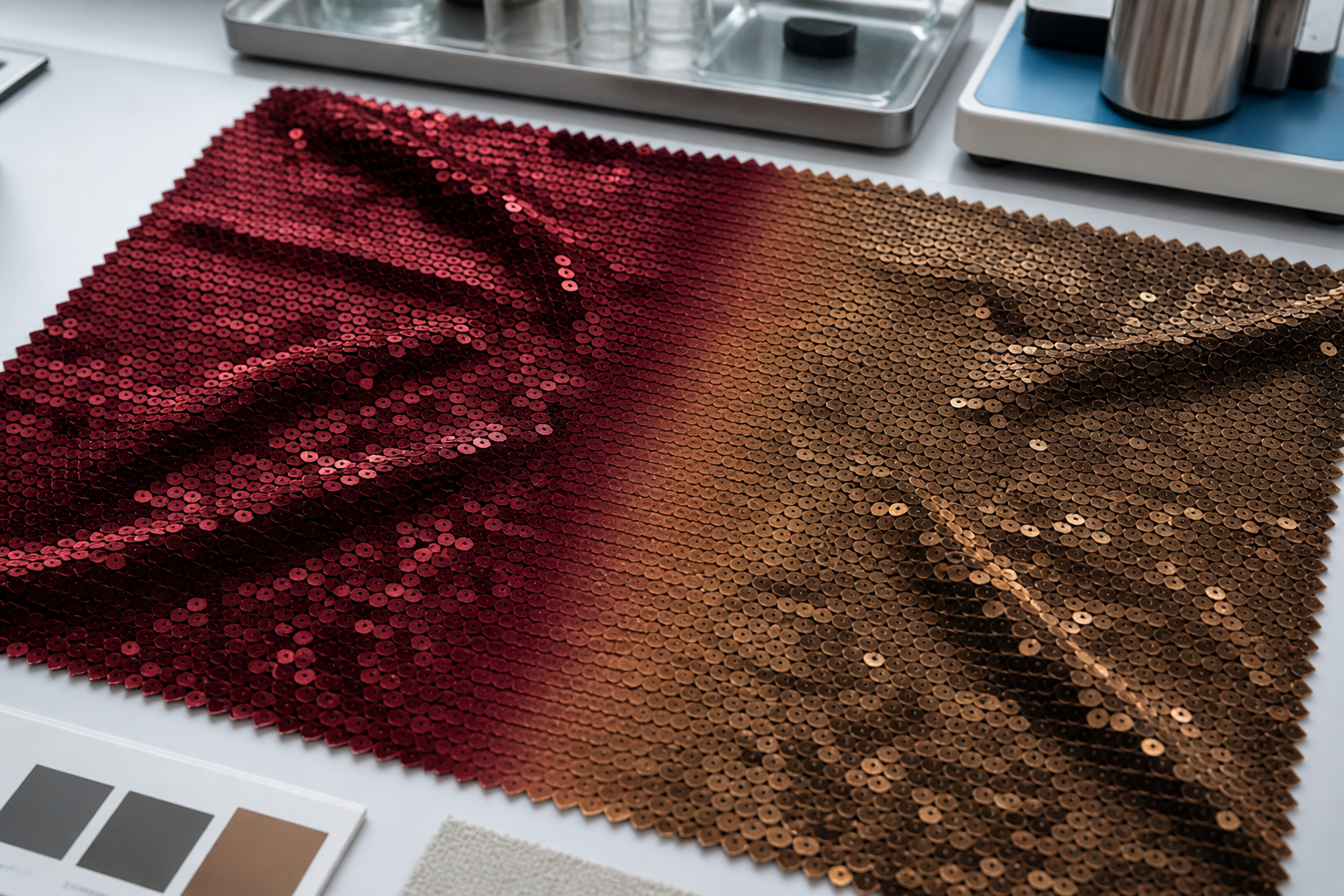
Start with a written product brief covering the end use, target market, desired colour direction, approximate quantity, dimensions, delivery schedule, and handling environment. Then request a development swatch that represents the proposed base fabric and sequin construction. If the supplier offers several options, compare them by visual effect, hand feel, width, GSM, flexibility, and estimated production requirements rather than by appearance alone.
Sample approval should include both a design review and a technical review. The design team can confirm the visual change, colour transition, and surface impact. The purchasing and quality teams can confirm the specification, packaging, inspection points, and commercial terms. Keep the approved swatch with the product file and record the lighting or temperature conditions used during approval.
For repeat production, use the approved sample as a shared reference. Record any permitted variation, such as a change in base colour, sequin density, or finish. This makes it easier to compare future batches and communicate decisions between the buyer, factory, merchandiser, and quality inspector.
Yunfan Textile supports global B2B buyers with sequin, embroidery, mesh, velvet, home textile, and decorative fabric development. Our team can discuss sample requirements, surface effects, custom colours, technical specifications, and quality-control checkpoints for apparel, stage, event, hospitality, and visual merchandising projects.
Source Directly from Our Alibaba Store
Browse factory-direct sequin and decorative textile options and request samples for your next development project.
Request Responsive Sequin Fabric Samples
To discuss responsive sequin fabric, use our website consultation page. Include the target application, trigger condition, preferred colour direction, estimated quantity, and delivery market so our team can recommend relevant samples.
Yunfan Textile B2B Contact
Website: https://www.yunfantextile.com/
B2B Contact: Wendy Jessie
WhatsApp/WeChat: +86 156 3752 5803
WhatsApp/WeChat: +86 175 1619 6727
Email: morris@yunfantextile.com
Email: morris@yunfantextile.com
Responsive sequin fabric works best when creativity and procurement are connected from the beginning. A defined trigger condition, physical sample approval, measurable fabric specifications, and clear inspection standards help buyers move from an exciting visual effect to a reliable commercial textile program.
SEO keywords: responsive sequin fabric, solar reactive textile supplier, thermal responsive fabric wholesale, smart sequin fabric development, performance textile sourcing.